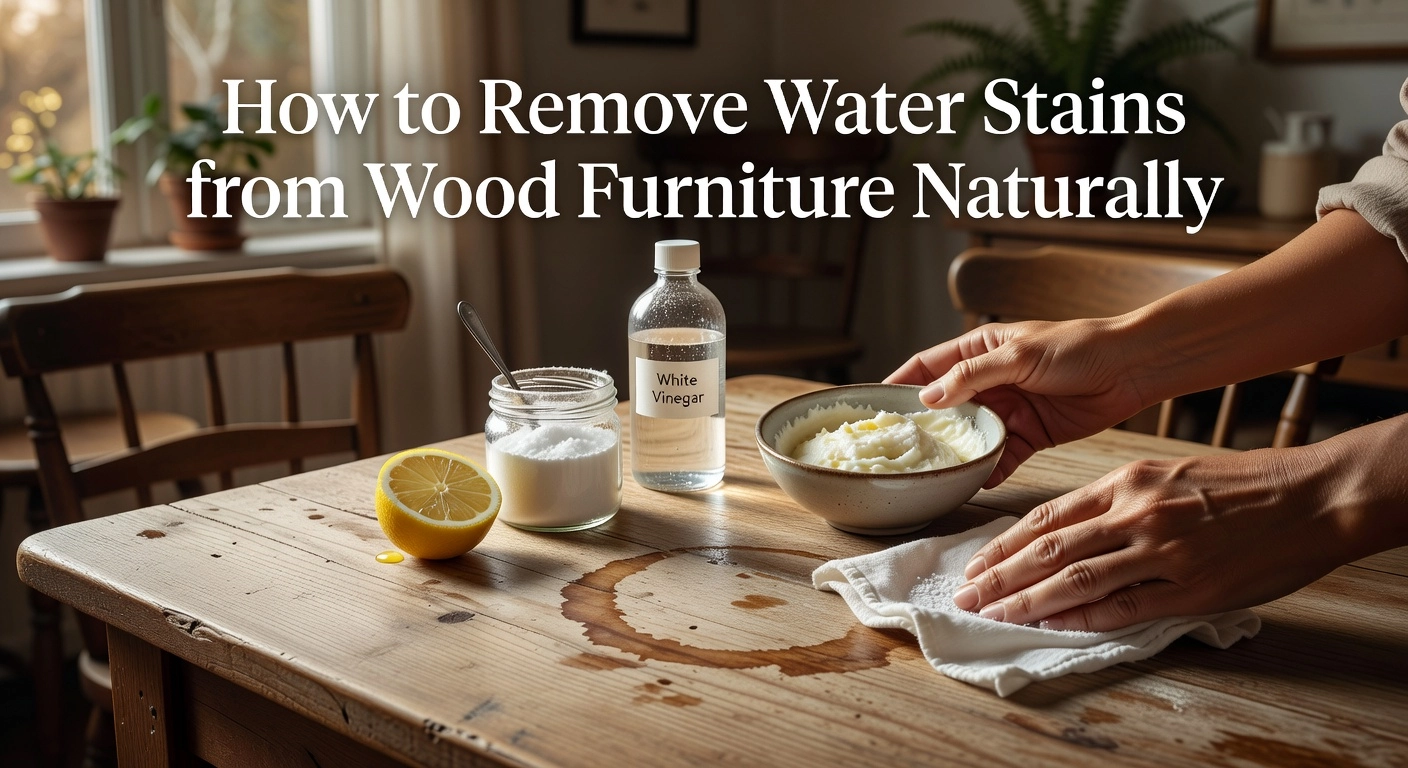
We’ve all been there. You set down a cold glass of water on your beautiful wooden coffee table, forget to use a coaster, and walk away. Then you come back to find that dreaded white ring staring back at you. It feels like the furniture is ruined, but here’s the good news: it’s probably not.
Water stains on wood are actually one of the most common household frustrations, and the fix might be sitting right in your kitchen cabinet. If you’ve been searching for how to remove water stains from wooden furniture naturally, you’re in the right place. No need to panic, spend money on expensive products, or call in a professional.
In this guide, you’ll learn simple, beginner-friendly methods using everyday natural ingredients to lift those stubborn stains and restore your furniture’s original beauty. We’ll walk through each technique step by step, so even if you’ve never done any furniture care before, you’ll feel completely confident giving these a try. Let’s get that wood looking good as new.
Why Water Stains Appear on Wood Furniture (And What Type You Have)
Before you grab any household remedy, it helps to understand why that annoying ring showed up on your wooden furniture in the first place. Water stains are not all created equal, and knowing what type you are dealing with will save you a lot of time and frustration.
The White and Cloudy Stain: A Finish Problem
When a cold glass or a wet cloth sits on a finished wood surface, moisture sneaks into tiny pores in the protective finish layer (think varnish, lacquer, wax, or polyurethane). That trapped moisture creates microscopic pockets within the finish, which scatter light instead of letting it reflect evenly. The result is that familiar milky, hazy, or cloudy white ring you see after a dinner party. According to experts at Architectural Digest, these white rings are a surface-level issue confined to the finish itself, meaning the actual wood underneath is still perfectly fine.
The Dark Stain: A Wood Problem
Dark stains, those brown, gray, or even black marks, tell a different story. These happen when water pushes all the way through the finish and soaks into the wood fibers themselves. Once inside, water can oxidize the wood, react with its natural tannins, and cause the fibers to swell. The damage is no longer just cosmetic at the finish level; it is inside the wood.
Your Quick Visual Diagnostic
Here is a simple way to figure out which type you have right now. Look closely at the stain:
- White or cloudy with a smooth surface underneath? You have a surface-level finish stain. Good news!
- Dark brown, gray, or black, especially with rough or raised grain? Water reached the wood itself.
As Biltrife Furniture’s detailed guide explains, white stains respond very well to gentle natural DIY methods like mayonnaise, baking soda paste, or careful heat application. Dark stains, on the other hand, may require sanding, wood bleach, or even professional refinishing because the damage goes deeper than any surface treatment can reach.
Why Acting Fast Matters
One last thing worth knowing: fresh stains are always easier to tackle than old ones. If you catch a water ring within the first few hours or a day or two, there is a strong chance a simple natural remedy will clear it up completely. The longer you wait, the deeper the moisture settles, and the more stubborn the stain becomes. So if you spotted a new ring this morning, you are in exactly the right place at exactly the right time.
Before You Start: Safety Rules Every Beginner Should Follow
Before diving into any natural remedy, take five minutes to go over these ground rules. They might seem overly cautious at first, but skipping them is how small water rings turn into bigger, more expensive problems.
Always test on a hidden spot first. Find an area nobody ever sees, like the underside of the tabletop or the inner side of a cabinet leg. Apply your chosen method there, wait at least 10 minutes, and check for any discoloration, finish lifting, or dullness. Wood finishes vary widely, from polyurethane to wax to oil, and what works beautifully on one piece can damage another. This one step alone saves beginners a lot of regret. You can find additional guidance on how to remove water stains from wood furniture to understand how different finishes respond.
Always rub with the grain, not against it. Look closely at your furniture and follow those natural lines running along the wood surface. Rubbing across the grain, even gently, can leave scratches and swirl marks that are far more noticeable than the original stain. This applies to every method covered in this guide.
Use only soft cloths. Microfiber towels and old cotton t-shirts are perfect. Paper towels can be surprisingly abrasive, and rough sponges will scratch your finish without question. For more tested approaches, 5 easy ways to remove water stains from wood consistently recommends soft, lint-free cloths for safe application.
Go easy on liquids. Too much moisture during treatment can spread the stain or push it deeper into the wood. Use minimal amounts of any solution, wring cloths out well, and never pour or spray directly onto the surface.
Dry thoroughly before reassessing. After each attempt, wipe the area with a clean dry cloth and let it air out completely before deciding whether to try again. Wet wood looks different from dry wood, and jumping straight into a second treatment without drying first leads to overtreatment.
Method 1: Mayonnaise (The Most Beginner-Friendly Fix)
If you’ve ever stared at a cloudy white ring on your coffee table and wished it would just disappear, this method was practically made for you. The mayonnaise fix is hands-down the most beginner-friendly natural remedy out there, and the best part? You almost certainly already have everything you need sitting in your fridge right now.
Why Mayonnaise Actually Works
It sounds a little ridiculous, but there’s real science behind this one. Full-fat mayonnaise is rich in oils and fats, and those oils slowly penetrate the wood finish and displace the trapped moisture that’s causing that cloudy, white appearance. Think of it like squeezing water out of a sponge by replacing it with something else. The oils essentially push the moisture out of the finish and restore its natural clarity, all without any harsh chemicals or abrasive scrubbing. Cleaning specialist Melissa Poepping, quoted in a January 2026 Martha Stewart article on removing water stains from wood, confirms that mayonnaise works particularly well on white fluid stains and heat rings on finished wood surfaces.
What You’ll Need
- Full-fat mayonnaise (roughly one tablespoon)
- Plastic wrap
- Two soft cloths or microfiber towels
Step-by-Step Instructions
Step 1: Gently wipe the stained area with a dry soft cloth to remove any dust or surface debris. Make sure the area is completely dry before you begin.
Step 2: Scoop out about one tablespoon of full-fat mayonnaise and apply it directly onto the stain, spreading it to cover the entire ring. According to Family Handyman’s guide on removing water stains with mayonnaise, a generous, even layer gives the oils enough contact time to work properly.
Step 3: Loosely cover the mayonnaise with a piece of plastic wrap. This step helps retain moisture and keeps the oils working on the stain instead of drying out too quickly.
Step 4: Leave it alone for 2 to 8 hours. For fresh, light rings, a couple of hours is usually plenty. For older or more stubborn stains, leave it overnight for the best results.
Step 5: Wipe the mayonnaise away with a clean, soft cloth, always moving in the direction of the wood grain. Then buff the area gently with a dry microfiber cloth to remove any remaining residue and bring back the surface’s natural shine.
Step 6: Inspect the area in good lighting. If the stain has faded significantly but hasn’t fully disappeared, it’s fine to repeat the process one more time. Afterward, a light application of wood conditioner or polish can help restore extra protection to the surface.
Best For and Safety Note
This method works beautifully on white or cloudy rings on finished wood surfaces, including coffee tables, dining tables, and dressers. It is not suitable for dark stains, which signal deeper wood damage requiring a different approach.
One critical detail: use full-fat mayonnaise only. Low-fat or flavored varieties contain significantly more water, which can actually make the stain worse rather than better. Stick to the full-fat version, and you’re in good shape.
Method 2: Hair Dryer Heat (Fast and Effective for Fresh Stains)
If mayonnaise is the slow-and-steady approach, the hair dryer method is its speedier cousin. This technique works especially well when you catch a water ring early, ideally within a few hours or a day or two of it forming. The sooner you act, the better your chances of clearing that cloudy white mark completely.
How It Actually Works
White water stains are essentially moisture that has gotten trapped inside the protective finish on your furniture, whether that finish is varnish, lacquer, or polyurethane. The wood itself is usually fine; the haziness you see is just water sitting between the finish and the surface beneath it. Gentle, controlled heat from a hair dryer warms that area just enough to cause the trapped moisture to evaporate and escape. Think of it like slowly coaxing the water out rather than forcing it. When done correctly, the finish stays perfectly intact and the cloudy mark simply fades away.
Step-by-Step Instructions
- Set your hair dryer to medium heat. Never use the high setting; it concentrates too much heat too fast and can damage your finish before you even realize it.
- Hold the dryer 6 to 8 inches away from the stain. Distance matters more than most beginners expect. According to Centennial Woods’ guide on removing water stains, consistent distance and constant movement are the two factors that keep the finish safe throughout this process.
- Move the dryer in slow, steady circular motions over the stain. Never hold it still in one spot, even for a few seconds.
- Limit each pass to 30 seconds, then pause. Let the surface cool for 20 to 30 seconds before your next pass. Repeat for up to 4 or 5 rounds, then step back and assess. You should notice the stain gradually fading with each pass. For stubborn rings, Bracko Home’s blow dryer technique notes that some stains need closer to 15 to 20 minutes of patient, intermittent application.
- Once the stain disappears, apply a small amount of lemon oil or olive oil with a soft cloth and buff gently along the wood grain. Heat can slightly dry out the finish, so this reconditioning step restores moisture and brings back that natural luster.
One Important Caution
The biggest mistake beginners make is holding the dryer too close or cranking up the heat to speed things up. Both choices can bubble, crack, or discolor your finish, turning a simple water ring into a much bigger repair job. Distance and movement are your two safety anchors here; respect them and this method works beautifully. If the surface ever feels hot to the touch or you notice any change in the finish texture, stop immediately and let it cool completely before deciding whether to continue.
Method 3: Iron and Cotton Cloth (For Stubborn White Rings)
So the hair dryer didn’t quite do the job, and the white ring is still staring back at you. That’s exactly when it’s time to bring in something with a little more firepower: your clothes iron.
Why This Method Works Better Than a Hair Dryer
The iron delivers heat in a more concentrated, controlled way than a hair dryer ever could. Instead of blowing warm air across a general area, the iron presses directly against the cloth, pushing steady, even heat right into the stain. That focused warmth penetrates the finish layer, converts the trapped moisture into vapor, and the cotton cloth absorbs it as it escapes. Think of the cloth as doing double duty: it protects your finish from direct contact with the iron while also soaking up the moisture being drawn out. For white rings that have been sitting for a few days or didn’t budge with the hair dryer, this extra intensity can make all the difference.
What You’ll Need
- A dry clothes iron (empty the water reservoir completely)
- A plain white 100% cotton cloth, such as an old t-shirt, a thin dish towel, or a flour sack towel
Step-by-Step Instructions
- Set your iron to the lowest heat setting and make absolutely sure the steam function is turned completely off. Steam adds moisture, which is the opposite of what you want here.
- Lay your cotton cloth flat over the stain. Smooth out any wrinkles or folds before you start; uneven fabric creates uneven heat and pressure.
- Press the iron down for 5 to 10 seconds. Keep it moving in slow, gentle circles; never leave it sitting in one spot, even for a moment.
- Lift the iron and cloth together and check the stain. Let the wood cool for about 30 seconds before you press again. Repeat in short passes until the ring fades.
One critical note on fabric: stick with plain white cotton only. Synthetic fabrics like polyester can melt under the iron and transfer residue directly onto your finish, turning one problem into a much worse one. Merry Maids also recommends this same cotton-only approach for exactly this reason.
A Fair Warning Before You Try This
Out of all the methods in this guide, this one carries the highest risk of damaging your finish if something goes wrong. Too much heat, too long in one spot, or the wrong fabric can scorch, discolor, or bubble your wood’s surface. That’s why this method should only be attempted after you’ve already tried gentler options like mayonnaise and the hair dryer. Always test on a hidden area first, such as the underside of a table leaf or an inside edge, before touching the visible surface. If you notice any discoloration or the finish looks odd after a test pass, stop immediately and consider calling a professional for valuable or antique pieces.
Method 4: Vinegar and Olive Oil Mix (Clean and Condition at Once)
Here’s what makes this method stand out from the others you’ve tried so far: it does two jobs at the same time. White distilled vinegar is mildly acidic, which means it gently breaks down the surface-level mineral deposits and trapped moisture that cause that cloudy white discoloration on your finish. Meanwhile, the olive oil works alongside it to condition the wood, replenish natural oils, and restore a healthy sheen to the surrounding area. You’re not just removing a stain; you’re leaving the surface looking better than before you started.
What You’ll Need
- Plain white distilled vinegar (5% acidity)
- Olive oil
- A small bowl
- Two soft cloths, microfiber or cotton work best
How to Do It
- Mix equal parts vinegar and olive oil in a small bowl. A quarter cup of each is plenty for most stains. Give it a good stir since the two liquids will naturally separate, so re-stir as you go.
- Dip a soft cloth into the mixture, then wring it out well. The cloth should feel damp, not wet or dripping. Too much liquid on wood is never a good thing.
- Rub gently over the stain, always moving in the direction of the wood grain. Use light, even pressure rather than scrubbing hard.
- Continue in light circular motions for 1 to 2 minutes. You should start to see the haze lifting. Wipe away the residue with a clean dry cloth and buff the surface to bring back the shine.
This method works best on light or recent water rings, or as a finishing polish after one of the earlier methods has already reduced a deeper stain. Think of it as your final buffing step once the heavy lifting is done.
One important note on ingredients: always use plain white distilled vinegar, not apple cider vinegar and not cleaning vinegar. Apple cider vinegar can leave behind a brownish residue, and cleaning vinegar often has a much higher acidity level that can damage your finish. As Merry Maids explains in their vinegar and olive oil guide, standard 5% white distilled vinegar is the safe, effective choice here. When in doubt, check the label before you start.
Method 5: Non-Gel White Toothpaste (Quick Fix with What You Already Have)
Here’s a method that requires zero trips to the store because the star ingredient is probably sitting in your bathroom right now. Plain white toothpaste is a surprisingly effective quick fix for light water rings, and it works thanks to something you might not expect: mild abrasives.
Why Toothpaste Works on Water Rings
Non-gel white toothpaste contains tiny abrasive particles, often silica-based, that are designed to gently polish tooth enamel. On wood furniture, those same particles do something useful: they very lightly buff the top layer of the finish, breaking up the moisture particles trapped inside that are causing that cloudy, white appearance. Think of it like using an ultra-fine polishing compound on the surface. It’s controlled, gentle action that lifts the stain without digging into the wood itself.
How to Do It
What you’ll need: Plain white non-gel toothpaste, a soft damp cloth, a clean dry cloth.
- Apply the toothpaste. Squeeze a pea-sized amount of toothpaste directly onto the water stain. You really don’t need more than that for a small ring.
- Rub gently with the grain. Using a soft damp cloth, rub the toothpaste over the stain in the direction of the wood grain for 30 to 60 seconds. Keep the pressure light; you are polishing, not scrubbing.
- Wipe clean and dry immediately. Remove all toothpaste residue with a clean damp cloth, then dry the area thoroughly right away to avoid introducing new moisture to the surface.
- Inspect and repeat if needed. Check the stain. If it has partially faded but is still visible, repeat the process once more. Stop after two passes total; going beyond that risks dulling or wearing down the finish over time.
The One Rule You Cannot Skip
Toothpaste type matters more than people realize. Use only plain white toothpaste with no gel formula, no whitening beads, and no added colors or sparkle. Gel toothpastes lack the right abrasive profile to work effectively. Whitening formulas and those with colored stripes or scrubbing beads can be far too aggressive, containing chemicals or particles that may strip or permanently damage your wood’s finish. When in doubt, check out this guide from Centennial Woods for additional context on choosing the right approach for your specific surface.
This method works best on small, fresh white rings sitting on hard-finished surfaces like polyurethane-coated dining tables or lacquered hardwood desks. It is not the right tool for older, set-in stains or dark marks that have already penetrated into the wood fibers. Next up, we’ll look at another pantry staple that takes a different approach entirely.
Method 6: Baking Soda Paste (For Persistent or Larger Rings)
Think of baking soda paste as the stronger sibling of the toothpaste method you just tried. Like toothpaste, baking soda works as a very mild abrasive, with fine particles that gently buff away the moisture trapped inside your wood’s finish. The key difference is that you can mix it into a thicker paste, which means it sits directly on the stain longer and gets more contact time to do its job. That extended dwell time is exactly what stubborn, older rings need.
What You’ll Need
- Baking soda (1 teaspoon)
- Water (roughly half a teaspoon)
- A small bowl for mixing
- A soft microfiber cloth
- A damp cloth for wiping
- Olive oil or furniture oil for reconditioning
Step-by-Step Instructions
Step 1: Mix the paste. Combine one teaspoon of baking soda with roughly half a teaspoon of water in a small bowl. You want a thick, spreadable consistency, similar to toothpaste. If it looks too runny, add a tiny pinch more baking soda.
Step 2: Apply and rub. Scoop a small amount of paste onto a soft cloth and apply it directly over the water ring. Rub gently in the direction of the wood grain for 45 to 60 seconds. Keep your pressure light and avoid circular scrubbing, which can leave fine scratches on the finish.
Step 3: Wipe clean and dry. Remove all paste residue using a damp cloth, then immediately follow with a dry cloth to pull out any leftover moisture. Do not skip the drying step; leaving moisture behind creates the exact problem you are trying to fix.
Step 4: Recondition the wood. Apply a small amount of olive oil or furniture oil to the treated area and buff gently with a clean cloth. This step restores the wood’s natural moisture and brings back its shine.
One Important Caution
Do not mix baking soda with vinegar for this method. It might seem like combining two popular natural cleaners would double the results, but the opposite happens. The fizzing reaction between them neutralizes the mild abrasive action you actually need, and it introduces extra moisture to the surface at the same time.
This method works best for larger water rings, overlapping stains from multiple glasses, or rings that have been sitting for several days without responding to the mayonnaise method. If the stain fades but does not disappear completely after one attempt, you can repeat the process once more before moving on to a different approach.
Method 7: Petroleum Jelly or Vaseline (The Overnight Approach)
Think of this method as the overnight version of the mayonnaise fix you tried earlier. It works on the same basic principle: the oils in petroleum jelly slowly penetrate the wood’s protective finish and push out the trapped moisture that’s causing that cloudy white ring. The key difference is time. Where mayonnaise can work in as little as an hour, petroleum jelly needs a longer dwell period to do its job. That slower, deeper penetration is exactly what makes it the right tool for older stains that have been sitting on your furniture for weeks, or for rings that lightened up with earlier methods but stubbornly refused to disappear completely.
What You’ll Need
- A jar of petroleum jelly (any standard drugstore variety works fine)
- Two soft, clean cloths
- A small amount of white distilled vinegar
- A dry buffing cloth
Step-by-Step Instructions
Step 1: Wipe the stained area gently with a dry cloth to remove any dust or surface debris. Make sure the wood is completely dry before you begin.
Step 2: Scoop out a generous amount of petroleum jelly and spread it directly over the stain with your finger or a soft cloth. Cover the entire ring completely, going slightly beyond its edges.
Step 3: Leave it alone. This is the most important step. Let the jelly sit for a full 8 to 12 hours overnight. Resist the urge to check on it every hour.
Step 4: In the morning, wipe away the petroleum jelly with a soft cloth, buffing gently in the direction of the wood grain.
Step 5: Dampen a clean cloth with a small amount of white vinegar and wipe the area lightly. This cuts through any greasy residue left behind without harsh chemicals. Dry the surface immediately and buff to a shine.
Important Limitations to Know
This method works best on white rings found on polyurethane or lacquered finishes, where the jelly can work its way into the finish layer without causing problems. If your furniture has an oil or wax finish, skip this one. Petroleum jelly can interfere with those existing protective layers and potentially make things worse rather than better. When in doubt, test a small hidden spot first before treating the visible stain.
All 7 Methods at a Glance: Which One Should You Try First
Here’s a quick-reference comparison of all seven methods so you can find your starting point at a glance:
| Method | Best Stain Type | Effort Level | Dwell Time | Risk of Finish Damage | Best Finish Type |
|---|---|---|---|---|---|
| Mayonnaise | White | Low | 1 hour to overnight | Low | Polyurethane, varnish |
| Petroleum Jelly | White | Low | Up to 24 hours | Low | Polyurethane, varnish |
| Toothpaste | White | Low-Medium | A few minutes | Low-Medium | Sealed finishes |
| Baking Soda Paste | White | Low-Medium | A few minutes | Low-Medium | Sealed finishes |
| Vinegar and Olive Oil | White | Low | Minutes to hours | Low | Sealed or oiled finishes |
| Iron with Cloth | White (recent) | Medium | Seconds per pass | Medium-High | Durable sealed finishes |
| Hair Dryer | White | Low-Medium | 5 to 10 minutes | Low-Medium | Sealed finishes |
If you’re a beginner staring at a white stain for the first time, stick to this order: start with mayonnaise, move to petroleum jelly overnight if needed, then try toothpaste or baking soda, followed by the vinegar and olive oil mix. Only bring in the heat methods if the stain is still hanging around after those gentler attempts.
One important note worth repeating: no natural method reliably removes dark stains completely. Dark discoloration means moisture has already worked its way past the finish and into the wood fibers themselves, which requires deeper treatment or refinishing rather than a surface-level fix.
It’s perfectly fine to work through multiple methods one after another. Just make sure the surface is fully dry and you’ve reassessed the stain before moving on to the next attempt. Rushing between methods while the wood is still damp can cause more harm than the original stain.
If you find that your furniture needs more than just a single stain fix, such as overall dryness, scratching, or general wear, WoodStuffHQ’s guides on wood conditioning and full furniture restoration walk you through those next steps with the same beginner-friendly approach you’ve seen here.
When Natural Methods Will Not Work (And What to Do Next)
Sometimes the natural methods just will not get the job done, and that is completely okay. It does not mean you did anything wrong. It usually means the damage goes deeper than the finish layer, and that calls for a different approach altogether.
If you are dealing with a dark stain (brown or black rather than white and cloudy), that is a sign water has pushed past the protective finish and reacted directly with the wood fibers underneath. Natural remedies like mayonnaise or heat cannot reach damage at that level. At that point, options like light sanding followed by refinishing, or using an oxalic acid-based wood bleach, become necessary. Oxalic acid is specifically effective at lifting dark tannin-related stains from bare wood. It is worth noting that this goes well beyond natural DIY territory and requires safety precautions like gloves and good ventilation. Research it separately with product-specific guidance before attempting it.
If you have tried multiple methods and a white stain is still visible after the surface has fully dried, the finish itself is likely permanently clouded or compromised. At that stage, light sanding to remove the damaged finish layer and recoating with a fresh protective finish is often the most reliable solution.
Antique pieces or unfinished wood are a special case. These surfaces are much more sensitive to any treatment, even gentle ones, because there is little or no protective layer to act as a buffer. A professional restorer can assess the wood type and condition before any treatment is attempted.
Swelling, warping, or soft spongy spots are serious warning signs. These are structural problems, not cosmetic ones, and DIY stain removal methods will not fix them and could make things worse. Professional restoration is the right call here.
For readers ready to take the next step, WoodStuffHQ covers wood restoration, refinishing, and finishing guides in depth, so you have a trusted resource when the job grows beyond basic stain removal.
How to Prevent Water Stains on Wood Furniture for Good
You have done the hard work of removing those stubborn rings. Now let’s make sure you rarely have to do it again. Prevention is genuinely easier than any remedy in this guide, and a few consistent habits are all it takes to keep your wood furniture looking great long-term.
Use Coasters Every Single Time
This sounds obvious, but it is the step most people skip. Place a coaster under every glass, mug, vase, or any item that holds liquid before it touches the wood surface. Silicone coasters are your best option because they are waterproof, easy to wipe clean, and do not trap moisture underneath the way fabric-backed or felt coasters can. Keep a small stack on your coffee table and dining table so guests use them automatically without having to ask.
Blot Spills Immediately, Then Let It Breathe
The moment a spill happens, grab a dry cloth and blot straight down rather than wiping across the surface. Rubbing spreads moisture and can push it deeper into the finish. Once you have absorbed as much liquid as possible, let the spot air dry completely before placing anything back on it, including a coaster or decorative item.
Condition the Wood Every 6 to 8 Weeks
A well-nourished finish resists moisture far better than a dry or neglected one. Apply a natural conditioner like lemon oil, tung oil, or a beeswax-based polish roughly every 6 to 8 weeks. These products replenish the wood’s natural oils, strengthen the protective layer, and leave the surface less vulnerable to condensation and minor spills.
Keep Indoor Humidity Stable
Wood absorbs and releases moisture as humidity changes, and wood that is already swollen or dried out stains much more easily. Aim to keep indoor humidity between 40 and 55 percent using a humidifier in dry months or a dehumidifier when things get muggy. A basic hygrometer from a hardware store makes monitoring simple.
Never Set Cold Drinks Down Bare
Condensation forms on a cold glass within seconds, even if you plan to move it right away. Always use a coaster first. If one is not nearby, a folded paper napkin is a perfectly acceptable short-term fix and far better than bare wood contact.
Start With What You Have in Your Kitchen
You have made it through all seven methods, and now it is time to bring everything together. The single most important thing to remember before reaching for any remedy is stain color. White or cloudy rings mean moisture is trapped in the finish layer, which is exactly where kitchen-cabinet solutions shine. Dark stains signal deeper water penetration into the wood itself, and those typically need sanding or professional help. Getting this identification step right saves you time and protects your furniture.
When in doubt about where to start, go with mayonnaise or petroleum jelly. Apply either one overnight, wipe clean in the morning, and buff lightly. No special tools, no risk of scorching, and both ingredients are probably already in your home right now.
Keep three safety habits close throughout the process: always test on a hidden spot first, always rub with the wood grain, and always dry the surface thoroughly after treatment. These three rules protect your finish every single time.
Revisit the comparison table earlier in this guide as your quick-reference cheat sheet, and work through methods one at a time rather than combining them. Layering multiple remedies at once makes it harder to know what actually worked.
For deeper care beyond stain removal, explore the WoodStuffHQ guides on full wood restoration, conditioning butcher block surfaces, and maintaining wood furniture finishes. Regular upkeep every six to eight weeks keeps your pieces looking great long after the rings are gone.
Conclusion
Water stains on wood furniture are frustrating, but they are far from permanent. With a few natural ingredients you likely already have at home, you can lift white rings and restore your wood’s natural beauty without spending a dime on harsh chemicals. The key takeaways are simple: act quickly when stains appear, use gentle natural solutions like mayonnaise, toothpaste, or olive oil, and always test any method on a hidden area first. Prevention with coasters and regular maintenance will keep your furniture looking its best long-term.
Now it is time to put these tips to work. Head to your kitchen, grab your ingredients, and tackle that stubborn ring today. Your furniture has more life left in it than you think, and a little natural care goes a long way. You have got this!
Frequently Asked Questions
How do I know if my water stain is a surface-level finish stain or a deeper wood stain?
You can identify the stain type by its color and texture. White or cloudy marks with a smooth surface underneath are surface-level finish stains, meaning moisture is trapped in the protective finish layer like varnish or polyurethane. Dark brown, gray, or black marks, especially with rough or raised grain, indicate that water has penetrated through the finish and soaked into the wood fibers themselves. White stains respond well to natural DIY remedies, while dark stains typically require sanding, wood bleach, or professional refinishing.
Which natural method should I try first for removing a white water ring from wood furniture?
For beginners, the best starting point is the mayonnaise method. Apply about one tablespoon of full-fat mayonnaise directly onto the stain, cover loosely with plastic wrap, and leave it for 2 to 8 hours or overnight. The oils in mayonnaise penetrate the finish and displace the trapped moisture causing the cloudiness. If that does not fully resolve the stain, move on to petroleum jelly overnight, then try toothpaste or baking soda paste, followed by the vinegar and olive oil mix. Only use heat methods like a hair dryer or iron if gentler options have not worked.
Is it safe to use a clothes iron on wood furniture to remove water stains?
Yes, but it carries the highest risk of finish damage out of all seven methods and should only be attempted after gentler options have failed. Set the iron to its lowest heat setting with the steam function completely turned off, then place a plain white 100% cotton cloth flat over the stain. Press the iron in slow, gentle circles for 5 to 10 seconds at a time, lifting and letting the wood cool between passes. Never use synthetic fabrics like polyester, which can melt and transfer residue onto your finish, and always test on a hidden spot first before treating a visible surface.
Why is it important to act quickly when a water stain appears on wood furniture?
Fresh stains are significantly easier to remove than old ones because the moisture has not yet settled deeply into the finish or wood fibers. If you catch a water ring within the first few hours or a day or two of it forming, a simple natural remedy like mayonnaise or a hair dryer has a strong chance of clearing it up completely. The longer you wait, the deeper the moisture penetrates, making the stain more stubborn and less responsive to surface-level treatments. In some cases, a stain that could have been fixed easily when fresh may eventually require sanding or professional refinishing if left too long.
How can I prevent water stains from forming on my wood furniture in the future?
The most effective prevention habits include always using coasters under every glass, mug, or liquid-holding item before it touches the wood surface, with silicone coasters being the best option since they do not trap moisture underneath. Blot spills immediately by pressing straight down with a dry cloth rather than wiping, then allow the area to fully air dry. Condition your wood furniture every 6 to 8 weeks with a natural product like lemon oil, tung oil, or beeswax-based polish to strengthen the protective finish and make it more resistant to moisture. Additionally, maintain indoor humidity between 40 and 55 percent to prevent the wood from swelling or drying out, both of which make it more vulnerable to staining.
9 thoughts on “How to Remove Water Stains from Wood Furniture Naturally”