If you want to protect wood furniture from sun damage, you need to act fast. That beautiful walnut dining table near the bay window is slowly dying…That beautiful walnut dining table near the bay window is slowly dying. UV rays break down wood lignin, causing bleaching, cracking, and irreversible color loss — often within 6 months of direct sun exposure. The good news? Every single prevention method in this guide costs under $40 and takes less than an hour to implement.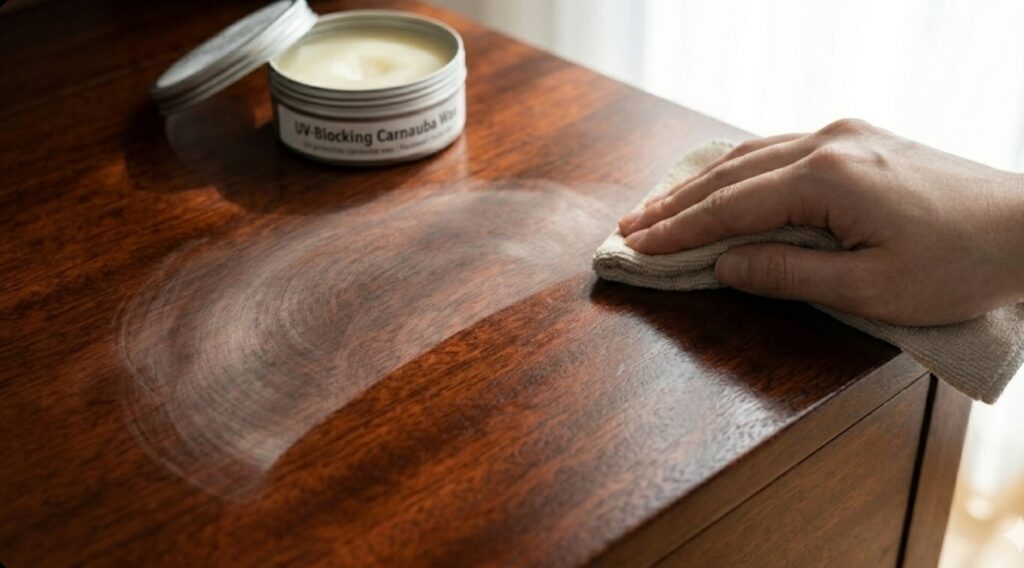
Why Sunlight Destroys Wood Furniture & How to Protect Wood Furniture from Sun Damage
Understanding the enemy is half the battle. Sunlight damages wood through three mechanisms:
- UV radiation (280–400 nm) — as classified by the EPA: Breaks down lignin — the natural “glue” that gives wood its color and strength. This causes bleaching that penetrates up to 1/8 inch deep.
- Infrared heat: Dries out natural oils and finish, leading to surface cracking and peeling.
- Visible light: Triggers photochemical reactions that alter wood pigments, especially in dark species like walnut, cherry, and mahogany.
How Fast Does Sun Damage Happen to Wood Furniture?
| Wood Species | Time to Visible Fading | Time to Deep Damage | Refinishing Cost |
|---|---|---|---|
| Walnut | 3–6 months | 12–18 months | $400–$600 |
| Cherry | 4–8 months | 18–24 months | $350–$550 |
| Mahogany | 6–10 months | 18–24 months | $300–$500 |
| Oak | 8–12 months | 24–36 months | $250–$400 |
| Maple | 12–18 months | 36+ months | $200–$350 |
Data based on south-facing window exposure — National Wood Flooring Association guidelines in temperate climates. Damage accelerates 2–3x in desert or high-altitude regions.
These 5 methods will help you protect wood furniture from sun damage for years without refinishing.
Method 1: UV Window Film to Protect Wood Furniture from Sun Damage
Window film is the most effective single solution, blocking up to 99.9% of UV rays while preserving your view and natural light. Modern films are nearly invisible and do not darken rooms.
What to Buy
Look for films rated for UV rejection 99%+ and IR rejection 50%+. Avoid dyed films (cheap, bubble, fade in 2–3 years). Choose ceramic or spectrally selective films instead.
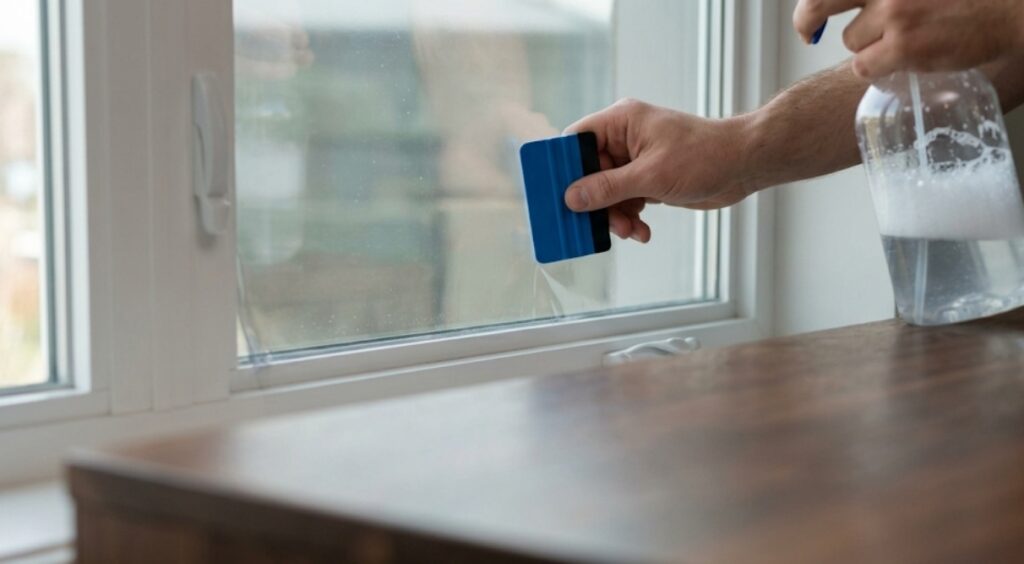
Step-by-Step Installation
- Clean the glass thoroughly: Use ammonia-free glass cleaner and a lint-free cloth. Any dust becomes a permanent bubble.
- Measure and cut: Measure each pane. Cut film 1 inch larger than needed on all sides.
- Apply soapy water: Mix 1 teaspoon baby shampoo per quart of distilled water. Spray generously on the glass.
- Peel and position: Remove backing paper while spraying the adhesive side. Position on the wet glass.
- Squeegee out water: Start from center, push to edges. Use a plastic squeegee (not rubber — it drags film).
- Trim edges: Use a sharp utility knife with a fresh blade. Cut along the window frame edge.
- Final squeegee: Push out remaining water. Small bubbles under 1/4 inch disappear in 2–4 weeks as film cures.
Cost: $20–$40 for a 3ft × 6.5ft roll (covers 2–3 average windows)
Time: 30–45 minutes per window
Lifespan: 10–15 years for ceramic films
Effectiveness: Blocks 99% UV, 50–80% IR heat
Method 2: Use Sheer Curtains or Blinds (Best Budget Option)
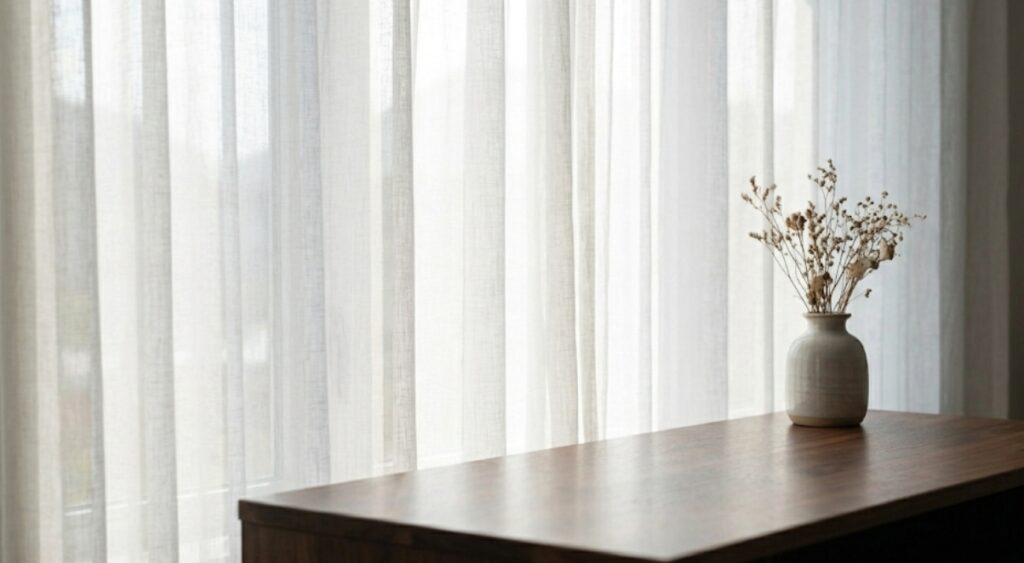
Sheer curtains filter approximately 60% of UV rays while maintaining natural light and visibility. They are the fastest, cheapest solution — and they look great.
Best Fabric Choices
- Linen sheers: Natural UV resistance, breathable, timeless look.
- Polyester sheers with UV coating: Higher protection (up to 75% UV block), machine washable.
- Silk sheers: Luxurious but require dry cleaning and offer only 40–50% UV block.
Optimal Setup
- Mount rods 6–12 inches above window frame: This blocks UV that would hit the top of furniture.
- Extend rods 6–10 inches past window sides: Blocks angled morning and afternoon sun.
- Use double rods: Sheers for daily UV filtering. Blackout curtains for intense midday sun (10 AM – 4 PM).
- Layer with cellular shades: For maximum protection, add top-down/bottom-up cellular shades behind sheers. Total UV block: 85–95%.
Cost: $15–$50 per window for sheers; $30–$80 for cellular shades
Time: 15 minutes to hang
Effectiveness: 60–95% UV block depending on layers
Bonus: Reduces cooling costs 10–25% in summer
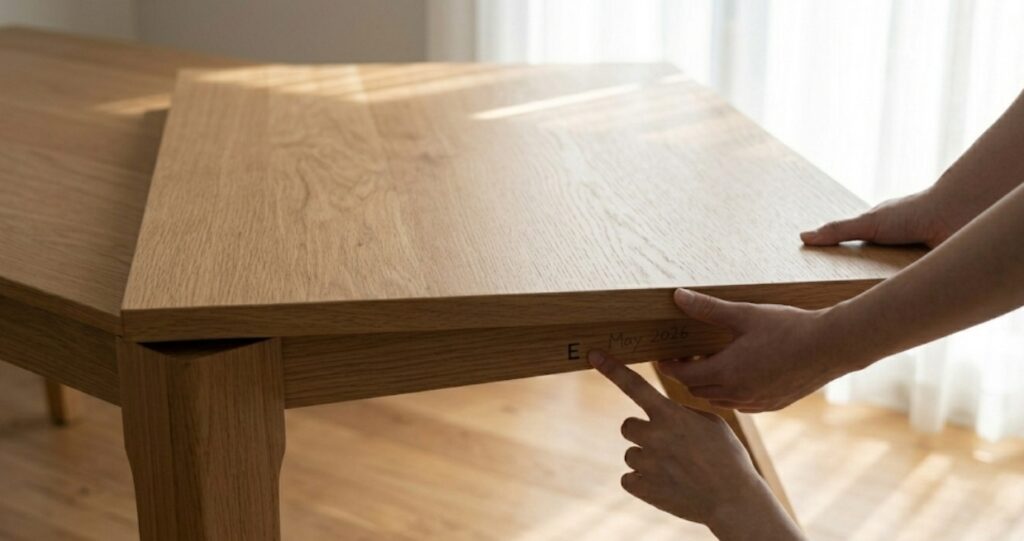
Method 3: Rotate Furniture Every 2–3 Months (Best for Antiques)
For pieces you cannot move away from windows — or antiques where you want even aging — rotation is the simplest strategy. It ensures all sides receive equal UV exposure, preventing the “two-tone” look.
Rotation Schedule
| Season | Position | Reason |
|---|---|---|
| Spring (Mar–May) | Near window, front facing sun | Low UV angle, moderate intensity |
| Summer (Jun–Aug) | Move 3+ feet from window OR rotate 180° | Peak UV intensity, highest damage risk |
| Fall (Sep–Nov) | Near window, back facing sun | Low UV angle, different exposure side |
| Winter (Dec–Feb) | Center of room or opposite wall | Low UV, but dry heating air damages finish |
Cost: $0
Time: 5 minutes per piece
Effectiveness: Prevents uneven fading; does not stop damage entirely
Best for: Antiques, sentimental pieces, rooms with limited layout options
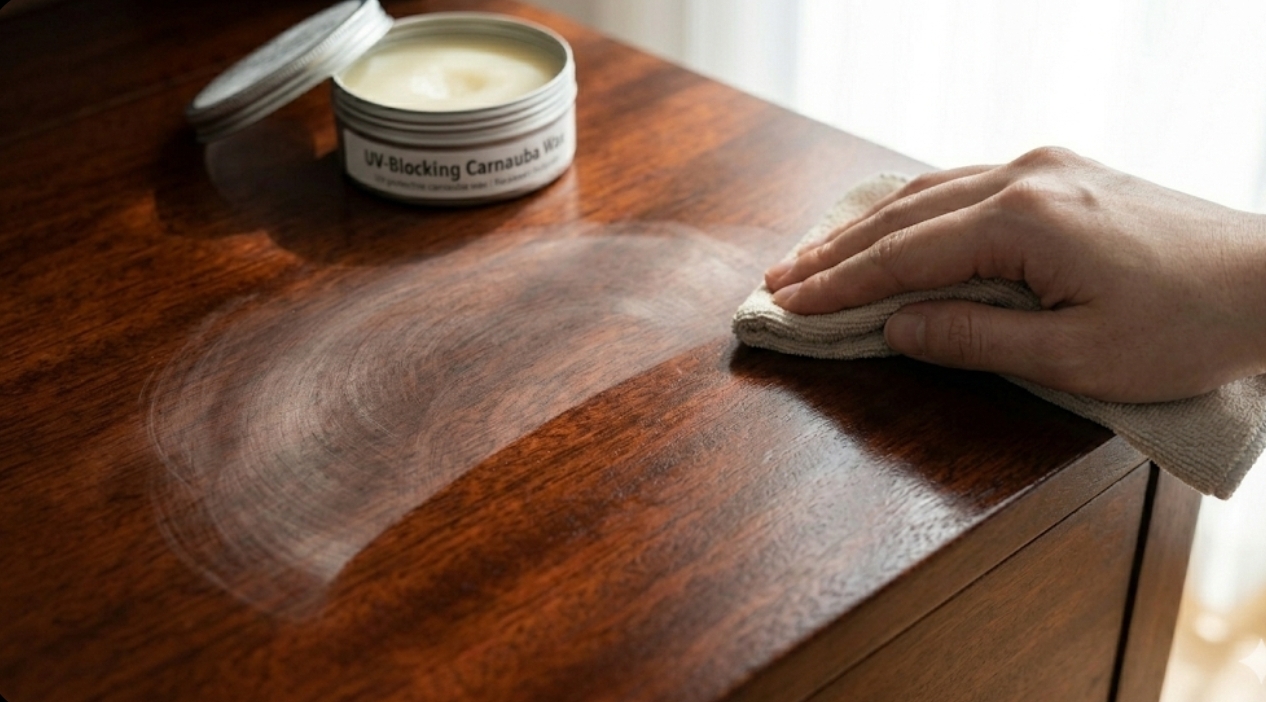
Method 4: Apply UV-Protective Wax or Polish (Best for Existing Finishes)
UV-blocking waxes and polishes add a sacrificial layer that absorbs UV before it reaches the wood. They are not as effective as window film but provide crucial supplemental protection — especially for pieces already near windows.
What to Look For
- UV absorbers: Benzotriazole or hydroxybenzophenone compounds (listed as “UV inhibitors” on labels).
- Carnauba wax base: Harder, longer-lasting than beeswax. Provides physical barrier plus UV protection.
- SPF rating: Some modern furniture polishes list SPF 15–30 equivalents.
Application Method
- Clean thoroughly: Remove dust, grease, and old polish with mineral spirits on a lint-free cloth. Let dry 30 minutes.
- Apply thin coat: Use 0000 steel wool or soft cloth. Work in circular motions, following grain direction.
- Let haze: Wait 15–20 minutes until surface looks dull and hazy.
- Buff to shine: Use clean microfiber cloth or lambswool buffer. Buff until glossy.
- Reapply monthly: UV waxes degrade with exposure. Monthly reapplication maintains protection.
Cost: $12–$25 per can (lasts 12+ months)
Time: 20 minutes per piece
Effectiveness: Blocks 15–30% UV; primarily protects finish layer
Bonus: Restores luster and hides minor scratches
Method 5: Reposition Furniture 3+ Feet from Windows (Best Free Solution)
UV intensity follows the inverse square law: double the distance from the window, quarter the UV exposure. Moving a table from 1 foot to 3 feet from the glass reduces UV by 89%.
Optimal Placement Rules
- 3+ feet from window: Minimum safe distance for daily exposure.
- 6+ feet from window: Ideal for antiques and dark woods.
- Avoid south-facing walls entirely: If possible, place valuable pieces on north or east walls.
- Use area rugs as UV barriers: A rug under a coffee table blocks reflected UV from floors.
Cost: $0
Time: 10 minutes to rearrange
Effectiveness: 70–95% UV reduction depending on distance
Best for: New furniture arrangements, room redesigns, seasonal moves
How to Repair Existing Sun Damage on Wood Furniture
If the damage is already done, you have three options depending on severity:
Option A: Touch-Up for Minor Fading (DIY, $15–$30)
For surface fading that has not penetrated the finish:
- Clean with mineral spirits.
- Apply Minwax wood stain markers or gel stain matching the original color.
- Blend with 0000 steel wool following grain direction.
- Apply 2–3 coats of UV-protective polyurethane or lacquer.
Option B: Spot Refinishing for Moderate Damage ($50–$150)
For fading that has penetrated the finish but not deep into wood:
- Sand affected area with 220-grit, then 320-grit paper.
- Apply matching stain. Let dry 24 hours.
- Apply 3 coats of UV-resistant finish (water-based polyurethane with UV absorbers).
- Buff between coats with 400-grit wet/dry paper.
Option C: Full Refinishing for Severe Damage ($300–$800)
When bleaching has penetrated deep into the wood:
- Strip old finish chemically or mechanically.
- Sand to bare wood (80-grit → 120-grit → 220-grit).
- Apply wood bleach (oxalic acid) to even out color if needed.
- Restain to match original or desired color.
- Apply 4–5 coats of marine-grade UV-resistant varnish.
Frequently Asked Questions
Can I use regular sunscreen on wood furniture?
No. Human sunscreen contains zinc oxide and titanium dioxide that leave white, chalky residue on wood. They also contain emulsifiers and fragrances that damage finishes. Use only products specifically formulated for wood — UV waxes and polishes with benzotriazole UV absorbers.
Does window glass block UV rays?
Partially. Standard window glass blocks UVB — according to the Skin Cancer Foundation (burning rays) but allows 75–80% of UVA (aging rays) to pass through. UVA is what fades wood. Low-E windows block more UV (85–90%) but still allow significant fading over time. Window film is necessary for complete protection.
How do I know if my furniture is already sun-damaged?
Look for these signs: (1) Color mismatch: The side facing the window is noticeably lighter. (2) Surface dryness: Wood feels rough or chalky instead of smooth. (3) Finish cracking: Small spiderweb cracks in the topcoat, especially on dark woods. (4) Lifted veneer: Heat + UV can delaminate veneer edges. Test by moving a small item — if the covered area is darker, you have fading.
Is LED or artificial light harmful to wood?
Minimal risk. LEDs emit negligible UV (less than 0.1% of sunlight). Incandescent bulbs emit some IR heat but little UV. The only artificial light source of concern is halogen bulbs, which emit significant UV and intense heat. Keep halogen fixtures 3+ feet from wood furniture.
Can I prevent sun damage with just wax?
Not alone. UV wax blocks only 15–30% of UV and degrades within weeks of exposure. It is an excellent supplemental layer but must be combined with window film, curtains, or repositioning for meaningful protection. Think of wax as sunscreen — helpful, but you still need shade.
Final Thoughts: Prevention Is 100x Cheaper Than Repair
A $25 roll of window film and 30 minutes of installation can save you a $500 refinishing bill. The math is simple — and the methods are simpler. Choose the strategy that fits your home:
- Renters or budget-conscious: Sheer curtains + quarterly rotation ($15–$50).
- Homeowners with valuable antiques: Ceramic window film + UV wax ($35–$65).
- Maximum protection: Film + cellular shades + wax + 6-foot placement ($80–$150).
The key is to act before you see damage. By the time fading is visible, the lignin is already broken down and repair requires stripping to bare wood. Start with window film this weekend — your future self (and your furniture) will thank you.
Following these steps will help you protect wood furniture from sun damage and extend its life by 10+ years.
📥 Keep This Guide Handy
Print our Seasonal Furniture Maintenance Checklist and tape it inside your cleaning cabinet. A 5-minute monthly inspection prevents 90% of furniture emergencies — including sun damage.
Related Guides: Learn how to remove water stains, fix scratches, and restore dry wood for complete furniture care.
“`
5 thoughts on “Protect Wood Furniture from Sun Damage: 5 Proven UV Prevention Methods”