Transforming your kitchen does not require a full renovation or a massive budget.
Sometimes, all it takes is the right kitchen cabinet paint to completely reinvent the heart of your home.
Whether your cabinets look worn, outdated, or simply no longer match your style, painting them is one of the most cost-effective upgrades you can make.
Why Painting or Refinishing Cabinets Is Worth It
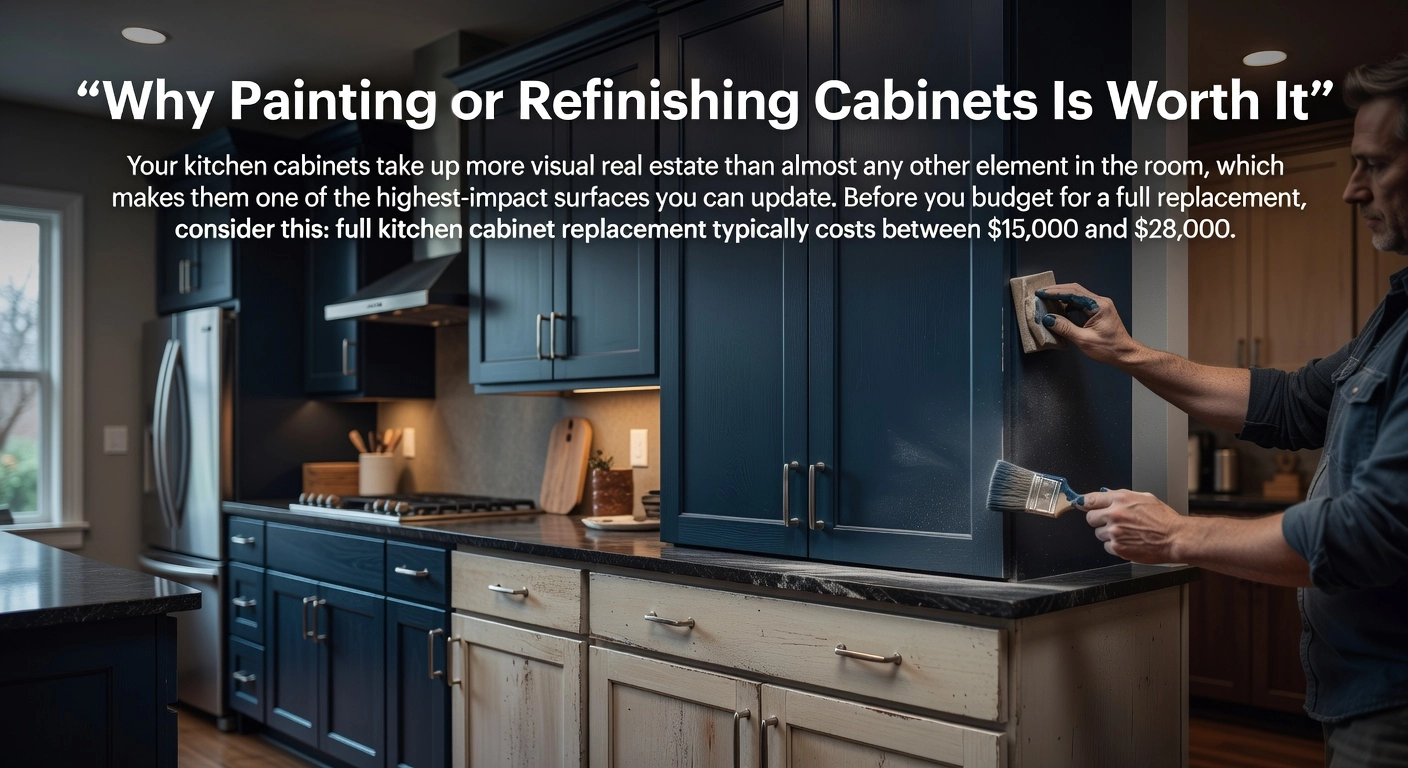
Your kitchen cabinets take up more visual real estate than almost any other element in the room, which makes them one of the highest-impact surfaces you can update. Before you budget for a full replacement, consider this: full kitchen cabinet replacement typically costs between $15,000 and $28,000 or more, factoring in demolition, new cabinetry, hardware, and labor. By contrast, a DIY painting project requires only $200 to $600 in materials, and hiring a professional cabinet painter runs approximately $2,095 to $6,764 for most standard kitchens. That represents potential savings of 70 to 80 percent while achieving a genuinely dramatic transformation.
The numbers reflect a broader truth about where homeowners are investing today.
According to Mordor Intelligence, the global kitchen cabinets market is projected to reach $95.55 billion in 2024.
This signals that kitchen updates remain a top priority for homeowners worldwide.
Refinishing is a central part of that study.
Paint vs. Stain for Kitchen Cabinets: How to Choose
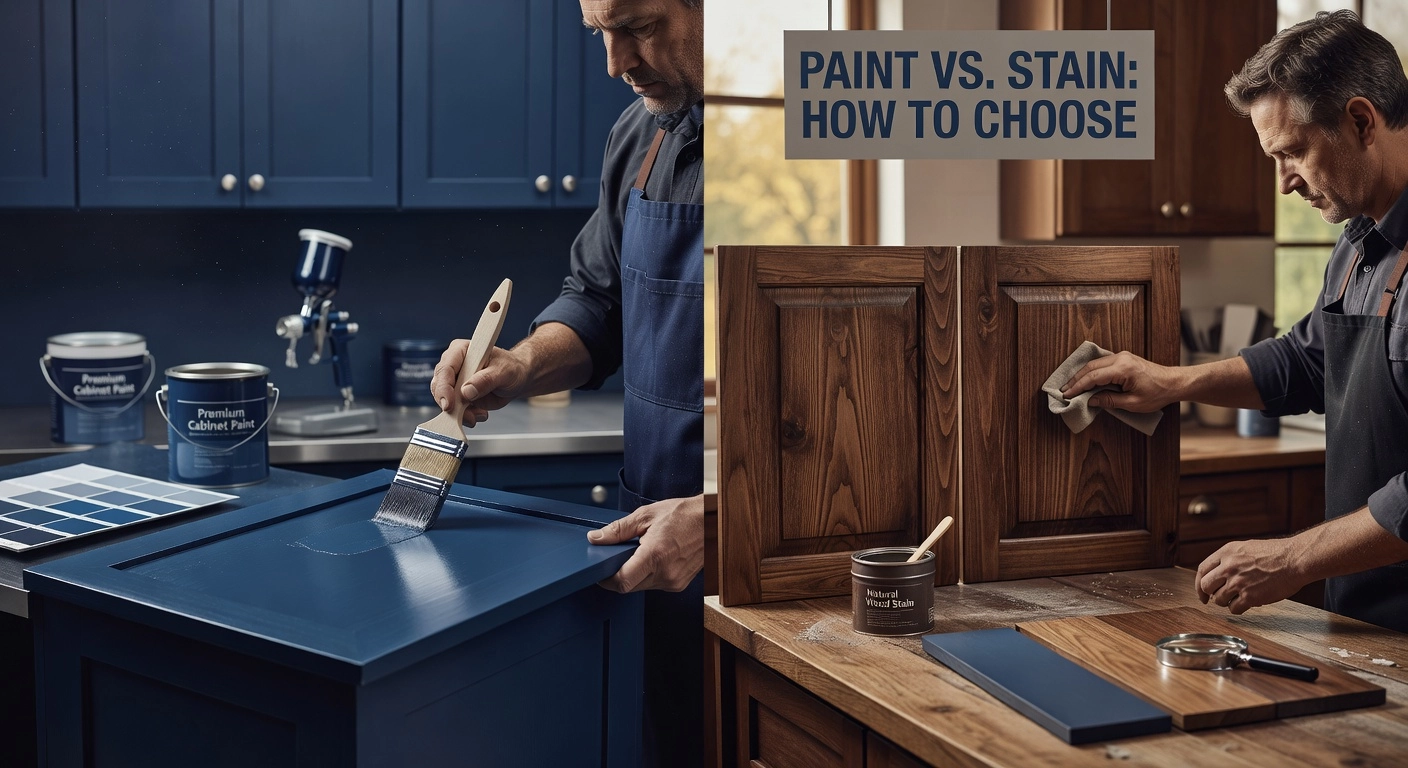
The first decision to make before touching a brush or sanding block is whether your cabinets should be painted or stained. This is not simply a matter of preference; it depends on your cabinet material, your design goals, and the condition of the wood itself.
When paint is the right choice, the answer often comes down to substrate. If your cabinets are made from MDF (medium-density fiberboard), laminate, or any non-porous composite material, stain will not absorb evenly and will produce a blotchy, unprofessional result. Paint is also the smart call when cabinets have visible surface damage, old filler repairs, or inconsistent wood species that you want to unify under a single, clean color
A solid-color finish in a semi-gloss or satin sheen creates the crisp, contemporary look that suits modern and transitional kitchens where clean lines and bright spaces are the goal. Stained vs. painted cabinets is ultimately a question of what your material can actually support.
When stain is the better option, the conversation shifts to the wood itself. Solid wood and wood-veneer cabinets contain natural grain, knots, and texture that stain penetrates and enhances rather than obscures. This creates a depth and warmth that no opaque coating can replicate. Stain works with the wood’s character, making it ideal for traditional, craftsman, and organic modern kitchens where authenticity and a connection to natural materials are priorities
According to the NKBA 2026 Kitchen Trends Report, wood-grain cabinetry has overtaken painted cabinetry in design professional preferences, with 59% identifying it as a growing trend and white oak confirmed as the top-specified species. Natural wood tones, particularly walnut and white oak, are a design-forward choice in 2026, not a dated one. Minwax named Special Walnut as its 2026 Color of the Year, a direct reflection of this broader shift toward grounded, warm interiors.
For staining projects, [Minwax oil-based and water-based stains paired with Polycrylic protective finish](https://carusokitchens.com/the-pros-cons-of-stained-vs-painted-cabinets) deliver a sealed, durable cabinet surface that pure paint-focused approaches simply do not address. Polycrylic adds a clear, non-yellowing topcoat that protects lighter wood tones especially well.
On durability, high-quality cabinet paint in semi-gloss or satin typically lasts 8 to 15 years with proper prep and application. A properly stained and sealed wood cabinet can match or exceed that range, with some sources citing 10 to 30-plus years when periodic resealing is performed. Stained finishes also tend to hide everyday scratches and minor dents more effectively because the grain breaks up the visual evidence of wear.
On cost, staining supplies generally run 10 to 15 percent less per square foot than premium cabinet enamel, since fewer coats are typically required. Labor time for both methods is comparable, so the savings come primarily from materials. For budget-conscious DIYers, that difference adds up across a full kitchen.
2026 Kitchen Cabinet Color Trends Worth Knowing
Once you have decided whether to paint or stain, the next question is which direction to take your color. Choosing a palette that feels current without being trendy for the sake of it gives your kitchen longevity, and the 2026 forecast offers exactly that kind of grounded guidance.
Warm Neutrals Are Taking Over from White and Gray
The era of stark white and cool gray cabinets is giving way to something warmer and more livable. According to NKBA’s 2026 Kitchen Trends Report, neutrals dominate cabinet color preferences at 96% popularity, but the character of those neutrals has shifted considerably. Khaki, taupe, mushroom, greige, and creamy off-whites are now the palette leaders because they add subtle depth and warmth without feeling sterile. Pantone’s Cloud Dancer, a soft billowy off-white with creamy undertones, is a standout example of this direction; it feels architectural and calm rather than clinical. Light browns and tans lead within the neutral category at 67%, while pure whites have dropped to 47%, reflecting a clear move toward what designers are calling “warm minimalism.” These tones pair exceptionally well with brushed brass hardware, stone countertops, and natural wood accents, making them a versatile foundation for almost any kitchen style.
Nature-Inspired Greens Are the New Neutral
If you want to introduce personality without committing to something bold, green is the answer for 2026. The NKBA’s color trends data for 2026 places greens second only to neutrals in cabinet popularity, with 86% of designers and remodelers citing them as a top choice. Sage, olive, and dusty muted tones bring a quiet connection to nature that feels both fresh and timeless. Light sage registers strong preference at 56%, while deeper olive tones follow at 51%. These greens function as neutrals in practice because they blend naturally with wood, stone, and warm metal finishes rather than competing with them. They work especially well as a lower cabinet color paired with a softer neutral on upper cabinets.
Natural Wood Tones Are Surging for Authenticity
Wood grain finishes are outpacing painted cabinets in popularity growth, with 59% of NKBA survey respondents citing wood grain as a preference. White oak leads at 51%, appreciated for its lighter, versatile grain pattern, while walnut brings richer, deeper warmth. This resurgence reflects a broader cultural appetite for handcrafted, textured interiors that feel genuine rather than overly polished. Minwax Special Walnut, the brand’s 2026 Color of the Year, offers a direct and practical path into this trend. It is a warm, earthy medium-brown stain that enhances the natural grain of oak, pine, and walnut without overpowering it, giving cabinets authentic character without requiring a full repaint or replacement.
Two-Tone Cabinets and Matte Finishes Add Depth and Practicality
Two-tone cabinetry has moved firmly into mainstream territory for 2026. Pairing lighter upper cabinets with deeper lower cabinets or a contrasting island adds visual depth and dimension without requiring a full renovation. Common combinations include soft off-white uppers with sage, navy, or walnut-stained lowers. NKBA data notes that 57% of designers apply statement colors specifically to islands, making the island the ideal starting point if you want to experiment without fully committing.
Alongside color, finish choice matters significantly in 2026. Matte and low-sheen finishes are trending for their velvety, understated appearance and their practical ability to conceal fingerprints and everyday wear. High-gloss surfaces are receding, particularly on lower cabinets in busy kitchens where traffic and handling are constant. These softer finishes complement both painted and stained wood surfaces, reinforcing the organic, approachable aesthetic that defines this year’s most enduring kitchen designs.
Best Paints and Stains for Kitchen Cabinets
Choosing the right product is where many beginners feel overwhelmed, but the decision becomes straightforward once you understand the key categories and what each one is built to do.
Professional-Grade Opaque Paints: Hybrid Alkyds Lead the Field
For homeowners who want a fully opaque, painted finish, hybrid alkyd enamels represent the gold standard. Products like Sherwin-Williams Emerald Urethane Trim Enamel and Benjamin Moore Advance combine the hardness and self-leveling properties of traditional oil-based paint with the easy soap-and-water cleanup of a water-based formula. These paints cure to a furniture-grade shell that resists chipping, grease, and the constant moisture exposure that kitchen cabinets endure every single day. An honest three-year review of Emerald Urethane confirms what professionals have observed: the finish holds up exceptionally well in busy kitchens, maintaining its appearance through heavy handling and repeated cleaning. Premium urethane and alkyd formulas like these can last eight to ten or more years with proper prep and care, making the higher upfront cost a genuinely sound investment.
This durability advantage comes directly from how these paints cure. Standard latex paints remain relatively soft and flexible after drying, which makes them prone to scuffing and peeling on high-touch cabinet surfaces. Water-based urethane and alkyd hybrids, by contrast, cross-link as they cure, building a harder, more adhesion-resistant film that holds up against repeated handling, steam, and cleaning products. For anyone serious about a long-lasting result, choosing this category over standard interior latex is one of the most important decisions in the entire project. You can review a comprehensive breakdown of the best cabinet paints for 2026 to compare specific product performance side by side.
Budget-Friendly and No-Prep Options
Not every project demands a premium product. Behr Premium Cabinet and Trim Enamel, available at The Home Depot, delivers solid coverage and smooth results at a more accessible price point, making it a reliable choice for rental properties, secondary kitchens, or tighter budgets. All-in-one no-sand kits like Beyond Paint combine a bonder, primer, paint, and sealer into a single product, dramatically reducing prep time. These kits earn strong marks for convenience and initial appearance, though independent testing consistently shows they lag behind dedicated enamels in long-term durability under heavy use. They are best suited to lighter-traffic cabinets or DIYers prioritizing speed over maximum longevity.
Stains and Clear Finishes for Natural Wood
For wood cabinets where preserving the natural grain is the goal, Minwax Wood Finish stains offer a distinct advantage that no opaque paint can replicate. The Minwax Color Series and warm neutrals within the Wood Finish line, including the 2026 Color of the Year Special Walnut, penetrate deeply and evenly into the wood grain, delivering rich, authentic tones that highlight natural character rather than covering it. Once the stain has fully dried, applying a coat of Minwax Polycrylic clear finish adds a durable, moisture-resistant protective layer that keeps stained cabinets looking sharp through daily kitchen use.
Sheen and Eco-Friendly Considerations
Sheen level shapes both the look and the practicality of your finished cabinets. Semi-gloss is the most forgiving option in humid, high-traffic kitchens; it wipes clean easily and reflects enough light to feel bright and crisp. Satin offers a softer, less reflective appearance while still providing solid washability, making it a popular middle-ground choice. Matte finishes are gaining momentum in 2026 for their contemporary, velvety look, but they require more attentive maintenance since they show fingerprints and smudges more readily than higher-sheen options.
Finally, low-VOC formulations have become a standard consideration rather than a niche upgrade. Most major brands now offer compliant low-VOC versions of their cabinet-grade products, reducing indoor air quality concerns during and after application without sacrificing performance. If you are working in a home with children, pets, or limited ventilation, prioritizing a certified low-VOC formula is a practical step that costs little extra but makes the painting process significantly more comfortable.
How to Prepare Kitchen Cabinets Before Painting or Staining
Proper preparation is the single most important factor separating a cabinet finish that lasts a decade from one that peels within a year. No matter how high-quality your paint or stain is, it cannot compensate for a poorly prepared surface. Working through each step methodically gives you a professional result without professional costs.
Start by Disassembling Everything
Before any cleaning or sanding begins, remove all cabinet doors, drawer fronts, and hardware including hinges, knobs, and pulls. Working on flat, detached pieces gives you full access to every surface and prevents paint from building up along door edges or seeping into hardware. Place screws and small hardware into labeled zip-lock bags so nothing gets misplaced.
Labeling each piece is a step beginners frequently skip and later regret. Use strips of painter’s tape on the inside or back of each door and drawer front, and write a simple code such as “Upper Left 1” or “Lower Right 3” that matches a corresponding mark inside the cabinet frame. This takes only a few minutes upfront and saves significant frustration during reassembly when doors that look identical actually differ slightly in size or hinge placement.
Degrease Before You Do Anything Else
Degreasing is consistently identified by finishing professionals as the most critical and most commonly skipped preparation step. Kitchen cabinet surfaces absorb years of airborne cooking grease, oil splatter, and residue from hands, and that invisible film creates a barrier that prevents paint and stain from bonding to the wood. You can sand and prime perfectly, but if grease remains on the surface underneath, your finish will eventually fail.
Use a dedicated degreaser such as TSP substitute, a concentrated kitchen degreaser, or a strong dish soap solution in warm water. Apply it with a microfiber cloth or soft-bristle brush, working it into corners and grooves where buildup is heaviest. Rinse thoroughly with clean water and repeat in any area that still feels tacky or slick. Woodcare.com covers the degreasing process in full detail in its dedicated cabinet prep guide, which is worth reviewing before you begin.
Sand the Surface to Create Adhesion
Once the cabinets are clean and fully dry, lightly sand all surfaces using 120 to 150-grit sandpaper. The goal is not to strip the existing finish entirely but to scuff it, creating a slightly rough texture that gives paint or stain something to grip. Sand evenly across flat panels, profiles, and trim, using a sanding block to maintain consistent pressure. After sanding, wipe every surface thoroughly with a tack cloth to pick up all dust particles. Even fine sanding dust left behind will create texture problems in your final finish.
Prime Before You Paint
Priming is required before applying opaque paint on most cabinet surfaces, particularly raw wood, MDF edges, and any surface that was previously painted or stained. MDF edges are especially important because they are highly absorbent and will drink up paint unevenly without a sealer coat first. A quality bonding primer creates a uniform surface that improves adhesion and prevents tannins from bleeding through lighter paint colors.
Some newer no-sand and no-prime cabinet paint products claim to skip this step entirely. While these can work on sound, lightly used surfaces, they consistently underperform in high-traffic kitchen environments over time. Peeling and chipping occur more frequently without proper priming, especially around handles and near the stove. For staining rather than painting, priming is generally not part of the process; instead, the focus stays on clean, sanded bare wood that can absorb the stain evenly.
Dry Completely Before Applying Any Product
After cleaning, degreasing, and sanding, allow every surface to dry completely before moving to primer, paint, or stain. Residual moisture trapped beneath a finish coat causes bubbling, poor adhesion, and uneven color absorption in stained wood. For best results, work in an environment with low humidity and a temperature between 50 and 77 degrees Fahrenheit. If your workspace tends to be humid, a portable dehumidifier or fans running for a few hours before you begin will make a measurable difference in how well your product adheres and cures.
How to Paint or Stain Kitchen Cabinets Step by Step
With your preparation complete, you are ready to apply product. The approach differs depending on whether you are painting or staining, so the steps below are broken out by method.
Painting Your Cabinets
Start with your bonding primer. Apply it in thin, even coats using a smooth brush or short-nap roller, working methodically from top to bottom on each piece. Thin coats are non-negotiable here; a thick primer coat takes far longer to dry and can trap moisture that weakens adhesion later. Allow each coat to dry fully according to the product label, which is typically 24 hours in normal conditions. Do not rush this phase.
Once the primer is dry, apply your first coat of cabinet enamel. Use a high-density foam roller on flat door panels and box surfaces for a smooth, nearly texture-free result. Switch to an angled brush for face frames, edges, and any recessed or raised detail areas where a roller cannot reach cleanly. Plan on two to three coats total, sanding lightly with 220-grit sandpaper after the first coat dries to knock down any raised grain or minor texture before continuing. This mid-process sanding step makes a significant difference in the final finish quality.
For the smoothest possible result on cabinet doors, an HVLP (High Volume Low Pressure) sprayer is the professional standard. It atomizes paint into an ultra-fine mist that lays down without brush marks or roller stipple. The trade-off is meaningful: you will need to mask or tent your workspace thoroughly, thin your paint to the correct viscosity for the sprayer, and plan for a more involved cleanup process. For beginners, brush-and-roller application is more practical and still produces excellent results when done with care. If you want to explore what a fully spray-applied finish looks like on finished kitchens, this overview of current cabinet painting trends shows how much of an impact technique and color choice make together.
Staining Your Cabinets
Staining works on bare or fully stripped wood and showcases the natural grain rather than covering it. Using a clean lint-free cloth, foam applicator, or bristle brush, apply Minwax Wood Finish stain in long, even strokes that follow the direction of the wood grain. Work in small, manageable sections so the stain does not begin drying before you wipe.
Wipe away the excess within 5 to 15 minutes using a clean cloth. Removing it sooner produces a lighter tone; leaving it longer before wiping deepens the color. Do not allow the stain to pool or dry on the surface, as this creates sticky, uneven patches that are difficult to correct. Once the first coat is fully dry, typically 4 to 24 hours depending on the formula and humidity, you can apply a second coat for a richer, more saturated result.
Applying a Protective Topcoat Over Stain
A clear topcoat is not optional on kitchen cabinets. Apply either Polycrylic (water-based) or oil-based polyurethane in two to three thin coats, allowing proper drying time between each. Sand very lightly with 220-grit sandpaper between coats, then wipe the surface clean before continuing. This between-coat sanding removes dust nibs and keeps the final surface glassy smooth. Polycrylic dries faster and stays clear, making it ideal for lighter wood tones. Oil-based polyurethane adds an amber warmth and greater long-term hardness, which suits high-traffic kitchens well.
Time, Curing, and Mistakes to Avoid
A realistic DIY cabinet project takes 40 to 60 hours from disassembly through final reassembly when you respect every drying interval. That timeline commonly stretches across 10 to 14 days or more. According to 2026 industry data on cabinet refinishing, more than 70 percent of homeowners choose refinishing over replacement, largely because of the time and cost savings involved.
Three mistakes derail more cabinet projects than any others. First, skipping the degreasing step during prep causes paint or stain to fail regardless of how carefully it was applied, because grease blocks adhesion at the surface level. Second, applying thick coats to finish faster creates drips, uneven sheen, and extended drying problems that ultimately cost more time than they save. Third, reinstalling doors and hardware before the finish has fully cured results in dents, smudges, and surface damage. Full cure, the point at which the finish reaches maximum hardness, takes 7 to 14 days for most cabinet enamels and polyurethane products. Hang your doors back in place after that window has passed, and your results will hold up for years.
How to Maintain Painted or Stained Cabinets After Refinishing
All the work you put into refinishing your cabinets deserves a solid maintenance routine to protect it. With the right habits in place, a quality kitchen cabinet paint job or stain-and-seal finish can last anywhere from 8 to 15 years before a full refinish is needed.
Weekly Cleaning and Daily Care
The foundation of cabinet maintenance is simple: clean gently and consistently. Each week, wipe down cabinet surfaces using a soft microfiber cloth dampened with a mild soap solution, warm water mixed with a small amount of dish soap works well. After wiping, immediately dry the surface with a clean cloth to prevent moisture from sitting on the finish. Never use abrasive scrubbers, steel wool, bleach, or ammonia-based cleaners. These strip sheen, dull the topcoat, and can permanently damage both painted and stained surfaces. For greasy buildup near handles or the stovetop, a diluted vinegar-and-water solution applied sparingly and wiped dry right away handles the job without harming the finish.
Protecting and Refreshing Stained Cabinets
Stained and sealed cabinets benefit from periodic reapplication of a compatible clear finish or wood conditioner, particularly around high-touch zones like door edges, handle areas, and drawer pulls. These spots experience the most friction and show wear first. Reapplying a compatible polyurethane or polycrylic topcoat every six to twelve months in those areas restores protection and keeps the sheen consistent. Always test any product in a hidden spot before applying broadly, and avoid silicone-based polishes, which can interfere with future refinishing work.
Spot Repairs for Chips and Scratches
Chips and scratches on painted cabinets should be addressed promptly before moisture works its way into the damaged area. Use a small artist’s brush to apply matching touch-up paint in thin layers, feathering the edges outward so the repair blends into the surrounding surface rather than sitting on top of it. For stained wood cabinets, Minwax touch-up markers and repair products offer a fast, targeted solution. Apply the marker to the affected area, let it absorb, wipe away any excess with a soft cloth, and allow it to dry fully. These tools restore color and coverage to minor worn spots without requiring a complete refinish.
Managing Humidity for Long-Term Durability
Kitchen humidity is one of the most overlooked threats to cabinet finishes. Wood naturally expands and contracts as moisture levels fluctuate, and over time that movement causes finish cracking, peeling, and joint separation. Keep indoor relative humidity between 30 and 50 percent using exhaust fans during cooking, a dehumidifier in humid climates, and proper kitchen ventilation. Wipe up spills immediately, and keep steam-producing appliances positioned away from cabinet surfaces. Consistent moisture management protects the wood itself, not just the finish layer.
Frequently Asked Questions About Kitchen Cabinet Paint
Can You Paint Over Already-Painted Cabinets?
Yes, you can paint over cabinets that already have a finish on them, and many successful projects do exactly that. The key is thorough preparation: degrease the surfaces completely using a TSP substitute or dedicated kitchen degreaser, scuff sand with 100 to 150-grit paper to give the new paint something to grip, then apply a bonding primer before your topcoat. If the existing paint is peeling, severely chipped, or built up in thick layers from multiple previous coats, stripping back to bare wood will give you noticeably better long-term adhesion and a smoother final surface. Stripping takes more time and effort, but it eliminates the risk of new paint failing because of an unstable base underneath.
How Long Does Cabinet Paint Take to Dry vs. Cure?
Drying and curing are two different things, and confusing them is one of the most common beginner mistakes. Most cabinet paints feel dry to the touch within one to four hours, and you can usually apply a second coat within that same window. However, the paint does not reach its full hardness until it has fully cured, which typically takes 7 to 14 days depending on the product, humidity, and temperature in your workspace. During that cure period, treat your cabinets gently: avoid scrubbing, stacking items inside doors, or slamming them repeatedly. Rushing back to heavy use too soon is a reliable way to scratch or dent an otherwise perfect finish.
Is It Better to Brush, Roll, or Spray Cabinet Paint?
Spraying, using an HVLP or airless system, consistently produces the smoothest, most factory-like results and is the method most professionals rely on. Rolling works well for flat door faces during a DIY project, offering reasonable speed and even coverage with only minor texture. Brushing alone tends to leave visible stroke marks on smooth cabinet surfaces, so it is best reserved for detail work, edges, and interior box corners rather than large flat panels. Many experienced DIYers combine rolling on flat areas with brushing in tight spots to get a balanced result without investing in spray equipment.
Do I Need to Sand Between Coats?
Light sanding between coats is strongly recommended and consistently elevates the final result. Use 220-grit sandpaper after your primer coat and again between paint layers to knock down dust nibs, tiny bubbles, and any surface texture that settled while the coat dried. This step improves adhesion between layers and produces a noticeably smoother finish by the time you apply your final coat. After sanding, wipe the surface clean with a tack cloth or slightly damp microfiber cloth before applying the next layer. Skipping this step is a shortcut that typically shows in the finished product.
What Is the Difference Between Cabinet Paint and Regular Wall Paint?
Cabinet paint is formulated with harder resin systems, typically alkyd, urethane-modified acrylic, or hybrid alkyd-urethane, specifically engineered to handle the demands of a kitchen environment. These formulations cure to a much harder film than standard latex wall paint, making them resistant to chipping, grease, moisture, and the frequent wiping that cabinet surfaces require. Regular wall paint is designed to be flexible and easy to apply across large areas, but it lacks the toughness needed for high-touch surfaces. Using standard latex on cabinets almost always results in faster wear, peeling at edges, and a finish that looks tired well before its time. For cabinets, choosing a product built specifically for the application is not optional; it is the foundation of a result that lasts.
Choosing the Right Approach for Your Cabinet Refresh
At its core, the decision comes down to two paths: paint for solid-color coverage and maximum versatility, or stain to preserve and celebrate natural wood grain with warmth and depth. Your cabinet material guides this choice more than personal preference does. Solid wood and wood-veneer cabinets accept stain beautifully, while laminate and MDF surfaces respond better to a primed, painted finish.
The 2026 color landscape supports both directions equally well. Warm neutrals, sage greens, and two-tone combinations are all achievable through paint, while natural wood tones like Minwax Special Walnut, the brand’s 2026 Color of the Year, deliver that resurgent warmth and authenticity that stained cabinets do best.
Regardless of which product you choose, preparation determines approximately 80% of your final result. Thorough degreasing, proper sanding, and a quality primer are non-negotiable steps that protect your investment over the long term.
Before committing to the full kitchen, test your chosen product on a single cabinet door first. This low-risk step confirms color accuracy, sheen, and adhesion under your actual kitchen lighting.
For wood cabinet projects specifically, explore Minwax stain colors and protective topcoat options at woodcare.com to find the right stain-and-seal combination for lasting, professional-quality results.
Conclusion
Painting your kitchen cabinets is one of the smartest, most rewarding home improvement projects you can tackle. To recap the essentials: proper preparation makes or breaks your final result, choosing the right primer and paint ensures lasting durability, and applying thin coats with patience delivers that smooth, professional finish you are after.
You do not need expensive tools or years of experience. You need a clear plan, quality products, and the confidence to follow through.
Now it is time to take action. Pull out a color swatch, gather your supplies, and start with a single cabinet door as your test run. Once you see the transformation taking shape, you will wonder why you waited so long. Your dream kitchen is closer than you think, and it starts with one brushstroke.
Frequently Asked Questions
How much does it cost to paint kitchen cabinets yourself versus hiring a professional?
A DIY cabinet painting project typically costs between $200 and $600 in materials, while hiring a professional cabinet painter runs approximately $2,095 to $6,764 for most standard kitchens. Both options are significantly more affordable than full cabinet replacement, which can cost between $15,000 and $28,000 or more, representing potential savings of 70 to 80 percent while still achieving a dramatic transformation.
Should I paint or stain my kitchen cabinets?
The right choice depends primarily on your cabinet material. If your cabinets are made from MDF, laminate, or composite materials, paint is the better option since stain will not absorb evenly on non-porous surfaces. If your cabinets are solid wood or wood-veneer, staining is an excellent choice because it penetrates and enhances the natural grain, delivering warmth and depth that paint cannot replicate. Staining is especially popular in 2026, with 59% of design professionals citing wood-grain cabinetry as a growing trend.
What is the most important step in preparing cabinets before painting?
Degreasing is consistently identified by finishing professionals as the most critical preparation step. Years of airborne cooking grease and oil residue create an invisible barrier that prevents paint and stain from bonding properly to the surface. Even if you sand and prime perfectly, a greasy surface will cause your finish to eventually fail. Use a dedicated degreaser such as TSP substitute or a concentrated kitchen degreaser, rinse thoroughly, and repeat in any area that still feels tacky before moving on to sanding and priming.
How long does painted cabinet finish last, and how do I maintain it?
A high-quality cabinet paint job in semi-gloss or satin finish typically lasts 8 to 15 years with proper preparation and application. To maintain it, wipe cabinets weekly with a soft microfiber cloth dampened with mild soap and water, then dry immediately. Avoid abrasive scrubbers, bleach, or ammonia-based cleaners. Address chips and scratches promptly using a small artist’s brush with matching touch-up paint, and keep kitchen humidity between 30 and 50 percent using exhaust fans and proper ventilation to prevent finish cracking and peeling over time.
What type of paint works best for kitchen cabinets and why can’t I use regular wall paint?
Hybrid alkyd enamels such as Sherwin-Williams Emerald Urethane Trim Enamel or Benjamin Moore Advance are considered the gold standard for kitchen cabinets. These products cure to a furniture-grade shell that resists chipping, grease, and moisture, lasting eight to ten or more years with proper prep. Regular wall paint lacks the hardness needed for high-touch surfaces because it stays relatively flexible after drying, making it prone to scuffing, peeling at edges, and premature wear. For kitchen cabinets, using a product specifically formulated for the application is essential to achieving a finish that holds up to daily use.
If you are deciding between painting and replacement, first check your kitchen cupboard door styles to see if refinish will work for your setup.
And if you already painted the boxes, learn how to build a DIY cutting board from scrap wood to complete your kitchen makeover.
4 thoughts on “Kitchen Cabinet Paint: Colors, Products and Techniques”