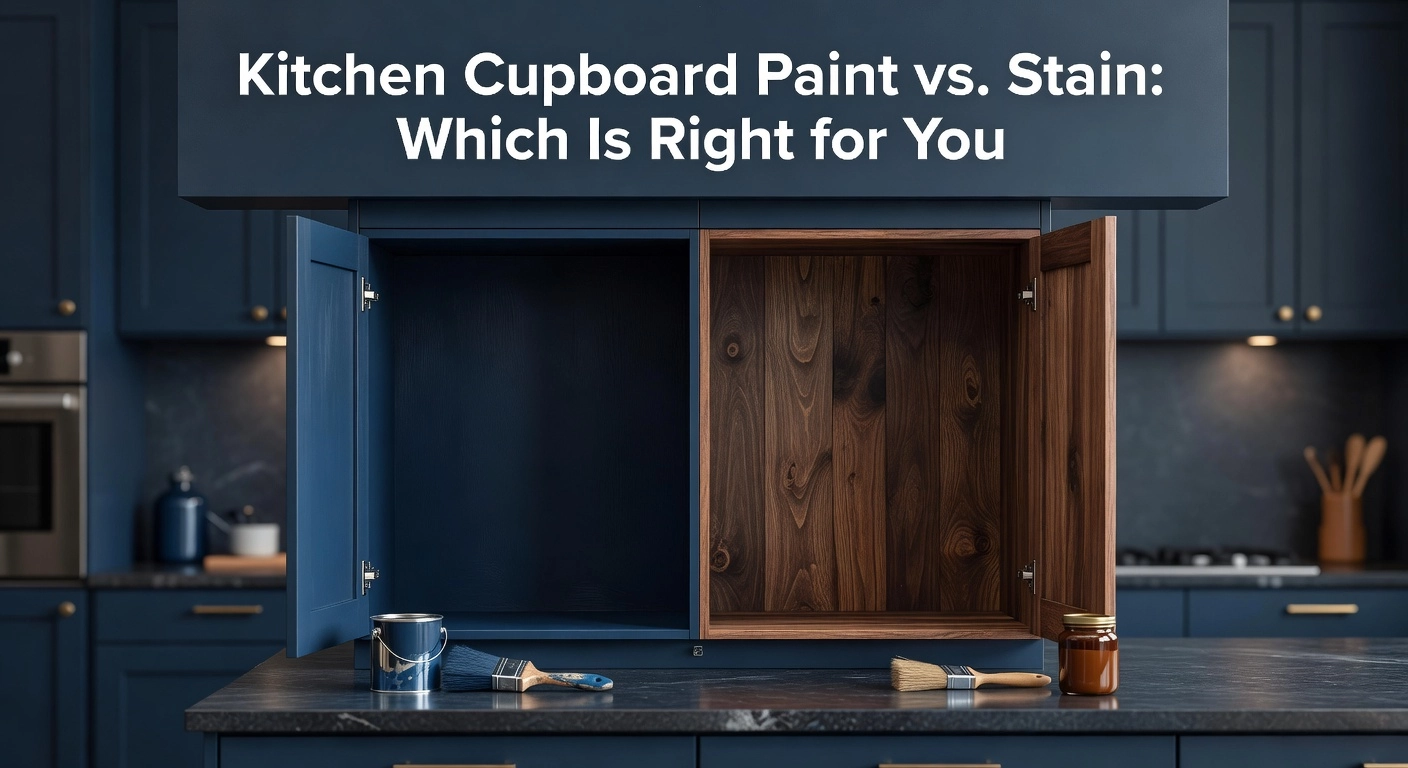
Standing in the paint aisle, staring at dozens of options, wondering if you’re about to make a very expensive mistake? Yeah, we’ve all been there. Updating your kitchen cabinets is one of the most budget-friendly ways to transform your space, but choosing between kitchen cupboard paint and stain can feel overwhelming, especially if you’ve never tackled a project like this before.
Here’s the good news: the decision is actually simpler than you think once you understand what each option does and how it works. In this guide, we’re going to break it all down for you in plain, straightforward language. No confusing jargon, no assuming you already know what a “gel stain” is or why “primer adhesion” matters.
By the time you finish reading, you’ll know exactly what sets paint apart from stain, which one suits your cabinets and your lifestyle, and how to feel confident walking into that hardware store ready to get started. So grab a coffee, and let’s figure out the right choice for your kitchen together.
Paint or Stain? The Decision That Changes Everything
Before you crack open a single can of kitchen cupboard paint, there’s one question that will shape your entire project: should you actually be reaching for paint at all? The finish you choose matters more than most beginners realize, and picking the wrong one means extra work, wasted money, or results that just don’t hold up.
Opaque paint is your best friend when you’re working with MDF cabinets, dealing with surface damage, covering multiple existing paint layers, or chasing a complete color transformation. MDF has a smooth, stable surface that holds paint beautifully without any grain showing through, which is exactly what you want for a clean, modern look. If your cabinet doors are dented, scratched, or already painted over several times, paint gives you the coverage to hide all of that and start fresh. It’s also the right call if you’re dreaming of trending shades like sage green, warm cream, or deep navy that would look completely different from your current cabinets.
Minwax wood stain becomes the obvious choice when you’re working with raw, unfinished, or stain-grade solid wood cabinets made from oak, maple, walnut, or cherry. Stain penetrates the wood rather than coating it, which means the natural grain, texture, and character stay fully visible. This matters a lot if you want your cabinets to coordinate with existing hardwood floors in an adjoining room. According to 2026 trends from Kitchen Cabinet Kings, wood cabinet preference has actually overtaken white for the first time, with 29% of renovating homeowners choosing wood tones. Minwax Special Walnut, named the 2026 Color of the Year, fits perfectly into this natural wood revival.
A clear protective finish alone makes sense when your cabinets already have beautiful wood grain that just looks dull or worn. You’re not changing the color; you’re simply renewing and protecting what’s already there. This is especially popular with white oak cabinets right now, where a low-sheen clear coat keeps that warm, organic feel intact.
Here’s a simple way to think through your decision:
- MDF or paint-grade wood: Go with opaque paint for full color coverage
- Solid stain-grade wood with visible grain: Use Minwax stain plus a clear topcoat, or a clear finish alone if the wood already looks great
- Damaged or heavily painted surfaces: Paint wins every time for hiding imperfections
One thing worth knowing is that the stain and clear finish lane is genuinely wide open compared to the crowded painted cabinet market. As noted in research from IST Cabinets on wood finishes, 59% of designers now expect wood grain to overtake painted cabinets in popularity. Most DIY marketing still focuses on color-changing paint products, which means homeowners who want to preserve natural wood grain have fewer guides pointing them toward stains and protective finishes. That’s a real gap, and it’s exactly why understanding this choice upfront sets your whole project on the right track.
2026 Color Trends Worth Knowing Before You Pick Up a Brush
Now that you’ve thought through the paint-versus-stain decision, it’s worth pausing before you commit to a color. The palette you choose will live in your kitchen for years, so understanding what’s actually trending in 2026 (and why) can save you from picking something that already feels dated before the paint dries.
Warm Is In, Cool Is Out
The biggest shift happening right now is a full retreat from the stark whites and cool grays that dominated kitchens throughout the 2010s. Sources like Veranda, The Spruce, and Real Simple all point to the same direction: warm neutrals, earthy greiges, creamy taupes, and soft blacks are replacing the clinical, cool look. Think mushroom, cashmere, tobacco brown, and warm greige rather than bright white or blue-toned gray. These shades feel more lived-in and inviting, and they pair beautifully with natural textures like stone countertops and wood accents. If your kitchen currently feels a little cold or stark, you are not imagining it; the design world agrees it is time for something warmer.
Wood Is Officially Back
Here is a data point worth sitting with. The 2026 Houzz Kitchen Trends Study surveyed roughly 1,780 renovating homeowners and found that wood cabinetry edged out white for the first time, with 29% of homeowners choosing wood versus 28% choosing white. Wood jumped six percentage points year over year while white dropped five. That is not a blip; that is a genuine shift in preference. Natural wood tones like walnut and white oak are winning because they bring warmth, grain texture, and a sense of authenticity that painted cabinets simply cannot replicate.
Why Minwax Special Walnut Makes So Much Sense Right Now
Minwax named Special Walnut its 2026 Color of the Year, and the timing could not be better. It is a warm, earthy brown stain that enhances the natural grain of wood species like oak, pine, and walnut without overpowering them. On kitchen cabinetry, it adds dimensional richness and a quiet, grounded elegance that feels timeless rather than trendy. It also pairs effortlessly with the warm neutrals and earth tones showing up everywhere in 2026 kitchens.
The Two-Tone Approach Worth Trying
About 24% of renovating homeowners are now choosing two-tone cabinet schemes, according to Houzz 2026 data. The most popular approach pairs lighter uppers with deeper or wood-toned lower cabinets. For a DIY-friendly version, try contrasting Minwax stain tones on your upper and lower cabinets; a lighter stain on top and a richer, deeper shade like Special Walnut on the bottom creates real depth without replacing a single cabinet box.
Greens, Blues, and Terracotta
Deeper greens, inky blues, and terracotta tones are all having a moment too. In fact, 76% of design professionals favored green cabinet colors in recent NKBA surveys. For these bolder colors, opaque paint is your best tool because it delivers the solid, saturated coverage these shades need to look intentional rather than patchy. Terracotta works beautifully as an accent on an island or pantry door. Stains and clear finishes, on the other hand, are better reserved for when you want the wood grain to show through, making them the right call for natural wood tones rather than these deeper statement colors.
What You Actually Need: Products, Tools, and Prep Essentials
Once you’ve landed on your color and finish direction, it’s time to gather the right products and tools. Walking into a hardware store without a clear list is one of the easiest ways to overspend, overbuy, or end up with the wrong product entirely. Here’s exactly what you need to do this job right.
The Minwax Product Lineup for Cabinets
Minwax offers three core products worth knowing before your next store run. The Minwax Wood Finish is an oil-based stain that penetrates deep into bare or stripped wood, bringing out natural grain while depositing rich color. It applies in a single coat, dries in about two hours, and pulls from a library of over 240 color options, so finding a tone that matches your vision is genuinely easy. If you want to preserve or enhance the look of real wood rather than cover it with a solid color, this is your starting point.
For protection, Minwax Polycrylic is the go-to water-based topcoat. It dries crystal clear without yellowing, which matters a lot when you’re working over light-colored stains or painted surfaces. It’s also low-odor and cleans up with soap and water, making it a friendlier option if your kitchen ventilation isn’t great. For maximum toughness, Minwax Fast-Drying Polyurethane (oil-based) is the harder-wearing choice, offering exceptional resistance to scratches and spills on surfaces that take a beating daily.
Why Your Kitchen Demands a Serious Topcoat
Most people underestimate how much punishment kitchen cabinets take. Grease from cooking settles on surfaces constantly. Steam from boiling water softens finishes over time. You’re wiping things down with cleaning products weekly, sometimes with something fairly harsh. Add in the natural humidity fluctuations and you have a recipe for finish failure if you’ve cut corners on protection. A topcoat that works beautifully in a bedroom or living room can start peeling, yellowing, or clouding within a year in a kitchen. This is why layering a durable, purpose-appropriate protective finish over your stain or base coat isn’t optional; it’s the difference between a project that lasts and one you redo in 18 months.
Polycrylic vs. All-in-One Kit Topcoats
If you’ve looked into all-in-one refinishing kits, you’ve probably seen them marketed as simple, complete solutions. The included topcoats in those kits can work, but many DIYers report the finish yellows over time, applies unevenly, and shows wear sooner in high-use kitchens. Minwax Polycrylic consistently earns praise for going on smoother, drying clearer, and holding up better under real kitchen conditions. A common approach among experienced DIYers is to use a kit for the base process and then swap in Polycrylic as the final protective layer for noticeably better results.
Your Tools Checklist
Don’t skip building this list before you start shopping. You’ll need:
- An angled brush for edges, door profiles, and tight corners
- A foam roller for smooth, streak-free coverage on flat door faces
- 120-grit sandpaper for initial surface prep and deglossing
- 220-grit sandpaper for light scuffing between coats
- Tack cloth to pick up dust before each coat
- Painter’s tape to protect hinges, walls, and hardware
- A dedicated deglosser or degreaser to cut through the kitchen grease and oils that would otherwise destroy adhesion
Low-VOC Options for Eco-Conscious Renovators
If indoor air quality matters to your household, the good news is that Minwax has you covered. Water-based products like Polycrylic have significantly lower VOC emissions than traditional oil-based formulas. Minwax also offers Wood Finish in a 250 VOC-compliant formula for areas with stricter environmental standards. This is increasingly relevant heading into 2026, with roughly a third of homeowners actively prioritizing eco-conscious finishes in renovation decisions. Lower VOC doesn’t mean lower quality here; you’re getting durability and responsible chemistry in the same product.
How to Stain or Refinish Kitchen Cupboards Step by Step

Now that you’ve got your products and tools ready to go, it’s time to get to work. Staining or refinishing kitchen cupboards takes patience more than skill, which is great news if you’re a first-timer. Follow these steps carefully and you’ll end up with results that look genuinely professional.
Steps 1 to 3: Prep Like You Mean It
Start by removing every door, drawer front, and piece of hardware. Label each door and its corresponding hinges with masking tape and a marker so reassembly doesn’t turn into a puzzle. Work in a well-ventilated space with drop cloths down to protect your floors and counters. This step isn’t just about convenience; it gives you full access to every surface and keeps hinges and knobs free of finish.
Next, clean every surface with a dedicated kitchen degreaser. Kitchens accumulate grease and cooking residue that you genuinely can’t see but will absolutely feel the consequences of later. Skipping this step is one of the most common reasons a finish peels or flakes within months. Scrub thoroughly, rinse clean, and let everything dry completely before moving on.
Once everything is dry, it’s time to sand. Start with 120-grit sandpaper to knock back any existing finish, rough spots, or imperfections. Follow up with 220-grit to smooth things out and create a fine surface that accepts stain evenly. Always sand in the direction of the wood grain, never across it. Vacuum up every bit of dust and wipe surfaces with a tack cloth. If you’re working with a blotch-prone wood like pine, apply Minwax Pre-Stain Wood Conditioner at this stage for more uniform color absorption. You can learn more about getting prep right from Minwax’s wood finishing basics guide.
Steps 4 and 5: Applying the Stain
Choose your color from the Minwax Wood Finish line, which offers more than 240 color options, so you have serious flexibility. Stir the stain well before you start and test it on a scrap piece or a hidden spot first. Color can look very different on your specific wood species versus the swatch on the can.
Apply the stain generously using a brush, foam applicator, or lint-free cloth, always working in the direction of the grain. Then comes the step beginners most often rush: the wipe-off. Let the stain penetrate for roughly 5 to 15 minutes depending on how deep you want the tone, then wipe off the excess thoroughly with clean lint-free rags. Use a fresh rag for a final clean pass. Leaving excess stain sitting on the surface creates sticky puddles that never dry properly and will cause your topcoat to fail. Check out Minwax’s staining tips and dos and don’ts for more detailed guidance on technique.
Step 6: Dry Time and Sanding Between Coats
After your first coat, follow the product instructions for dry time before applying a second coat. This is typically several hours, though humidity in a kitchen environment can extend that. Once dry, lightly sand with 220-grit sandpaper to knock down any raised grain and improve adhesion for the next coat. Wipe away all dust before continuing. Rushing this step leads to a rough, uneven finish that no amount of topcoat will fix.
Step 7: Apply Your Protective Topcoat
The stain gives you color; the topcoat gives you protection. This is the layer standing between your beautiful finish and all the daily grease, steam, and scrubbing a kitchen throws at cabinets. Apply two to three coats of Minwax Polycrylic for a water-based option that dries clear without yellowing, which is ideal for lighter wood tones. For maximum durability in high-traffic areas, oil-based polyurethane is a strong choice. Apply thin, even coats and sand lightly with 220-grit between each one.
Step 8: Cure Before You Reassemble
Dry to the touch and fully cured are two very different things. Wait the full cure time listed on your product, typically 24 to 72 hours minimum depending on product type and humidity levels in your home. Then give surfaces at least a week before heavy use or cleaning. Remounting doors too early or wiping surfaces with cleaners before the finish has hardened can leave permanent marks or cause adhesion problems you won’t be able to fix without starting over.
The effort you put into patience here is exactly what separates a finish that lasts years from one that chips after a few months.
The Cost Math: What Refinishing Your Cupboards Actually Saves
Let’s be honest: the number one reason most people hesitate before starting a kitchen refresh is the money question. So let’s put the actual numbers on the table and see what refinishing your cupboards really costs compared to the alternatives.
If you’re going the DIY route, expect to spend somewhere between $200 and $600 on materials for a standard kitchen. That covers your stain or kitchen cupboard paint, a quality topcoat, brushes, foam rollers, sandpaper in a few different grits, painter’s tape, a degreaser, and drop cloths. If you’re using Minwax stain plus a polyurethane topcoat, your product costs alone often land comfortably in the lower half of that range, which makes it genuinely one of the most affordable kitchen upgrades you can tackle. You’re trading dollars for hours, so plan for a weekend project that stretches across several days when you factor in drying time between coats.
If you’d rather hire a professional, budget between $1,200 and $7,000, with most standard kitchens falling right around the $3,000 to $4,000 mark. Pros bring cabinet-grade finishes, spray equipment, and the prep expertise that makes results last a decade or longer. Even at the higher end of that range, you’re still looking at a fraction of what replacement would cost, which brings us to the number that really puts things in perspective.
Full cabinet replacement is expensive. Stock cabinets with installation typically start at $4,000 and can run up to $13,000 for a standard kitchen. Custom cabinetry easily blows past $20,000, and high-end custom work can push well beyond that. According to data comparing painting versus replacement costs, painting or staining runs 40 to 70% less than full replacement in most situations. If your cabinet boxes are structurally sound, you’d essentially be paying to demolish something that still works perfectly fine.
The return on investment piece is worth understanding too. Minor kitchen remodels, the category that includes cabinet refinishing and targeted updates, have shown returns between 80% and 113.7% depending on the market, according to 2025 and 2026 analyses. That means the money you spend comes back to you, and then some, when you sell. Detailed cost breakdowns from cabinet painting specialists consistently show that refreshed kitchens sell faster and command stronger offers than outdated ones.
Where Minwax staining fits into all of this is at the most cost-effective end of the spectrum. When you have solid wood cabinets with good structural bones, staining rather than painting preserves the natural grain while modernizing the color. You’re protecting the original material instead of covering it up, and touch-ups down the road are simpler. It’s the lowest-cost, highest-preservation path available, and the results can honestly look just as striking as a full replacement at a tiny fraction of the price.
How to Match Stained Cabinets to Your Hardwood Floors
If you’ve got hardwood floors already running through your kitchen, getting your cabinet stain right isn’t just about color preference. It’s about making the whole space feel intentional and pulled together. In open-plan kitchens especially, your floors and cabinets are almost always in the same sightline, so a mismatch in tone can make the room feel disjointed, even if everything else looks great. Coordinated wood finishes create a sense of flow that makes spaces feel larger and more cohesive, and buyers notice this too. According to Houzz 2026 data, natural wood tones have nearly matched white cabinets in popularity (29% versus 28%), which tells you that timeless wood pairings have serious staying power for resale appeal.
Using Minwax Tools to Find Your Match
The good news is that Minwax makes the matching process much more approachable than you might expect. Their online color guide and Color Visualizer let you preview how different stains look across various wood types before you commit to anything. With over 240 stain colors available, including oil-based, water-based, and gel options, there’s real flexibility to find something that complements your existing floor finish rather than fighting against it. The key is to look at undertones, not just depth. Warm amber floors need warm stains, while cooler-toned floors benefit from stains with grey or neutral bases.
Three Pairings That Actually Work
A few combinations consistently get great results. Special Walnut, Minwax’s 2026 Color of the Year, pairs beautifully with medium-toned oak floors because its warm, earthy brown balances without overpowering. Early American is a solid choice when your floors lean toward golden or amber tones; the rich warmth of the stain ties the surfaces together naturally. For lighter floors made from natural oak or maple, Golden Oak keeps things bright and cohesive without introducing contrast that feels jarring.
The Single-Brand Advantage
Using Minwax for both your floors and cabinets gives you a reliable color matching advantage. Because the pigments and formulations behave consistently across surfaces, you’re not guessing how one brand’s “walnut” compares to another’s. What reads as medium brown on your floor swatch will translate predictably to your cabinet wood.
Test Before You Commit
Before touching a single cabinet door, pull one off its hinges or identify a hidden inside face and apply your chosen stain there first. Let it dry fully, then hold it up next to your floor in your kitchen’s actual lighting. Natural and artificial light both shift perceived color, and this simple test can save you from a full project redo.
Your Next Steps for a Kitchen Cupboard Refresh That Lasts
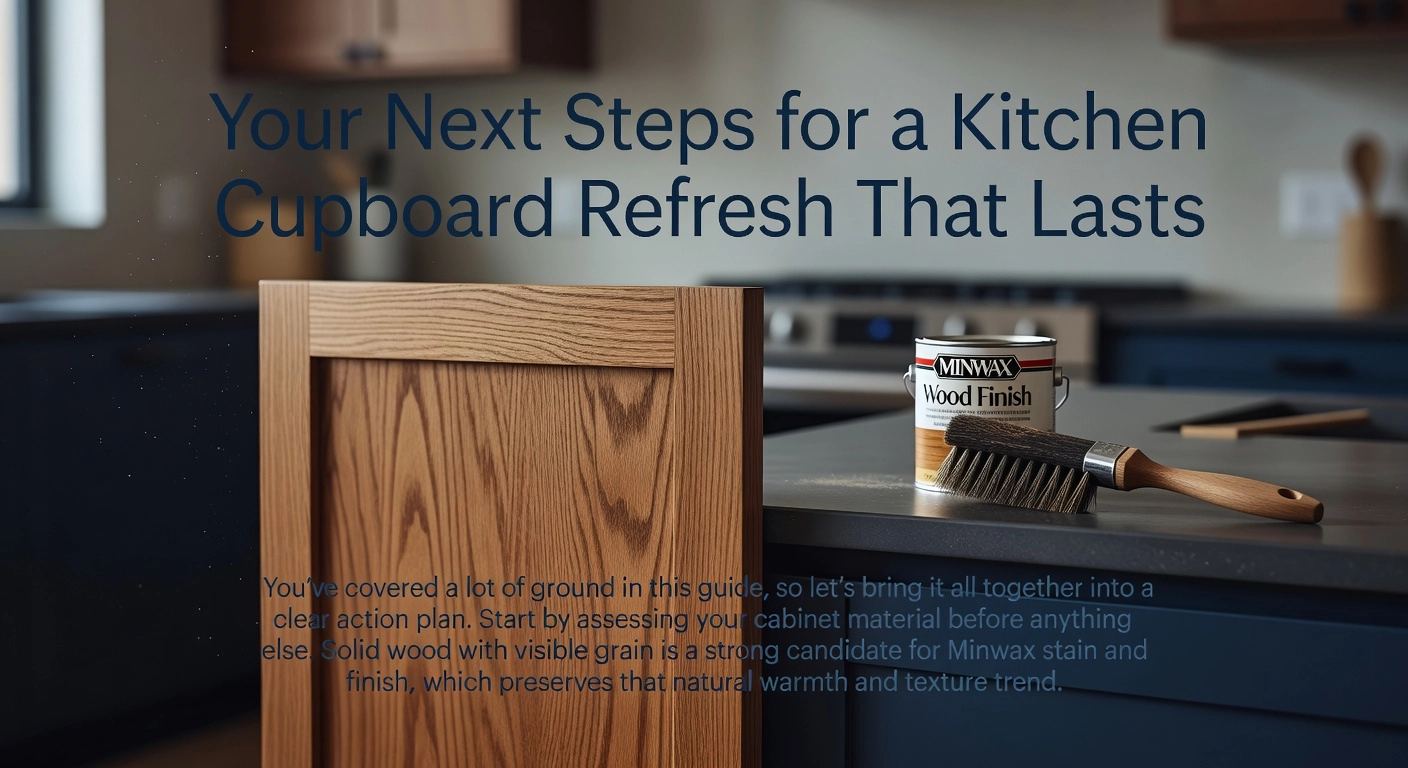
You’ve covered a lot of ground in this guide, so let’s bring it all together into a clear action plan. Start by assessing your cabinet material before anything else. Solid wood with visible grain is a strong candidate for Minwax stain and finish, which preserves that natural warmth and texture trending strongly in 2026. MDF, laminate, or previously painted surfaces respond better to opaque kitchen cupboard paint for a full color transformation. That single material check shapes every decision that follows.
On the budget side, DIY staining with Minwax products typically lands between $200 and $600 for a full kitchen, a fraction of the $4,000 or more that cabinet replacement can cost. That’s a meaningful saving without giving up a durable, professional-looking finish.
For your product starting point, browse the Minwax Wood Finish line to explore stain colors, with Special Walnut being a particularly relevant choice for 2026 aesthetics. Pair your stain with Polycrylic for a water-based, non-yellowing topcoat on lighter projects, or polyurethane if you need maximum durability in a high-traffic kitchen.
Before buying full quantities, test your chosen stain on a hidden cabinet surface and evaluate it under your kitchen lighting at different times of day. It’s a small step that prevents costly surprises. Over 70% of homeowners who refresh rather than replace report being genuinely happy with the results, and with the right Minwax products, this is absolutely manageable for a first-time DIYer.
Conclusion
Choosing between kitchen cupboard paint and stain does not have to be a stressful decision. Keep these key takeaways in mind: paint offers full coverage and works beautifully on any cabinet material, stain enhances natural wood grain and suits a more rustic or traditional look, your lifestyle and maintenance preferences matter just as much as aesthetics, and preparation is the secret to a lasting finish either way.
Now it is time to put this knowledge to work. Walk through your kitchen, take a close look at your cabinets, and ask yourself what finish truly fits your vision and your daily routine. Then head to your local hardware store with confidence.
Your dream kitchen is closer than you think. With the right product and a little preparation, those cabinets can look completely transformed without breaking the bank.
Frequently Asked Questions
How do I know whether to use paint or stain on my kitchen cabinets?
The decision comes down to your cabinet material. If your cabinets are made from MDF, laminate, or are already painted, opaque kitchen cupboard paint is your best choice for full color coverage and hiding imperfections. If your cabinets are solid wood with visible grain—such as oak, maple, walnut, or cherry—Minwax wood stain is the better option because it penetrates the wood and preserves the natural grain and texture. If your wood already looks great but just appears dull, a clear protective finish alone may be all you need.
What are the most popular kitchen cabinet colors and finishes trending in 2026?
In 2026, the biggest shift is away from cool whites and grays toward warm neutrals like mushroom, cashmere, greige, and tobacco brown. Natural wood tones are also surging in popularity, with Houzz data showing wood cabinetry edging out white for the first time at 29% versus 28%. Minwax Special Walnut was named the 2026 Color of the Year and fits perfectly into this trend. Deeper greens, inky blues, and terracotta are also popular for bold accent cabinets, best achieved with opaque paint for solid, saturated coverage.
How much does it cost to refinish kitchen cabinets yourself versus hiring a professional?
DIY refinishing typically costs between $200 and $600 for a standard kitchen, covering stain or paint, topcoat, brushes, rollers, sandpaper, tape, and degreaser. Hiring a professional runs between $1,200 and $7,000, with most kitchens landing around $3,000 to $4,000. Both options are significantly more affordable than full cabinet replacement, which starts at $4,000 for stock cabinets and can exceed $20,000 for custom cabinetry. Painting or staining typically costs 40 to 70% less than full replacement, and minor kitchen remodels have shown returns on investment between 80% and 113.7%.
What products and tools do I need to stain kitchen cabinets properly?
For products, you'll need Minwax Wood Finish in your chosen color, a protective topcoat such as Minwax Polycrylic (water-based and non-yellowing) or Fast-Drying Polyurethane for maximum durability, and Minwax Pre-Stain Wood Conditioner if working with blotch-prone wood like pine. For tools, gather an angled brush for edges and profiles, a foam roller for flat surfaces, 120-grit and 220-grit sandpaper, tack cloth, painter's tape, a kitchen degreaser, and drop cloths. Having the right tools before you start prevents costly mid-project trips to the hardware store.
How do I match my cabinet stain to existing hardwood floors?
Start by focusing on undertones rather than just depth of color. Warm amber floors pair well with warm-toned stains, while cooler-toned floors benefit from stains with grey or neutral bases. Reliable pairings include Minwax Special Walnut with medium-toned oak floors, Early American with golden or amber floors, and Golden Oak with lighter natural oak or maple floors. Use Minwax's online Color Visualizer to preview options before committing, and always test your chosen stain on a hidden cabinet surface first. Evaluate the test patch under your kitchen's natural and artificial lighting at different times of day to ensure an accurate match.