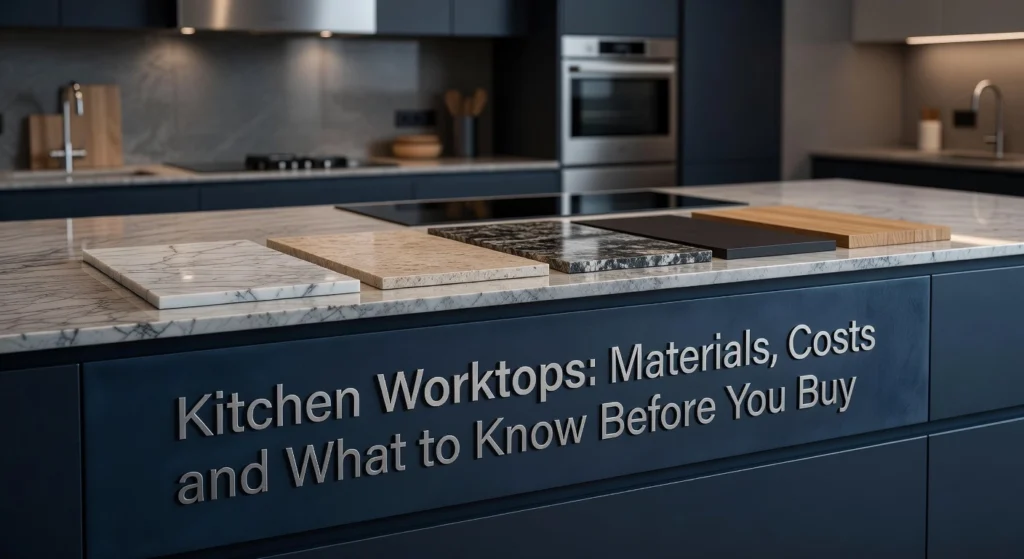

Your kitchen worktop does more work than almost any other surface in your home. It handles hot pots, sharp knives, spilled wine, and daily meal prep without a single complaint. Yet most homeowners give it surprisingly little thought until it cracks, stains, or simply looks tired and worn.
Choosing the right kitchen worktop is one of the most important decisions you will make during a kitchen renovation or new build. The material you select will affect not only how your kitchen looks, but also how it functions, how much maintenance it requires, and how long it lasts. With so many options available at such varying price points, it is easy to feel overwhelmed before you have even started.
This guide is designed to cut through the confusion. We will walk you through the most popular kitchen worktop materials available today, break down the real costs involved, and highlight the key factors you need to consider before making your final decision. Whether you are working with a tight budget or planning a high-end finish, you will find everything you need here to make a confident, informed choice.
The Main Kitchen Worktop Materials at a Glance
Choosing the right kitchen worktop is one of the most consequential decisions in any kitchen project, and the sheer number of options on the market makes it genuinely confusing for first-time buyers. This guide focuses on the six materials that dominate both designer specifications and consumer sales: wood, quartz, laminate, granite, porcelain, and quartzite. Each brings a distinct combination of appearance, performance, and practicality, and understanding the differences before you commit can save you significant time, money, and frustration.
The numbers behind these materials tell an interesting story. According to the NKBA 2026 Kitchen Trends Report, a staggering 78% of professional designers now specify quartz as their top worktop choice, drawn by its low maintenance, consistent appearance, and stone-like finish. Yet in UK consumer households, laminate holds roughly 50% of the market, largely because it costs a fraction of engineered stone and suits budget-conscious renovations perfectly well. These two statistics reveal something important: the “best” material depends entirely on who is buying and why.
Throughout this comparison, every material is assessed across four practical filters: durability (how it holds up against scratches, heat, stains, and impact), maintenance (what it asks of you daily and annually), cost (upfront price plus realistic lifetime ownership costs), and DIY suitability (whether a capable homeowner can install or repair it without specialist tools). As research into popular countertop materials consistently shows, no single material wins across all four categories.
Before diving into individual sections, it is worth setting realistic expectations. Every material involves trade-offs. Quartz is tough and nearly effortless to maintain, but it needs trivets because resin binders can discolour under sustained heat. Wood brings warmth and genuine repairability, but requires regular oiling and is vulnerable to standing water. Granite and quartzite are exceptionally hard and heat-resistant, but demand periodic sealing. Laminate is affordable and DIY-friendly, but edges can chip with heavy use. Porcelain is virtually indestructible in daily use, but its installation complexity often makes professional fitting essential.
The right choice ultimately comes down to your specific kitchen, how heavily it is used, what you are prepared to spend, and how much ongoing care you are willing to invest. A busy family kitchen preparing meals twice daily has very different needs from a lightly used second kitchen or a beautifully styled space used mostly for entertaining.
Wood Worktops: The Most Repairable Surface in Your Kitchen
Of all the kitchen worktop materials available today, solid wood stands alone in one critical respect: when it gets damaged, you can fix it yourself at home without calling a professional or ripping out the whole surface. That single quality changes the entire ownership experience and makes wood a uniquely practical long-term investment for DIY-minded homeowners.
Choosing Your Wood Species
The four species you will encounter most often are oak, beech, maple, and iroko, and each brings a distinct character to the kitchen. Oak is the most popular choice in the UK, offering a pronounced, attractive grain, strong hardness, and a warm golden tone that deepens beautifully with age and regular oiling. Beech sits slightly softer on the hardness scale, with a finer, more uniform grain and a pale, creamy colour that suits contemporary and Scandi-style kitchens particularly well. Maple, especially hard rock maple, is one of the densest options available; its tight, closed grain resists knife marks and moisture absorption exceptionally well, which is why it has long been the preferred timber for butcher blocks and food preparation surfaces. Iroko, sometimes called African teak, brings a rich golden-brown heartwood with naturally oily properties that make it highly resistant to moisture and decay, giving it excellent credentials in a kitchen environment. All four species are considered food-safe when finished with an appropriate worktop oil rather than a film-forming varnish.
The Repairability Advantage
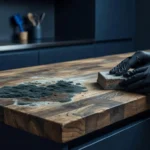
No other mainstream worktop material gives you genuine restoration capability at home. Quartz, laminate, and stone can all be cleaned and maintained, but once they are chipped, deeply scratched, or heat-damaged, the remedies are limited and often expensive. Wood operates by entirely different rules. A scratched or stained oiled wood surface can be sanded back using progressively finer sandpaper, starting around 80 to 120 grit for heavier damage and finishing at 180 to 240 grit for a smooth result, before a fresh application of finishing oil restores the surface completely. Water stains, surface mould, light burn marks, and years of general wear can all be addressed with the same straightforward process. This is the core reason WoodStuffHQ focuses so heavily on wood care: the material actively rewards hands-on maintenance in a way that synthetic surfaces simply do not.
What Wood Worktops Cost
Solid wood worktops start at roughly £120 per linear metre for accessible species like beech and oak in standard dimensions, which positions them firmly in the mid-range of the market. That is considerably more affordable than premium stone options, which can reach several hundred pounds per linear metre, but noticeably higher than entry-level laminate, which can start as low as £30 per linear metre. The pricing reflects both the material quality and, crucially, the long service life that proper maintenance delivers.
Style Compatibility and 2026 Design Trends
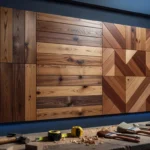
Wood has always suited traditional, rustic, farmhouse, and shaker-style kitchens, where its warmth and natural character feel completely at home. What makes it particularly well-timed right now is its strong alignment with the latest kitchen trends for 2026, which are moving decisively away from cool grey palettes toward warm neutrals, organic textures, and biophilic design principles. Light oak, rift-sawn oak, and elm tones are appearing consistently across design forecasts, and the tactile, living quality of real timber is precisely what that aesthetic demands.
Honest Maintenance Expectations
Wood does require consistent care, and it is important to go in with clear expectations. Oiling every three to six months is the standard recommendation, though high-use surfaces may need attention more frequently. A simple test is to drop a small amount of water onto the surface; if it absorbs rather than beads, it is time to re-oil. Beyond oiling, the main rules are straightforward: wipe up spills promptly rather than leaving standing water, always use trivets or heat mats under hot pans, and use a chopping board for heavy knife work. These habits take moments but prevent the majority of serious damage.
The Sustainability Case
For eco-conscious homeowners, wood makes a genuinely compelling case that no synthetic material can match. As a detailed look at wooden worktop sustainability confirms, timber sourced from responsibly managed or FSC-certified forests is a renewable material with a low-impact lifecycle. More importantly, the repairability of wood means that a well-maintained worktop can serve for decades without needing replacement, which is the most sustainable outcome of all. In a market where many materials end up in landfill after a single kitchen renovation, a wood worktop that can be sanded and restored multiple times over its lifetime represents a genuinely circular approach to kitchen design.
Quartz Worktops: Why Designers Love Them and When They Make Sense
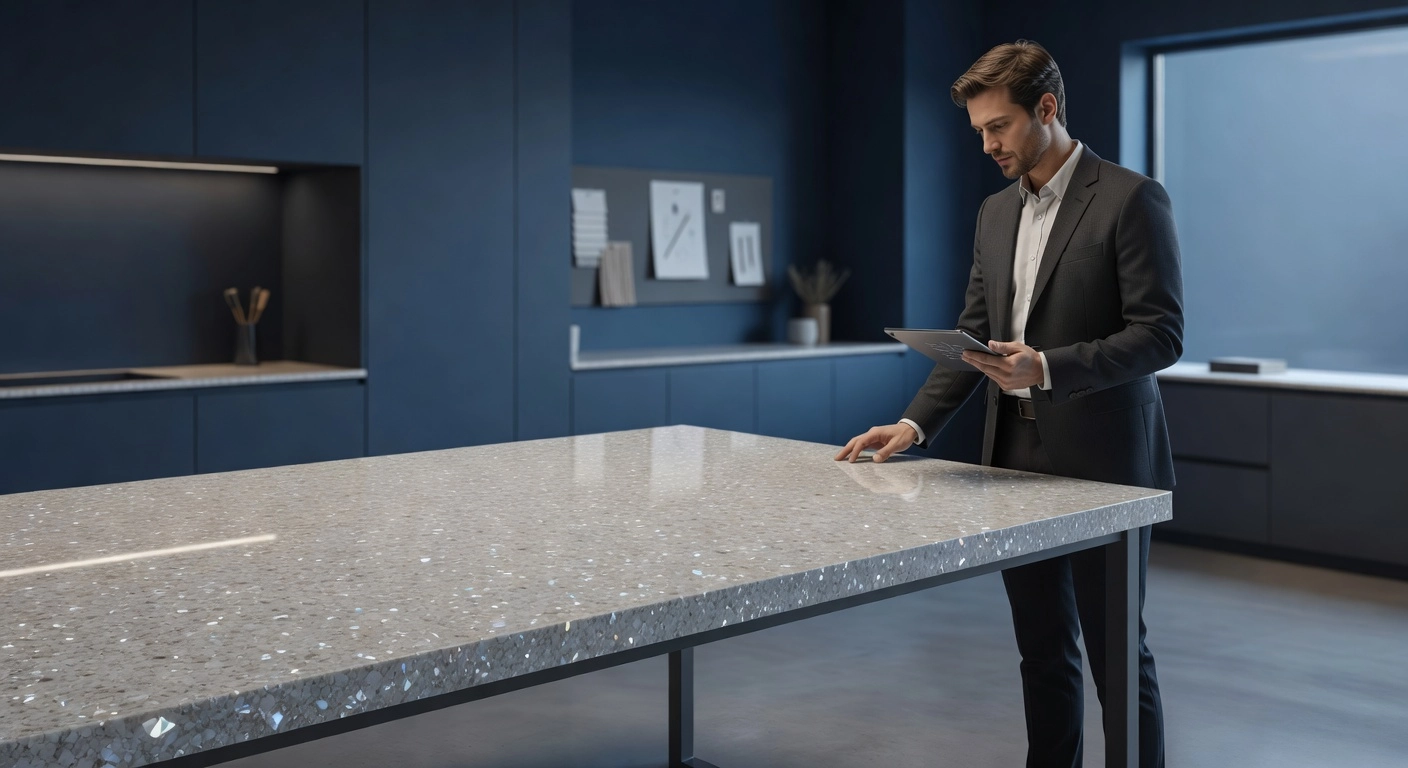
Quartz is an engineered stone, not a material quarried and cut directly from the ground. Each slab is manufactured by combining 90 to 95% crushed natural quartz crystals with resin binders, pigments, and occasionally other minerals. The mixture is compressed under high pressure and cured to produce a dense, non-porous surface. Because the entire process is controlled in a factory, the colour, pattern, and veining are consistent from slab to slab, which makes quartz far easier to match across a large kitchen installation than natural stone, where every piece looks slightly different.
Why Designers Keep Choosing Quartz
The numbers here are hard to ignore. According to the NKBA 2026 Kitchen Trends Report, 78% of kitchen designers named quartz as their top worktop material, a figure that reflects years of consistent professional preference. The two primary reasons cited are durability and low maintenance. Because the surface is non-porous, it resists staining from liquids like red wine, coffee, and cooking oils without requiring any sealing. Cleaning it down with mild soap and water is genuinely all the upkeep most homeowners ever need. Designers working on high-use kitchens, tight project timelines, or client briefs demanding a long-lasting result find quartz a dependable answer to all three challenges at once.
What Quartz Costs in the UK
For UK homeowners budgeting a kitchen renovation, quartz sits firmly in the mid-to-premium price bracket. Supply-only costs typically start from around £300 to £500 per square metre for entry-level options, rising to £700 to £1,000 or more per square metre for premium finishes. Fully installed across a typical kitchen, most projects land somewhere between £1,500 and £4,000, depending on the number of cut-outs for sinks and hobs, the edge profile chosen, and the complexity of the layout. Professional templating is essential because quartz slabs are heavy and unforgiving of measurement errors; templating fees commonly add £150 to £300 to the overall budget. Always use an experienced fabricator, as poor handling during installation can crack a slab before it ever reaches your kitchen.
The Limitations You Should Know Before Buying
Quartz has a strong performance profile, but it is not without real weaknesses. It is not fully heat-proof. The resin content in the slab can degrade, discolour, or even crack when a hot pan is placed directly on the surface, so trivets and heat pads are a non-negotiable habit rather than an optional precaution. You can read a detailed breakdown of quartz pros and cons to understand the full picture before committing. Unlike the wood worktops discussed in the previous section, quartz cannot be sanded and refinished if it sustains deep scratching or serious damage; the engineered composition makes uniform refinishing impractical, and severe damage typically means replacing the affected section entirely. The resin binders also react poorly to prolonged UV exposure, which means quartz installed near large south-facing windows or in a conservatory kitchen can gradually discolour or fade. It is an indoor material by nature, and direct sunlight should be a genuine consideration in your planning.
Where Quartz Genuinely Earns Its Place
Quartz is at its best in situations where reliability and minimal effort are the top priorities. Busy family kitchens benefit most, because the non-porous surface resists bacteria, handles daily spills without complaint, and never needs sealing or specialist products. Rental properties and investment homes are another strong fit; landlords value a surface that tenants can clean easily and that holds its appearance through years of varied use without requiring attention between tenancies. If your honest answer to the question “how much time do I want to spend maintaining my worktop?” is “as little as possible,” quartz is designed precisely for you. It suits contemporary and transitional kitchen styles particularly well, and the growing trend toward warm neutral tones means there are now more earthy, matte quartz finishes available than ever before.
Laminate Worktops: The Budget-Friendly Option Worth Reconsidering
Laminate might not get the same admiring glances as granite or quartz at a showroom, but it quietly dominates British kitchens for one straightforward reason: it works, and it works at a price almost anyone can afford. According to consumer research from Wilsonart, roughly 50% of UK homeowners have laminate worktops in their kitchens. That figure is not a sign of compromise so much as a reflection of how practical the material genuinely is for everyday life.
How Laminate Is Built
Standard laminate worktops are constructed by bonding multiple layers of resin-saturated kraft paper under intense heat and pressure, creating a rigid decorative sheet that is then adhered to a chipboard or MDF substrate, typically 28 to 38mm thick. The top surface carries a printed decorative layer mimicking wood, stone, or solid colour, protected by a hard melamine wear overlay. The result is a non-porous, lightweight surface that resists everyday scratches and stains reasonably well, installs quickly, and costs a fraction of premium alternatives. Entry-level options begin at around £30 per linear metre, and even a full five-metre kitchen run typically comes in well under £500 for materials alone. By comparison, wood worktops start closer to £120 per linear metre, and quartz climbs higher still.
What Has Changed in 2026
The more compelling argument for laminate in 2026 is how dramatically the aesthetics have improved. High-definition printing and surface texturing now produce wood and stone effects that are genuinely difficult to distinguish from the real thing at a glance. More significantly, 12mm compact laminate has emerged as a serious design option. Unlike standard laminate, compact laminate has a solid pressed core with no chipboard substrate, which makes it far more water-resistant, allows for sleek square-cut edges, and suits undermount sinks. These advances have meaningfully closed the visual and functional gap with natural materials, as detailed in this laminate worktop pros and cons breakdown.
Where Laminate Falls Short
The limitations are real and worth understanding before committing. Edges and joins around sinks or hobs are the most vulnerable points; if water penetrates the substrate, swelling and delamination follow quickly. More critically, unlike wood, a chipped or scratched laminate surface cannot be sanded back or refinished. Damage is permanent, and repair usually means full replacement. Heat resistance is also moderate, so trivets are non-negotiable near the hob.
Laminate makes most sense for tight budgets, rental properties, or anyone planning to renovate again within five to ten years. For a long-term forever kitchen, the inability to repair surface damage is a meaningful drawback worth weighing carefully against the upfront savings.
Granite Worktops: A Fading Favourite Still Worth Considering
Granite ruled kitchen design for the better part of two decades, and while its reign has clearly softened, writing it off entirely would be a mistake. According to the NKBA 2026 Kitchen Trends Report, fewer than 43% of designers now select granite as a top countertop material, a significant drop from its near-universal presence in upscale kitchens during the 2000s and early 2010s. The shift reflects a broader move toward engineered surfaces that offer consistency and zero-maintenance appeal. That said, granite still has a loyal following, and for good reason.
The single most compelling argument for granite is its complete individuality. Every slab is formed through geological processes spanning millions of years, producing patterns, veining, and mineral deposits that cannot be replicated. No two granite worktops are identical, which means your kitchen surface is genuinely one of a kind. For homeowners who find the uniform, predictable appearance of engineered stone a little sterile, granite’s natural drama and character offers something engineered materials simply cannot manufacture. In 2026, this quality is finding renewed appreciation among designers working with bold, expressive statement kitchens, particularly on islands and feature zones.
Where granite requires more commitment from owners is in its porosity. Unlike quartz, granite needs periodic sealing, typically every six to twelve months depending on usage and the specific stone’s density. Without sealing, liquids like oils, wine, and acidic juices can penetrate the surface and leave permanent stains. This maintenance rhythm places granite closer to wood than quartz in terms of ongoing care, though the actual effort involved is minimal once you establish a routine.
On practical performance, granite holds its ground convincingly. It sits around 7 on the Mohs hardness scale, making it highly scratch-resistant, and its heat tolerance is exceptional, easily withstanding hot pans that would damage quartz resin. Regarding cost, granite and quartz compete directly at the mid-to-upper market tier, with UK installed prices typically falling in a comparable range to quartz. If you value natural authenticity and long-term durability over low-maintenance convenience, granite remains a genuinely sound investment.
Porcelain and Quartzite: The Rising Alternatives to Watch
Two materials are climbing fast through the designer rankings, and both deserve serious attention if your kitchen project has room in the budget for something genuinely special.
Quartzite is the standout story of the NKBA 2026 Kitchen Trends Report. This natural metamorphic stone has overtaken granite to become the second most-chosen worktop material among designers, with approximately 61 to 62% of professionals now specifying it for countertops. That is a significant shift. Quartzite forms when sandstone is compressed under intense geological heat and pressure, producing a dense, hard stone with the kind of flowing veining and warm tonality that many homeowners associate with marble, but with considerably better durability. It is harder than granite on the Mohs scale, making it highly resistant to scratching and chipping under normal kitchen use.
One point that genuinely confuses beginners is the name. Quartzite and quartz are completely different materials. Quartzite is a natural stone, quarried from the earth, and because it is porous to some degree, it requires periodic sealing, typically once a year, to protect against staining. Engineered quartz, covered in an earlier section, is a factory-made composite of crushed minerals and resin that never needs sealing. The names sound almost identical, but the maintenance requirements are not.
Porcelain worktops occupy a different position entirely. Made from refined clays fired at extremely high temperatures, porcelain is fully non-porous, requires no sealing, and offers exceptional resistance to scratches, heat, and UV fading. Large-format porcelain slabs can exceed three metres in length, enabling near-seamless installations across islands and full kitchen runs, with minimal joins that are both visually cleaner and easier to keep hygienic.
Both materials sit firmly at the premium end of the market. Neither is a budget choice, and neither suits every kitchen brief. Quartzite rewards projects where unique natural character and organic movement are priorities. Porcelain suits high-use kitchens where a consistent, low-maintenance surface matters more than natural variation. What both share is strong alignment with the dominant 2026 design direction identified by industry professionals: warm neutrals, earthy tones, and matte or honed finishes that feel architectural and refined rather than flashy. Polished high-gloss surfaces are retreating, and both quartzite and porcelain are available in leathered, brushed, and matte options that sit perfectly within that quieter, more considered aesthetic.
Kitchen Worktop Costs Compared: What You Actually Pay Per Linear Metre
With all the material comparisons covered, it helps to put actual numbers side by side so you can make sense of the budget before you commit to anything.
Laminate starts from around £30 per linear metre at the entry level, making it the most accessible option by a significant margin. Solid wood begins at approximately £120 per linear metre, with oak and walnut pushing higher depending on grade and thickness. Quartz and granite sit in the mid-to-upper range, typically from £200 to £450 per linear metre once you factor in supply and basic installation. Porcelain and quartzite occupy the premium tier, frequently reaching £450 to £800 or more per linear metre for specialist slabs, reflecting the precision fabrication these materials demand.
Those figures, however, only tell part of the story. The price per linear metre covers the material itself; it does not cover what it costs to actually fit it in your kitchen. Templating, which is the process of creating a precise template of your worktop layout before cutting stone, typically adds £200 to £300 on top of the material price. Sink and hob cutouts cost an additional £50 to £200 each depending on the material and profile. Jointing, edge profiles, and drainer grooves each carry separate charges. Labour rates also differ sharply by material: laminate and wood fitting runs considerably cheaper than quartz or granite installation, which requires specialist tools, heavier handling equipment, and more time on site. A realistic installed cost is often 30 to 50 percent higher than the material quote alone.
The most useful way to compare worktops is through total cost of ownership rather than upfront price. Laminate typically needs replacing after 10 to 15 years, particularly in high-use kitchens where moisture, heat, and daily cutting wear down the surface. A solid wood worktop, maintained with periodic oiling and occasional light sanding, can realistically last 30 years or more, and many pass from one kitchen renovation to the next without replacement. That difference in lifespan fundamentally changes the value calculation, especially when you factor in the disruption and labour cost of a full worktop replacement.
Premium stone options carry hidden costs that are easy to overlook at the planning stage. Natural stones like granite require periodic resealing to maintain their stain resistance, adding ongoing product costs. If a chip or crack appears in quartz, granite, or porcelain, professional repair or full slab replacement is usually the only realistic option. DIY intervention rarely works on engineered stone, and mismatched repairs can be more visible than the original damage.
Wood stands apart because damage is genuinely fixable at home. A scratched or stained wood worktop responds to light sanding and a fresh coat of oil, restoring the surface without professional help and at minimal cost. For homeowners comfortable with basic maintenance tasks, this repairability makes wood the strongest long-term value proposition across all the materials compared here.
How Much Maintenance Does Each Worktop Material Actually Need
Maintenance is where the real differences between worktop materials become clear, and where many homeowners discover too late that the surface they chose demands more than they bargained for, or less than they assumed.
All worktop materials share a basic cleaning requirement: wipe down daily with a soft cloth, mild washing-up liquid, and warm water. Avoid bleach, ammonia-based products, and anything abrasive across all surfaces. The meaningful differences lie in what additional treatment each material needs, how often it needs it, and what happens when things go wrong.
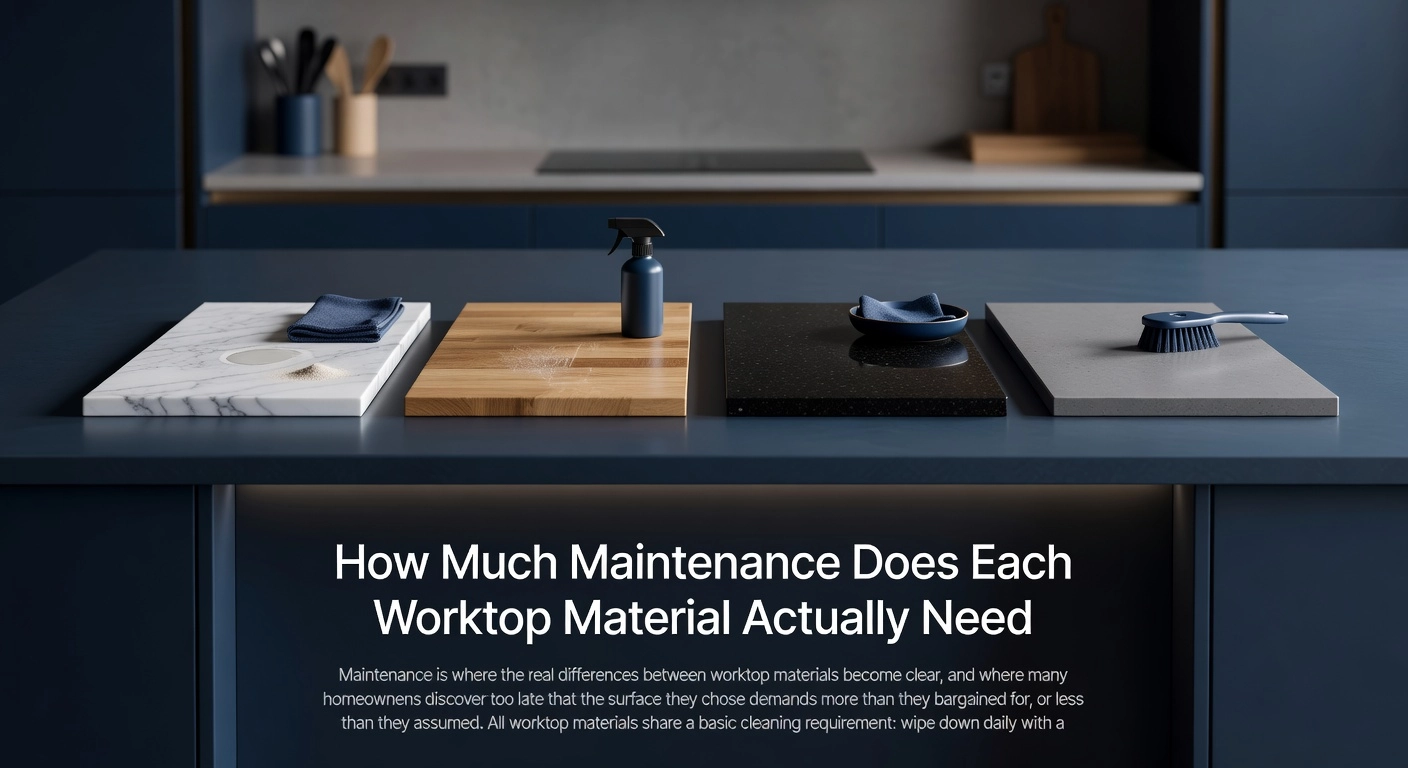
Wood sits at the hands-on end of the spectrum, but its defining advantage is that mistakes are rarely permanent. Scratches, heat marks, and surface stains can be sanded back and the surface re-oiled, restoring it close to its original condition without professional help. For routine care, you need a food-safe worktop oil applied every three to four months once the surface is established. The critical mistake many homeowners make, however, is underestimating the initial oiling period. In the first six to eight weeks after installation, a new wood worktop needs multiple oil applications, sometimes as many as four or five coats with full drying time between each. Skipping or rushing this stage leaves the wood insufficiently protected, and the result is premature cracking, water absorption at joints, and deep staining that becomes much harder to reverse. The initial oiling schedule is not optional; it is the foundation everything else builds on.
Quartz and laminate sit at the opposite end of the daily effort scale. Neither requires sealing, specialist products, or periodic treatments. Wipe clean, dry promptly, and avoid placing hot pans directly on the surface. The trade-off is that meaningful damage is largely permanent. Quartz can discolour from prolonged heat exposure or certain chemicals, and once a burn or deep chip occurs, repair options are limited. Laminate is similarly unforgiving; moisture that penetrates seams causes the core to swell, and surface chips or burns cannot be sanded out or concealed convincingly. Both materials reward careful use but penalise neglect.
Granite and quartzite require periodic sealing, typically every six to twelve months depending on the stone density and how heavily the surface is used. This is a similar time commitment to oiling a wood worktop, but the key difference is that sealing prevents damage rather than reversing it. There is no way to sand out a stain or etch mark on natural stone, so staying ahead of maintenance is the only real protection available.
Porcelain is the lowest-maintenance material in practical terms. No sealing, no oiling, and no special cleaning products are required. The vulnerability is physical rather than chemical; edge profiles and joint lines can chip under sharp impact, and because the decorative finish is often surface-applied rather than running through the full thickness of the slab, chips are visible and difficult to repair without specialist intervention.
How to Care for a Wood Worktop: The Basics Every Owner Should Know
Wood worktops are genuinely forgiving surfaces, but that forgiveness only holds up if you follow two non-negotiable habits consistently. First, keep the surface regularly oiled to maintain its protective barrier. Second, never leave standing water sitting on the grain for any extended period. Water is the primary enemy of a wood worktop; left to soak in, it causes swelling, warping, dark staining, and eventually mold at joints and seams. Oil is the primary defence, replenishing the wood’s natural moisture resistance and preventing the surface from drying out, cracking, or becoming brittle over time. Everything else in wood worktop care builds on these two foundations.
Choosing the Right Oil
Not all oils are equal, and using the wrong product can cause serious problems. The oils that work are food-grade, penetrating formulas designed specifically for timber surfaces. Danish oil provides a lustrous, protective finish and penetrates deeply into the grain. Hardwax oils, which combine natural oils with wax, offer enhanced resistance to water and light chemicals, and deliver a natural matte or satin appearance that suits high-traffic kitchen use particularly well. Dedicated worktop oils are formulated specifically for food-contact horizontal surfaces and are food-safe once fully cured.
What to avoid entirely are standard cooking oils, including olive oil, sunflower oil, and similar vegetable-based products. These do not cure or harden; they turn rancid inside the grain, producing unpleasant odours and creating an environment that can harbour bacteria. Mineral oil is sometimes used on cutting boards as a short-term measure, but it lacks the hardening properties that make Danish oil or hardwax oil effective for a full kitchen worktop under daily use.
How Often to Oil
The frequency changes significantly depending on how new your worktop is. A new worktop in its first six months needs intensive treatment to build up a robust protective layer. Apply three to four coats during installation and finishing, allowing each coat to cure fully before the next. After that initial conditioning, re-oil every one to three months, or whenever water stops beading on the surface, which is your most reliable visual cue that protection is fading.
An established worktop that has been properly maintained needs less attention: typically once or twice a year, though high-use zones near the sink may need treatment every three to four months. Apply thin coats along the grain, wipe away any excess before it becomes tacky, and allow adequate drying time between applications. Multiple thin coats always outperform a single heavy one.
Daily Cleaning and What to Avoid
For routine cleaning, a soft cloth or sponge with mild dish soap diluted in warm water is all you need. The critical step is drying the surface immediately and thoroughly afterwards. For light degreasing, a pH-neutral wood cleaner or a diluted white vinegar solution works without damaging the oil finish. For stubborn sticky residue, a small amount of white spirit applied to a cloth and tested on an inconspicuous area first can lift the build-up; always re-oil the treated area afterwards.
Several common cleaning habits cause real damage and should be avoided completely. Bleach and harsh chemical cleaners strip the oil finish and can discolour the wood. Abrasive scourers and scouring pads leave scratches across the surface. Steam cleaners aimed directly at joints and seams force moisture into the places wood worktops are most vulnerable to swelling and mold.
When Things Go Wrong
One of the strongest arguments for choosing wood is exactly this: damage is rarely permanent. Light scratches respond well to fine-grit sanding (180 to 240 grit, always working with the grain) followed by re-oiling the affected area. Water rings can often be buffed out using a gentle abrasive paste or a light sand, then re-oiled. Heat marks typically require localised fine-grit sanding to remove the discolouration, followed by thorough re-oiling to restore the finish.
For each of these scenarios, the step-by-step guides on WoodStuffHQ translate directly to worktop surfaces because the underlying repair principles are identical to those used on oiled timber furniture. The scratch repair guide covers everything from minor surface marks to deeper damage. The water stain removal guide details methods for both white rings and darker marks using straightforward household approaches. The wood restoration and heat mark removal guides walk through sanding and re-oiling sequences that apply equally well to a worktop as to a table or cabinet surface. Treat your wood worktop like a large, horizontal piece of oiled furniture and you will find that most problems are entirely fixable at home, without professional help and without replacing the surface.
Wood Worktops and 2026 Kitchen Design Trends: A Natural Fit
If there is one material that 2026 kitchen design trends seem almost purpose-built to favour, it is solid wood. The dominant shift in interior design right now is a decisive move away from the cool greys, clinical whites, and high-gloss surfaces that defined kitchens through much of the previous decade. In their place, homeowners and designers are gravitating toward warm neutrals, earthy tones, textured finishes, and organic materials that make a kitchen feel grounded and lived-in rather than sterile. Wood worktops deliver exactly that character without any styling effort required. The grain, warmth, and natural variation are already there, built into the material itself.
The NKBA 2026 Kitchen Trends Report found that 96% of design professionals now favour warm neutral palettes, and Houzz data shows wood cabinetry overtaking white as the most popular choice at 29% compared to 28%. That broader preference for natural timber in the kitchen extends directly to worktop selections, where wood’s inherent warmth and texture feel entirely at home in the current aesthetic.
One of the clearest 2026 trends is the use of mixed materials, where a wood island or breakfast bar is paired with a quartz or porcelain perimeter worktop. This approach solves a practical problem as much as a design one. The perimeter handles the heaviest day-to-day use, including hot pans, chopping, and water splashes, while the wood surface takes centre stage as a focal point in the social heart of the kitchen. Houzz data supports this directly, showing that among homeowners choosing different materials for their island versus main countertops, butcher block or wood slab is the most popular island choice at 44%, up 13 percentage points year-on-year.
The physical characteristics of wood also align naturally with the aesthetic preferences driving 2026 design. Thicker profiles, matte finishes, and textured surfaces are all gaining ground as homeowners move away from polished, uniform surfaces. A 40mm solid oak worktop with an oiled matte finish does not need to chase these trends; it already embodies them. The grain provides natural texture, the oil finish creates a soft, low-sheen surface, and the mass of the timber delivers the visual weight that chunky-profile worktops are designed to achieve.
Wood’s versatility across kitchen styles is another genuine strength. In a classic farmhouse or Shaker kitchen, warm oak or beech reinforces a sense of craftsmanship and heritage. In a contemporary organic interior with flat-slab cabinetry and stone accents, light oak or elm keeps the space feeling natural without introducing visual noise. In a Japandi-influenced kitchen, where calm, minimal harmony is the goal, brushed or lightly fumed oak paired with honed stone creates exactly the kind of serene, tactile environment that defines the style. Transitional kitchens, which represent the single most popular style category at 25% according to Houzz, also benefit from wood’s ability to bridge traditional warmth and modern simplicity in a single surface.
Finally, sustainability is becoming a genuine purchasing driver rather than just a talking point. Homeowners investing in a kitchen renovation increasingly want materials that age well, can be repaired rather than replaced, and carry credible eco-credentials. Wood worktops answer all three requirements directly. A scratched or stained surface can be sanded back and re-oiled at home, extending its lifespan by years without professional intervention. FSC-certified and responsibly sourced timber options are widely available, and a well-maintained wood worktop can outlast the kitchen itself. For buyers factoring long-term value and environmental impact into their decision, that combination is difficult to match.
Which Kitchen Worktop Should You Choose: A Simple Decision Framework
Every worktop decision comes down to four variables: your budget, how much maintenance you are genuinely willing to do, the style of kitchen you are creating, and how long you plan to stay in the property. Answer those four questions honestly before you look at a single slab or sample, and the right material will become obvious far more quickly than you might expect.
Wood is the right choice if you value sustainability, enjoy a hands-on relationship with your home, and are comfortable with a surface that changes and improves with age. Solid timber suits long-term homeowners who are happy to oil the surface every few months and who see the occasional scratch or patina mark as character rather than damage. If you have already read the wood care section of this guide, you will know that sanding back and refinishing a wood worktop is a straightforward DIY task, which makes it the most cost-effective choice over a ten-year-plus horizon for people who are willing to put in the occasional afternoon of work.
Quartz makes the most sense for busy households with children, anyone running a rental property, or homeowners who simply want their worktop to be invisible from a maintenance perspective. Wipe it down with soap and water; that is essentially all it needs. The NKBA 2026 Kitchen Trends Report confirms quartz is the top choice for 78% of designers, and the reason is consistent: it delivers stone-like aesthetics without the stone-like demands. If a low-effort surface is your priority, quartz is the benchmark everything else gets measured against.
Laminate is the smart move for short-term renovations, tight budgets, or utility areas where the worktop spends most of its life hidden under a microwave or appliance. Starting from around £30 per linear metre, it is significantly cheaper than any alternative, and modern laminate in wood or stone finishes is genuinely convincing at normal viewing distance. It will not last thirty years, but if you are updating a kitchen before selling, or fitting out a space that will be heavily reconfigured in five years, spending four times more on quartz delivers little practical return.
Stone options including granite, quartzite, and porcelain belong on the list when the brief is premium, when you need large slabs with minimal visible joins for a statement island, or when extreme heat and scratch resistance are non-negotiable. Quartzite in particular is rising fast through designer rankings precisely because it combines natural drama with better durability than marble.
Finally, watch for three red flags with any supplier. Vague or very short guarantees signal a supplier who lacks confidence in their own product. No information on edge profiles suggests a limited fabrication capability, which matters for both aesthetics and long-term durability at the worktop edge. Most importantly, any supplier who cannot tell you the exact composition of what they are selling, the resin content in quartz, the origin and grade of a natural stone, or the core material in a laminate panel, is a supplier worth walking away from.
Choosing Your Kitchen Worktop: Key Takeaways
No single kitchen worktop material wins on every dimension. Quartz delivers unmatched low-maintenance durability, laminate keeps costs genuinely accessible, granite offers unique natural character, and porcelain pushes the boundaries of performance. Each comes with trade-offs, and the right choice depends entirely on your specific priorities, budget, and how you actually use your kitchen day to day.
For DIY homeowners, wood makes a particularly strong case. It is repairable, sustainable, and fully manageable with the right knowledge and a consistent routine. Most common problems, including scratches, water stains, and surface dullness, can be resolved at home without professional help and without replacing the surface entirely. That repairability gives wood worktops a long-term value that no other material can quite match.
If you have chosen a wood worktop, or already own one, the practical next steps are straightforward. WoodStuffHQ’s wood worktop oiling guide and scratch repair content will walk you through exactly what to do and when to do it, using simple tools and accessible products.
Treat your worktop selection as a long-term ownership decision rather than a one-time purchase. The surface you maintain well will outlast the one you simply install and ignore.
Conclusion
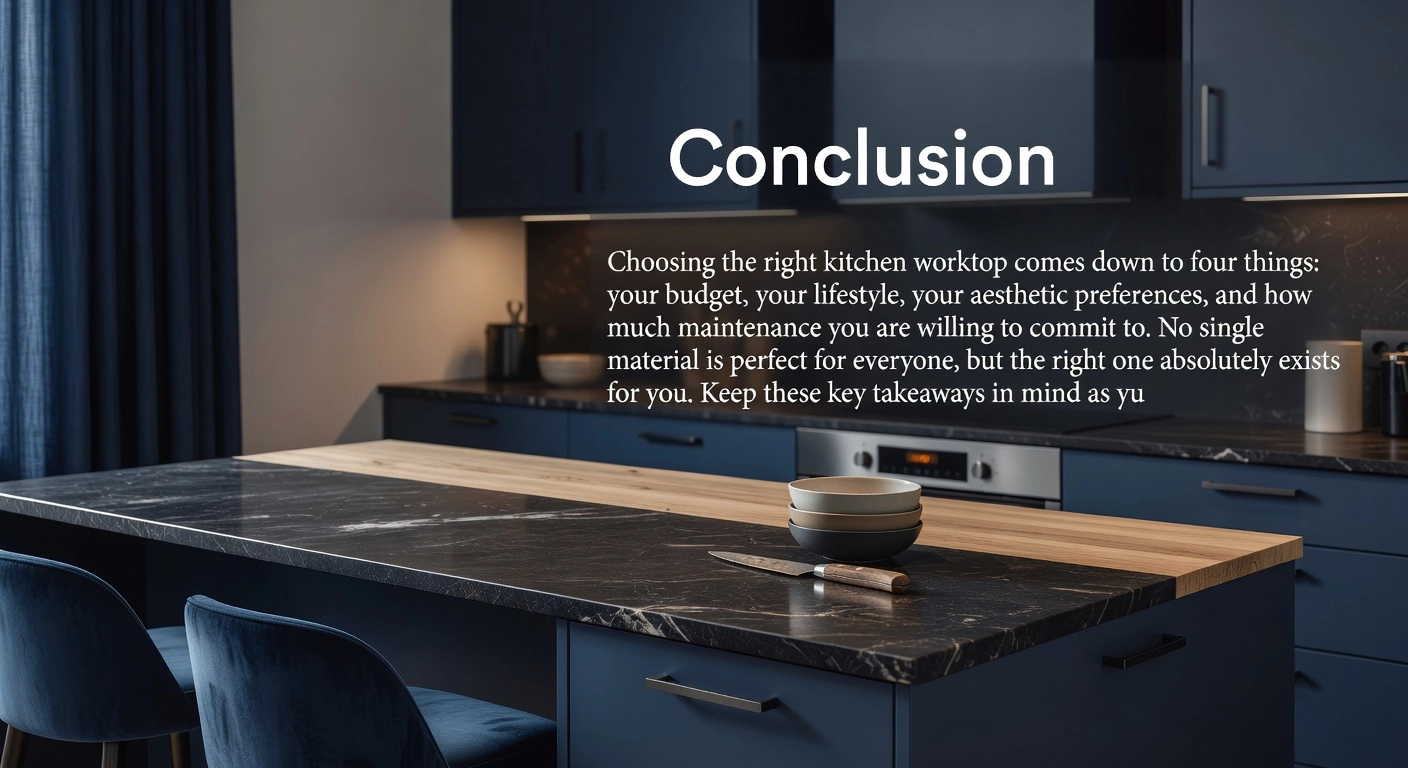
Choosing the right kitchen worktop comes down to four things: your budget, your lifestyle, your aesthetic preferences, and how much maintenance you are willing to commit to. No single material is perfect for everyone, but the right one absolutely exists for you.
Keep these key takeaways in mind as you move forward. Durability and cost do not always go hand in hand. Your daily habits should drive your material choice just as much as your design vision. And installation quality matters just as much as the surface itself.
Now that you have a clearer picture of what is available and what to expect, the next step is yours. Get samples, request quotes from trusted suppliers, and take your time. A well-chosen worktop will serve your kitchen beautifully for decades. Make it a decision you feel genuinely confident about.

Pingback: Moen Kitchen Faucets That Look Great With Wood Cabinets - WoodStuffHQ
Pingback: Kitchen Cabinets: A Complete Guide for DIY Homeowners - WoodStuffHQ