

There is something undeniably warm and inviting about walking into a room with beautiful wooden doors. They bring a sense of character and craftsmanship that no other material can quite match. But if you have ever stood in a home improvement store staring at rows of options, feeling completely overwhelmed, you are definitely not alone.
Choosing wood interior doors can feel like a big decision, especially when you are new to home renovation or design. With so many wood types, styles, and construction methods out there, it is easy to wonder where to even begin. The good news is that once you understand the basics, the whole process becomes a lot more manageable and even fun.
In this guide, we are breaking everything down in a simple, beginner-friendly way. You will learn about the most popular types of wood interior doors, the different wood species available, and the key factors to consider before making your final choice. By the end, you will feel confident and ready to find the perfect doors for your home. Let us get started!
How Wood Interior Doors Are Actually Constructed
Most people assume a wood interior door is just a thick slab of wood, kind of like a wooden board scaled up to door size. That’s actually one of the most common misconceptions in home improvement. In reality, the vast majority of wood interior doors are built using a method called frame-and-panel construction, and understanding this changes how you shop for, install, or even build your own door.
Here’s how it works in plain terms. The door frame is made up of two main types of pieces: stiles (the vertical boards running the full height of the door on each side) and rails (the horizontal boards connecting the stiles at the top, bottom, and sometimes the middle). Together, these create a rigid outer frame. Nestled inside that frame are one or more panels, which sit in grooves routed into the inner edges of the stiles and rails. Here’s the clever part: those panels are not glued in place. They “float” freely, with a small gap that lets them expand and contract with changes in humidity and temperature. This is exactly what prevents warping and cracking over time. You can learn more about the mechanics behind this approach in this frame-and-panel construction overview, or dive into the hands-on details over at Woodworkers Journal’s guide to making frame-and-panel doors.
Now, this same basic anatomy applies whether you’re looking at a classic six-panel colonial door, a simple Shaker style, or a modern flat-flush design. The visible style changes, but the underlying structure stays remarkably consistent across most standard residential doors.
Beyond frame-and-panel solid wood, you’ll also encounter three broader construction categories: hollow-core, solid-core, and engineered wood. Think of these as the budget, mid-range, and premium tiers, each with real trade-offs in weight, sound insulation, and durability. We’ll break those down in detail further down this list.
Why does any of this matter before you buy or build? Because construction directly affects how a door performs in your home. A hollow-core door that feels flimsy and lets sound pass straight through is a poor fit for a bedroom. A heavy solid-core door in a small closet opening is overkill. If you’re planning a DIY build, the construction method also determines your joinery choices, how you’ll cut your panels, and how you need to finish and seal the wood to keep everything stable long-term. Knowing what’s inside the door before you commit saves you money, frustration, and a lot of do-overs.
7 Types of Wood Interior Doors and When to Use Each
Now that you know how wood interior doors are built, the next step is figuring out which style actually fits your home. Each type has a distinct look, a specific job to do, and a different level of difficulty if you’re planning a DIY build. Here’s a breakdown of all seven so you can make a confident choice.
1. Shaker Doors
Shaker doors are probably the most popular interior door style right now, and for good reason. They feature a clean, recessed flat panel set inside a simple frame of stiles and rails. That understated look works equally well in a farmhouse kitchen, a modern bedroom, or a traditional living room, making them one of the most versatile options available. For DIYers, Shaker doors are a great starting point because they don’t require complex routing or fancy equipment. Basic lumber, a plywood panel, pocket screws, and wood glue are often all you need to get the job done. If you’re just getting into woodworking, this is one of the friendliest door styles to tackle first.
2. Raised Panel Doors
Raised panel doors bring a more formal, classic character to a space. Instead of a flat recessed panel, these doors feature a panel that actually rises above the surrounding frame, often with beveled or profiled edges that add depth and shadow lines. The look is elegant and substantial, which is why you’ll see these doors all over traditional, colonial, and period-style homes. The catch for DIYers is that building them requires router work to create those beveled profiles, which adds complexity and demands a bit more tool knowledge. If you’re a beginner, buying a pre-made raised panel door slab is a smarter move than trying to build one from scratch. These doors are best used in formal dining rooms, primary bedrooms, or entryways where you want a more polished, architectural feel.
3. Flush Doors
Flush doors are exactly what they sound like, a completely flat, smooth surface on both sides with no panels, grooves, or ornamentation. This makes them the easiest wood interior door to build or buy. A basic flush door slab is simply a veneer or solid wood face bonded to a core, which is straightforward to construct or source affordably. Aesthetically, flush doors shine in modern, minimalist, and Scandinavian-inspired interiors where clean lines are the priority. They’re also a blank canvas for finishing since they take paint and stain beautifully. If you want something simple, budget-friendly, and contemporary, flush is the way to go. Opting for a solid-core version over hollow-core will give you noticeably better sound dampening between rooms.
4. French Doors
French doors swap out solid panels for glass inserts, letting natural light flow freely between rooms while still defining the space. They’re a popular choice between a living room and a home office, or between a bedroom and a sitting area, anywhere you want connection without completely opening up the floor plan. The glass can be clear, frosted, or fluted depending on how much privacy you need. The trade-off is cost and complexity. Glass inserts, specialized framing, and more precise hardware make French doors one of the pricier options, and installation is trickier than a standard hinged door. For most beginners, professional installation is worth the investment here.
5. Louvered Doors
Louvered doors use horizontal slats angled to allow airflow while still blocking a direct line of sight. That built-in ventilation makes them the go-to choice for closets, laundry rooms, and utility spaces where air circulation prevents moisture buildup and musty smells. Building a louvered door yourself sits at a moderate difficulty level since the slat assembly requires patience and accuracy, though pre-made kits are widely available for an easier route.
6. Bifold Doors
Bifold doors fold in on themselves accordion-style, stacking neatly to the side when open. That space-saving design makes them a staple for closets and pantries where a swinging door would eat up too much floor space. Installation revolves around the hardware, specifically the track, pivot hardware, and alignment guides, so getting those components right is the key to smooth operation. Kits from most home improvement stores make this manageable for a first-timer.
7. Sliding and Pocket Doors
Sliding doors run along a surface-mounted track (think barn door style), while pocket doors disappear completely into the wall cavity. Both are excellent for tight spaces like small bathrooms, hallways, or compact home offices. Choosing the right interior door for your home often comes down to available space, and pocket doors win when you truly have none to spare. The surface-mounted version is a reasonable DIY project, but pocket doors require framing work inside the wall, which is significantly more involved. If you’re doing a new build or a full renovation, it’s worth planning pocket doors in early.
Best Wood Species for Interior Doors: A Practical Comparison
Choosing the right wood species for your interior doors might feel overwhelming at first, but it really comes down to three things: your budget, how much wear the door will see, and the look you’re going for. Here’s a practical breakdown of the five most popular species so you can make a confident decision.
1. Oak (Red and White)
Oak is probably the most popular choice for wood interior doors, and for good reason. It’s widely available at most lumber yards and home centers, holds up exceptionally well to daily use, and takes stain beautifully thanks to its open grain structure. Red oak leans warmer with a slightly reddish tone, while white oak runs cooler and more neutral with a tighter grain pattern. If you’re following interior door trends for 2026, white oak is having a serious moment right now because its cleaner, more subtle grain works perfectly in minimalist and modern spaces. For high-traffic doors like hallways or family rooms, both varieties are excellent picks.
2. Walnut
Walnut is the showstopper of the wood door world. Its rich, dark chocolate tones and smooth grain give any room an instant upgrade, making it the go-to choice for statement doors in living spaces or primary bedrooms. The good news for DIYers is that walnut is also surprisingly easy to work with; it cuts cleanly, sands evenly, and doesn’t fight you the way some dense hardwoods do. The tradeoff is price. Solid walnut doors sit at the premium end of the budget, often $800 or more for a custom solid wood slab. That said, if you’re renovating one or two key doors rather than an entire house, walnut is absolutely worth the splurge.
3. Pine
Pine is your best friend if you’re working with a tight budget or doing a full-house renovation. It’s the most affordable wood option available, and because it’s a softwood, it’s incredibly easy to cut, shape, and sand with basic hand tools. The catch is that pine dents and dings more easily than hardwoods, so it’s not the best call for doors that take constant abuse. Where pine really shines is under paint. A smooth coat of primer and paint hides any imperfections beautifully, making pine a smart pick for bedroom doors, closets, or any space where a painted finish is the plan anyway.
4. Alder
Alder sits comfortably in the middle of the pack in terms of both cost and hardness. Its grain is smooth and fine, similar to cherry, which means it accepts both paint and stain very evenly without blotching. It’s a favorite in Pacific Northwest homes and craftsman-style builds, especially in knotty alder form, which adds rustic warmth and character. If you love the look of cherry but don’t want to pay cherry prices, alder is a genuinely great alternative.
5. Mahogany
Mahogany brings a classic, elegant reddish tone and outstanding dimensional stability to the table. It’s one of the best choices for high-humidity rooms like bathrooms because it resists warping and moisture better than most species. The downside is that sourcing restrictions have pushed prices up steadily, putting mahogany firmly in premium territory. Look for FSC-certified mahogany or sapele (a close relative) to get similar performance while supporting responsible forestry, which is a growing priority for eco-conscious buyers in 2026. Many suppliers now offer FSC-certified wood species options alongside low-VOC finishes, so you don’t have to sacrifice quality to make a greener choice.
Quick Comparison Table
| Species | Durability | Workability | Cost | Best Use Case |
|---|---|---|---|---|
| Oak (Red/White) | High | Excellent | Medium-High | High-traffic doors, natural finishes |
| Walnut | High | Excellent | Premium | Statement doors, upscale interiors |
| Pine | Low-Moderate | Excellent | Budget | Painted doors, low-traffic areas |
| Alder | Moderate | Good | Medium | Craftsman styles, paint or stain finishes |
| Mahogany | High | Good | High | High-humidity rooms, classic designs |
Once you’ve settled on a species, the next big decision is how to finish it, which can dramatically change the final look of even the most basic door.
Solid Core vs. Hollow Core vs. Engineered Wood Doors
Once you’ve picked your wood species and door style, the next big decision comes down to what’s actually inside the door. This is where a lot of beginners get confused, because three very different products all get sold under the “wood interior door” label. Let’s break down each one so you know exactly what you’re getting before you buy.
1. Solid Wood Doors
Solid wood doors are the real deal, built from natural wood throughout, usually using a frame-and-panel construction to minimize warping. They deliver the best sound insulation and thermal performance of any interior door option, simply because dense wood mass blocks noise and resists temperature transfer better than anything else. A solid oak or maple door can make a genuinely noticeable difference in how quiet a room feels. The tradeoff is cost, typically ranging from $500 to $2,500 or more per door, and weight, which makes installation trickier. The other thing to know is that solid wood moves with humidity. If you don’t properly finish and seal the door, it can swell, stick, or warp over time. For bathrooms or rooms with big seasonal temperature swings, this matters a lot.
2. Hollow-Core Doors
Hollow-core doors are what you’ll find in most apartments and budget new-builds. They have a lightweight cardboard honeycomb core sandwiched between thin wood veneer or fiberboard panels, and they typically cost between $70 and $150 each. That price and weight make them easy to hang, and they’re widely available as prehung units at any home improvement store. The problem is performance. With an STC rating of only 20 to 25, you can easily hear a normal conversation through a closed hollow-core door. They also dent easily and aren’t a great candidate for DIY modifications since cutting into them can compromise their structural integrity. They’re fine for low-traffic closets, but that’s about where their usefulness ends.
3. Engineered Wood Doors (MDF Core with Wood Veneer)
Engineered wood doors, often called solid-core doors, use a dense MDF or particleboard core wrapped in a wood veneer or smooth laminate skin. According to this solid wood vs. solid core comparison, engineered cores are actually more dimensionally stable than real wood because they don’t react to humidity changes the way natural wood does. They take paint exceptionally well thanks to the smooth MDF surface, which is a big plus if you’re planning to finish the door yourself. Pricing typically falls between $200 and $800, making them a strong middle-ground option between budget hollow-core and premium solid wood.
Sound Insulation at a Glance
The difference in sound blocking between hollow-core and solid-core options is significant in everyday life. Hollow-core doors rate STC 20 to 25, meaning voices, TV noise, and music pass through easily. Solid-core engineered doors typically hit STC 28 to 35, a jump that’s clearly noticeable. Solid wood performs similarly to high-end engineered options, sometimes better depending on species and thickness.
Quick Recommendation by Room
Use this as a simple guide when deciding what to install where:
- Bedrooms: Solid-core engineered or solid wood. Sound privacy matters here, and hollow-core vs. solid-core guides consistently recommend the upgrade for sleeping spaces.
- Bathrooms: Moisture-resistant solid-core MDF. Avoid unfinished solid wood unless you’re committed to proper sealing.
- Closets: Hollow-core is perfectly fine. Low traffic, no sound concerns, and the cost savings add up.
- Home offices: Solid-core is strongly recommended. With more people working from home, blocking out household noise genuinely affects productivity.
For most rooms in most homes, engineered solid-core doors hit the sweet spot of performance, stability, and price. Solid wood is the upgrade path when budget allows and the look really matters.
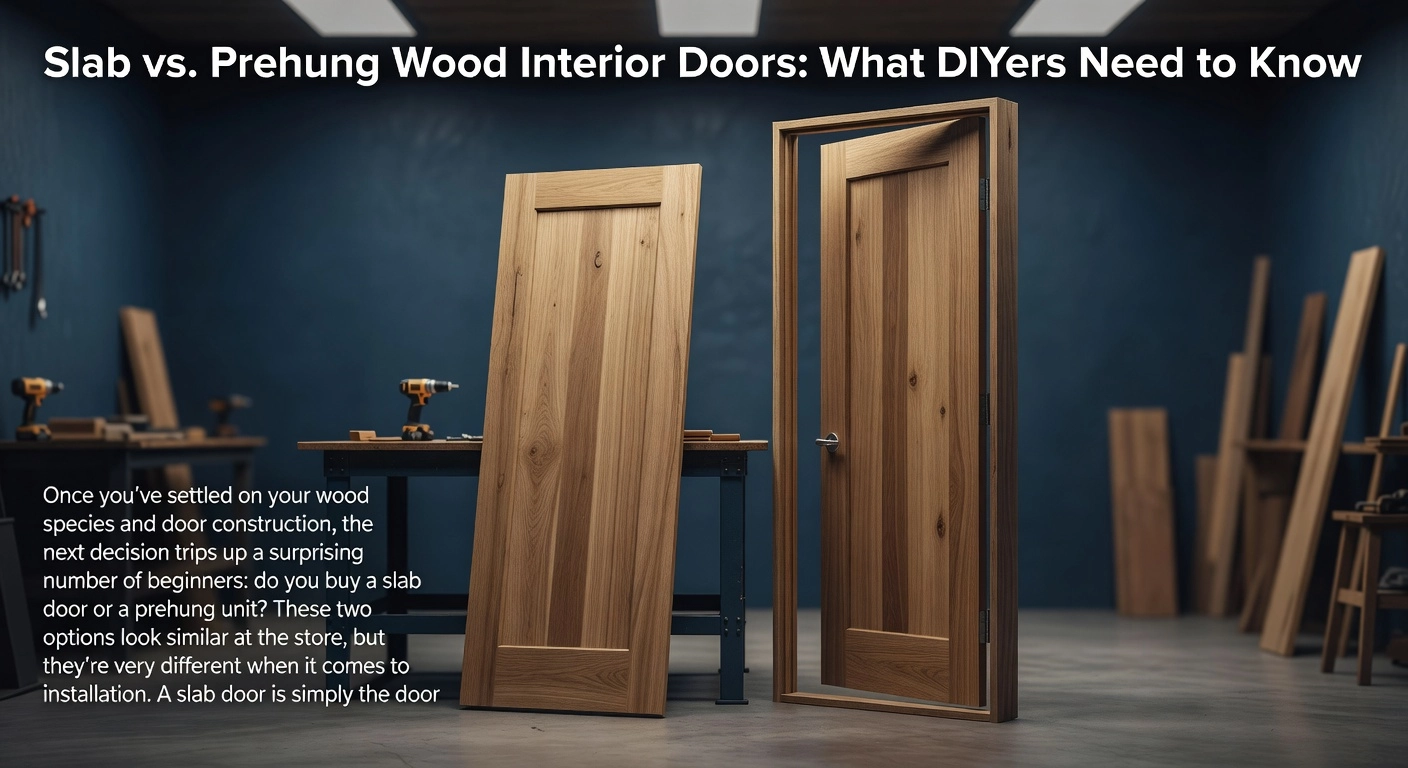
Slab vs. Prehung Wood Interior Doors: What DIYers Need to Know
Once you’ve settled on your wood species and door construction, the next decision trips up a surprising number of beginners: do you buy a slab door or a prehung unit? These two options look similar at the store, but they’re very different when it comes to installation.
A slab door is simply the door itself. No frame, no hinges, no hardware included. It’s just the panel, ready to drop into an existing door frame that’s already in your wall. Because of this, slab doors work best when your current frame is square, plumb, and in solid condition. If the jamb is straight and the opening hasn’t shifted over the years, a slab swap is a clean, budget-friendly solution. Slabs also make sense when you want to match your existing trim without disturbing the surrounding wall or casing.
A prehung door comes as a complete package. The door slab is already mounted on hinges inside a brand-new three-sided frame, with pre-drilled holes for your hardware and the door stop molding often already attached. You’re essentially installing the whole assembly into the rough opening in your wall. This makes prehung units the smart choice for new construction, full remodels, or any situation where the existing frame is warped, rotted, or damaged. For first-time DIYers especially, prehung doors remove a lot of the guesswork around alignment, which is a genuinely difficult skill to develop. You can learn more about choosing between prehung and slab doors before you head to the store.
Measurements You Need Before Buying Either Type
Before purchasing, grab a tape measure and note these four things:
- Rough opening size: Measure width in three spots (top, middle, bottom) and record the smallest number. Do the same for height.
- Door thickness: Most interior doors are 1-3/8 inches; confirm your hardware matches.
- Swing direction: Stand outside the room facing the door. Hinges on the left mean a left-hand swing.
- Wall thickness: This ensures your jamb width fits properly, especially important for prehung units.
Shimming a Prehung Door: A Beginner Rundown
Shimming sounds intimidating, but the process is straightforward when you work methodically. Set the prehung unit into the rough opening and start with the hinge-side jamb. Use a level and tap wooden shims behind the jamb at each hinge location until it’s perfectly plumb (straight vertical). Always use shims in opposing pairs so the pressure stays even and the jamb doesn’t bow inward. Once the hinge side is locked in, level the header across the top, then shim the latch side until you see a consistent gap (about 1/8 inch) all the way around the door. Nail or screw through the jamb into the studs, snap off the excess shims, and install your trim. Test the swing before you call it done.
How to Finish a Wood Interior Door the Right Way
You’ve already made smart decisions about wood species and door construction. Now comes the step that actually determines how long your door lasts: finishing it properly. This is where a lot of DIYers rush, and it almost always leads to problems down the road.
Know Your Finish Options Before You Pick Up a Brush
Not every finish works the same way on every wood, and that matters a lot with interior doors. Paint creates an opaque film that covers the grain completely, which works well on both open-grain woods like oak and closed-grain woods like maple. It’s great for hiding minor imperfections but won’t showcase the natural beauty of the wood. Stain with a clear topcoat is a popular choice because it lets the grain show while adding color depth. The catch is that open-grain species like oak absorb stain deeply and evenly, while closed-grain softwoods like pine tend to blotch without preparation. Oil finishes (tung, danish, linseed) penetrate into the wood and enhance the natural grain with a matte look, but they need periodic reapplication and aren’t the most moisture-resistant on their own. Varnish and polyurethane are film-forming finishes that offer the best durability and moisture resistance, making them a solid choice for most interior doors.
For a deeper breakdown of selecting the best finish for interior wooden doors, including how different topcoats perform over time, that guide covers the technical side clearly.
Surface Prep Is More Important Than the Finish You Choose
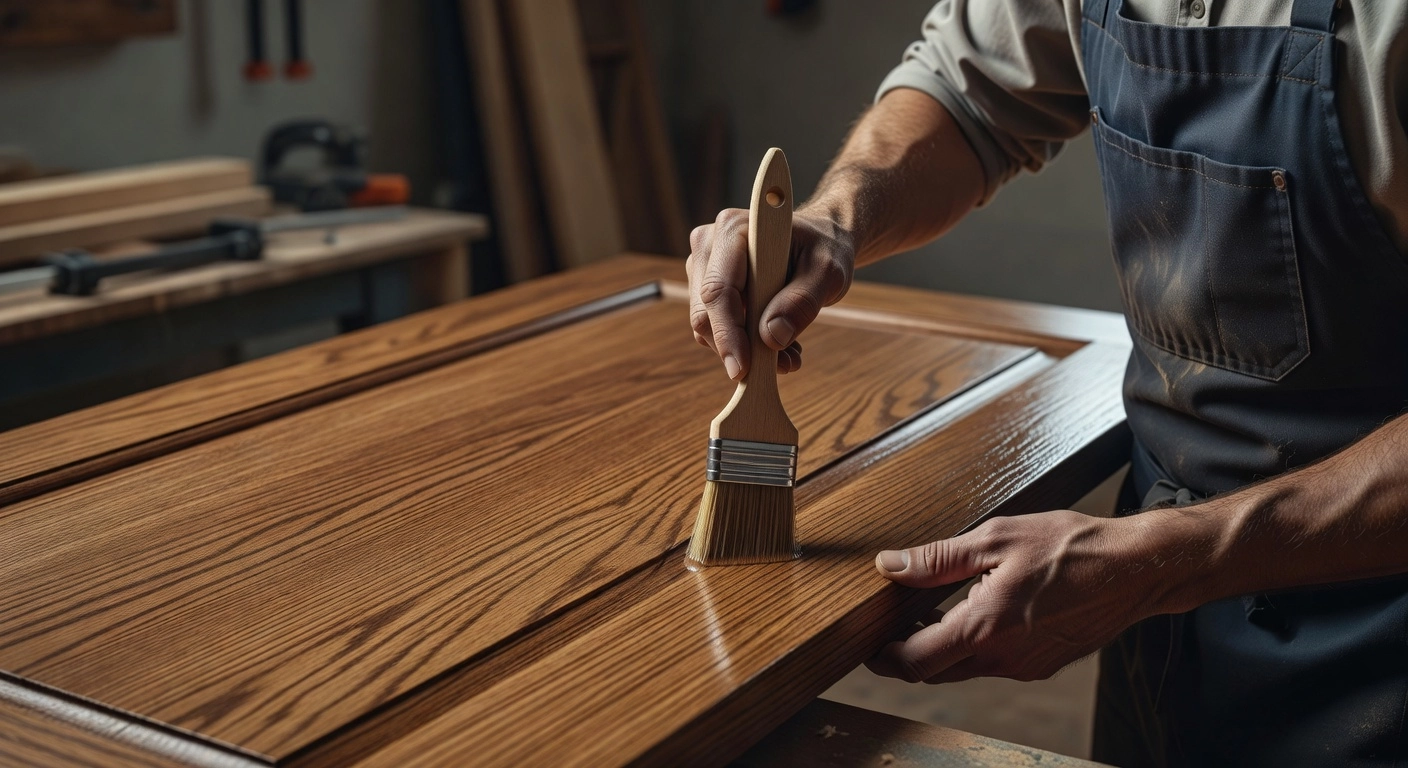
Here is something most beginners don’t expect: your surface prep matters more than which finish you buy. Start sanding at 120-grit to remove mill marks, work up through 150 and 180, and finish at 220-grit. Always sand with the grain. Before applying any water-based finish or stain, wipe the surface with a damp cloth and let it dry completely. This raises the grain fibers intentionally so you can sand them off lightly before finishing, preventing roughness later. If you’re working with pine, apply a pre-stain wood conditioner first. Pine absorbs stain unevenly without it, and the blotchy result is very difficult to fix after the fact.
Go Low-VOC If You Can in 2026
Water-based and low-VOC finishes are increasingly the go-to choice for indoor projects, and for good reason. They dry faster, produce less odor, and are much better for indoor air quality, which matters especially in bedrooms and hallways. Modern water-based polyurethanes have closed the performance gap with oil-based products significantly, and matte or satin versions are trending strongly in 2026 for their natural appearance.
Prioritize Durability for High-Traffic Doors
For bedroom and bathroom doors that get touched and slammed daily, choose 2 to 3 coats of polyurethane or varnish over your stain. Water-based polyurethane works well in bathrooms because it resists moisture and dries quickly between coats. Matte and satin sheens are smarter choices here because they hide fingerprints and scuff marks far better than gloss.
The same finishing principles that apply to doors also apply to kitchen cabinet doors. The WoodStuffHQ kitchen cabinet door finishing guides cover species-specific prep, conditioner use on pine and alder, and topcoat selection for moisture-prone areas, and most of those lessons transfer directly to door finishing.
Finally, never skip finishing the top and bottom edges of your door. An unfinished or poorly sealed door absorbs moisture unevenly, and that imbalance is one of the leading causes of warping and humidity damage over time. Seal all six sides before hanging.
Maintaining and Restoring Your Wood Interior Doors
Even after the perfect finish job, wood interior doors need regular attention to stay looking sharp and working properly. The good news is that most common problems, scratches, warping, stains, are very fixable with basic tools and a little patience.
Fixing Scratches and Dents
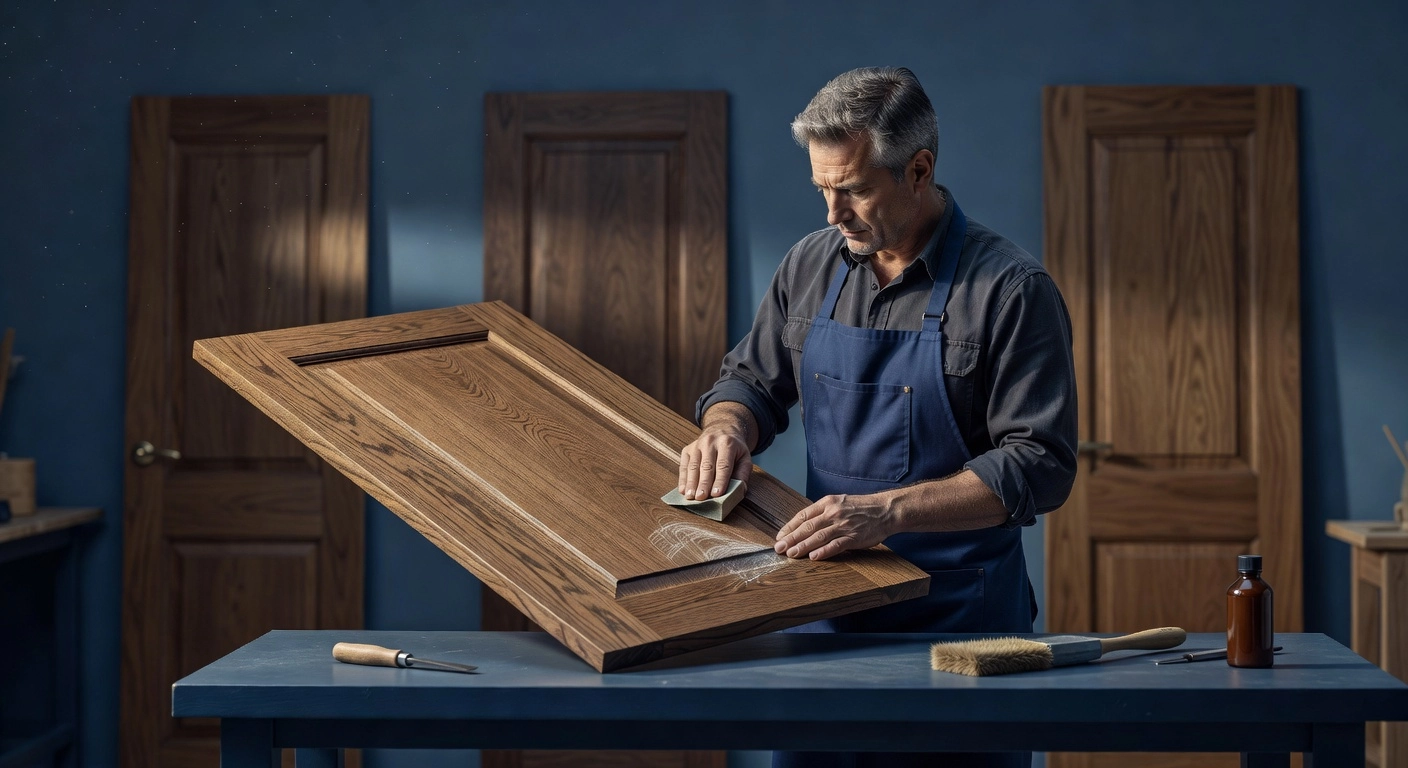
For light surface scratches, start by lightly sanding with 220-grit sandpaper, always moving with the wood grain, then wipe clean and apply a color-matched finish. Deeper gouges need a bit more work: apply stainable wood filler with a putty knife, let it dry completely, sand it flush, and refinish to match the surrounding area. For the quickest fix on shallow scratches, color-matched wax sticks are your best friend. You simply rub them into the scratch, buff lightly, and the damage practically disappears. The WoodStuffHQ scratch repair guide walks through all three approaches in detail, including some surprisingly effective tricks like rubbing a walnut across minor marks.
Addressing Humidity Warping
Warping is the most frustrating wood door problem because it sneaks up on you slowly. Early warning signs include the door sticking in certain seasons, uneven gaps around the frame, or a slight bow you can spot by looking down the face of the door. The single best prevention step is sealing all six faces of the door, both flat faces plus all four edges, before or right at installation. Unfinished edges absorb moisture unevenly and cause the door to curl. If your warp is under about a quarter inch, you can often fix it by adjusting hinges or lightly planing after the door dries out fully. Anything beyond that, especially if the core is compromised, usually means replacement is the smarter call.
Removing Water Stains and Discoloration
Dark tannin-based stains from water contact respond well to oxalic acid treatment on bare wood. Mix the crystals with hot water, apply to the stained area, let it sit for several hours, then rinse thoroughly and neutralize with a baking soda solution before refinishing. For lighter watermarks on a finished surface, strip the finish in that area first, then treat and refinish. Always test any bleaching treatment in a hidden spot before committing to the full area.
Degreasing Before Refinishing
Skipping this step is one of the most common refinishing mistakes. Wax, cooking oil residue, and grime buildup create an invisible barrier that stops new finishes from bonding properly, leading to peeling and blotchy results within months. Wipe the entire door down with a mild detergent solution or a mineral spirits-dampened cloth, paying extra attention to edges and areas around the handle. Let it dry completely before you sand or apply anything new. The WoodStuffHQ restoration guides cover this degreasing workflow in the context of cabinets and furniture, and the same principles apply directly to doors.
When to Refinish vs. Repaint
Check the existing finish carefully before deciding. If the finish is just dull, faded, or lightly scratched but still intact, refinishing is the better choice. Clean it, sand lightly, and apply a fresh coat of stain or polyurethane to bring the natural grain back to life. If the finish is peeling, heavily damaged, or you simply want a solid uniform color, repainting after proper prep will give you a cleaner result faster. For solid wood doors especially, refinishing preserves the character and value that made the door worth buying in the first place.
Frequently Asked Questions About Wood Interior Doors
What is the best wood for interior doors?
For most homeowners, oak and alder hit the sweet spot. Red oak offers strong grain patterns, solid durability, and excellent stain absorption, making it a reliable pick for high-traffic areas or traditional-style homes. Alder, especially knotty alder, is slightly softer and more affordable, machines easily, and can mimic the look of pricier species like cherry or walnut. Pine is a budget-friendly alternative, but it dents more easily. If you want a practical starting point, grab oak or alder and you won’t regret it.
Are solid wood doors worth the extra cost?
In most cases, yes. Solid wood and solid-core doors provide noticeably better sound insulation, typically rating around 27 to 30 STC compared to roughly 20 to 25 for hollow-core options. They also feel more substantial when you open and close them, which matters more than people expect. For bedrooms, bathrooms, or home offices, that extra privacy is genuinely useful. Hollow-core doors work fine for closets or pantries where noise and feel aren’t priorities.
How long do wood interior doors last?
A properly finished and maintained solid wood door can easily last 50 years or more. Hollow-core doors typically hold up for 20 to 30 years under normal use, though poor finishing or humidity issues can shorten that significantly for any door type.
Can I build my own wood interior door without professional tools?
Yes, absolutely. A simple Shaker-style frame-and-panel door is very beginner-friendly using pocket-hole joinery with a basic Kreg jig, a miter saw, clamps, and a sander. You cut your stiles and rails, drill pocket holes, assemble with screws and glue, and drop in a plywood panel. No fancy shop equipment required.
How do I stop my wood interior door from warping?
Finish all six faces, including the top and bottom edges that often get skipped. Seal any trimmed edges immediately. Keep your indoor humidity steady between 30 and 50 percent using your HVAC system or a dehumidifier if needed. Uneven moisture exposure is the main culprit behind warping, so consistent sealing and stable conditions go a long way.
What wood door style works best in small rooms?
Pocket doors, bifold doors, and flush doors are your best friends in tight spaces because they eliminate or minimize swing clearance. Pocket doors disappear completely into the wall, which is ideal for small bathrooms or hallways. If you want one style that works almost everywhere without overthinking it, the Shaker door is the most versatile choice, fitting modern, transitional, and traditional interiors equally well.
Choosing the Right Wood Interior Door for Your Home
By now, you’ve covered a lot of ground: door styles matched to room function, wood species balanced against your budget and workability, and construction types chosen based on real performance needs like sound control and daily wear. Those three decisions work together, and getting all three right is what separates a door that just fits from one that actually belongs in your home.
Here’s the bottom line on construction: solid wood and quality veneer doors consistently outperform hollow-core options in feel, sound insulation, and longevity. Yes, the upfront cost is higher, but you avoid the hollow knock, the flimsy swing, and the early replacement that hollow-core doors often bring.
If you’re just getting started, pick a Shaker slab build or a prehung installation as your first project. Both are beginner-friendly, forgiving, and genuinely confidence-building.
Before buying anything new, check your existing doors first. Our wood restoration guides at WoodStuffHQ cover repairs, refinishing, and fixes that could save you a full replacement.
Ready to move forward? Measure your rough openings, choose your species, and decide between slab and prehung before you shop or source lumber.
Conclusion
Choosing wood interior doors does not have to be overwhelming. By understanding the main door types, exploring the unique qualities of different wood species, and considering factors like budget, style, and durability, you now have the foundation to make a smart and confident decision.
Remember, the right door is one that matches your home’s personality while meeting your practical needs. Whether you lean toward the classic charm of oak, the rich warmth of cherry, or the affordability of pine, there is a perfect option waiting for you.
Now it is time to put your knowledge to work. Visit a local showroom, browse inspiration photos, and start narrowing down your favorites. Your ideal wood interior door is closer than you think, and with the right choice, every room in your home will feel a little more special.