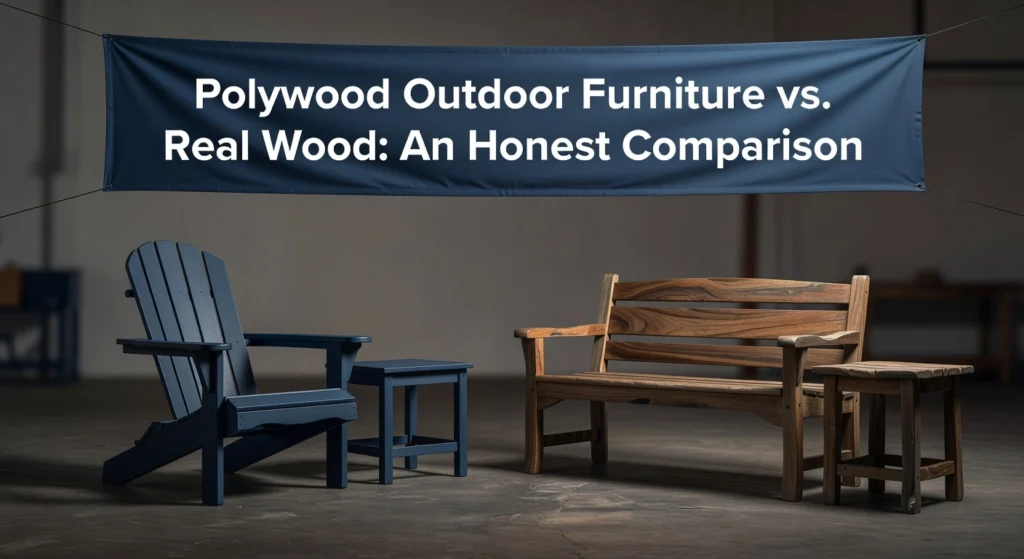

Choosing the right outdoor furniture is more than just a matter of aesthetics. It is a long-term investment that affects your budget, your maintenance routine, and the overall look of your outdoor space for years to come. Two of the most popular options on the market today are polywood outdoor furniture and traditional real wood, and the differences between them go much deeper than most buyers initially expect.
If you have been weighing these two materials, you are not alone. Homeowners, designers, and outdoor enthusiasts all face this same decision, and the right answer is not always obvious. Both options have genuine strengths, and both come with trade-offs worth understanding before you commit.
In this comparison, we will break down the key factors that matter most: durability, maintenance requirements, environmental impact, cost, and overall appearance. By the end, you will have a clear, honest picture of how polywood and real wood stack up against each other, giving you the confidence to make a well-informed decision for your specific needs and lifestyle.
What Is Polywood and How Is It Made?
Polywood outdoor furniture is built on a foundation of proprietary recycled high-density polyethylene (HDPE) plastic lumber, a material engineered specifically to perform where natural wood struggles. Unlike conventional outdoor furniture materials, Polywood’s lumber is sourced exclusively from landfill-bound and ocean-bound post-consumer plastics, including everyday items like milk jugs and detergent bottles. This approach eliminates reliance on virgin petroleum-based materials, positioning each piece of furniture within a genuine circular economy rather than a linear one. The company operates its own on-site recycling facility in Syracuse, Indiana, where incoming plastics are shredded, cleaned, melted, and extruded into solid lumber profiles ready for furniture production.
What makes this material particularly noteworthy for practical buyers is how closely it replicates the behavior of real lumber. Color pigments and UV inhibitors are blended directly into the HDPE before extrusion, meaning color runs throughout the board rather than sitting on the surface. The finished lumber accepts screws, bolts, and standard hardware the same way traditional wood does, so assembly requires no specialized tools and repairs follow familiar processes. Textured surface finishes, especially in the Select lumber line, replicate visible wood grain convincingly enough to satisfy buyers who want the aesthetic of natural materials without the upkeep.
The material’s non-porous structure is one of its most compelling technical advantages. Moisture, salt spray, and UV radiation cannot penetrate the surface the way they attack and degrade wood fibers over time. This means no rotting, no splintering, no warping, and no need for seasonal sealing or staining. Polywood backs this performance with a 20-year limited residential warranty, among the longest offered in the outdoor furniture category, and every piece is manufactured in the United States.
The product lineup spans a broad range of styles and colors to suit varied outdoor spaces. Iconic Adirondack chairs, multi-piece dining sets, benches, deep-seating sofas, and chaise lounges are all available, with color options ranging from classic neutrals like black, white, and slate gray to bolder choices like Pacific Blue and Sunset Red.
Real Wood Outdoor Furniture: Teak, Cedar, and Treated Lumber
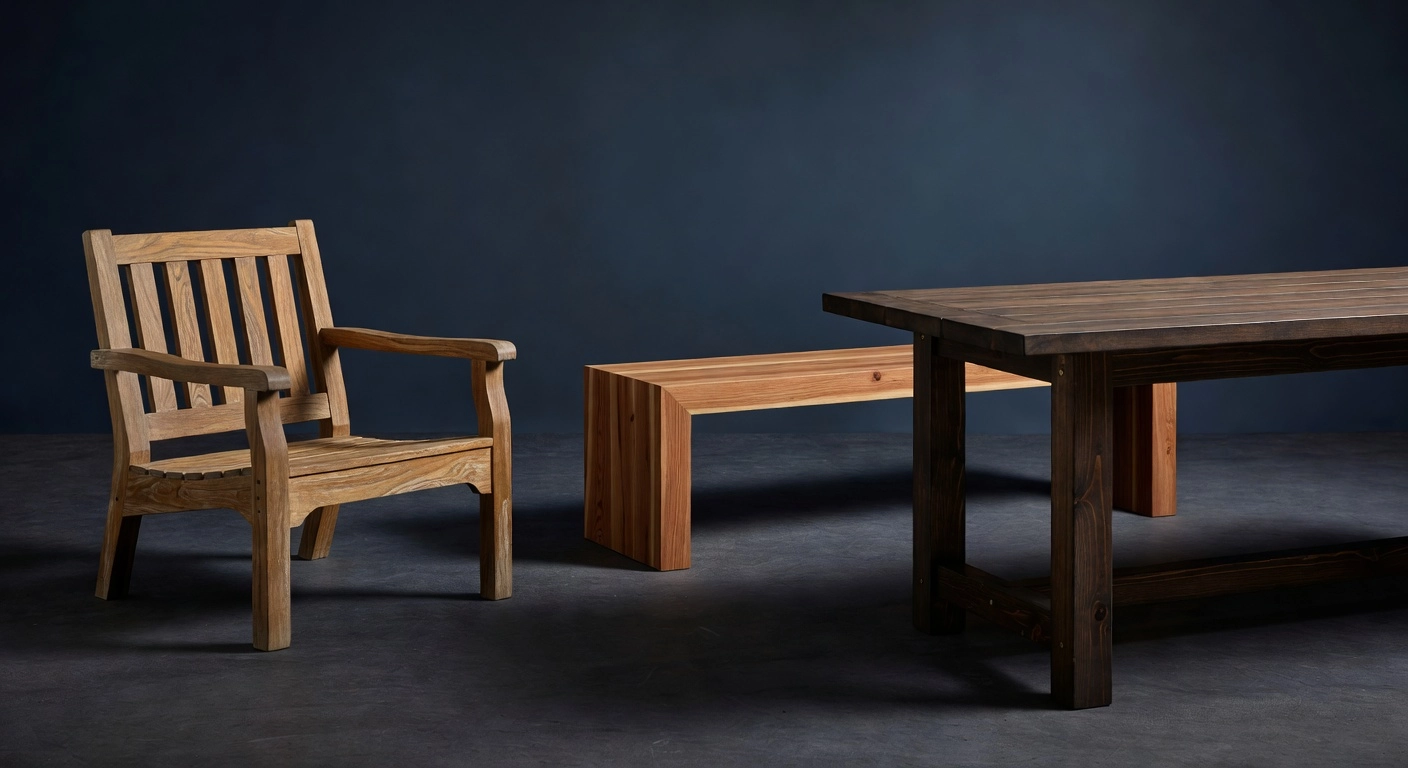
While HDPE composite lumber dominates the low-maintenance conversation, natural wood remains a compelling choice for homeowners who prioritize authentic aesthetics, repairability, and hands-on customization. Three species define the natural wood outdoor furniture landscape, and each brings a distinct performance profile, cost point, and maintenance commitment.
Teak: The Gold Standard
Teak (Tectona grandis) earns its reputation as the benchmark for outdoor wood furniture through a unique combination of high natural oil content, tightly interlocked grain, and natural silica deposits. These properties work together to resist moisture absorption, rot, insects, and warping, even in coastal salt air or humid climates. Quality teak pieces routinely last 30 to 50 years, which explains the premium price tag. Left unfinished, teak develops a distinguished silvery-gray patina over time. Owners who prefer the original warm golden-brown tone should apply a quality teak oil or protector annually to maintain color and surface integrity. One to two deep cleanings per year round out a straightforward maintenance schedule that rewards patience with exceptional longevity.
Cedar: Natural Preservatives on a Budget
Western red cedar offers a practical middle ground for DIY-focused homeowners. It contains thujaplicins, naturally occurring fungicidal compounds that slow decay, resist rot, and deter insects without any chemical treatment. This makes cedar a popular and affordable choice for building patio furniture, Adirondack chairs, benches, and planters from scratch. The maintenance schedule is manageable: apply a quality semi-transparent penetrating stain every two to three years to protect against UV exposure and moisture intrusion. Annual light cleaning with mild soap keeps the surface in good condition. Cedar is softer than teak and more susceptible to denting, but its workability and cost make it a favorite for hands-on builders.
Pressure-Treated Lumber: Budget Entry with Trade-offs
Pressure-treated pine is the most accessible starting point for outdoor furniture builds. Modern formulations using micronized copper azole provide solid rot and insect resistance at a fraction of teak’s cost. However, the preservatives require compatible finishes; always choose water-based or oil-based sealers specifically rated for treated wood. Most treated lumber should be sealed within the first year, ideally after performing a simple water-bead test to confirm the wood is dry enough to accept finish. Careful handling during cutting and sanding is also recommended. Without consistent sealing and annual inspections, treated lumber is prone to warping, checking, and splitting.
The Repairability Advantage
Perhaps the most underappreciated strength of natural wood furniture is its repairability. Scratches can be sanded out, faded surfaces can be stripped and refinished, and damaged boards can be replaced individually. HDPE composite simply does not offer this flexibility; its color-through construction resists fading well, but surface damage generally cannot be reversed through refinishing. For DIY homeowners who find satisfaction in restoration work, natural wood provides an ongoing relationship with the material rather than a set-and-forget solution.
Polywood vs. Real Wood: The Full Side-by-Side Breakdown
With the material background established, the practical question becomes: which option actually delivers better value and performance across the metrics that matter most to a homeowner making a multi-year investment?
Durability: Maintenance-Free vs. Active Upkeep
Polywood’s resistance profile is remarkably complete. The HDPE lumber resists rotting, cracking, chipping, fading, splintering, and moisture absorption without any seasonal treatment. It handles freeze-thaw cycles, salt spray, and prolonged UV exposure without structural degradation, which is why the material carries a 20-year residential warranty. Cedar and teak tell a different story. Teak’s natural oils give it genuine durability, but those oils deplete over time, leaving the wood vulnerable to graying, cracking, and eventual structural weakening if not replenished annually. Cedar performs well in dry climates but deteriorates faster in humid or wet environments without consistent staining and sealing. Maintaining structural integrity in either species over a full decade requires active, recurring effort, not occasional attention.
Upfront Cost vs. 10-Year Ownership Math
The purchase price comparison is nuanced. A poly Adirondack chair typically runs $350 to $500 or more, while a basic cedar equivalent may start around $150 and a budget pressure-treated build costs even less. Premium teak, however, sits at a comparable or higher price point than polywood outdoor furniture, making the upfront gap narrower at that tier. The more revealing calculation covers 10 years of ownership. Teak oil runs $15 to $30 per application and needs reapplication one to two times annually. Cedar stain and UV-blocking sealer adds $25 to $50 per gallon, plus brushes, cleaners, sandpaper, and several hours of labor each season. Over a decade, a single wood dining set can accumulate $800 to $1,500 or more in maintenance materials and labor time alone, and softwood pieces may require full replacement before the decade is up. Polywood’s maintenance cost over the same period is essentially the price of dish soap. As this detailed cost breakdown from My Patio Life illustrates, the upfront premium for poly frequently reverses into net savings by year five or six for most households.
Aesthetics and Repairability
This is where real wood holds a genuine, irreplaceable advantage. Grain variation, tactile warmth, natural scent, and the evolving silver patina of weathered teak create an organic character that no engineered composite fully replicates. Polywood offers consistent, through-body color that resists fading well, but its uniform appearance reads as noticeably synthetic to many buyers at close range.
Repairability follows a similar pattern favoring wood. Surface scratches and gouges in teak or cedar can be sanded out and refinished to near-original condition. Polywood surface damage is generally permanent; however, because color runs throughout the material rather than sitting on top as a finish coat, scratches are far less visible than they would be on painted wood.
Weight, Stability, and Storage
Polywood furniture is significantly heavier than cedar or pine equivalents, and approaches the weight of dense hardwoods in many configurations. That density is an asset on exposed patios where wind uplift is a real concern; poly chairs and tables are far less likely to tip or scatter in a storm. The tradeoff appears at the end of the season. Moving heavy poly pieces into storage, up stairs, or onto a truck for winter requires more effort than equivalent cedar furniture. Homeowners with covered patios or mild climates will barely notice this; those who fully winterize their outdoor spaces should factor in the physical logistics before purchasing a large dining set or sectional.
Cleaning and Maintenance: What You Actually Have to Do Each Year
Maintenance is where the real cost of outdoor furniture reveals itself, and the gap between polywood outdoor furniture and natural wood options is significant enough to influence your buying decision on its own.
Polywood: Soap, Water, and You’re Done
Routine care for HDPE lumber furniture is genuinely straightforward. Mix mild dish soap with warm water, scrub with a soft-bristle brush, and rinse thoroughly with a garden hose. That handles pollen, dust, bird droppings, and most everyday grime without any special products or techniques. For mildew buildup, which shows up most visibly on lighter colors like white or sand, a diluted bleach solution (roughly one part bleach to four parts water) or a commercial outdoor furniture cleaner applied with a brush, left to dwell briefly, then rinsed clean removes the growth effectively. According to Polywood’s official care guidance, no sealing, staining, painting, or oiling is ever required. Most owners treat this as an annual spring task rather than an ongoing commitment.
One legitimate drawback worth acknowledging: dark-colored HDPE, particularly black and mahogany finishes, absorbs and retains heat in direct afternoon sun noticeably more than a wood surface does. On a hot summer afternoon, armrests and seat surfaces on dark polywood pieces can become uncomfortably warm to the touch. Choosing lighter colors like white, sand, or slate gray largely eliminates this issue, but it is a real consideration if your patio gets full sun exposure for extended periods.
Teak: Choose Your Approach and Commit to It
Teak maintenance divides cleanly into two camps, and neither is wrong. The low-effort path is to simply let the furniture weather outdoors. Over six to twelve months, teak transitions from its warm golden-brown tone to a distinguished silver-gray patina. Beyond occasional soap-and-water cleaning, this approach requires nothing further. The moderate-effort path involves applying teak oil or sealer annually, or more frequently in high-UV or high-rainfall climates, to preserve the original color. This costs money each season, requires cleaning and light sanding beforehand, and locks you into a recurring maintenance schedule. The key mistake is switching approaches midway through ownership; restoring oiled teak that has been neglected or partially weathered requires stripping and brightening before refinishing can proceed cleanly.
Cedar: Staining Every Two to Three Years
Cedar outdoor furniture holds up well but benefits from a quality semi-transparent exterior stain applied every two to three years to protect against moisture absorption and UV graying. Semi-transparent formulas are the right choice here because they allow the wood grain to show while still providing meaningful protection, and they are far easier to recoat than film-forming solid stains or paints, which require stripping when they begin to peel. When cedar furniture has already developed water stains, black mildew rings, or the deep gray cast that comes from prolonged unprotected weathering, oxalic acid wood brightener is the correct first step before any stain or finish goes down. It removes tannin oxidation, mineral staining, and surface gray without aggressive sanding. WoodStuffHQ covers this entire restoration sequence in its wood restoration guides, including how to neutralize the acid wash and prepare the surface for finish adhesion.
Seasonal Storage: The Effort Gap Widens
Polywood furniture requires no winter storage. It can remain outside through snow, freezing temperatures, salt air, and hard rain without cracking, rotting, or requiring any treatment when spring arrives. A quick cleaning in March and the furniture is ready for use. Wood furniture, by contrast, benefits meaningfully from covered storage or heavy-duty furniture covers during harsh winters. Moisture penetrates wood finishes over repeated freeze-thaw cycles, accelerating the weathering that triggers the need for stripping and refinishing. Protecting cedar or teak during winter does not eliminate maintenance entirely, but it extends the interval between full refinishing cycles considerably, reducing both time and material costs over the life of the furniture.
Sustainability Comparison: Recycled Plastic vs. Responsibly Sourced Wood
Recycled HDPE furniture like polywood outdoor furniture makes a compelling environmental case by directly addressing plastic waste at its source. The material is manufactured from post-consumer plastics, including milk jugs and detergent bottles, diverting landfill-bound and ocean-bound plastics from waste streams before they degrade into microplastics. An on-site recycling operation reincorporates 99% of production scrap back into new lumber, creating a near-zero-waste, closed-loop manufacturing model. You can review the specifics of this process through Polywood’s lumber material content and sustainability documentation, which outlines exactly how recycled feedstocks are sourced and processed. This circular economy approach resonates strongly with eco-conscious buyers, and the market data reflects it: the global outdoor furniture market reached approximately USD 19.70 billion in 2025, with the plastics and polymers segment advancing at a 5.0% CAGR, notably outpacing the overall market growth rate of 4.04% projected through 2031.
Where Certified Wood Holds Its Ground
Responsibly sourced wood is not simply the less sustainable option by default. FSC-certified teak and cedar, harvested from independently audited forests, provide credible assurances around biodiversity protection, legal logging practices, and long-term forest regeneration. The critical word here is “certified.” Not all wood marketed as sustainable carries third-party verification, and chain-of-custody gaps can undermine even well-intentioned claims. Buyers should look specifically for the FSC or PEFC label alongside traceable documentation rather than relying on vague supplier language. When those credentials are present, certified wood brings a meaningful advantage that recycled HDPE cannot easily replicate: carbon sequestration. Sustainably managed trees absorb and store carbon throughout their growth cycle, and that carbon remains locked in the finished furniture for decades. Recycled HDPE production, while far preferable to virgin plastic manufacturing, still involves energy-intensive processes including shredding, washing, and extrusion. Even with a recycled feedstock, the carbon profile of HDPE lumber depends heavily on the regional energy grid powering the facility.
End-of-Life: A Genuinely Complex Comparison
The end-of-life picture for both materials rewards honest scrutiny rather than marketing simplicity. HDPE composite furniture is technically 100% recyclable and infinitely so in theory, but practical recycling depends entirely on local infrastructure. Collection programs and processing capabilities vary widely by region, meaning that recyclability on paper does not always translate to recyclability in practice for a given homeowner. Wood furniture, particularly pieces finished with non-toxic or natural oils, can be composted, repurposed into smaller projects, or simply left to biodegrade. Chemically treated wood requires more careful handling, but untreated cedar or naturally finished teak offers genuinely flexible end-of-life pathways.
For eco-conscious DIY homeowners, the intellectually honest conclusion is that neither material holds a universal sustainability advantage. Recycled HDPE excels at diverting existing plastic waste and delivering extreme weather durability that extends product lifespan, reducing replacement frequency. Certified wood offers renewable sourcing, carbon storage, and biodegradability benefits when properly verified. The better question is not which material wins outright, but which sourcing story you can actually verify and which end-of-life option your region realistically supports.
When Polywood Outdoor Furniture Is the Clear Choice
Certain buyers and environments make the choice straightforward. When the conditions are right, polywood outdoor furniture does not just perform adequately; it outperforms every alternative by a meaningful margin.
Coastal and high-humidity climates present the most compelling case. Salt spray, standing moisture, and relentless UV exposure accelerate wood degradation so aggressively that even premium teak can require oiling or sealing annually in beachfront conditions. HDPE is non-porous, so salt air and moisture bead off the surface rather than penetrating and breaking down the material over time. UV stabilizers built into the pigmentation prevent the fading, chalking, and cracking that coastal sun delivers season after season. For homeowners along the Gulf Coast, Florida, or the Pacific shoreline, polywood outdoor furniture built for Florida’s climate consistently outperforms wood with only occasional soap-and-water cleaning required.
Zero-maintenance households represent the second clear fit. If furniture needs to live outside year-round and the owner has no intention of following a seasonal oiling or staining schedule, real wood will deteriorate prematurely. Polywood requires no protective finishing routine of any kind, winter or summer.
Commercial and hospitality settings benefit significantly from the durability-to-cost equation. Resorts, restaurants, and rental properties face heavy daily use across unpredictable conditions. Replacement cycles and labor costs for refinishing wood accumulate quickly. Polywood’s consistent appearance over years, combined with a dedicated commercial program, makes it a practical specification choice where long-term performance outweighs upfront price sensitivity.
Families with children or high daily use gain the straightforward advantage of hosing furniture down completely without worrying about stripping a finish or triggering a refinishing project. Solid HDPE tolerates poolside chlorine, spills, sand, and rough handling without splintering, a genuine safety and convenience benefit.
Finally, buyers focused on predictable ownership costs will find the 20-year residential warranty and near-zero annual maintenance spend compelling. Real wood can carry lower purchase prices but introduces unpredictable refinishing expenses and earlier replacement timelines. For anyone reviewing total cost over a decade or more, the best outdoor furniture for coastal living analysis consistently points to recycled HDPE composites as the more financially transparent option.
When Real Wood Outdoor Furniture Is Still the Better Answer
Real wood retains a meaningful edge over polywood outdoor furniture in several specific scenarios, and recognizing those scenarios prevents an expensive mismatch between material choice and actual priorities.
Aesthetics That Engineered Composites Cannot Fully Match
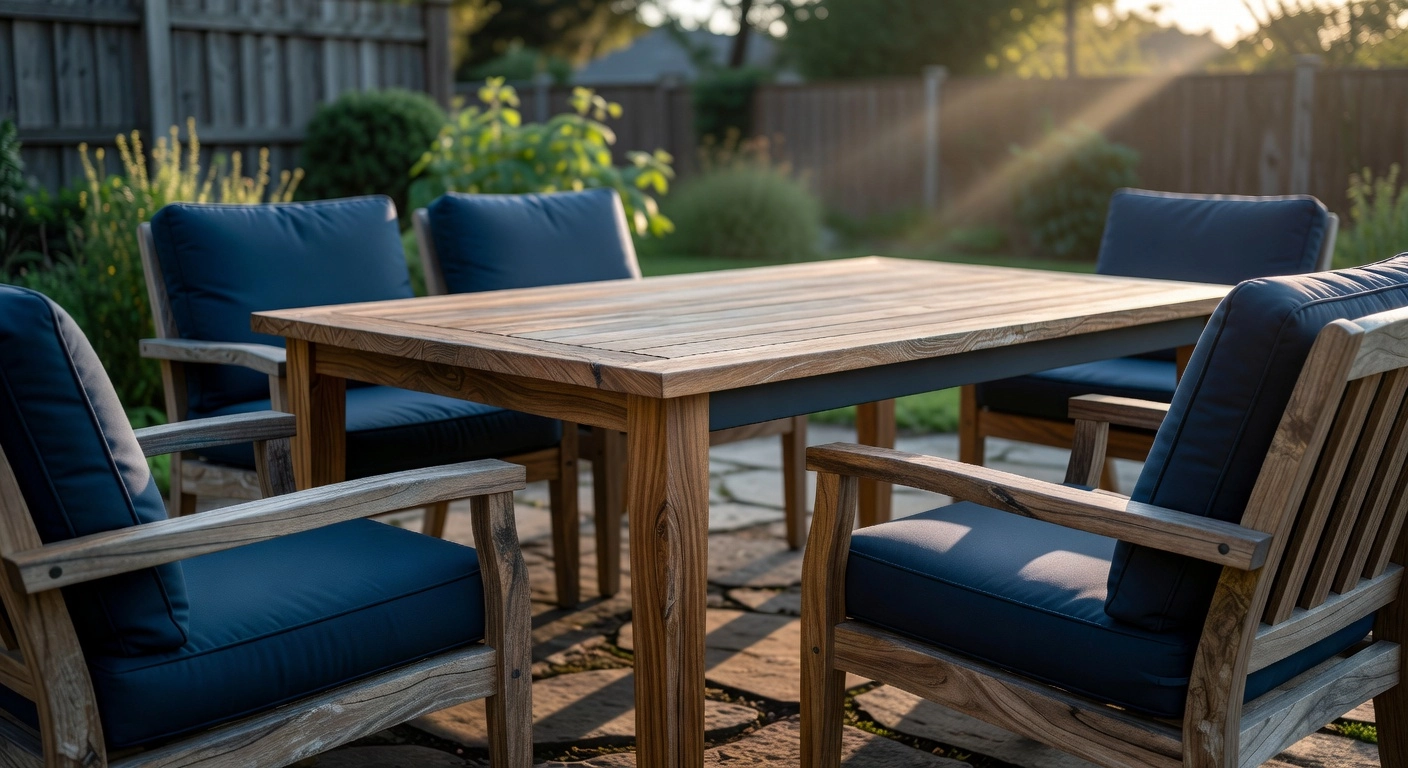
For homeowners who value organic grain patterns, natural color variation, and the living warmth of timber, real wood still delivers something composites have not replicated convincingly. Teak develops a distinguished silvery-gray patina over time. Cedar shows reddish-amber tones that shift with seasonal exposure. These qualities emerge from the material itself, not a manufactured surface texture. HDPE lumber offers consistent, uniform finishes that photograph well but can read as flat or synthetic at close range. If your outdoor space leans toward rustic, traditional, or biophilic design, and if matching existing cedar decking or natural stone is part of the picture, wood produces a visual cohesion that no composite currently equals.
DIY Builders Who Want to Build Rather Than Buy
Cedar and pressure-treated lumber remain the practical choice for anyone who wants to build their own patio furniture rather than purchase it assembled. Standard dimensional lumber, 2x4s and 2x6s, works with free or low-cost plans that include measured drawings and cut lists for Adirondack chairs, benches, and dining sets. DIY builders report constructing cedar furniture for a few hundred dollars in materials, compared to $1,500 or more for equivalent retail composite sets. That cost gap, often 50 to 80 percent savings upfront, represents a real financial advantage for budget-conscious homeowners who are willing to accept periodic sealing or staining as a trade-off. WoodStuffHQ’s build guides are specifically structured for this audience, with cut lists and step-by-step instructions that eliminate guesswork.
Temperature, Repairability, and Long-Term Restoration
Surface temperature is a practical factor that deserves attention. Natural wood stays noticeably cooler to the touch than dark HDPE in direct afternoon sun, which matters for bare feet on pool decks and open patios. Polywood’s own guidance acknowledges that darker-colored lumber retains more heat, and real-world user feedback consistently favors wood for barefoot comfort during peak sun hours without requiring cushions or lighter color selections.
Repairability adds another long-term argument for natural wood. A cedar Adirondack chair showing surface scratches or a weathered gray finish can be sanded smooth and refinished with basic tools and accessible products, such as a penetrating oil, exterior stain, or water-seal finish, restoring both function and appearance to near-original condition. That process is repeatable across decades. HDPE resists damage effectively, but deep scratches or structural issues typically require part replacement rather than surface restoration. For homeowners who treat outdoor furniture as something worth maintaining and improving over time, wood’s repairability is a genuine advantage that compounds across years of ownership.
Can You Build Wood Outdoor Furniture That Approaches Polywood Durability?
The short answer is yes, but the margin you close depends heavily on species selection, finish strategy, and construction details that most casual builders overlook. A well-executed DIY wood build will not replicate Polywood’s 20-year near-zero-maintenance lifespan, but it can deliver a structurally sound, weather-resistant piece that earns its place on a patio for a decade or longer with manageable upkeep.
Finish Strategy Determines How Long Cedar Actually Lasts
Cedar is the most accessible and cost-effective starting point for DIY outdoor furniture, and with the right finish system it outperforms its reputation. A quality exterior penetrating oil finish applied to clean, dry cedar pushes the refinishing interval to roughly 5 to 7 years under normal residential conditions. A two-coat system combining a solid-color exterior stain as a base with a UV-blocking topcoat performs similarly, adding color stability and surface protection that bare penetrating oils alone cannot match. The maintenance cycle that follows is also lighter than most builders expect: a light cleaning, a quick sand with 120-grit paper on any roughened areas, and a single refresh coat rather than full stripping. Penetrating finishes in particular are forgiving because they do not peel or blister the way film-forming varnishes do, which means surface prep before recoating takes minutes rather than hours.
Build Details That Separate a 5-Year Piece from a 15-Year Piece
Species and finish account for only part of the durability equation. The construction decisions made before a single board is cut determine whether moisture works its way into the structure within two seasons or stays out for fifteen. Use stainless steel or hot-dipped galvanized hardware exclusively; standard zinc-plated screws begin corroding and staining wood within a single wet season. Pre-drill every joint, particularly in cedar, where splitting at fastener locations creates channels that funnel water directly into the wood fiber. Elevate the finished piece on composite feet or position it over a gravel base to prevent standing water from wicking into the bottom rails.
One preparation step that separates experienced outdoor builders from beginners is sealing end grain with a penetrating water-repellent preservative before assembly, not after. End grain absorbs moisture at rates that can be five to ten times higher than face grain, and it is almost always where rot originates. Applying a preservative to every cut end before the joint is assembled means the most vulnerable surface is protected before it becomes inaccessible.
Teak Builds the Closest Natural Equivalent to Low-Maintenance HDPE
For homeowners willing to invest in premium materials, teak closes the gap with polywood outdoor furniture more than any other wood species. Teak’s natural silica and oil content make it resistant to rot, moisture, and insects with almost no chemical intervention required. A well-built teak piece can develop a silver-gray patina over years of exposure without structural compromise, which means the maintenance proposition shifts from “refinish every few years” to “clean occasionally and decide whether you prefer the patina or the original tone.” The material cost is significant, often several times the price of comparable cedar stock, but the lifecycle math shifts accordingly.
WoodStuffHQ’s step-by-step outdoor furniture build guides include measured drawings and cut lists for both cedar and teak projects, giving DIY homeowners a documented starting point that removes the guesswork from material selection and joint planning. Working from a tested cut list also reduces waste on expensive teak stock, which matters when board costs are high.
How to Decide: A Simple Framework for DIY Homeowners
The most practical decision tool available to any homeowner is a short, honest self-assessment across five dimensions. Work through each one in sequence and the right choice becomes clear without second-guessing.
Start with your maintenance tolerance. Be completely honest here, not aspirational. If that set of dining chairs will sit on the patio through three winters before you get around to resealing them, the realistic comparison is not Polywood versus beautifully maintained teak. It is Polywood versus cracked, grayed, and splintering wood that will need replacing within a decade. Polywood outdoor furniture eliminates that outcome entirely. The 20-year warranty exists because the material genuinely holds up without intervention, and that guarantee changes the financial calculus for anyone whose maintenance follow-through is inconsistent.
Factor in your specific climate. Coastal homeowners dealing with salt air and humidity, northern households navigating hard freeze-thaw cycles, and anyone in a high-UV southern or high-altitude location are all operating in conditions that penalize untreated or undertreated wood aggressively. A moderate inland climate with dry summers and mild winters narrows the performance gap considerably, but the more extreme your environment, the more Polywood’s advantages compound over time. Real-world user accounts from snowy and coastal climates consistently confirm multi-year durability with minimal upkeep.
Run the 10-year budget math. A Polywood Adirondack chair typically runs $180 to $280 upfront with near-zero maintenance costs afterward. A comparable wood chair may cost less initially, but add finish products at $20 to $50 per application, cleaning supplies, and even two hours of labor annually at a modest $25 per hour rate. Over a decade, those additions stack up to hundreds of dollars per piece, often exceeding the original purchase price. Proper annual care for outdoor wood furniture is genuinely time-consuming, and that time has real value.
Assess your DIY motivation honestly. If building and finishing outdoor furniture is part of the pleasure, and you genuinely follow through on seasonal maintenance, natural wood delivers creative satisfaction and tactile authenticity that no composite product replicates. The ability to sand, restain, and repair on your own terms is a real advantage for committed DIY homeowners. If the build is the appealing part but the annual upkeep feels like a chore, wood is likely to disappoint.
Consider a hybrid approach as the practical middle ground. Place polywood outdoor furniture in the hardest-working, most-exposed positions: dining chairs, Adirondack chairs set in direct sun, and any seating that lives outdoors year-round without cover. Reserve natural wood builds for covered porch settings, shaded pergola areas, and protected spots where conditions are milder and maintenance is actually manageable. This strategy captures the durability and low-maintenance benefits of composite lumber exactly where those benefits matter most, while preserving the warmth and customization of real wood in the environments where it can realistically thrive.
The Bottom Line on Polywood vs. Real Wood Outdoor Furniture
Polywood outdoor furniture is not a universal replacement for real wood, but it is the most rational choice for high-exposure settings where honest self-assessment reveals that maintenance will rarely, if ever, happen. Coastal yards, uncovered decks, and busy households with limited time for seasonal upkeep are where HDPE lumber earns its premium price through accumulated savings on finishes, repairs, and early replacement. The comparison between polywood and wood outdoor furniture ultimately comes down to lifestyle fit, not material superiority.
Real wood remains the right answer for DIY builders, aesthetic purists, and budget-conscious homeowners willing to invest time in proper exterior finishing and seasonal care. The ability to cut, modify, sand, refinish, and rebuild from raw lumber gives wood a flexibility that no composite product matches.
The 20-year warranty and recycled-plastic origin make Polywood a genuinely compelling long-term investment when total cost of ownership is calculated honestly across a decade. Zero sealing, staining, or replacement costs add up faster than most buyers initially estimate.
WoodStuffHQ’s wood restoration, exterior finishing, and DIY furniture build guides exist precisely to close the performance gap for wood owners committed to doing the work correctly. Use those resources to protect whichever material you choose.
The best outdoor furniture decision is simply the one you will actually maintain. That honest self-assessment matters more than any single specification, warranty term, or material comparison chart.