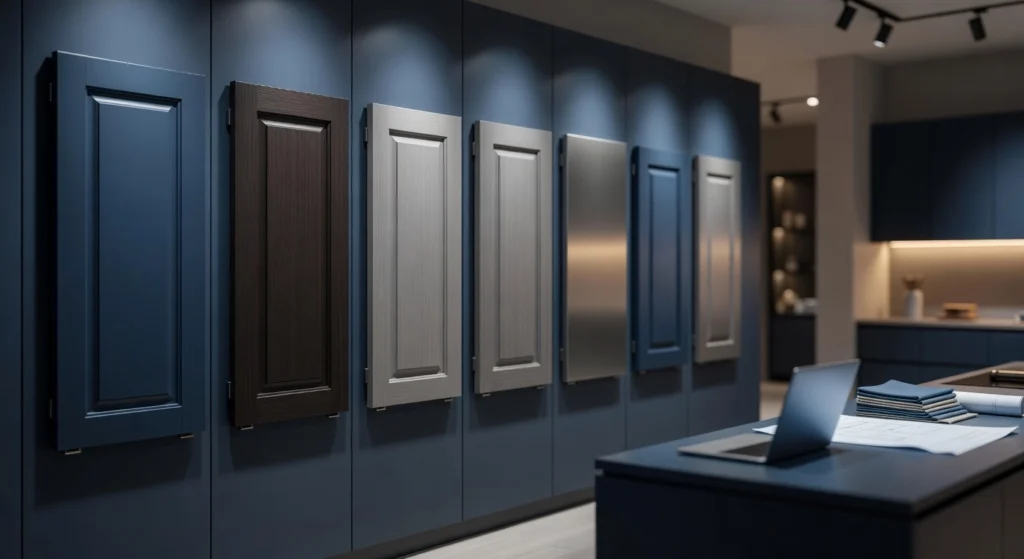

Ever walked into a kitchen and instantly felt drawn to it without knowing exactly why? Chances are, the cabinet doors had a lot to do with it. They are one of those details that quietly set the tone for an entire room, yet most people do not give them much thought until it is time for a renovation.
Here is the good news: choosing the right cabinet doors does not have to be overwhelming. Whether you are updating your kitchen, refreshing a bathroom vanity, or tackling your first home improvement project, understanding your options makes the whole process so much easier and even a little fun.
In this guide, we are breaking everything down into simple, digestible pieces. You will learn about the most popular cabinet door styles, get a realistic look at costs for different budgets, and pick up some handy tips to help you choose what works best for your space. No design degree required, just a little curiosity and a sense of what you love. Let’s dive in!
Why Replacing Cabinet Doors Is Worth It
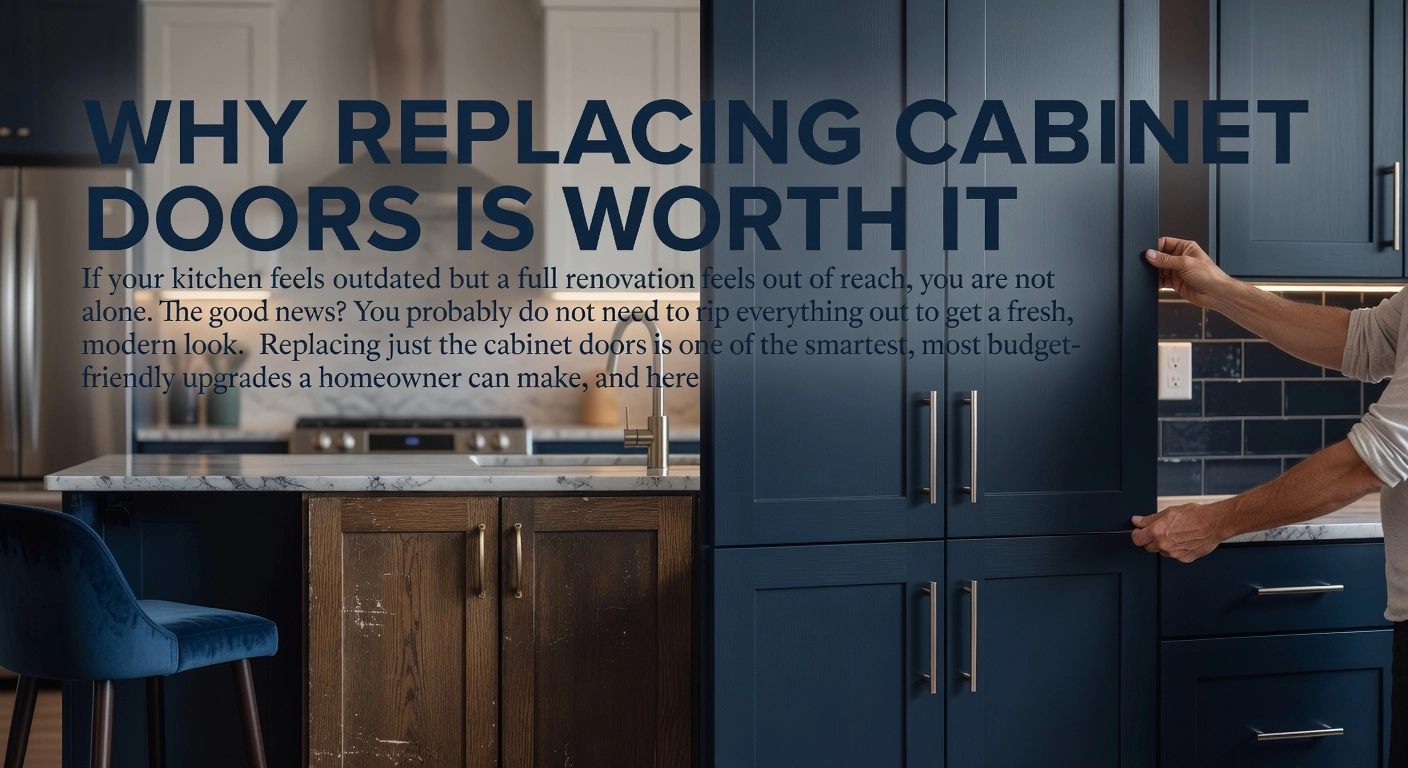
If your kitchen feels outdated but a full renovation feels out of reach, you are not alone. The good news? You probably do not need to rip everything out to get a fresh, modern look. Replacing just the cabinet doors is one of the smartest, most budget-friendly upgrades a homeowner can make, and here is why it works so well.
The savings are real and significant. Replacing cabinet doors instead of installing entirely new cabinet boxes typically saves homeowners 40 to 60% on renovation costs. Full cabinet replacement means paying for demolition, new boxes, extensive labor, and potential layout changes. Door replacement skips all of that. You keep what is working and simply upgrade what everyone actually sees.
The per-door costs are more accessible than most people expect. Materials alone range from about $30 for budget-friendly MDF doors up to $200 or more for solid hardwood options like maple, oak, or walnut. That range means you can do a phased replacement, tackling the most visible doors first without blowing your entire budget at once.
The total project cost tells an even clearer story. A full small kitchen door replacement typically runs between $1,000 and $3,000, compared to $10,000 or more for brand-new cabinet boxes. That is a dramatic difference for what often ends up looking like a completely new kitchen.
Here is something most people do not realize: the cabinet boxes themselves are usually in great shape. The boxes hide behind walls and inside corners, while the doors take all the daily wear, scratches, and style shifts. If your boxes are still square and solid, there is no good reason to replace them.
At WoodStuffHQ, the approach is simple: help you figure out whether to build, buy, or reface your cabinet doors before you spend a single dollar. Because the right choice depends on your budget, your skill level, and how much of the work you want to do yourself.
Shaker Cabinet Doors
If you had to pick just one cabinet door style that works in almost every kitchen, Shaker would win that vote every single time. It is the most popular cabinet door style in North America for good reason, and understanding what makes it tick will help you decide if it is the right fit for your space.
What makes a Shaker door a Shaker door comes down to its five-piece construction. You have two vertical stiles, two horizontal rails, and a flat recessed center panel sitting inside the frame. That is it. No carved details, no ornate molding, no fussy embellishments. The result is a clean, squared-off look that feels timeless without trying too hard. According to the most popular cabinet door styles heading into 2026, Shaker consistently ranks as the top choice among homeowners and designers alike, with some surveys placing it at over 57% of all kitchen installations.
One of the biggest reasons Shaker doors have held onto their dominance for decades is their incredible flexibility. Paint them bright white for a crisp modern farmhouse look. Stain them in a warm walnut or white oak tone for a more natural, cozy feel. Use them in a traditional cottage kitchen or a sleek contemporary space and they blend right in. That kind of versatility is rare, and it is exactly why they remain a safe, stylish choice no matter what direction your design heads.
The hottest evolution of the style right now is the slim-profile Shaker door. As noted in a full breakdown of kitchen cabinet door styles in 2026, designers are trimming the rails and stiles down from the traditional 2.5 inches to around 2 inches. That subtle change creates a lighter, less boxy silhouette that feels more refined and contemporary without abandoning the classic look entirely.
For materials, solid maple is a go-to for paint-grade projects because it sands incredibly smooth. White oak has become hugely popular for stain applications thanks to its tight, even grain. Paint-grade MDF works well for the center panel when you want a perfectly flat, smooth surface that holds primer beautifully.
On the DIY difficulty scale, Shaker sits at a solid moderate. You will need a table saw to cut your frame pieces and rip the panel groove, plus a router or router table for clean cope-and-stick joinery on the corners. If you have basic shop experience and can work carefully and precisely, this is absolutely achievable on a weekend. WoodStuffHQ has a full step-by-step Shaker cabinet door build guide below with exact measurements and a cut list to take the guesswork out of the process.
Slab and Flat-Panel Cabinet Doors
If Shaker is the style that works everywhere, slab is the style that makes a statement. A slab cabinet door is exactly what it sounds like: one single, flat piece of material with no frame, no rails, no stiles, and zero decorative detail. What you see is what you get, and for a lot of homeowners, that clean simplicity is the whole point.
This style absolutely dominates contemporary, minimalist, and European-inspired kitchens. The uninterrupted flat surface creates a seamless, almost gallery-like look that feels calm and uncluttered. Slab doors pair especially well with handleless hardware, like push-to-open mechanisms or slim integrated edge pulls, so the entire cabinet face reads as one smooth plane. According to the NKBA’s 2026 Kitchen Trends Report, 69% of design professionals identified flat and slab doors as the style gaining the most ground over the next three years. That is a significant number worth paying attention to.
What Material Should You Use?
When it comes to material, MDF (medium-density fiberboard) is the go-to choice for most slab doors, and for good reason. It stays flat, resists warping as humidity shifts throughout the seasons, and gives you a perfectly smooth surface that takes paint without showing any grain or texture underneath. If you want a crisp, solid color finish, MDF is genuinely hard to beat. The Spruce notes that MDF slab doors are also easy to maintain, since that flat face wipes down quickly with no grooves or crevices to trap grease.
Solid wood slabs are possible, and they look beautiful when done right. However, wood moves. It expands and contracts with moisture, and a wide solid panel can cup or warp over time if the grain orientation is off or the wood was not properly dried before use. If you want to go the solid wood route, look for quartersawn boards and make sure the wood is fully acclimated before installation.
How Difficult Is This for a Beginner?
The honest answer is that it depends on how you approach the project. Buying pre-cut MDF or plywood panels from a supplier is genuinely beginner-friendly. You are mainly handling edge banding, drilling hardware holes, and applying your finish or paint. That is very manageable with basic tools and a little patience.
Building slab doors completely from scratch is a different story. You will need a table saw to rip panels to precise dimensions, and your cuts need to be dead-on because there is no frame to hide small errors. It is not impossible for a motivated beginner, but it does require more confidence with power tools than the pre-cut route demands.
Raised Panel Cabinet Doors
If Shaker is the crowd-pleaser and slab is the minimalist statement, raised panel cabinet doors are the ones that bring genuine old-world character to a kitchen. The defining feature is the center panel that sits proud of the surrounding frame, meaning it actually rises up above the stiles and rails around it. That elevation creates depth and shadow lines that catch the light and give the door a sculptural, three-dimensional quality you simply cannot fake with a flat surface.
This style has been a go-to choice for traditional, colonial, and farmhouse kitchens for decades, and for good reason. It pairs naturally with rich finishes, decorative hardware, crown molding, and the kind of warm, layered look that makes a kitchen feel established and formal rather than fresh out of a showroom. If your home leans classic rather than contemporary, raised panel doors can anchor the whole space beautifully.
That said, if you are a beginner DIYer, it is worth knowing upfront that these doors are more technically demanding to build than Shaker or slab versions. You will need a router table along with cope-and-stick or rail-and-stile router bit sets, and often a separate raised-panel bit on top of that. The process involves profiling the frame pieces, coping the rails to fit the stiles precisely, and shaping the panel itself. Tight joints and proper panel float (leaving room for wood movement) matter a lot here. Many woodworking resources classify this as an intermediate-to-advanced project. You can learn more about the joinery and construction process over at Eagle Woodworking’s raised panel cabinet door guide or check out how-to guidance from AWINET for a solid technical foundation before you start.
For materials, solid wood species like oak, cherry, and alder are the top choices. These woods have the grain character and warmth to really show off the raised profile, especially under a stain or natural oil finish. MDF works for painted versions on a budget, but solid wood is where this style truly shines.
In terms of where this style fits today, raised panel doors remain genuinely popular in the South and Midwest U.S., where traditional and transitional design preferences are strong. On the coasts, where slim Shaker and flat slab profiles dominate 2026 design trends, raised panel is less prominent, but it is far from gone. For homeowners who want timeless elegance over trend-chasing, it remains a deliberate and rewarding choice.
Inset Cabinet Doors
If you have ever walked into a high-end kitchen and thought, “this looks like a piece of furniture rather than just cabinets,” there is a good chance you were looking at inset cabinet doors. Unlike the overlay styles we have covered so far, inset doors sit completely inside the cabinet frame rather than resting on top of it. When you close them, they align flush with the face frame, creating that seamless, built-in look that feels more like fine furniture than standard cabinetry.
This configuration is widely considered the highest-end door style available in framed cabinetry. You will mostly find it in custom and semi-custom cabinet lines rather than stock options at big-box stores. The aesthetic is timeless and works beautifully across traditional, transitional, and even modern kitchens depending on the door profile you choose. Pair inset doors with a classic raised panel design for a traditional feel, or go with a slim Shaker profile for something cleaner and more contemporary.
The Precision Factor
Here is where things get real for DIYers: inset doors demand extremely precise measurements and installation. The gap around all four sides of the door, called the reveal, must be perfectly consistent, typically around 1/16 inch. That is a very tight tolerance. Even small errors in measuring or hanging can result in uneven gaps, doors that stick, or panels that bind when humidity causes the wood to expand slightly. Understanding how inset doors differ from overlay styles can help you decide whether this level of precision fits your skill set and project goals.
Cost and Skill Level
Because of those tighter tolerances, inset doors cost noticeably more to manufacture and buy. Expect to pay a 30 to 50 percent premium over standard overlay doors. DIY installation is absolutely possible, but it is time-consuming and less forgiving than hanging overlay doors. This style is genuinely best suited for experienced woodworkers or homeowners who are patient, detail-oriented, and willing to invest serious time in fitting and adjusting each door individually. If that sounds like you, the result is absolutely worth it.
Beaded, Fluted, and Textured Cabinet Doors
If you want something with a little more personality than Shaker but do not want to go full traditional with raised panels, this family of textured and detailed door styles might be exactly what you are looking for.
Beaded cabinet doors are a great starting point for beginners who want subtle detail without a big commitment. A small, rounded bead is routed into the inside edge of the door frame, creating a delicate shadow line where the frame meets the center panel. It sounds minor, but that tiny detail gives the door a craftsman or cottage character that flat Shaker simply cannot match. Think farmhouse kitchens, coastal bathrooms, or any space that wants a handcrafted, furniture-like quality without feeling overdone.
Fluted and reeded doors are a completely different animal, and they are absolutely having a moment right now. These doors feature vertical grooves running across the panel face, and according to cabinet door trend reports from production floors in 2025, they rank among the fastest-rising styles heading into 2026. The grooves catch light and create movement across the surface, giving the door a sculptural, almost architectural quality. The look pairs especially well with natural wood tones like white oak.
Here is an important tip for beginners: do not use fluted doors everywhere. They work best as accents on a kitchen island, a pantry cabinet, or a single run of uppers. Full-room application can feel visually busy and makes dust collection more of a chore. Strategic placement is the move.
Textured doors as a whole also have a practical advantage that does not get enough credit. As design experts note, textured surfaces hide fingerprints, minor scratches, and everyday wear far better than smooth slab or basic Shaker doors, especially in matte finishes.
When it comes to construction, you have three solid options. Routed solid wood gives you authentic grain and premium feel. Thermofoil-wrapped MDF keeps costs down while still delivering consistent texture. Glass inserts, whether fluted or frosted, add a lighter, more open quality that works beautifully on upper cabinets. Mixing materials, like textured wood on the island with flat doors on the perimeter, is one of the most popular approaches right now and gives your kitchen a layered, designer look without requiring a full overhaul.
Cabinet Door Materials: Which One Should You Choose
Once you have settled on a door style, the next big decision is what that door is actually made of. Material affects how your doors look, how long they last, how they handle your kitchen’s humidity, and what kind of finish they can take. Here is a breakdown of the main options so you can choose with confidence.
Solid Wood (Maple, Oak, White Oak, Cherry)
Solid wood is the gold standard for cabinet doors, and for good reason. Species like maple, oak, white oak, and cherry are incredibly durable, can be sanded and refinished multiple times, and accept stain beautifully to show off natural grain. White oak in particular has become the go-to choice in 2025 and 2026 for homeowners who want that warm, natural wood tone that feels timeless rather than trendy. The trade-off is cost and sensitivity to moisture. Solid wood expands and contracts with humidity changes, which can lead to warping or cracking in kitchens that are not well-ventilated or climate-controlled. If you go this route, proper sealing is non-negotiable, and you should expect to pay a premium.
MDF and Thermofoil
MDF (medium-density fiberboard) and thermofoil are the smart picks for painted kitchens. MDF is an engineered wood product with a dense, smooth surface that holds paint incredibly well without showing grain or knots. Thermofoil takes that a step further by wrapping an MDF core in a heat-fused vinyl film, giving you a seamless, wipe-clean finish right out of the box. Both options resist warping better than solid wood in painted applications and come in at a lower price point. The downside is that if the surface gets chipped or damaged, moisture can sneak into the MDF core and cause swelling. These materials are not great candidates for staining, but for a crisp, modern painted look, they are hard to beat on value.
Reclaimed and FSC-Certified Wood
If sustainability matters to you, reclaimed and FSC-certified wood options are worth a look. Reclaimed wood, salvaged from old barns or structures, brings genuine character with its weathered patina and natural history. FSC-certified wood comes from responsibly managed forests, so you get the look of solid wood with a cleaner environmental footprint. You can read more about choosing the right materials in this guide to the best kitchen cabinet materials. The catch is sourcing; availability can be inconsistent, lead times are longer, and the wood may need additional treatment before use. However, for a renovation that prioritizes warmth, individuality, and eco-conscious choices, these options deliver something no mass-produced door can replicate.
Plywood Core Doors
Plywood core doors sit right in the middle of the pack in the best possible way. The cross-layered construction gives plywood better moisture resistance than MDF and better dimensional stability than solid wood, meaning it is less likely to warp in a humid kitchen. It is also lighter than solid wood, which makes installation easier if you are doing this yourself. Plywood holds screws well, which matters for hinges and hardware over time. It typically costs less than solid wood but more than basic MDF, making it a practical choice for budget-conscious projects that still need reliable performance.
Match Your Material to Your Finish Plan
The simplest rule to remember: choose solid wood if you want to stain, choose MDF if you want to paint, and choose thermofoil if you want low-maintenance color that just needs a quick wipe-down. Plywood works well as a structural core in hybrid builds, where you might use MDF doors with a plywood cabinet box for the best of both worlds. Getting this match right from the start saves you a lot of frustration down the line.
What Cabinet Doors Actually Cost: A Practical Breakdown
Before you fall in love with a door style, it helps to know what you are actually getting into budget-wise. Cabinet door costs vary more than most people expect, so here is an honest look at what the numbers typically look like.
Material-Only Costs Per Door
When you are just buying the door itself, without installation, here is roughly what to expect. A basic MDF slab door runs around $30 per door, making it the most budget-friendly option if you are going for a clean, modern look. Step up to a mid-grade Shaker door and you are looking at $75 to $100 per door, which covers most of the five-piece MDF or wood composite options you would find through an online door supplier. If you want solid hardwood with a raised panel, budget $150 to $200 or more per door, and that number climbs higher for premium species like cherry or white oak.
What a Pro Installation Actually Costs
Here is where the sticker shock usually sets in. When you hire a professional to handle everything, including removing old doors, measuring, installing new ones, adjusting hinges, and adding hardware, the total installed cost typically runs $411 to $595 per door. Labor alone accounts for roughly $140 to $220 of that per door. The material is often the smaller part of the bill once a pro gets involved.
Full Kitchen Project Totals
For a small kitchen with 10 to 15 cabinet doors, the numbers break down like this. Going the DIY route, buying doors and handling installation yourself, typically costs $1,000 to $3,000 for the whole project. Hiring a professional to handle everything from start to finish pushes that total to $5,000 to $9,000 or more. That gap is a big reason so many homeowners choose to tackle door replacement themselves, even with zero prior experience.
Why Refacing Can Be a Smart Middle Ground
If replacing only the doors is not quite enough but a full cabinet gut-job feels excessive, refacing is worth considering. Refacing means installing new doors and drawer fronts while adding a veneer over your existing cabinet boxes. It typically saves 40 to 60 percent compared to tearing out and replacing everything, and the finished result looks nearly identical to a full replacement.
The DIY Build Option
If you are willing to supply the labor yourself and build paint-grade MDF Shaker doors from scratch, your material cost can drop to as low as $15 to $40 per door. That is a significant savings, and it is completely achievable for a beginner with basic tools and a little patience.
Should You Build or Buy Your Cabinet Doors
Once you have figured out which style and material you want, the next question is whether you are going to order your cabinet doors or make them yourself. Both options are totally valid, and the right answer really depends on your situation, your tools, and how you want to spend your weekend.
When Buying Makes More Sense
Buying pre-made or custom-ordered doors is the smarter move in a few specific situations. If you want consistent, professional-looking results without a steep learning curve, ordering from an online supplier is hard to beat. Every door arrives with clean edges, precise joinery, and uniform sizing, which matters a lot when you are replacing doors across an entire kitchen. If your cabinets have irregular openings, which is common in older homes, custom online suppliers are actually a great fit because they build doors to your exact measurements rather than forcing you to work with standard stock sizes. And if you do not own a table saw, miter saw, or router, buying is simply the practical choice. Jumping into door building without the right tools usually leads to frustrating results and wasted materials.
Online suppliers offer custom-sized replacement doors in popular styles like Shaker, slab, and raised panel, shipped flat for easy swaps. You can typically choose your wood species, finish level, and even pre-bored hinge holes, making the installation process pretty straightforward.
When Building Makes More Sense
Building your own doors is genuinely rewarding if your goals lean toward saving money, getting exact dimensions, or picking up a new skill. Labor is the biggest cost when buying doors, so cutting that out yourself can lead to real savings, especially for larger kitchens. You also get total control over wood species, proportions, and details that a supplier might not offer.
To build basic Shaker or slab doors, you will need a table saw, a miter saw, a pocket hole jig or router, and finishing supplies like sandpaper, stain or paint, and a topcoat sealer.
That sounds like a lot, but slab doors in particular are beginner-friendly since they are essentially one flat panel cut to size and finished.
WoodStuffHQ’s build guides make the DIY route even more approachable by providing measured drawings and cut lists for common cabinet openings, so you are not guessing on dimensions or figuring out material quantities from scratch.
Cabinet Door Trends Shaping Kitchens in 2026
If you are planning a kitchen refresh, it helps to know which direction things are heading. Here are the five biggest cabinet door trends shaping kitchens in 2026, so you can make choices that feel current now and hold up for years to come.
1. Slim Shaker profiles are taking over from traditional wide-rail versions. Classic Shaker doors are not going anywhere, but the version everyone wants right now has noticeably narrower rails and stiles. Traditional Shaker frames often run 2.5 inches or wider, while the slim version brings that down to around 2 inches. It sounds like a small difference, but it makes cabinets look lighter, less chunky, and more architectural. If you love the clean, familiar look of Shaker but want something that feels a little more modern and refined, the slim profile is the update worth knowing about.
2. White oak is the wood of the moment. According to the NKBA 2026 Kitchen Trends Report, 51% of design professionals named white oak as their preferred cabinet wood. It is easy to see why. Unlike red oak, white oak has warm, neutral tones without the orange undertone, a beautiful straight grain, and natural moisture resistance. It also plays extremely well with matte finishes, which makes it a perfect match for the next trend on this list.
3. Matte finishes are replacing high-gloss, and wire-brushed textures are gaining ground fast. High-gloss cabinets show every fingerprint and feel a bit dated at this point. Matte and satin finishes hide wear better, feel more premium, and complement natural wood beautifully. Wire-brushed textures, especially on white oak doors, add tactile depth without going over the top.
4. Two-tone designs are now mainstream, not experimental. Darker lower cabinets paired with lighter uppers, or a bold island color against neutral perimeter cabinets, have moved well beyond trend territory. Mixed materials, including wood combined with glass inserts or metal accents, are also showing up regularly in everyday kitchens rather than just high-end renovations.
5. Fluted panels are becoming a standard feature. Fluted and paneled door styles spent a couple of years as the exciting new option. Now they are becoming a reliable staple. The vertical detailing adds visual height and a crafted, furniture-like quality that pairs naturally with the warm wood tones and matte finishes dominating 2026 design.
Overlay vs. Inset: Understanding Cabinet Door Fit
Before you order a single door or make your first cut, there is one technical detail that trips up more DIYers than almost anything else: understanding how your cabinet doors are supposed to fit relative to the cabinet box or face frame. This is called the overlay, and getting it wrong means doors that do not line up, hinges that do not work, and a project that costs you extra time and money to fix.
Full Overlay
Full overlay doors cover almost the entire face frame, leaving only a tiny gap (usually around 1/8 inch) between adjacent doors. When you look at a bank of cabinets with full overlay doors, you barely see any of the frame at all. This gives kitchens that clean, seamless, modern appearance you see in contemporary and transitional designs. Full overlay is the most common fit in frameless European-style cabinets, and it is increasingly popular in framed cabinets too because it maximizes storage access and hides the frame completely.
Half Overlay (Standard Overlay)
Half overlay, sometimes called partial or standard overlay, is the traditional choice. Each door covers only part of the face frame, leaving roughly half an inch to two inches of frame visible around each door. If you open a cabinet in an older home and see a strip of wood framing around every door, that is half overlay. It is more budget-friendly and a little more forgiving to install, which is why it dominated builder-grade cabinetry for decades. The downside is that it can look dated compared to full overlay or inset options.
Inset Fit
Inset doors sit completely inside the face frame opening, flush with the front surface. The frame itself becomes a visible border around each door. This creates a high-end, furniture-like look, but it requires precise measurements and careful fitting. Wood movement alone can cause inset doors to stick seasonally if the tolerances are not right.
The Measurement Step You Cannot Skip
Choosing the wrong overlay before ordering is the single most expensive mistake beginners make. Before you order replacements or start cutting new stock, measure your existing door reveal (how much of the frame is currently covered or exposed) and identify your hinge type. Write those numbers down and double-check them against the manufacturer’s specs before committing to anything.
Finishing, Painting, and Maintaining Cabinet Doors
Once you have chosen your style, material, and fit, the last step that actually determines how your doors look five or ten years from now is finishing and maintenance. Getting this part right is less about buying the fanciest product and more about understanding what your specific material needs.
Match Your Finish to Your Material
The finish you choose should follow your material, not just your personal preference. For solid wood doors made from white oak (which is everywhere in 2025 and 2026 kitchens), matte lacquer or an oil-based finish like a hard wax oil is the right call. These finishes let the natural grain show through, sit close to the wood surface, and give that warm, organic look that makes white oak so appealing right now. For MDF or paint-grade doors, skip the stain entirely since MDF absorbs unevenly and the results look patchy. Instead, go with a semi-gloss alkyd or urethane enamel paint for a smooth, durable, furniture-grade surface that resists chipping and moisture.
Prep Is Everything
Here is the part most beginners skip, and it is the number one reason painted cabinet doors start peeling within a couple of years. Proper prep matters far more than which topcoat you buy. The process goes: remove the doors, degrease thoroughly with a TSP substitute or strong dish soap solution, scuff-sand to give the surface some tooth, apply a quality bonding primer, then finish with one or two topcoats. Sanding lightly between coats with 220-grit paper makes a noticeable difference in the final smoothness. WoodStuffHQ’s guides on degreasing cabinets and choosing finishes by wood species walk through exactly this process and apply directly to door projects, not just full cabinet refreshes.
Common Problems to Watch For
Kitchen doors take a beating from heat, steam, and grease. The most frequent issues are water stains near the sink, scratch buildup on lower doors, grease residue near the stove and dishwasher, and peeling thermofoil edges on vinyl-wrapped MDF doors. Thermofoil peeling is particularly frustrating because heat and moisture cause the vinyl to lift at the corners, and once it starts, it tends to spread. Your best options are carefully re-gluing early separations or repainting after removing the thermofoil entirely with a heat gun.
Keep Them Clean the Right Way
Clean your cabinet doors monthly with a damp cloth and a small amount of mild dish soap. Wipe gently, then dry the surface immediately so moisture does not work its way into edges or seams. One important thing to avoid: silicone-based polishes and spray cleaners. They feel great in the short term but leave a residue that prevents paint or finish from bonding if you ever want to touch up or repaint down the road.
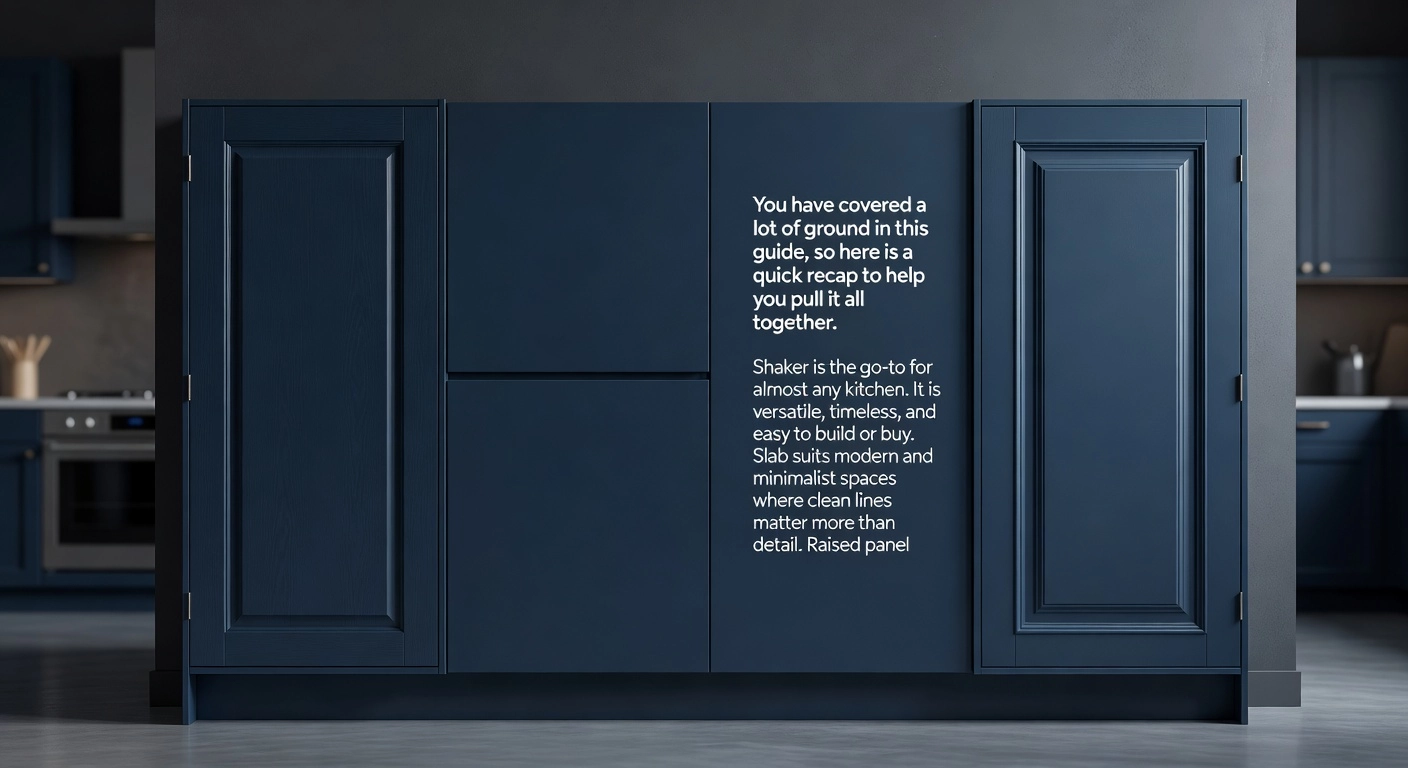
Choosing the Right Cabinet Door for Your Kitchen
You have covered a lot of ground in this guide, so here is a quick recap to help you pull it all together.
Shaker is the go-to for almost any kitchen. It is versatile, timeless, and easy to build or buy. Slab suits modern and minimalist spaces where clean lines matter more than detail. Raised panel brings traditional character and works beautifully in formal or classic kitchens. Inset doors deliver a furniture-grade look but require precise fitting. Beaded and fluted styles add texture and personality, perfect for farmhouse or cottage aesthetics. Recessed panel splits the difference between Shaker simplicity and traditional depth.
The biggest takeaway from all of this? You do not need to replace your entire cabinet boxes to get a kitchen that looks brand new. Refacing or swapping just the doors can save you 40 to 60 percent compared to a full replacement, and a confident DIY build can push those savings even further.
Before you order or cut anything, confirm your overlay type (full, partial, or inset) and measure your existing doors carefully, including height, width, thickness, and hinge placement. That one step prevents most of the costly mistakes beginners run into.
For your next steps, WoodStuffHQ has step-by-step build guides, a dedicated finishes page covering 2026 trends like matte coatings and natural white oak stains, and restoration guides if your existing doors just need some love rather than a full swap.
Here is your action plan: measure your current doors, pick the style from this guide that fits your kitchen and budget, then decide whether to build or buy based on your tools and timeline.
Conclusion
Choosing the right cabinet doors is one of the simplest ways to transform a space without a full renovation. Here is a quick recap of what we covered: styles range from classic raised panel to sleek flat front designs, costs vary widely based on material and finish, and the best choice always comes down to your personal style and budget.
The most important takeaway? You do not need to spend a fortune to get a look you love. A little planning and the right information go a long way.
Now it is your turn. Measure your cabinets, set a realistic budget, and start browsing styles that speak to you. Whether you hire a pro or tackle it yourself, fresh cabinet doors can completely change how your home feels. Your dream kitchen is closer than you think.



Pingback: 15 Bathroom Cabinet Ideas for Every Style and Budget - WoodStuffHQ