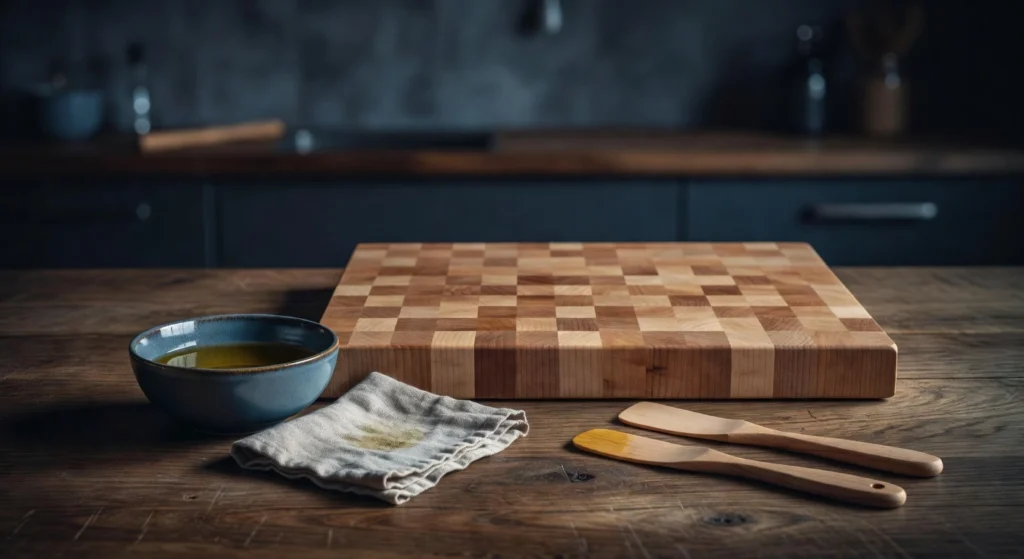

You spent good money on that beautiful wooden cutting board, so the last thing you want is to watch it crack, warp, or turn into a breeding ground for bacteria. Sound familiar? Here is the good news: a little bit of regular care goes a long way, and it is much simpler than you might think.
Conditioning a wooden cutting board is one of those kitchen tasks that beginner cooks often overlook, but it makes a huge difference in how long your board lasts and how safe it is to use. Think of it like moisturizing your skin. Without that extra care, wood dries out, splits, and becomes harder to clean properly.
In this guide, you will learn exactly how to condition your wooden cutting board from start to finish. We will cover the best oils and products to use, how often you should be doing this, and a simple step-by-step process that anyone can follow. No experience needed, no fancy tools required. By the end, you will have everything you need to keep your cutting board looking great and performing even better for years to come.
What Does Conditioning a Wooden Cutting Board Actually Mean
Conditioning a wooden cutting board is a two-part process: first you oil the wood to hydrate it from the inside out, then you follow up with a wax or board cream to seal everything in. A lot of beginners assume that any kitchen oil will do the trick, but that’s actually one of the most common mistakes people make. Proper conditioning uses food-grade mineral oil for penetration and a beeswax-based cream or wax for surface protection. Both steps work together, and skipping either one leaves your board only halfway protected.
Here’s why it matters: wood is naturally porous, meaning it’s full of tiny channels and fibers that absorb and release moisture depending on the environment around them. Every time you wash your board, dry indoor air pulls moisture out of those fibers. Heat from nearby stoves or warm water accelerates that process even further. Over time, the wood simply dries out.
When that happens, the consequences are pretty easy to spot. A neglected board starts to crack along the grain, warp or cup unevenly, and in multi-piece boards, it can actually split right along the glue joints as the wood shrinks and shifts. The surface also becomes rough and splintery, which dulls your knives faster and makes the board harder to clean properly. According to Serious Eats and NYT Wirecutter, warping is one of the most common and most preventable causes of board failure.
Think of the two conditioning steps as having separate jobs. Oiling is about hydration; the mineral oil soaks deep into the wood fibers and keeps them supple and flexible. Waxing is about protection; the beeswax layer sits on top and locks that moisture in while also creating a water-repellent barrier against staining and odors. Oil without wax leaves the wood vulnerable. Wax without oil first means you’re just sealing dry, thirsty wood.
The good news is that this entire process is genuinely beginner-friendly. You don’t need any special equipment, just a clean cloth or paper towel, your oil, and your wax or board cream. Active hands-on time runs about 10 to 15 minutes, and The Kitchn notes that most of the process is simply waiting for the oil to absorb. Done consistently, conditioning can keep a wooden cutting board in great shape for decades.
What You Need Before You Start
Before you get started, gather a few simple supplies. Having everything on hand makes the whole process smoother and means you won’t have to stop halfway through.
Food-grade mineral oil is the only oil you should use on your cutting board. It’s completely flavorless, odorless, and most importantly, it won’t go rancid inside your wood. You can find it at most hardware stores, kitchen shops, or online, and it’s usually very affordable. Avoid reaching for whatever cooking oil you have on the counter. Olive oil, vegetable oil, and coconut oil all seem like reasonable choices, but they’re actually problematic for wood care. These oils contain compounds that oxidize over time, and once they’re trapped inside the wood’s pores, they break down and go rancid. That leads to unpleasant smells, off flavors transferring to your food, and potential food safety concerns you really don’t want in your kitchen.
Once you have your mineral oil, you’ll also want a beeswax-based board cream or wax blend to use as a finishing step. Products like Howard Cutting Board Wax or Boos Block Board Cream seal the surface after oiling, adding a moisture-repellent barrier that helps protect the wood between conditioning sessions. Think of the oil as the hydration step and the wax as the protective layer on top.
For application, grab a few lint-free cloths or paper towels. These are perfect for rubbing oil into the wood and buffing out the wax without leaving fibers behind.
One optional but handy addition is a sheet of 220-grit sandpaper. If your board has visible scratches or rough patches, a quick light sanding before you condition it will smooth things out and help the oil absorb more evenly. It’s not required for newer boards, but it makes a real difference on boards that have seen a lot of use.
Step 1: Clean and Dry Your Board Properly Before Conditioning
Before you put a single drop of oil on your board, you need to make sure it’s properly cleaned and completely dry. Skipping this step or rushing through it is one of the most common mistakes beginners make, and it can cause real problems down the line.
Start by washing your board by hand using hot water and a mild, unscented dish soap. Use a sponge or soft scrubber and make sure you scrub both sides of the board, even if you only used one side for chopping. This matters because wood absorbs moisture, and if only one side gets wet, it can dry unevenly and cause the board to warp or cup over time.
Whatever you do, don’t soak the board in the sink or toss it in the dishwasher. Standing water and the intense heat from a dishwasher cycle cause irreversible warping, swelling, and cracking. Wood is naturally porous, so it soaks up water fast, and once that structural damage sets in, there’s no fixing it. The USDA recommends hand-washing wooden boards with hot soapy water as the safest and most board-friendly approach.
After washing, wipe the board down with a clean towel to remove surface water, then stand it upright on its edge rather than laying it flat on the counter. This allows air to circulate around all surfaces evenly, which helps it dry uniformly and prevents moisture from pooling underneath.
Then comes the part most people skip: waiting. Let your board air-dry for several hours, or better yet, overnight. Applying oil to a board that still has moisture in the wood traps that dampness inside, creating the perfect environment for mold and mildew to grow, often showing up as dark spots along the edges. Patience here protects your board and keeps it food-safe.
Step 2: Apply Food-Grade Mineral Oil Generously
Now that your board is clean and bone dry, it’s time for the most satisfying part of the whole process: feeding that thirsty wood with a generous coat of food-grade mineral oil.
Pour directly and don’t be shy about it. Drizzle a generous amount of mineral oil straight onto the board surface. More is more here, especially the first time around. You want to see a visible puddle forming, not just a light drizzle. Use your lint-free cloth to spread the oil across every inch of the top surface, then flip the board and repeat on the bottom. Don’t forget the sides either, because exposed edges and sides absorb just as much moisture from the air and sink as the cutting surface does. Every surface needs coverage.
Work the oil in with intention. Using your cloth, rub the oil into the wood using small circular motions. This helps push the oil down into the wood fibers rather than just sitting on top. Pay special attention to the end grain, which is the short ends of the board where the wood fibers are cut across. End grain is far more porous than the flat face of the board and will soak up oil noticeably faster, so apply a little extra there and give it a thorough rub-down. According to wood cutting board care guidance from WebstaurantStore, covering all surfaces, including the back, is essential for even protection.
Now the hardest part: waiting. Let the oil soak in for at least one to two hours. Overnight is even better if you can manage it. Stand the board upright in a dish rack so air can circulate around it. Once the time is up, wipe away any excess oil that hasn’t been absorbed with a clean cloth.
If your board is brand new, plan to repeat this process. New boards are genuinely thirsty wood, and one coat won’t cut it. Repeat the full oiling process two to three times over several days before you ever use the board for food prep. As NH Bowl and Board explains in their seasoning guide, new and freshly sanded boards benefit greatly from multiple applications spaced out over time.
Don’t be alarmed if the oil seems to disappear almost immediately on those first applications. The wood absorbing oil that quickly is a good sign; it means the wood is dry and pulling in exactly what it needs. By the second or third application, you’ll notice the oil sitting on the surface a bit longer before soaking in, which tells you the wood is getting closer to fully saturated and ready for use.
Step 3: Seal with Board Cream or Beeswax Blend
Once your oil has fully soaked in and the surface feels completely dry to the touch, it’s time for the finishing step that really locks everything in. Grab your board cream or beeswax blend and a clean cloth, because this is what takes your board from simply oiled to genuinely protected.
Apply a small amount of cream to the surface. You don’t need much here; a little goes a long way. Scoop out roughly a teaspoon-sized amount and drop it onto the board. Too much just means more buffing later, so start small and add more if needed. This is also a great time to check out a DIY beeswax cutting board conditioning cream if you’d rather make your own blend at home.
Work it in using small circular motions. Use your cloth to massage the wax into the wood, moving in gentle circles across the entire surface. Don’t forget the sides and the bottom of the board. These edges take a lot of moisture exposure during washing, so skipping them leaves a weak spot in your protection.
Let it sit for 20 to 30 minutes. This waiting period allows the wax to settle and form a thin, even protective film across the wood fibers. For a deeper look at what that finish actually does, this beeswax finish guide on Instructables explains the process clearly.
Buff off the excess with a clean, dry cloth. Wipe the board down with firm, smooth strokes until the surface feels smooth and looks slightly shiny rather than greasy or tacky.
The reason this step matters so much is that oil alone can evaporate or wash away over time. The wax layer acts as a seal on top, locking that hydration inside the wood while creating a barrier that resists water penetration and food stains. Think of the oil as the moisture and the wax as the shield that keeps it there.
How to Tell If Your Board Needs Conditioning: The Water-Bead Test
Here’s a dead-simple way to know if your board is ready for another round of conditioning: the water-bead test. All you do is sprinkle a few drops of water onto the surface of your clean, dry board and watch what happens over the next few seconds.
If the water beads up into little round droplets that sit on top of the surface and roll off easily, your board is in great shape. That reaction means the oil and wax layer is still doing its job, creating a protective barrier that repels moisture instead of absorbing it. Think of it like water rolling off a freshly waxed car.
If the water spreads out, soaks into the wood, or leaves a dark wet spot behind, that’s your board telling you it’s thirsty. According to America’s Test Kitchen, a well-conditioned board has a satiny, lustrous feel and causes water to bead immediately. When that stops happening, it’s time to go back through your oil and wax routine.
The whole test takes about 10 seconds, and it’s worth making a quick habit of it after every few uses or washes. As noted by Just Jeannie Jacobs, running this check regularly removes the guesswork entirely. Boards that get heavy daily use or frequent washing will fail the test faster since repeated scrubbing strips the conditioning away more quickly. A board you use occasionally might pass for weeks without any attention.
How Often Should You Condition a Wooden Cutting Board
Now that you know how to condition your board, let’s talk about how often you actually need to do it. The answer changes depending on whether your board is brand new or already broken in.
Brand new boards need the most attention upfront. For the first one to two weeks, apply food-grade mineral oil every day or every other day. This intensive phase is all about fully saturating the wood before it ever touches food. Fresh boards are completely dry from manufacturing and storage, so they’ll soak up oil quickly at first. Keep going until the wood stops absorbing as fast, which tells you it’s finally getting close to fully hydrated.
After that initial saturation phase, dial it back to once a week for the rest of your first month. Think of this as the maintenance phase where your board settles into regular use while still building up its protective foundation.
From there, ongoing conditioning is pretty relaxed. If you use your board several times a week, aim to condition it monthly. If it only comes out occasionally, two to three times per year is plenty.
A few things will push you toward more frequent conditioning: daily heavy use, washing the board often with hot soapy water, dry winter air, living somewhere with low humidity, or keeping the board near your stove or a sunny window.
Here’s a practical tip that actually works: tie conditioning to another monthly kitchen task like sharpening your knives. Doing both together means neither one gets forgotten.
Common Conditioning Mistakes That Damage Your Board
Even when you’ve got the right products and good intentions, a few sneaky habits can undo all your hard work. Here are the most common conditioning mistakes to watch out for.
Using cooking oils like olive oil, vegetable oil, or coconut oil. This one trips up a lot of beginners because it seems logical. You use olive oil in the kitchen, so why not on your board? The problem is that these oils contain unsaturated fats that oxidize when exposed to air inside the wood. Over time, they turn rancid, leaving your board with a sour smell, a sticky residue, and potential off-flavors that transfer to your food. Olive oil can start going rancid in as little as four to eight weeks. Stick with food-grade mineral oil; it’s stable, odorless, and won’t spoil.
Applying board cream or wax without oiling first. Wax creates a nice protective layer on the surface, but it doesn’t penetrate deep enough to actually hydrate the wood fibers underneath. Without oil soaking in first, your board stays dry on the inside and becomes prone to cracking. Always oil first, let it absorb fully, then follow up with your cream or beeswax blend as a sealant.
Only oiling the top surface. Wood responds to moisture on every side, so treating just the face you chop on creates uneven moisture levels throughout the board. That imbalance leads directly to warping and cracking. Make sure you coat the bottom, all four sides, and especially the end grain, which is extra thirsty and absorbs oil fastest.
Soaking the board thinking more is better. Flooding your board with oil or leaving water pooled on the surface causes more harm than good. Excess liquid seeps into glue joints on edge-grain and end-grain boards, causing them to swell and eventually separate. Apply oil in thin, even coats, let it absorb for 20 to 30 minutes, then wipe away any excess before it sits too long.
Drying your board flat after washing. Setting a wet board flat on the counter traps moisture against the underside, creating the perfect environment for mold and mildew. After washing, towel-dry your board immediately, then stand it upright on its edge so air can circulate around every surface while it finishes drying.
Seasonal and Climate Tips for Year-Round Board Care
Your board’s needs actually shift with the seasons, and paying attention to those changes can save you from dealing with a cracked or warped board down the road.
Winter is the toughest season for wooden boards. Indoor heating systems, whether forced-air furnaces or baseboard heaters, pull humidity out of the air fast. That dry indoor air then pulls moisture right out of your wood. During winter months, you may find your board needs conditioning every two to three weeks instead of the usual monthly schedule. Run the water-bead test more often during this time of year, because the signs of dryness can sneak up on you quickly.
Summer humidity brings a different challenge. In warmer, more humid climates, your board actually dries more slowly after washing. The risk here is oiling too soon and trapping moisture underneath, which can lead to mildew or warping. Give your board extra drying time in summer, standing it upright in a well-ventilated spot for several hours before you reach for the oil.
Where you store your board matters just as much as how often you oil it. Boards parked near the stove, sitting on a windowsill with afternoon sun, or resting next to a heating vent dry out much faster than boards stored in a shaded, cool spot. If your board lives near any of these heat sources, plan on conditioning it more frequently and consider moving it to a better location.
A rough or slightly gritty surface after drying is a specific signal worth knowing. That texture means the wood grain has raised from repeated moisture cycles. The fix is simple: lightly sand the surface with 220-grit sandpaper, moving with the grain, wipe away the dust, let it dry completely, and then re-oil as usual. This smooths things back out and actually helps the oil absorb more evenly.
A practical trick for staying on top of all of this is to do a quick board inspection every time the clocks change. That gives you two built-in checkpoints each year that line up naturally with the seasonal shifts your board is already responding to.
Fixing Scratches and Surface Damage Before Conditioning
Before you dive into conditioning, it is worth taking a few minutes to assess the surface of your board. If you have scratches, gouges, or spots, fixing those first will give you a much cleaner result once the oil goes on.
For light surface scratches, grab a sheet of 220-grit sandpaper and sand in the direction of the wood grain using long, even strokes. This is important: sanding against the grain can tear the wood fibers and actually create more visible damage. Apply light, consistent pressure and work across the entire surface rather than just the scratched spot, so the board stays even.
After sanding, always wipe the board down with a dry cloth before oiling. Any dust left sitting on the surface can get trapped and sealed in when you apply mineral oil, leaving a gritty, uneven finish. Make sure the board is completely clean and dry before moving on to your oil application.
For deeper knife marks or gouges, start with a coarser 120-grit paper to remove the bulk of the damage, then finish with 220-grit to smooth everything out. Always sand both sides to reduce the risk of uneven warping.
Black or green spots signal mold growth. Scrub the affected area with a diluted hydrogen peroxide solution, rinse well, and dry completely before sanding and conditioning.
If your board has deep cracks, severe warping, or mold that keeps coming back despite cleaning and conditioning, those are signs it is time to replace it rather than repair it.
Keep Your Board in Top Shape for Decades
You have now got everything you need to keep your wooden cutting board going strong for years to come. To recap the full process: clean your board thoroughly with warm soapy water and let it dry completely before you do anything else. Then apply food-grade mineral oil generously to all surfaces and let it soak in for several hours or overnight. Finally, follow up with a board cream or beeswax blend to seal in that moisture and create a protective barrier on top.
From there, the water-bead test is your best friend for ongoing maintenance. It takes about five seconds and tells you instantly whether your board needs attention. No guessing, no complicated checks.
Here is the honest truth: consistent conditioning is the only thing standing between a board that lasts decades and one that cracks, warps, and ends up in the trash. A bottle of food-grade mineral oil and a small tin of board cream together cost less than most replacement boards, making this one of the easiest investments you can make in your kitchen.
If you have never conditioned your board before, or you genuinely cannot remember the last time you did, today is the day to start.
Conclusion
Taking care of your wooden cutting board does not have to be complicated. To recap the key takeaways: always clean and dry your board thoroughly before conditioning, use food-safe oils like mineral oil or beeswax blends for the best results, apply conditioner regularly (at least once a month), and let the oil absorb fully before putting the board back to work.
A well-conditioned cutting board is safer, more hygienic, and built to last for years. The few minutes you invest in this simple routine will save you money and protect one of the most-used tools in your kitchen.
Now it is your turn. Grab your oil, clear a few minutes from your schedule, and give your cutting board the care it deserves. Your future self will thank you every single time you step into the kitchen.


Pingback: Wood Kitchen Islands: What to Know Before You Build, Buy, or Restore - WoodStuffHQ
Pingback: How to Care for Wood Furniture in Summer Heat - WoodStuffHQ