

Walking into a furniture store or browsing online, you have probably seen the Ashley Furniture name plastered everywhere. It is one of the most recognizable furniture brands in the world, and for good reason. But does popularity actually mean quality? That is the question thousands of shoppers ask before pulling out their credit cards.
In this review, we are going to take an honest, detailed look at what you are really getting when you buy Ashley Furniture. We will break down the materials used in their construction, compare their products against competitors in the same price range, and help you understand exactly what your money is buying. Whether you are furnishing your first apartment or replacing a worn-out sofa, this guide is designed to give you clear, straightforward answers.
By the end of this post, you will know whether Ashley Furniture deserves a place in your home, which product lines offer the best value, and what potential drawbacks to watch out for before making a purchase. No fluff, no confusing industry jargon, just the honest truth about one of America’s biggest furniture brands.
The Quick Verdict on Ashley Furniture

Ashley Furniture holds a genuinely dominant position in the American home furnishings market. Founded in 1945 and headquartered in Arcadia, Wisconsin, the company has grown into the world’s largest furniture manufacturer, controlling roughly 20% of US household furniture manufacturing industry revenue. With over 1,200 retail locations across 67 countries and products available in 123 nations, Ashley’s footprint is nearly impossible to ignore when you’re shopping for affordable home furnishings.
The core tension with Ashley, however, is straightforward: you get competitive pricing and enormous style variety, but most pieces are built with engineered wood cores, including particleboard and MDF with wood veneer surfaces, rather than solid wood. That construction choice keeps costs low and shelves stocked, but it also means pieces are more vulnerable to moisture damage, edge chipping, and structural wear over time. According to IBISWorld’s household furniture manufacturing data, the broader industry is projected near $27.1 billion in 2026, and Ashley’s outsized share reflects its volume-first strategy.
This guide is written for three specific readers: budget-conscious buyers weighing whether Ashley represents real value, first-time homeowners furnishing a space on a practical timeline, and existing Ashley owners noticing premature wear who want honest context. What follows is a detailed breakdown covering materials, construction methods, common failure patterns by furniture category, and realistic repair potential so you can make fully informed decisions.
What Ashley Furniture Actually Makes and Sells
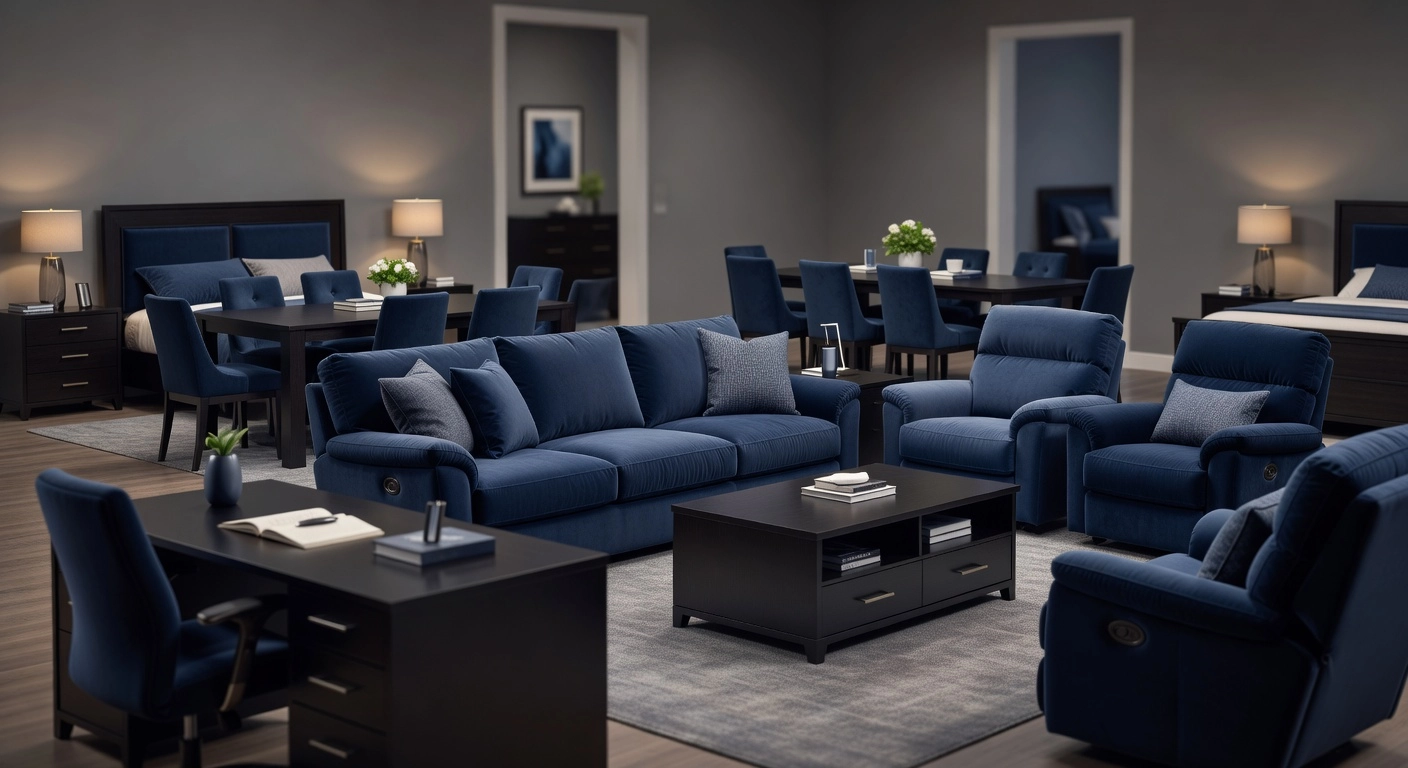
Ashley’s catalog covers virtually every room in the home. The full product range spans bedroom furniture including beds, dressers, and nightstands; living room pieces like sofas, sectionals, and recliners; dining tables and chair sets; and home office desks and storage. Beyond furniture, Ashley also sells mattresses under its Ashley Sleep brand and recently acquired Nectar, giving the company a firm foothold in the sleep category as well. Styles range from traditional and transitional to modern and contemporary, so beginners shopping for a cohesive home look can typically find matching pieces across multiple categories without leaving the brand.
What makes Ashley unusually powerful as a manufacturer is its vertical integration. The company controls design, production, distribution, and retail under one roof, operating more than 1,200 branded store locations across 67 countries and supplying retailers in over 123 countries worldwide. That level of control keeps costs competitive and gives Ashley tight oversight over its supply chain, which is a meaningful advantage when sourcing consistent materials at scale.
The rebrand from Ashley HomeStore to simply Ashley, launched in 2023, signals more than a name change. The updated identity, paired with modernized store formats and open-concept layouts, reflects a deliberate push to attract younger shoppers while signaling a step toward more premium positioning. The new Ashley Luxe collection reinforces this shift, featuring materials like French oak, full-grain leather, and marble at accessible price points.
Not all Ashley furniture is created equal, and that distinction matters before buying. Entry-level collections prioritize affordability and are typically built with engineered wood cores and veneer finishes. Mid-range offerings represent the bulk of the lineup with improved construction for the price. Higher-end lines, including Signature Design by Ashley and the newer Luxe collections, use better-grade components and more refined finishes. Treating every Ashley piece as identical in quality would be a mistake.
Beyond Ashley’s own stores and official website, you can find Ashley products at Walmart, through independent authorized dealers, and across third-party online furniture retailers. This wide distribution makes the brand easy to access but also means pricing and selection can vary significantly depending on where you shop.
What Ashley Furniture Is Actually Made Of
Understanding what Ashley furniture is physically made of gives you a major advantage as a buyer. Most people assume “wood furniture” means solid wood cut from a single tree. In Ashley’s case, and in most mass-market furniture, the reality is more nuanced, and knowing the difference helps you set realistic expectations before you spend a dollar.
Engineered Wood: What It Actually Means
Engineered wood is a category of manufactured materials made by bonding wood fibers, chips, or particles together with adhesive resins under high heat and pressure. The result is a stable, consistent panel that performs predictably in manufacturing. Three types appear most frequently in Ashley’s construction:
- Particleboard is made from compressed sawdust and wood chips mixed with resin. It is the most affordable option and the heaviest for its thickness, but it swells and crumbles when exposed to moisture if the surface finish is broken.
- MDF (Medium-Density Fiberboard) uses finer wood fibers for a smoother, more uniform surface. It takes paint and laminate extremely well, but it shares particleboard’s weakness around water.
- Plywood layers thin wood veneers with alternating grain directions, creating a panel that resists warping and holds fasteners more reliably than the other two. It appears in better-quality Ashley frames and structural components.
None of these are inferior materials by definition. They are simply different from solid wood, with distinct strengths and clear limitations that matter for long-term care.
How Veneer Creates a Wood-Grain Look
Veneer is a thin slice of real hardwood, typically between 0.5 mm and 1.5 mm thick, sliced or peeled directly from an actual log and bonded under pressure to an engineered wood core. Because one log can yield hundreds of veneer sheets, manufacturers stretch premium wood species across far more furniture than solid lumber would allow. The result looks and feels like real wood on the surface, because it is real wood, just very thin. Ashley uses veneer most commonly on mid-range tabletops, drawer fronts, and case sides where visual quality matters. The trade-off is that veneer furniture requires careful maintenance; sanding too aggressively or exposing the surface to standing water can damage or lift the layer permanently.
Laminate: The Entry-Level Surface Finish
At Ashley’s lowest price points, veneer gives way to laminate. Laminate is not wood at all. It is printed paper or synthetic foil carrying a photographic wood-grain image, bonded to particleboard or MDF under heat and pressure. It resists light scratches and surface moisture reasonably well when intact, but it cannot be sanded, stained, or refinished the way veneer can. Once the surface chips or peels, the damage is largely permanent. You will find laminate most commonly on the “Signature Design by Ashley” entry-level lines covering flat drawer faces, cabinet panels, and headboards.
Where Solid Wood Actually Appears
Solid wood does appear in Ashley furniture, but it is concentrated in specific components rather than entire pieces. Legs on dining chairs and case goods, decorative trim details, and structural frame elements in select mid-tier and premium collections are the most common locations. Some dining collections use rubberwood solids for tabletops or chair frames. Ashley’s premium sub-line, Ashley Luxe, incorporates materials like French oak in targeted pieces. As interior furniture analysts note, the large flat surfaces, including dresser sides, tabletop panels, drawer boxes, and headboard faces, are almost always engineered wood with veneer or laminate on top.
Why the Cost Difference Is So Dramatic
Engineered wood construction directly enables Ashley’s pricing. Thin veneers stretch a single log across dozens of pieces. Automated pressing and cutting lines process components faster than traditional joinery allows. Laminate surfaces eliminate the labor-intensive finishing steps that solid wood requires. Fasteners, dowels, and cam locks replace dovetail joints and mortise-and-tenon construction, reducing both skill requirements and assembly time. A bedroom set in solid hardwood from a traditional manufacturer can easily cost three to five times what a comparable Ashley set costs, because nearly every step of production is more expensive. Ashley passes those manufacturing savings directly to the retail price, which explains both its enormous market share and the durability trade-offs buyers sometimes encounter later.
Ashley Furniture vs. Solid Wood: A Side-by-Side Comparison
Now that you understand what Ashley furniture is physically constructed from, the logical next step is seeing how those materials stack up against solid wood across the metrics that actually affect how long your furniture lasts and how easy it is to maintain.
Structural Strength
Solid wood has a natural grain structure that distributes stress across the entire piece, which makes it exceptionally good at resisting racking forces (the lateral twisting that happens when you push a bookcase sideways or lean against a bed frame) and point loads (concentrated pressure around screw holes and joints). Particle board and MDF simply cannot match this. The compressed wood fibers and resins that hold engineered panels together will crack, crumble, or allow screws to strip under repeated stress, particularly in high-movement areas like drawer slides, bed rails, and cabinet hinges. Once a screw strips out of particle board, the joint is essentially finished without significant intervention. Solid wood, by contrast, can be re-drilled, re-glued, and reinforced because the material itself retains structural integrity throughout its thickness.
Moisture Response
This is arguably the sharpest dividing line between the two material categories. Properly kiln-dried and finished solid wood expands and contracts with seasonal humidity changes in a predictable, manageable way. Furniture makers account for this movement in their joinery, which is why well-built solid wood pieces can survive for generations in varied climates. MDF and particle board behave very differently: both materials absorb moisture through their porous surfaces and swell in a way that is often permanent and progressive. The swelling warps panels, destroys laminate adhesion, and causes veneer to bubble and peel away from edges and flat surfaces. Detailed quality breakdowns of Ashley furniture consistently flag moisture vulnerability as a primary durability concern for engineered wood pieces, especially in bathrooms, laundry rooms, or humid climates.
Surface Durability and Refinishing
A solid wood surface can realistically be sanded and refinished three to five times across its lifespan, restoring a scratched dining table or worn dresser top to near-original condition each time. The veneer surfaces on Ashley furniture allow at most a single very light pass with fine-grit sandpaper before you begin exposing the particle board or MDF core beneath. At that point, refinishing is no longer a realistic option. Independent assessments of Ashley’s quality and longevity note that decorative laminates and thin veneers chip and peel under normal daily use, limiting the useful life of the surface finish considerably compared to solid hardwood alternatives.
Weight, Repairability, and Cost
MDF is notably denser than many common solid wood species, meaning MDF-heavy furniture can actually weigh more than a comparable solid wood piece, which contributes to shipping damage and makes flat-pack assembly more physically demanding. On repairability, solid wood is far more forgiving: a gouge or deep scratch can be filled with matching wood filler, sanded flush, and stained to blend convincingly. The same damage on laminate or thin veneer is difficult to disguise because the repair material does not take stain the same way the surrounding surface does, leaving a visible patch.
The cost gap is real and significant. Comparable solid wood furniture typically retails for two to four times the price of engineered wood equivalents. For buyers working within a firm budget, Ashley is genuinely competitive, delivering stylish, functional furniture at accessible price points. The trade-off is a shorter expected lifespan and more limited repair options when wear eventually appears.
Where Ashley Furniture Genuinely Holds Up Well
Ashley’s strengths become clearer when you know exactly which categories to focus on. The brand is not trying to compete with custom woodworkers or heirloom furniture makers, and the product lines that align with its actual manufacturing strengths deliver genuine value.
Style Variety and Trend Responsiveness
Ashley updates its collections more aggressively than most buyers realize. The brand’s 2026 design direction leans into curved silhouettes, organic shapes, and mixed wood tones, which align directly with what interior designers are calling the dominant residential aesthetic of the moment. Rounded sofa backs, arched cabinet frames, and sculptural accent seating are all appearing across Ashley’s current lineup. The 2026 Ashley Luxe collection, featuring materials like French oak and hand-woven suede, demonstrates that the brand is actively responding to consumer demand for warmer, more layered interiors rather than the sterile minimalism that defined the previous decade. For buyers who want a current-looking room without commissioning custom pieces, this responsiveness is a practical advantage.
Upholstered Products Represent the Strongest Category
Sofas, sectionals, and recliners are where Ashley’s value proposition holds up most consistently. The reason is straightforward: upholstered furniture performance depends primarily on fabric quality, foam density, and frame construction, not on whether the wood components are solid or engineered. A 2026 in-store evaluation by Apartment Therapy testing roughly 40 Ashley sofas praised specific models for loungability, durable upholstery, and family-friendly firmness at accessible price points. Performance fabrics with stain resistance and high-resiliency foam cushions address the most common complaints in this category. If you are buying Ashley furniture, the upholstered category is where your money works hardest.
Accent Pieces, Accessories, and Short-Term Use Cases
Mirrors, shelving, decorative tables, and similar accent pieces carry far less structural load than case goods like dressers or bookcases. That matters because engineered wood failure modes, including joint separation and surface delamination, are most likely to appear under sustained weight and stress. An accent table or wall mirror does not experience those forces, making construction material a secondary concern. These pieces also align well with 2026 interior trends emphasizing tactile textures and mixed materials for visual layering.
For furnished rentals, guest rooms, or transitional living situations where you need a piece to perform reliably for five to seven years rather than a lifetime, Ashley’s price-to-style ratio is a legitimate argument. Many owners report satisfactory performance in moderate-use environments, particularly when they follow Ashley’s official care and cleaning guidance, which covers wood, upholstery, leather, and glass surfaces with specific, actionable instructions. Using coasters, avoiding direct sunlight, and following the cleaning codes printed on upholstery tags are simple habits that meaningfully extend the life of these pieces. For this use case, Ashley outperforms ultra-budget alternatives while keeping costs well below premium furniture tiers.
Where Ashley Furniture Falls Short
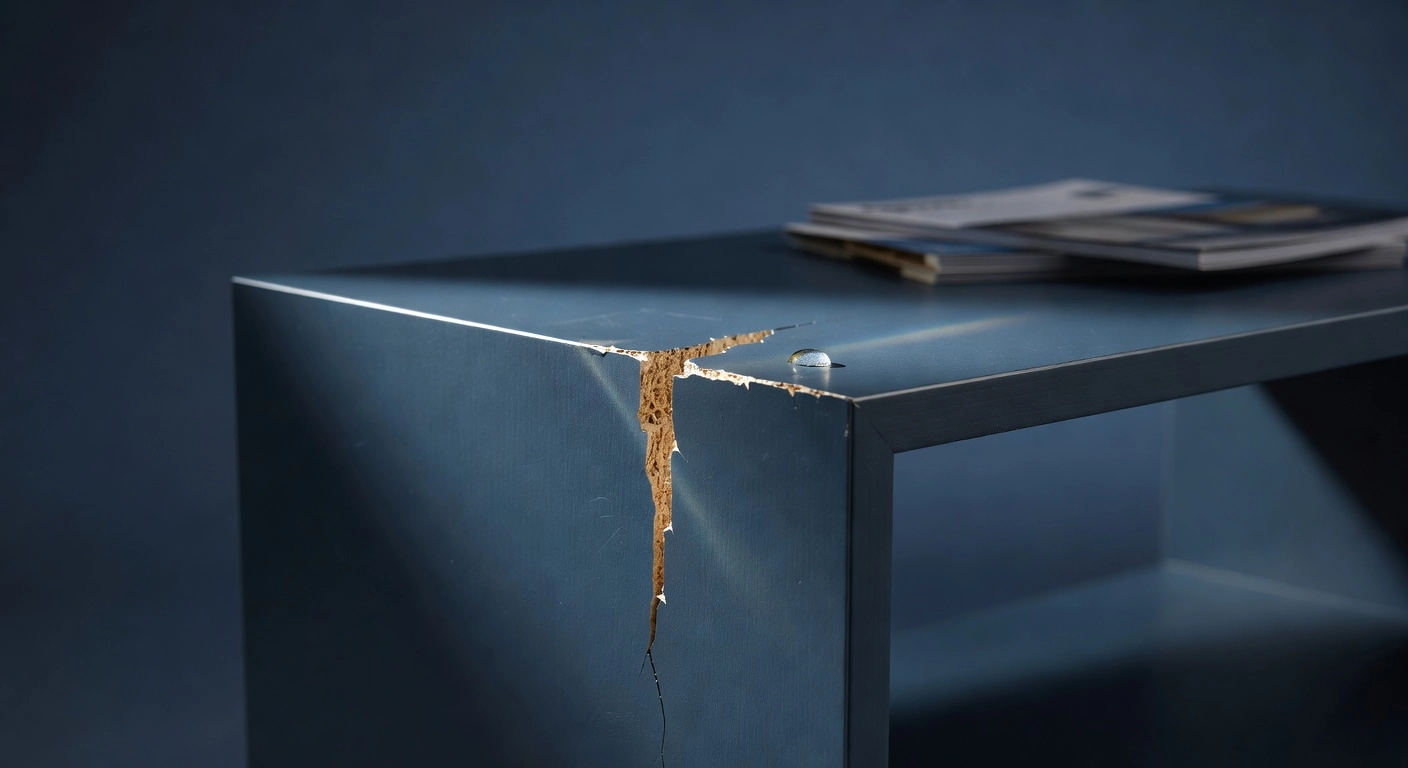
The materials that make Ashley’s price tags attractive are the same materials that create predictable, well-documented failure points. Knowing where those weaknesses cluster helps you avoid costly placement mistakes and set realistic expectations before you buy.
Moisture Is the Fastest Way to Destroy an Ashley Piece
MDF and particle board absorb moisture aggressively through any exposed edge, scratch, or area where the finish has worn away. Once water penetrates the core, the material swells, bubbles, and eventually delaminates as the internal resin bonds break down. This process is not gradual; in bathrooms, kitchens, or humid climates, visible swelling can appear within two to three years even without direct spills. Placing an Ashley dresser in a bathroom, positioning a nightstand near a humidifier, or living in a consistently humid region accelerates this failure significantly. Unlike solid wood, which can sometimes be dried and refinished, swollen MDF is essentially unrecoverable.
Cushions and Upholstery Wear Out Earlier Than Expected
Sagging cushions rank among the most frequently reported complaints across consumer review platforms, and the timeline is often surprisingly short. Many buyers report visible cushion compression and foam breakdown within twelve to eighteen months of regular use. The base foam in Ashley’s entry-level and mid-range seating tends toward lower density grades, which compress under body weight and do not rebound effectively over time. Fabric pilling and seam stress show up on a similar timeline. If you are furnishing a heavily used family room or a space where the sofa will absorb daily use from multiple people, this is the category where the value equation weakens most noticeably.
Fasteners Fail Faster in Engineered Wood
Screw holes drilled into particle board degrade with every tightening cycle. The material surrounding each fastener is made from compressed wood fibers and resin rather than continuous wood grain, so it crumbles and enlarges rather than gripping tighter over time. Beds, bookshelves, and dressers are particularly vulnerable because their joints absorb regular stress from weight, movement, and vibration. Once a screw hole strips out in particle board, the standard fix requires toothpicks and wood glue or a larger fastener, neither of which fully restores the original holding strength. Solid wood joinery, by contrast, can be re-glued and re-clamped with results that approach the original bond.
Veneer Chips at the Edges Early On
The veneer layer on Ashley case goods is thin by design, and the edges and corners of dressers and nightstands take repeated contact in everyday use. Chipping and peeling begin at exactly those high-friction points, often within the first year or two, exposing the engineered core underneath. Touching up chipped veneer is difficult to make seamless because the wood grain pattern cannot be replicated with paint or filler alone.
Delivery Damage and the Reassembly Problem
Engineered wood is brittle under sudden impact in a way that solid wood is not. Cracks, dented corners, and delaminated laminate from shipping are a recurring pattern in customer complaints, and the damage is difficult to repair invisibly. Moving an assembled Ashley piece also presents challenges because dense MDF makes large bedroom and living room sets heavier than their appearance suggests. Cam-lock joints, the hardware most commonly used in Ashley’s flat-pack construction, degrade measurably with each disassembly and reassembly cycle, leaving frames looser and less stable over time.
Can You Actually Repair Ashley Furniture? DIY Fixes That Work
The good news for Ashley furniture owners is that many of the most common failure points are repairable with basic household tools and inexpensive materials. The key is understanding what you are working with: thin veneer over engineered wood cores responds very differently to repair attempts than solid hardwood does, and using the wrong technique can make damage significantly worse.
Veneer Chips and Peeling Edges
Peeling veneer is one of the most reported issues with Ashley pieces, and it is also one of the most forgiving repairs when caught early. At the first sign of a lifting edge, apply a small amount of wood glue such as Titebond or Gorilla Wood Glue directly under the lifted section, press the veneer firmly flat, and clamp it or hold it in place with painter’s tape and a weight. Allowing the glue to cure for a full 24 hours gives the bond real strength. Once secured, use a wax-based touch-up marker or tinted wood filler in a matching color to blend the repaired area visually. Acting at the first sign of lift is critical because a small peel that goes unaddressed will delaminate outward over time, eventually involving a much larger surface area that becomes far more difficult to reattach cleanly.
Water Rings and Moisture Stains on Veneer
Moisture stains on veneered surfaces require a careful, gentle approach. The veneer layer on most Ashley pieces measures only a fraction of a millimeter thick, which means that aggressive sanding will break through the surface entirely and create a worse problem than the stain itself. For light water rings, a paste made from white toothpaste and baking soda applied with a soft cloth, worked in gentle circular motions and then buffed clean, removes many surface-level marks effectively. Commercial veneer-safe wood cleaners and conditioners offer a more targeted option for stubborn staining. Multiple light applications always produce safer results than heavy scrubbing, and you should always test your chosen method in an inconspicuous area first.
Stripped Screw Holes in Particleboard
Particleboard loses its fastener grip quickly once a screw hole strips out, but the fix is straightforward and reliable. Pack the stripped hole with a bundle of toothpicks coated in wood glue, filling the cavity as completely as possible, then allow the fill to cure for a full 24 hours before attempting to re-drive the fastener. The hardened glue-and-wood mixture creates a new material for the screw threads to bite into. This technique works consistently for cabinet hinges, drawer slide hardware, and bed frame connections, all of which are frequent failure points in Ashley construction.
Laminate Scratches and Swollen MDF
Surface scratches in laminate finishes are more cosmetically stubborn than veneer scratches because the material offers almost no depth to work with. Color-matched furniture markers, burn-in sticks, or clear wax fill for shallow marks are the practical options here, with results that minimize visibility rather than eliminate damage entirely. For swollen MDF caused by water exposure, speed matters above everything else. Move the piece to a low-humidity environment, run a fan or dehumidifier nearby, and avoid direct heat sources that cause uneven drying. Once the core is fully dry, re-adhere any lifted veneer with contact cement and clamp the surface flat until bonded.
WoodStuffHQ’s wood restoration guides cover each of these repair categories in detail, including scratch repair, water stain removal, and wood reconditioning approaches designed specifically for homeowners using simple, readily available tools. They are a practical starting point for anyone tackling these fixes for the first time.
Who Should Buy Ashley Furniture (And Who Should Not)
Getting honest value from Ashley furniture comes down to matching the product to the situation. The brand performs well in specific circumstances and falls short in others, and knowing which side of that line you stand on before you buy saves real money and frustration.
Ashley Furniture Is a Strong Choice For…
First-time apartment renters and starter home buyers are arguably Ashley’s ideal customer. If you need to furnish a living room, bedroom, and dining area quickly without exceeding a defined budget, Ashley’s depth of catalog and frequent promotional pricing make outfitting an entire home genuinely achievable in a single shopping trip. The engineered wood construction keeps prices low while delivering acceptable style and function for a five-to-ten-year window. Most buyers planning to upgrade as their income grows find solid satisfaction throughout that timeline without feeling they wasted their investment.
Parents furnishing children’s and teenagers’ rooms also benefit from what Ashley offers. Kids outgrow furniture styles quickly, tastes change dramatically between ages eight and sixteen, and the expectation that a piece will survive decades of heavy use simply does not apply here. Ashley’s affordable price points allow parents to refresh a room as their child develops without committing premium dollars to furniture that may be unwanted within a few years. Moderate everyday wear is well within what most Ashley pieces handle reliably.
Rental property owners represent another strong match. Furnished rentals require furniture that looks appealing in photos and survives normal tenant turnover, not furniture built to last forty years. Ashley’s price-to-appearance ratio is difficult to beat in this context, and replacement costs remain manageable when wear eventually shows.
Ashley Furniture Is a Poor Choice For…
Buyers in high-humidity environments face real risk with particle board and MDF construction. These materials absorb moisture readily, leading to swelling, warping, and structural failure. Placing Ashley pieces in unfinished basements, laundry rooms, or climates with persistent high humidity accelerates degradation significantly faster than the typical five-to-ten-year lifespan.
Anyone seeking heirloom furniture should look elsewhere. Solid wood accepts repeated sanding and refinishing because its density and grain structure support it. Engineered wood does not; the veneer layer is too thin and the substrate too soft to survive stripping or resurfacing without permanent damage.
Frequent movers face a specific structural problem. The cam-lock fasteners and particle board used in most Ashley case goods degrade noticeably after two or three disassembly and reassembly cycles. Screw holes strip, edges crumble, and joint integrity weakens with each move. If your lifestyle involves relocating every one to two years, the furniture often does not survive intact long enough to justify the purchase.
How to Make Ashley Furniture Last as Long as Possible
Ashley furniture built from MDF and veneer can deliver years of reliable service, but only if you treat the materials for what they actually are. Engineered wood is not forgiving of neglect. The following habits separate furniture that lasts a decade from furniture that deteriorates in two years.
Protect Surfaces Before Damage Happens
Place felt pads under every lamp base, decorative object, remote control, and accessory that sits on a veneer surface. Scratches on veneer are not cosmetic inconveniences; they are entry points for moisture that can lift adhesive layers over time. Coasters are equally non-negotiable. A single moisture ring from a cold glass can penetrate a veneer finish in minutes, and the stain that results is difficult to reverse without refinishing the entire surface. Ashley’s official care guidance specifically calls out felt backing and coasters as baseline requirements, not optional suggestions.
Control Humidity in the Room
MDF cores absorb moisture readily, and once swelling begins, it does not reverse. Keep Ashley pieces away from exterior walls in humid climates, where temperature swings cause repeated expansion and contraction. In any room where relative humidity regularly climbs above 60 percent, run a dehumidifier. A basic hygrometer costs less than ten dollars and tells you exactly what the air in that room is doing to your furniture. Targeting a stable range between 40 and 55 percent humidity protects the core from the swelling that leads to warped drawer fronts and bubbling veneer.
Clean with Minimal Moisture
Wipe veneer surfaces with a lightly dampened, soft, lint-free cloth and dry the surface immediately after. That is the complete cleaning method for routine maintenance. Avoid all-purpose sprays, multi-surface cleaners, and any product containing ammonia, bleach, or acetone. These chemicals dissolve veneer adhesives, cloud finishes, and create the kind of damage that voids Ashley’s warranty. When in doubt, test any new product in an inconspicuous area before applying it to a visible surface.
Assemble Carefully and Reinspect After 30 Days
Tighten every cam-lock fastener and screw fully during initial assembly. After 30 days of normal use, go back and check each connection point again. Furniture settles under load, and connectors that felt snug on assembly day often need a quarter-turn more once the piece has been in use. Loose joints are the starting point for nearly every structural failure in flat-pack furniture.
Maintain the Finish and Repair Damage Immediately
Apply a thin coat of paste wax or a silicone-free furniture polish to wood veneer surfaces every six to twelve months. This step maintains the protective barrier that slows moisture infiltration and keeps the finish looking consistent. When you notice a veneer chip or edge beginning to lift, address it the same day with a small amount of wood glue and a clamp or masking tape to hold the repair while it cures. A two-minute repair on day one costs nothing. Waiting six months allows moisture to work beneath the lifted edge, expanding the damage into a full delamination that requires far more time and materials to fix properly.
Final Thoughts on Ashley Furniture
Ashley Furniture delivers genuine value when matched to the right situation, but it is not a replacement for solid wood when long-term durability, refinishing potential, or heirloom quality are part of the equation. That distinction matters more than the price tag.
Knowing what your furniture is actually made of changes how you shop, how you care for what you own, and how confidently you can address problems when they appear. Engineered wood cores with veneer surfaces behave differently than solid lumber, and treating them the same way leads to preventable damage and frustration.
The most important habit shift for Ashley owners is proactive maintenance. Solid wood tolerates moisture fluctuations and surface wear more forgivingly. MDF and particle board do not. Consistent sealing, prompt spill cleanup, and controlled humidity are not optional extras with engineered wood construction; they are the foundation of longevity.
If you are already dealing with scratches, water damage, swollen edges, or worn finishes on your Ashley pieces, WoodStuffHQ’s wood restoration and care guides cover practical, beginner-friendly repair methods using simple tools and accessible products.
Before your next furniture purchase, take time to assess your actual environment, your household’s usage patterns, and how long you realistically need the piece to perform. Ashley’s value proposition is real for the right buyer in the right situation.