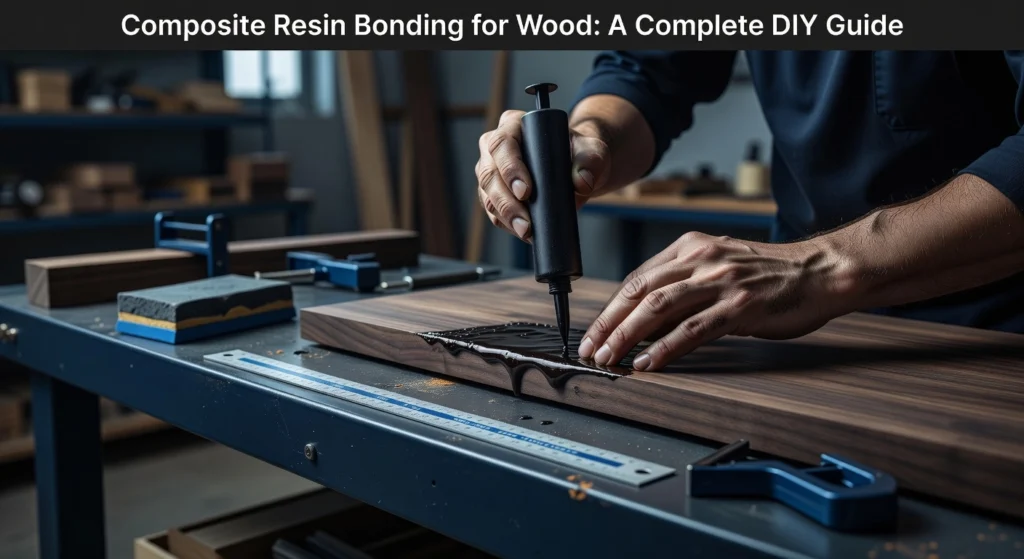

Have you ever looked at a cracked piece of wood furniture and wished you could fix it yourself without spending a fortune? Good news: you absolutely can, and it is easier than you might think.
Composite resin bonding is one of those skills that sounds intimidating at first but quickly becomes a go-to technique once you get the hang of it. Whether you are dealing with a split tabletop, a chipped cabinet edge, or a damaged wooden frame, this method gives you a strong, clean repair that can last for years.
In this guide, we are going to walk you through everything you need to know as a complete beginner. We will cover what composite resin bonding actually is, what supplies you need to get started, and how to apply it step by step for a smooth, professional-looking finish. We will also share some handy tips to help you avoid the most common beginner mistakes.
By the time you finish reading, you will feel confident enough to tackle your first wood repair project with ease. So grab a coffee and let us get started!
What Is Composite Resin Bonding in Woodworking?
If you’ve ever searched “composite resin bonding” online, you’ve probably been hit with a wall of dental and cosmetic results about tooth repairs and smile makeovers. That’s not what we’re talking about here. In a woodworking context, composite resin bonding refers to using synthetic resin-based adhesives to join, repair, or reinforce wood, whether you’re fixing a wobbly chair joint, filling a crack in a tabletop, or building engineered wood products like plywood or particleboard. It’s a completely different world, and one that’s incredibly useful for DIY home projects.
The term covers a whole family of synthetic adhesives. Epoxy resins are probably the most familiar to home woodworkers, working as two-part systems that mix a resin with a hardener. But the category also includes polyurethane adhesives, which expand slightly as they cure and handle moisture beautifully; urea-formaldehyde resins, which are widely used in interior panels and plywood; and melamine adhesives, which offer improved moisture resistance for semi-outdoor applications. Each has its own strengths, and this guide will help you figure out which one fits your project.
So how does resin bonding actually differ from the standard wood glue sitting in your toolbox? Regular PVA glue (the white or yellow stuff) works by evaporating water and forming a thermoplastic bond, meaning heat or prolonged moisture can weaken it over time. Synthetic resins, by contrast, undergo an irreversible chemical curing reaction, creating a much harder, more stable polymer network. They’re also dramatically better at gap-filling, since PVA needs an almost perfect joint to perform well, while epoxy maintains strength even across visible gaps. Add in genuine waterproofing properties, and you can see why resin adhesives are the go-to choice for repairs and outdoor applications. For a deeper look at composite wood products and how resin adhesives hold them together, the science is genuinely fascinating.
Woodworkers didn’t always have these options. Before World War II, craftspeople relied almost entirely on natural glues, including animal hide glues made from boiled collagen, casein glues derived from milk protein, and various starch-based pastes. These worked reasonably well for traditional furniture but struggled with moisture, consistency, and long-term durability. Synthetic resins emerged in the early 20th century and exploded in use after WWII, thanks to advances in petrochemical manufacturing. For modern DIYers, that evolution means stronger and more reliable bonds, better performance in kitchens and bathrooms, and far less dependence on perfectly cut joints or professional-grade tools.
Throughout this guide, you’ll learn everything you need to get started with resin bonding at home. We’ll walk through proper surface preparation, explore the most common repair techniques like filling cracks and reinforcing loose joints, cover practical applications from furniture to cabinetry, and break down the main product types so you can shop with confidence.
Types of Resin Adhesives Used in Wood Projects
Not all resin adhesives work the same way, and knowing which type suits your project makes a big difference in your results. Here’s a breakdown of the most common options you’ll encounter as a DIY woodworker.
Two-Part Epoxy Systems
Two-part epoxy is the go-to choice for most DIY wood repairs, and for good reason. You mix a resin with a hardener, usually in a 1:1 or 2:1 ratio, and the chemical reaction creates a bond that’s often stronger than the surrounding wood itself. Epoxy excels at filling gaps in uneven joints, bridging voids in cracked wood, and resisting moisture in both indoor and outdoor settings. It doesn’t shrink as it cures, which means your repair stays flush and solid over time. You can even use it on damp wood, making it a reliable option for rot repairs or outdoor furniture fixes. Products like PC-Woody wood epoxy paste are specifically formulated for wood and can be sanded, drilled, and painted once cured.
Epoxy Putty Sticks
If the measuring and mixing of liquid epoxy feels intimidating, epoxy putty sticks are a friendlier starting point. These come as a two-layer stick where the inner core is hardener and the outer ring is resin. You simply cut off the amount you need and knead it in your hands until the color becomes uniform, which signals the curing process has started. No mixing cups, no syringes, no mess. The putty is moldable for several minutes, then hardens into a dense, sandable material that holds up well under paint or stain. It’s especially handy for filling holes, rebuilding chipped corners, or patching rotted sections.
Polyurethane and Formaldehyde-Based Resins
Polyurethane (PUR) adhesives are gaining traction for composite panels, chipboard, and MDF applications where a little flexibility matters. Unlike rigid epoxies, PUR bonds can flex slightly with the natural movement of composite wood materials, reducing the risk of cracking over time. They also tend to be lower in VOCs, which is a genuine advantage for indoor projects.
On the manufacturing side, urea-formaldehyde and melamine resins are what hold most store-bought plywood, particleboard, and laminated timbers together. You won’t typically use these as a DIY adhesive, but understanding that they exist explains why some engineered wood products have emission concerns. This has pushed a growing trend toward formaldehyde-free and low-VOC adhesive options, with bio-based and water-based formulas becoming easier to find for home projects where indoor air quality matters.
Epoxy vs. Traditional Wood Glue: When to Use Which
Picking the right adhesive can make or break your project, so let’s break down how epoxy stacks up against the other common options: PVA, PUR, and hide glue.
PVA (white or yellow wood glue) is the go-to for most indoor woodworking. It’s affordable, easy to clean up with water, and bonds incredibly well on tight, clean, dry joints. For cabinet builds, furniture assembly, or any indoor glue-up where your pieces fit snugly together, PVA is hard to beat. However, it struggles badly with gaps, oily or contaminated wood surfaces, and any outdoor or high-moisture environment. Even “waterproof” versions like Titebond III showed weaknesses in extended wet exposure testing, so don’t rely on them for truly outdoor or marine applications.
Epoxy is your best friend when conditions get tricky. Loose joints, uneven surfaces, dissimilar materials like wood-to-metal, or projects that need genuine waterproofing; epoxy handles all of these reliably. It fills gaps without losing strength, bonds to almost anything, and resists moisture, chemicals, and solvents. The trade-offs are higher cost, a messier two-part mixing process, and longer cure times depending on the hardener you choose. According to Wood by Wright’s independent load-cell glue testing, PVA can actually match or slightly exceed epoxy in tight long-grain joints, which confirms that epoxy isn’t always the strongest option, just the most versatile one.
PUR (polyurethane glue) bridges the gap between the two. It expands slightly during curing, which helps with minor gaps, and it’s genuinely waterproof. It works well for outdoor furniture or multi-material projects. The downsides are foamy cleanup and moderate gap-filling compared to epoxy on large voids.
Hide glue is a specialized traditional adhesive prized in antique and instrument restoration. Its biggest advantage is reversibility; heat and moisture can break the bond cleanly years later, which is invaluable when repairing heirlooms. For most homeowners, though, the preparation involved and moisture sensitivity make it impractical for everyday projects. You can explore a full overview of adhesive types at Wood Designer for deeper reference.
Here’s a quick summary to help you decide at a glance:
| Scenario | Best Choice |
|---|---|
| Tight indoor furniture joints, clean dry wood | PVA |
| Gaps, loose joints, or uneven surfaces | Epoxy |
| Outdoor or wet exposure | Epoxy or PUR |
| Wood bonded to metal or glass | Epoxy |
| Antique restoration needing reversibility | Hide Glue |
| Heavy structural or load-bearing repairs | Epoxy |
The simple rule of thumb: reach for PVA first on clean indoor work, and switch to epoxy the moment conditions become more demanding.
Surface Preparation: The Step Most DIYers Skip
Here’s something that surprises almost every beginner: the quality of your resin adhesive matters far less than how well you prepared the surface before applying it. According to adhesive industry experts, over 90% of bonding failures trace back directly to poor surface preparation, not bad adhesive choices. You can use the most expensive epoxy on the market, but if the surface isn’t clean, dry, and properly abraded, your bond will fail under stress, moisture, or time.
Clean First, Sand Second
Before you touch sandpaper, you need to remove every trace of grease, wax, old finish, oil, or silicone from the surface. These contaminants create an invisible barrier between the resin and the wood, preventing the adhesive from properly wetting the surface and locking in. Wipe the surface with acetone or isopropyl alcohol on a clean paper towel, and swap to a fresh towel frequently so you’re not just spreading the contamination around. Once it’s clean, then you sand.
Sanding creates what woodworkers call “tooth,” the tiny peaks and valleys that give resin something to grip mechanically. A sawn or rough-cut wood surface actually bonds better than a planed or polished one, because planing can close off wood pores and leave a compressed, glassy layer that resists adhesion. If your workpiece has a smooth, machine-planed face, hit it with 80-grit sandpaper before bonding. Remove the dust with a vacuum or brush afterward, and you’re ready. As Meridian Adhesives explains, proper surface prep is what separates reliable, long-lasting bonds from frustrating delamination failures.
Watch Out for Amine Blush
If you’re recoating or bonding onto already-cured epoxy, there’s one sneaky problem that catches beginners off guard: amine blush. This is a thin, waxy film that forms on the surface of cured epoxy, especially in cool or humid conditions, as a byproduct of the hardener reacting with moisture in the air. It feels slightly greasy and looks dull or milky. If you sand or apply fresh resin over it without removing it first, your new layer simply won’t bond properly.
The fix is simple. Wash the cured surface with clean water and scrub it with an abrasive pad, like a green Scotch-Brite pad. Dry it immediately with paper towels before the dissolved blush can redeposit. Do not sand before washing, since sanding smears the blush into the surface rather than removing it.
Moisture Is a Hidden Bond Killer
Wood moisture content matters more than most beginners realize. For interior projects, aim for wood that’s between 6 and 8 percent moisture content. Exterior applications can tolerate up to around 12 to 14 percent. Bonding above these thresholds leads to weak joints, incomplete curing, and long-term instability as the wood moves.
Freshly purchased pressure-treated lumber is a common trap. Even if the label says it meets moisture standards, treated wood often comes loaded with water from the treatment process, sometimes sitting above 50 percent moisture content right off the shelf. Let it dry for several weeks, stickered and stacked with airflow on all sides, before you bond it with any resin adhesive. Patience here saves you from a frustrating failure down the road.
How to Use the Two-Step Wetting-Out Technique
The two-step wetting-out technique is one of those game-changing methods that separates solid, lasting repairs from joints that fail six months down the road. Once you understand why it works, you’ll never want to skip it.
Step One: The Primer Coat
Start by mixing a small batch of unthickened epoxy, meaning no fillers or thickeners added yet, just the resin and hardener at the correct ratio. Brush or wipe this thin, neat mixture directly onto your bare, prepared wood surfaces. Work it into the grain thoroughly, paying extra attention to end grain, which soaks up resin like a sponge. This primer coat penetrates deep into the wood fibers, sealing the surface and creating a strong mechanical and chemical foundation for everything that follows. Without this step, porous wood can literally pull the adhesive out of a joint, leaving you with a starved, weak bond.
Judging the Tack Window
Here’s where timing matters. You want to apply your thickened assembly coat while the primer is still tacky, not wet and not fully hardened. Test it by lightly touching the surface with a gloved fingertip. If it feels like the back of a sticky note and pulls slightly without transferring wet epoxy onto your glove, you’re in the sweet spot. Too wet and your layers will slide around; too cured and you’ll lose the chemical bond between coats. Temperature plays a big role here. A warm workshop shortens this window, while a cool garage extends it considerably.
Choosing and Using Thickeners
Once your primer coat is ready, mix your thickened assembly coat. Colloidal silica creates a strong, non-sagging paste ideal for vertical surfaces or overhead work. Wood flour gives you a sandable, wood-toned putty that blends naturally into repairs. Microfibers add tensile reinforcement for structural fillets. Add your chosen thickener gradually until you reach a consistency similar to peanut butter for gap-filling or thick mayonnaise for standard joints.
Mixing Ratios and Small-Repair Tips
Accurate measurement is non-negotiable. Off-ratio epoxy simply will not cure properly, leaving you with a soft, sticky mess. Most two-part epoxy systems use a 5:1 or 3:1 ratio by volume, so always check your product’s data sheet. For small furniture repairs, syringe-style dispensers let you measure tiny amounts precisely without waste. Mix for at least two full minutes in a clean cup, scraping the sides and bottom as you go. You can find detailed mixing guidance at the WEST SYSTEM bonding and clamping resource and the Wessex Resins bonding guide.
Cure Stages: When to Clamp, Move, and Finish
Epoxy cures in three stages you need to know. During the working time (typically 60 to 110 minutes depending on your hardener), the epoxy stays liquid and workable. This is your window for assembly and clamping. Use just enough clamping pressure to see a small amount of epoxy squeeze out along the joint line. After roughly 6 to 8 hours, the epoxy reaches an initial solid cure and you can carefully unclamp and handle the piece. Full cure, where the bond reaches maximum strength, takes 24 hours or more. Hold off on sanding, painting, or putting the piece back into use until you’ve hit that full cure mark. Rushing this stage is one of the most common beginner mistakes, and it’s an easy one to avoid.
Practical Applications for DIY Wood Repairs and Projects

Now that you understand the techniques, let’s look at where composite resin bonding actually earns its place in your workshop and around your home.
Furniture Joint Repair Without Full Disassembly
Loose chair legs and wobbly table joints are among the most common furniture problems DIYers face, and they’re also one of the best applications for low-viscosity epoxy. Instead of breaking the whole piece apart (which often causes more damage), you can inject thin, runny epoxy directly into the loose mortise-and-tenon or dowel joint using a syringe or needle applicator. The epoxy wicks into the gap, soaks into the end grain, and cures into a solid, gap-filling bond. Just clean out any old glue or debris you can reach first, apply the epoxy, clamp the joint, and let it cure fully before putting the piece back in use. For high-stress joints like chair legs, consider a flexible epoxy formula rather than a fully rigid one, since repeated flexing can cause brittle epoxy to crack over time.
Crack and Void Filling in Tabletops and Cutting Boards
Splits, checks, and knot holes are a normal part of working with solid wood, but they don’t have to stay visible. Thickened epoxy or kneadable epoxy putty fills these voids cleanly and cures into a hard, sandable surface that accepts paint or stain. For narrow cracks, start with a thin coat of low-viscosity epoxy to seal the wood fibers, then follow up with a thickened version mixed with wood flour or silica. For knot holes or larger voids, build up the fill in layers rather than one thick pour. Once fully cured, typically after 24 hours, you can sand it flush for a seamless result. Clear epoxy creates a natural “window” effect that’s especially popular on live-edge and reclaimed wood pieces, while tinted or opaque putties can blend right into the surrounding wood tone. If you’re working on a cutting board, make sure to choose a food-safe epoxy formula. You can learn more about choosing the right epoxy resin for wood repairs before you start.
Water-Damaged and Rotted Wood Restoration
Cabinet bases, window sills, and porch trim are constantly exposed to moisture, and over time that leads to soft, punky, or partially rotted wood. Before you can fill anything, you need to stabilize what’s left. Penetrating epoxy consolidants are thin enough to soak deep into deteriorated wood fibers, essentially gluing them back together from the inside. Brush or flood the consolidant on until the wood stops absorbing it, then let it cure completely. After that, you apply an epoxy paste or putty to rebuild any missing material, shape it, and sand smooth before priming and painting. This two-step method, consolidant first and filler second, is the standard approach recommended by restoration professionals and saves wood that would otherwise need full replacement.
Decorative Wood-Epoxy Projects
River-style tabletops, resin inlays, and sealed live-edge slabs have exploded in popularity across DIY and maker communities, and the trend shows no sign of slowing heading into 2026. These projects use clear or pigmented casting epoxy to fill the natural gap between two live-edge slabs, creating the illusion of a flowing river running through the table. The technique rewards patience; you need to pour in layers to manage heat buildup, work in a dust-free space, and allow full cure time before sanding and polishing to a glass-like finish. Beginners are often advised to start smaller, with resin inlays on a charcuterie board or a small shelf, before committing to a full tabletop pour. For an overview of how epoxy resin works as a super adhesive for wood, it helps to understand the chemistry before diving into decorative work.
Bonding Composite Decking or Panels
Composite decking, which combines wood fiber and plastic, expands and contracts significantly with temperature changes, much more so than solid lumber. Rigid epoxy bonds strongly but doesn’t flex, which means it can crack or cause delamination when the composite material moves. In these situations, a flexible polyurethane construction adhesive or a modified MS polymer adhesive often outperforms rigid epoxy because it moves with the material while still holding firmly. For outdoor composite applications especially, prioritize UV-resistant and moisture-tolerant products, and always combine adhesive with mechanical fasteners for a reliable, warranty-friendly result.
Limitations of Resin Bonding and Mistakes to Avoid
Epoxy is a fantastic tool, but it’s not the right choice for every situation. Knowing its weak spots will save you from some frustrating and sometimes irreversible mistakes.
It’s a Permanent Commitment
Once epoxy cures, it’s there for good. Unlike hide glue, which you can soften and release with a little heat and moisture even decades later, cured epoxy bonds cannot be easily undone without damaging the surrounding wood. If you’re working on an antique chair or a piece of furniture that might need future repairs, this is a serious drawback. Conservators and restoration experts almost always reach for hide glue on antiques precisely because future repairability matters just as much as current strength. Save the epoxy for modern repairs and new builds where permanence is actually a feature, not a liability.
Wood Moves, Rigid Epoxy Doesn’t
Wood expands and contracts seasonally as humidity changes, sometimes shifting quite a bit across the grain. A fully rigid epoxy bond running across a wide panel or across the grain direction puts enormous stress on the surrounding wood fibers as they try to move. According to USDA Forest Products Laboratory research on epoxy-wood durability, rigid epoxies often underperform in moisture-cycling tests because they simply can’t flex with the wood. The result is cracking or delamination at the joint over time, not because the epoxy failed exactly, but because it held too well in the wrong direction.
Protect Yourself Before You Mix
Uncured epoxy contains chemical sensitizers that can cause allergic reactions with repeated skin contact or inhalation. Always wear nitrile gloves, safety glasses, and work in a well-ventilated space with good airflow. Sensitization is cumulative and irreversible, meaning each exposure can make future reactions worse.
Mix It Right or Start Over
Epoxy curing is a precise chemical reaction. The most common beginner mistakes are using the wrong ratio of resin to hardener, not stirring thoroughly for at least three to five minutes while scraping the sides and bottom of the container, and using components that have expired or been stored poorly. Any of these errors results in a soft, tacky, or rubbery cure that never fully hardens. Measure carefully, stir completely, and always check your product’s expiration date before you start.
Prep Oily Hardwoods Before Bonding
If you’re working with teak, rosewood, or ipe, the natural oils in these species will actively prevent a proper epoxy cure at the surface. Before applying any adhesive, wipe the bonding area with acetone and let it flash off completely, then apply your epoxy within about 30 to 60 minutes before the oils migrate back to the surface. Skipping this step is one of the most common reasons bonding jobs on exotic hardwoods fail, and the fix is genuinely simple.
Choosing the Right Resin Bonding Approach for Your Project
Think of this section as your quick-reference decision guide before you open any adhesive. If your joint fits tightly and the wood surfaces are clean, standard wood glue is still your best friend. It’s cheaper, easier to work with, and plenty strong for most indoor furniture and cabinet work. If the joint is loose, worn, oily, or just won’t close cleanly, that’s when you reach for two-part epoxy. And if you’re dealing with missing chunks, soft rotted sections, or structural voids, epoxy putty is the right call because it fills and rebuilds rather than just bonds.
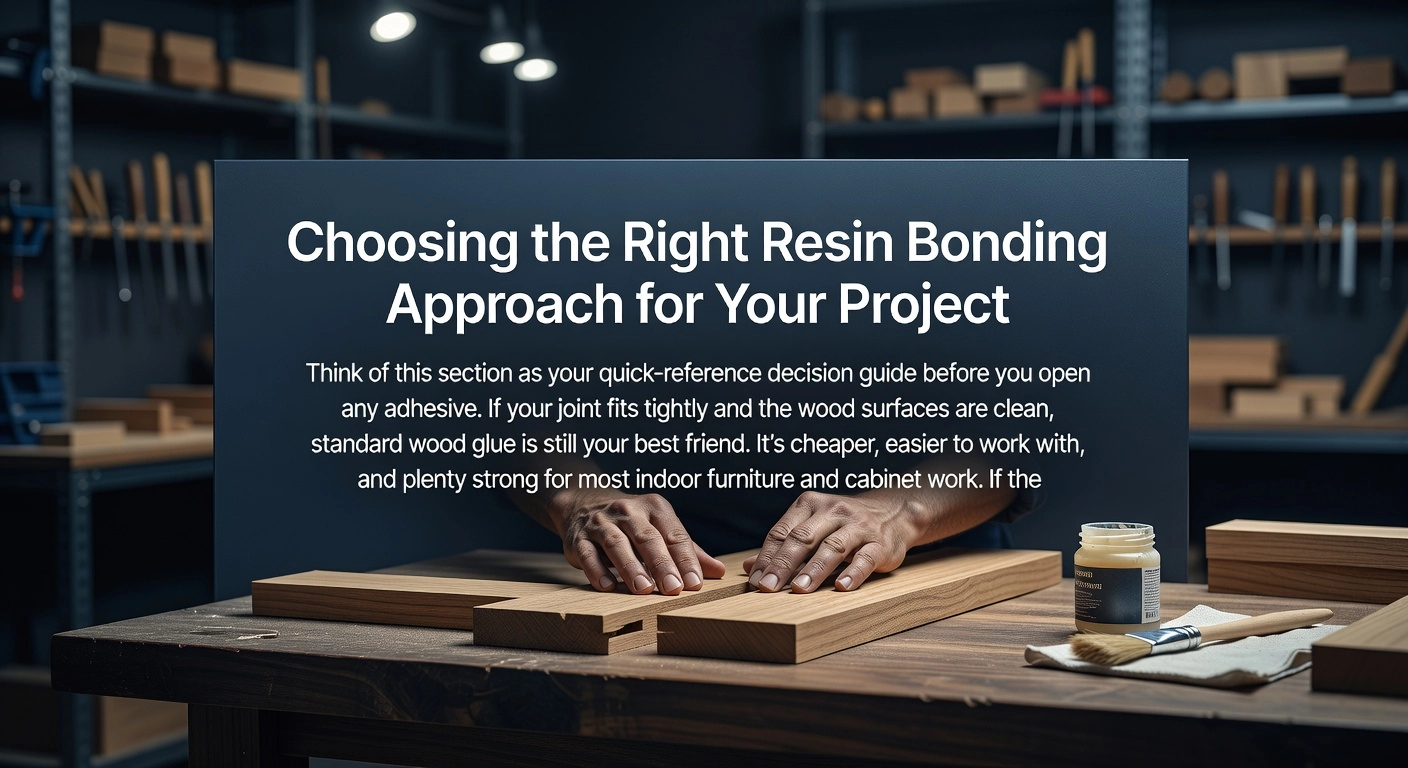
No matter which product you choose, two things will determine whether your repair holds: surface prep and accurate mixing. Clean, dry, roughened surfaces give the adhesive something to grip. Properly mixed epoxy means a complete chemical reaction, not a soft or tacky failure spot. These are entirely within your control, and they matter more than brand or price.
Before tackling a visible repair, run a quick test on scrap wood from the same species. It only takes a few minutes and tells you exactly what to expect with cure time, color, and workability.
Ready to dig deeper? Check out our related guides on furniture repair, cabinet restoration, and general wood care to tackle your next project with confidence.
Conclusion
Composite resin bonding is a genuinely rewarding skill that puts the power of professional-level wood repair right in your hands. To recap the essentials: proper surface preparation is everything, choosing the right resin for your specific wood type makes a significant difference, and patience during the curing process ensures a lasting result. With the right tools and a little practice, even beginners can achieve clean, nearly invisible repairs.
Now it is your turn to put this knowledge to work. Start small with a low-stakes piece, maybe an old chair or a thrifted furniture find, and build your confidence from there. The satisfaction of restoring something damaged into something beautiful is hard to beat.
You already have everything you need to get started. Pick up your supplies, find that cracked piece of wood you have been ignoring, and make your first repair today.