
Every meal shared around a table becomes a memory, and the furniture you choose sets the stage for those moments. Whether you are furnishing your first home or finally upgrading that old set, choosing the right dining table and chairs is one of the most important decisions you will make for your living space. Get it wrong, and you end up with a set that does not fit your room, clashes with your style, or falls apart within a few years.
The good news is that with the right guidance, this process does not have to be overwhelming. There are key factors every buyer should understand before spending a single dollar, from sizing and materials to seating capacity and style compatibility.
In this guide, we break down everything a first-time buyer needs to know about selecting dining table and chairs that work for your home. By the end, you will feel confident, informed, and ready to make a purchase you will be happy with for years to come. Let us get started.
Why Solid Wood Dining Sets Outlast Every Alternative
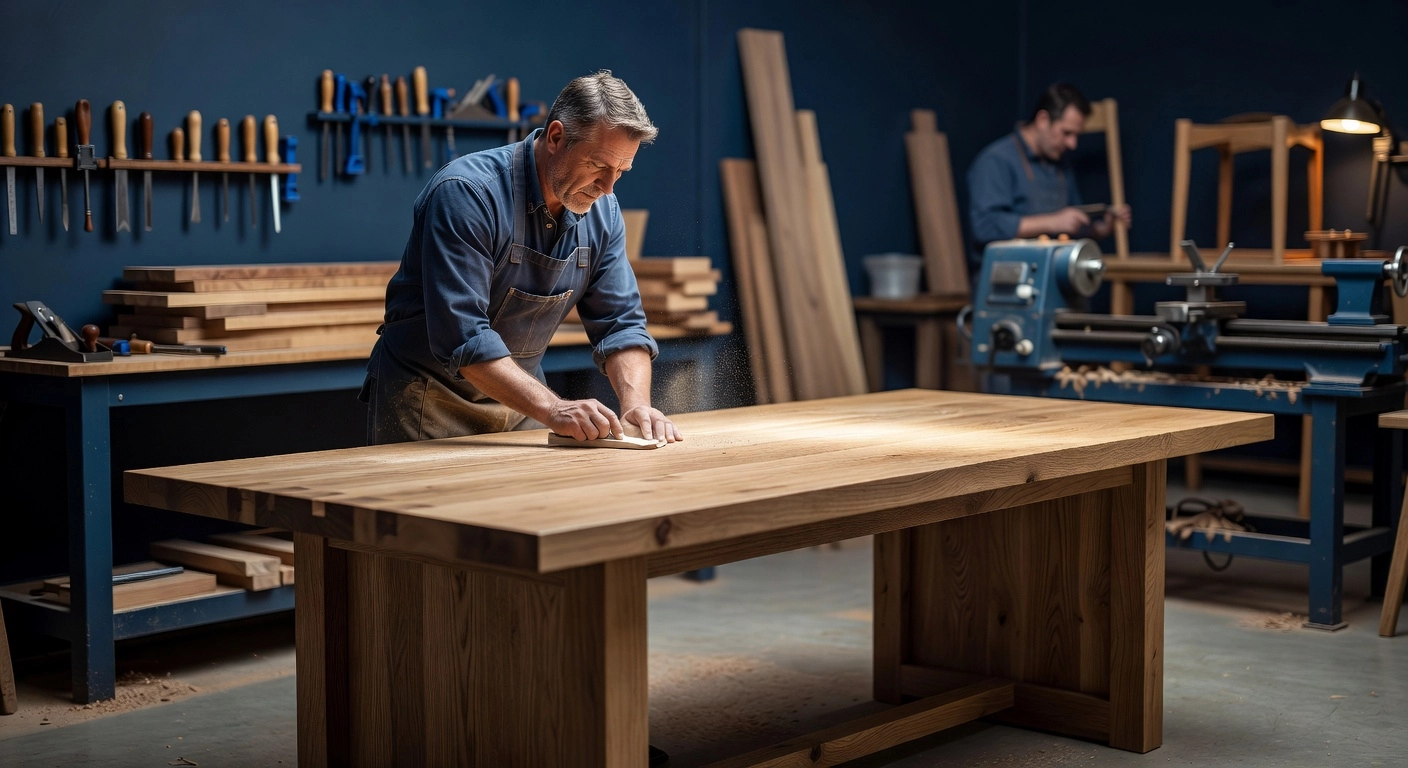
The wood dining table market represents a $4.85 billion subset of the broader furniture industry in 2026, and that figure is not an accident. Consumers consistently choose solid wood over engineered alternatives because experience proves it outlasts everything else. When you invest in a solid wood dining set, you are buying a piece that can serve your family for generations, not just until the next replacement cycle.
How Construction Type Determines Longevity
Understanding what your furniture is actually made of changes how you evaluate cost and durability. Solid wood is exactly what it sounds like: the full thickness of the board is real wood fiber, whether oak, walnut, or maple. This means the piece can flex slightly with humidity changes without cracking, and any surface damage only affects the top layer of a thick, homogeneous material.
Plywood-core veneer furniture uses layers of glued wood sheets topped with a thin real-wood surface, often just 1/32 of an inch thick. It is sturdier than particleboard but that veneer layer limits your repair options significantly. MDF and particleboard furniture compresses wood fibers with resin binders, then covers the result with laminate or paper. It looks clean initially but swells with moisture, chips at edges, and holds screws poorly over time.
The Refinishing Advantage
This is where solid wood separates itself completely from every alternative. A scratched or stained solid wood table can be lightly sanded to remove the damaged surface, then refinished with oil, stain, or varnish to look brand new. You can repeat this process multiple times across decades without compromising structural integrity. MDF and thin veneer simply cannot be sanded without destroying the surface, meaning any serious damage requires full replacement. A solid wood dining table purchased today could still be serving a family fifty years from now after two or three refinishing cycles.
Reframing the Maintenance Question
Many beginners assume solid wood demands constant attention, but that misconception overstates the reality. Modern finishes protect wood effectively, and daily care involves nothing more than wiping spills promptly, using placemats under hot dishes, and applying a conditioner occasionally. These are habits that take seconds, not hours. Consistent simple routines prevent problems before they start, keeping your dining set looking excellent without any specialized skills or expensive products.
For anyone who does encounter deeper repairs, scratches, water rings, or finish wear, WoodStuffHQ provides practical step-by-step restoration guides designed specifically for homeowners without professional tools. Having that resource available after your purchase makes owning solid wood even more manageable.
Oak, Walnut, or Maple: Choosing the Right Wood Species
Not all solid wood is created equal, and the species you choose for your dining table and chairs will shape everything from daily maintenance demands to how the piece ages over decades. Here is a clear breakdown of the three most common options, plus two worth knowing about.
Oak: The Beginner-Friendly Choice
Oak earns its reputation as the most forgiving dining table species for good reason. Its open grain structure naturally conceals minor scratches, small dings, and everyday wear, which means a busy household will not have to stress over every scuff. Red oak typically measures around 1,290 lbf on the Janka hardness scale, while white oak sits slightly higher at roughly 1,360 lbf. Both variants are widely available across nearly every price range, making oak an accessible starting point whether you are shopping on a tight budget or investing in a higher-end piece. When the finish eventually needs refreshing, oak responds well to common DIY products such as penetrating oils, paste wax, and oil-based polyurethane. You do not need professional tools or specialized knowledge to restore it to its original warmth.
Walnut: Premium Appeal With Extra Care Requirements
Walnut is the species capturing the most attention in 2026 interior design trends, and it is easy to understand why. Its deep chocolate-to-espresso tones and bold grain figure bring a level of richness that few other domestic hardwoods can match. However, walnut has a Janka rating of approximately 1,010 lbf, making it softer than both oak and maple. It is also more moisture-sensitive, meaning spills left sitting on the surface, prolonged humidity exposure, and inconsistent climate conditions can all cause real damage over time. Owners need to commit to regular finish maintenance, including periodic oiling and prompt attention to water exposure. Walnut rewards that care with genuinely stunning results, but it is not a set-it-and-forget-it species.
Maple: Maximum Hardness, Minimum Forgiveness
Hard maple, often called sugar or rock maple, tops the hardness chart at approximately 1,450 lbf. That density translates into exceptional resistance to surface scratching, making it the most physically tough option of the three. The tradeoff is that maple’s tight, closed grain shows finish wear more visibly over time; dulling, rings, and uneven sheen become apparent faster than they would on oak. Refinishing maple is also more technically demanding because its dense grain is prone to blotching when stain is applied without a pre-conditioner or gel stain. For most beginners, maple works best left with a natural or clear finish rather than a tinted one.
Cherry and Reclaimed Wood: Worth Considering
Cherry is a compelling secondary option with a fine, straight grain and warm reddish tones that deepen significantly with age and UV exposure. That natural darkening gives cherry furniture a living, evolving quality that many homeowners find deeply appealing. Its Janka hardness sits around 950 lbf, so it dents more easily than the primary three species, but it suits formal or traditional dining rooms beautifully.
Reclaimed wood aligns directly with the sustainability-focused direction of 2025 and 2026 design, repurposing timber from old barns, factories, or structural beams into dining pieces with genuine history and character. The main requirement is thorough preparation: old wood needs cleaning, leveling, pest treatment if necessary, and robust sealing before it performs reliably as a dining surface.
Quick Recommendation Matrix
- Oak: Best for families with young children, high-traffic dining rooms, and anyone new to wood furniture care. It forgives mistakes and refinishes easily.
- Walnut: Best for design-forward buyers who want a showpiece table and are willing to follow a consistent maintenance routine to protect the investment.
- Maple: Best for low-traffic formal dining rooms where the table sees occasional use and a clean, contemporary aesthetic matters more than easy refinishing.
Matching species to your actual lifestyle, rather than simply choosing based on looks, is the decision that keeps your dining table and chairs looking good for years to come.
Table Shape and Size Guide for Every Dining Room
Choosing the right shape and size before you buy will save you from costly returns and cramped dinners. Here is a practical breakdown of what actually works in real dining rooms.
1. Rectangular Tables: The Versatile Default
Rectangular tables hold approximately 54% of the global dining table market share in 2026, and that dominance is earned. They align naturally with standard rectangular rooms, slide flush against walls during parties to free up floor space, and scale in long, predictable increments. A table seating four fits comfortably at 60 inches; jump to 72 or 84 inches and you seat six to eight without changing the room’s layout logic. If you entertain regularly or anticipate a growing household, a rectangular table is the lowest-risk starting point. For a deeper look at how shape affects long-term buying decisions, rectangular designs consistently win on practicality.
2. Round and Oval Tables: Better Flow, Better Conversation
Round versus rectangular comparisons consistently show that curved shapes outperform in compact spaces and open-plan layouts. No sharp corners means better foot traffic around the table, and because every seat faces inward, conversation stays inclusive rather than splintered across a long surface. Oval tables are growing at a 6.72% CAGR through 2031, driven by urban apartments and smaller dining nooks. A 48-inch round table seats four adults comfortably and works beautifully in a square room where a rectangular table would feel forced.
3. Standard Height vs. Counter Height
Standard dining tables measure 28 to 30 inches tall and pair with chairs seated at 16 to 19 inches. Counter-height tables run 34 to 36 inches and require stools with seat heights of 22 to 26 inches. The taller setup creates a more casual, bar-adjacent feel and visually raises the room’s center of gravity. Mixing the wrong chair height with either table format creates ergonomic problems that no cushion can fully fix.
4. Sizing Rules That Prevent Regret
Allow 24 inches of table edge per seated person to give everyone adequate elbow room and space for a full place setting. Between the table edge and the nearest wall, maintain at least 36 inches of clearance so chairs can pull out without scraping the baseboard. For busier traffic paths, 42 to 48 inches is more comfortable. A simple formula: measure your room’s length and width, then subtract 72 inches (six feet) from each dimension to find your maximum safe table size.
5. Expandable Tables: One Table, Two Footprints
An expandable table with a leaf insert solves the most common dining room dilemma: everyday compactness versus occasional hosting capacity. A 60-inch table seats four on Tuesday and extends to 84 inches for a dinner party on Saturday, all without permanently surrendering floor space. Market data confirms that extendable designs rank among the fastest-growing dining furniture segments, driven by smaller urban homes and hybrid live-work lifestyles. Look for butterfly or self-storing leaf mechanisms, which are more beginner-friendly than loose insert leaves that require storage.
How to Match Chairs to a Wood Dining Table That Will Last
Choosing the right chairs for your wood dining table is about far more than color coordination. The decisions you make here affect daily comfort, long-term maintenance, and how well your dining set holds up over years of real use.
1. All-Wood Chairs vs. Upholstered Seats
All-wood chairs in a species that matches your table, such as oak legs and seat paired with an oak dining table, create strong visual cohesion and a timeless look that lets the wood grain speak for itself. However, this choice increases your overall wood care burden considerably. Every chair becomes another surface that needs regular dusting, occasional oiling, and protection from scratches and spills. Upholstered seats offer a practical trade-off: they reduce fatigue during longer meals by providing padding and better ergonomics, and performance fabrics or faux leather wipe clean far faster than bare wood. A hybrid approach, meaning wood frames with upholstered seats, is widely considered the most balanced option for everyday family dining in 2025 and 2026.
2. Embrace Mix-and-Match Seating
The mix-and-match dining chair trend is a dominant force in 2025 and 2026, and it works in your favor practically, not just aesthetically. Pairing wood-frame side chairs with fully upholstered armchairs at the ends, or adding a bench along one side of a rectangular table, reduces your per-unit cost while giving you seating flexibility for guests and kids. According to design experts at Studio McGee, cohesion comes from shared tones and leg weights rather than identical pieces. Matching warm walnut tones across varied chair styles, for example, creates a collected, intentional look without requiring a pricey uniform set.
3. Check the Joinery Before You Buy
For beginners, this is the single most important construction detail to understand. Look for mortise-and-tenon or dowel joinery at the point where chair legs meet the seat frame. These joints create a mechanical interlock with significant wood-to-wood contact, which resists the sideways rocking and daily stress of real use. Chairs held together primarily with glue and staples may feel solid at first but tend to loosen and wobble within months of regular use. A simple test: lift the chair by its backrest and press the seat gently from the side. Any creak or flex at the leg joints is a warning sign worth taking seriously.
4. Rattan and Wicker Accents Require Different Care
Rattan and wicker chairs align naturally with the eco-friendly material trend rising through 2026 and pair beautifully with oak and walnut tables by adding texture and lightness without competing visually. However, they require a different maintenance approach than solid wood. Rather than oiling or polishing, woven rattan should be dusted regularly, wiped with a mildly damp cloth, and kept away from prolonged moisture exposure, which can loosen the weave over time. In high-humidity rooms or households with frequent spills, solid wood or upholstered options may prove more durable day to day.
5. Prioritize Stability and Weight Capacity
A well-built chair in a modest wood species, such as pine or acacia with proper joinery and a solid frame, will outlast a fashionable piece with weak construction every single time. Quality daily-use chairs typically support 250 to 300 pounds or more and feature wide, stable stances that resist tipping. Per current dining design guidance from Decorilla, function-forward choices consistently deliver better long-term value than trend-driven purchases made without attention to build quality. When possible, test chairs in person before buying.
Which Dining Table Finish Actually Holds Up to Daily Use
The finish coating your dining table is not decorative. It is the primary line of defense between your wood and everything daily life throws at it: hot plates, spilled wine, homework sessions, and years of regular wiping. Understanding your options before you buy or refinish will save you significant frustration later.
1. Polyurethane: The Durability Default
Polyurethane, available in both oil-based and water-based formulas, forms a hard protective film on top of the wood surface. This film actively resists moisture, heat, abrasion, and stains, which is exactly what a family dining table faces every single day. Oil-based versions are often praised for their flexibility and rich amber tone, while water-based formulas dry faster, emit lower VOCs, and resist yellowing over time. For households with children or frequent entertaining, polyurethane is the practical default because it demands little beyond routine cleaning and can last seven to fifteen years before needing full refinishing. You can learn more about how different wood finishes compare in performance before making your decision.
2. Hardwax Oil and Penetrating Oils: Beautiful but Demanding
Hardwax oil and penetrating oil finishes work differently. Rather than sitting on top of the wood, they soak into the fibers and cure within the grain itself. The result is a matte, tactile surface that lets the natural character of oak, walnut, or maple breathe visually, which aligns directly with the warm, low-sheen aesthetic dominating 2025 and 2026 interior design trends. The trade-off is maintenance. These finishes typically require reapplication every six to eighteen months using a compatible maintenance oil or wax, depending on use intensity. For homeowners who value authenticity and are comfortable with planned upkeep, they are an excellent choice.
3. Lacquer and Catalyzed Varnish: What Comes on Factory Furniture
Most dining sets purchased from retail stores arrive finished in lacquer or catalyzed varnish. These coatings offer solid day-to-day protection, but their real weakness shows when damage occurs. Spot repairs almost always leave visible witness lines where old and new finish meet, creating sheen mismatches that are difficult to hide. Deep scratches or worn areas typically require complete stripping and refinishing of the entire surface for a uniform result.
4. Food Safety and Cure Time
Once fully cured, the majority of dining table finishes are considered safe for incidental food contact. Polyurethane reaches full cure at approximately thirty days at room temperature, even though it feels dry to the touch much sooner. For households that prefer a naturally food-safe option from day one, pure tung oil is the standard recommendation. It is non-toxic, penetrates without forming a surface film, and is a proven choice for tabletops and butcher blocks alike. Pairing tung oil with a beeswax topcoat adds an additional layer of protection while keeping the finish food-safe. You can explore specific finish options for kitchen and dining surfaces to match your household priorities.
5. How Finish Type Shapes Your Future Repair Options
This is the consideration most buyers overlook entirely. An oil-finished table can be spot-repaired at home with minimal skill. You lightly sand the damaged area, clean it, and apply the same product; the fresh oil integrates into the wood without leaving a visible patch. Film finishes like polyurethane and lacquer do not blend the same way. Any repair requires feathering the finish across a wide surrounding area, and deep damage often means stripping the entire surface down to bare wood and starting over. If DIY repair matters to you, an oil finish offers substantially more flexibility, even if it demands more routine attention.
The Most Common Dining Table Damage and How to Fix It Yourself
Even the most carefully chosen solid wood dining table will eventually show signs of daily life. The good news is that most common damage types are fixable at home without stripping or fully refinishing the piece. Here is what to watch for and how to handle each issue.
1. Water Rings and White Haze
Water rings are the single most reported complaint among dining table owners. They form when moisture becomes trapped beneath the surface finish, creating a milky or cloudy appearance. The wood itself is usually unaffected. For fresh rings, rubbing the area with a paste of baking soda and water, or pressing a clean cotton cloth with a warm iron on low heat, draws the trapped moisture out effectively. For more stubborn haze, 0000-grade steel wool with mineral spirits applied gently along the wood grain will often cut through the damage. A dedicated wood finish restorer can also blend and revive the surrounding finish without requiring full refinishing. Always test any method in a hidden area first.
2. Heat Marks from Hot Dishes and Pans
White heat marks behave much like water rings and respond to the same remedies, because both result from surface-level moisture or steam trapped in the finish layer. Black or dark marks are a different situation entirely. Those indicate actual charring of the wood fiber beneath the finish, and they require careful spot sanding with progressively finer grits, followed by color-matched staining and a localized topcoat application to restore the appearance. Never skip the sanding step on black marks, since covering them with a restorer alone will not correct the underlying damage.
3. Surface Scratches from Daily Use
Light scratches that only affect the finish layer can be addressed with color-matched touch-up markers or crayons designed for wood furniture. Deeper scratches that expose raw wood benefit from wood filler applied in thin layers, allowed to dry fully, then sanded flush and sealed with a matching topcoat. For oil-finished dining tables specifically, light sanding followed by a fresh coat of the same oil is often all that is needed. WoodStuffHQ has a detailed scratch repair guide covering multiple methods by damage depth.
4. Warping Caused by Humidity Imbalance
Warping happens when one side of a solid wood table absorbs or loses moisture faster than the other, creating tension that bends or cups the surface. Catching it early dramatically improves correction odds. Place the table on a flat surface, apply controlled weight across the high side, and introduce balanced humidity to the room, targeting 40 to 60 percent relative humidity. Minor warps often stabilize or self-correct over several weeks with consistent conditions. A warp that has been setting for months is considerably harder to reverse, so acting quickly and maintaining stable indoor humidity year-round is the most effective long-term strategy.
For step-by-step repair guidance on any of these issues, WoodStuffHQ provides practical, tested tutorials on wood restoration, water stain removal, and furniture repair designed specifically for homeowners working without professional tools.
A Simple Annual Care Routine for Solid Wood Dining Tables
Protecting a solid wood dining table requires less effort than most homeowners expect. The key is building a few consistent habits across daily, monthly, and annual intervals rather than reacting to damage after it occurs.
Daily habits prevent the majority of damage. Wipe spills immediately using a soft, damp cloth, then follow with a dry cloth to remove all moisture. Never allow water to pool on the surface, even briefly, as standing liquid penetrates finish edges and causes rings, warping, and swelling over time. Place mats, coasters, and trivets under hot dishes, glasses, and serving bowls before every meal. These three habits, practiced consistently after each use, require no products and address the root cause of most finish damage seen on dining tables.
For oil-finished tables, monthly maintenance keeps the surface protected. Apply a thin coat of the same oil finish originally used on the table, working it in gently with a clean, lint-free cloth in the direction of the grain. Allow the oil to penetrate and cure overnight before returning dishes, centerpieces, or table linens to the surface. Applying too much oil at once creates a sticky residue rather than a durable layer, so thin and frequent is always the correct approach with oil finishes.
Polyurethane-finished tables need a focused annual inspection. Clean the entire surface with a mild wood soap on a lightly damp cloth, then dry it thoroughly. Examine the center of the table and the areas where chair backs and seat edges make repeated contact, as these zones wear first. Apply a thin, compatible refresh coat to any spots showing dullness or thinning before bare wood becomes exposed. Catching wear at this stage takes minutes; waiting until bare wood is exposed requires full refinishing.
Humidity control delivers more long-term protection than any topical product. Solid wood expands and contracts with seasonal moisture shifts, and those movements cause cracking, joint separation, and leaf warping when humidity swings are wide. Keep indoor relative humidity between 35 and 55 percent year-round using a hygrometer to monitor levels and a humidifier or dehumidifier to correct them. Inspect rail joints and leaf connections each fall and spring for early signs of movement or gaps.
Finally, remove silicone-based furniture sprays and commercial polish products from your care routine entirely. These products build a hazy, contaminating film on the finish surface over time that dulls appearance and, more critically, prevents future refinishing products from bonding properly. A simple damp cloth, compatible oil, or mild soap solution handles every routine cleaning need without creating problems for later repairs.
How to Buy a Sustainable Solid Wood Dining Set
Sustainability claims are everywhere in the furniture market right now, but knowing how to verify them is what separates a genuinely responsible purchase from greenwashed marketing. Here are the five most important checkpoints when evaluating a sustainable solid wood dining set.
1. Require FSC or PEFC Certification as Your Starting Point
FSC (Forest Stewardship Council) and PEFC (Programme for the Endorsement of Forest Certification) are the only two third-party certification bodies with the supply chain rigor worth trusting. Both require Chain of Custody documentation, meaning the wood can be traced from responsibly managed forest to finished product. FSC is recognized by approximately 46% of global consumers and is the more commonly cited standard in North American retail. PEFC is widely used in European markets and aligns directly with the EU Deforestation Regulation. When evaluating any dining set, ask the retailer or manufacturer for the certification label or sourcing documentation before purchasing. If they cannot produce it, treat the sustainability claim as unverified.
2. Reclaimed Wood Carries the Lowest Footprint, but Demands Closer Inspection
Reclaimed wood tables reuse timber from barns, warehouses, and demolished structures, which avoids new logging, reduces processing energy, and keeps carbon stored in existing wood. That said, buyer diligence is non-negotiable. Inspect for remaining hardware holes, inconsistent plank thickness from uneven planing, and prior finish contamination that could affect food safety or future refinishing. Always ask whether the supplier kiln-dried and pest-treated the wood before construction. Reputable reclaimed wood sellers will disclose the origin and any stabilization processes used.
3. Choose Domestic Species to Reduce Supply Chain Emissions
Oak, maple, and cherry sourced domestically travel far shorter distances than imported tropical hardwoods, which directly reduces transportation emissions. Beyond the environmental benefit, domestic species carry a practical advantage for DIY owners: refinishing guides, scratch repair tutorials, and restoration products are widely available for these woods in ways they simply are not for exotic imports.
4. Select Low-VOC or Natural Oil Finishes
Tung oil, linseed oil, and hardwax oil minimize volatile organic compound off-gassing, supporting healthier indoor air and safer dining surfaces. These finishes are increasingly available from major suppliers and align with 2025-2026 trends toward matte, plant-based coatings that highlight natural grain while remaining repairable at home.
5. Ignore Sustainability Claims on Veneered or MDF-Core Tables
A thin certified-wood veneer over an MDF or particleboard core does not deliver meaningful sustainability benefits. The core materials, formaldehyde-based adhesives, and synthetic topcoats in most engineered products offset any sourcing advantage. Solid wood construction is the only format that supports decades of refinishing, repair, and true longevity.
DIY Refinishing vs. Hiring a Pro: An Honest Cost Comparison
Refinishing your dining table yourself costs roughly $50 to $150 in materials: sandpaper in multiple grits, chemical stripper if the old finish resists sanding, a stain of your choice, a topcoat such as polyurethane or a hardwax oil, and applicators including brushes, foam rollers, and rags. Hiring a professional furniture refinisher for the same table typically runs $300 to $800 or more, with national averages landing closer to $630 depending on table size, condition, and finish type. For solid wood tables showing surface-level scratches, worn finish, or minor discoloration, the cost case for doing it yourself is straightforward and difficult to argue against.
That said, professional refinishing earns its price tag in specific situations. Complex veneer repairs, particularly when the veneer layer has started delaminating or shows significant loss, require techniques and adhesives that are difficult to execute cleanly without experience. Antique pieces where the original patina contributes to the piece’s provenance and monetary value should not be stripped without expert evaluation. Catalyzed lacquer and conversion varnish finishes, which many commercial and higher-end dining tables carry from the factory, require professional spray equipment, precise mixing ratios, and controlled curing conditions. Attempting to spot-repair or recoat these finishes with consumer-grade products typically results in adhesion failure and a worse outcome than the original damage.
The DIY refinishing process for a solid wood dining table follows a reliable sequence that any motivated beginner can execute. Clean the surface thoroughly first, then strip or sand back to bare wood depending on the existing finish type and condition. Apply stain if you want to adjust the color, allowing full penetration and dry time before moving forward. Then apply two to three thin topcoats, sanding lightly between each coat with fine-grit sandpaper to eliminate dust nibs and improve adhesion. Finally, allow the finish to cure completely before returning the table to regular use, which can take anywhere from several days to two weeks depending on the product.
WoodStuffHQ’s restoration guides walk through each of these phases with species-specific and finish-specific detail that generic tutorials consistently omit. The guidance you need for refinishing an oak table with open grain differs meaningfully from what applies to a dense maple surface, and those differences matter for stain absorption and topcoat performance.
Call a professional when damage involves any of the following: structural joinery failure where legs or aprons have come loose or broken, deep veneer delamination covering large surface areas, or confirmation that the original factory finish is a catalyzed lacquer or conversion varnish. These scenarios sit outside what consumer-grade products and standard DIY technique can reliably address.
2026 Dining Room Trends Worth Knowing Before You Shop
Shopping for dining table and chairs without knowing current trends means risking a purchase that feels dated before it even arrives. Here are five design directions defining dining rooms in 2026.
1. Warm Woods with Visible Grain Are Taking Over
Oak and walnut have firmly replaced the cool grays and bleached tones that dominated the previous decade. Buyers and designers alike are gravitating toward wood with pronounced, honest grain patterns finished in matte or satin sheens rather than high-gloss coatings. A matte-finished white oak table, for example, reads as both contemporary and enduring. This shift reflects a broader preference for materials that feel natural and tactile rather than polished and synthetic.
2. Curved and Organic Shapes Are Everywhere
Strict rectangular forms are giving way to rounded table edges, sculptural pedestal bases, and chairs with softly curved backs. These silhouettes create a more conversational atmosphere at the table and visually soften a room without requiring any additional decor. Oval tables in particular work exceptionally well in narrow dining spaces where a standard rectangle would feel cramped.
3. Earthy Color Palettes Complement Wood Naturally
Muted browns, terracotta, and olive green are the dominant backdrop colors for dining rooms in 2026. These tones work with warm wood grain rather than against it, creating layered, cohesive spaces that feel grounded. Cool grays and stark whites are largely disappearing from dining room design guidance.
4. Vintage-Modern Blends Are Now Standard
Pairing a reclaimed or antique wood table with contemporary upholstered chairs in bouclé, velvet, or linen is no longer considered eclectic. It is now a mainstream interior approach that adds personality and depth to a dining room without appearing mismatched.
5. Expandable Tables Are a Top Purchase Priority
Urban and suburban buyers managing tighter square footage are consistently prioritizing expandable dining tables with leaf inserts or butterfly mechanisms. These pieces serve daily meals for two or four while expanding comfortably to seat guests, making them one of the most practical investments in modern dining furniture.
A Practical Buying Checklist Before You Commit
Before you finalize any purchase, run through these five checks. They take less than 30 minutes total and protect you from the most expensive mistakes buyers make with dining table and chairs.
1. Confirm wood species and construction method in writing. Ask the retailer to state in writing whether the tabletop is 100% solid wood, veneer over plywood, or MDF core. Vague terms like “hardwood construction” or “wood finish” are not acceptable answers. You need the exact species name, such as solid white oak or solid North American walnut. Solid wood tops show continuous grain on the underside and along edges; veneer tops often reveal a different or seamed material underneath. This distinction determines whether you can sand and refinish the surface years from now or whether damage becomes permanent.
2. Check the finish type and confirm it is repairable. Oil finishes allow easy DIY touch-ups with a simple reapplication, making them the most forgiving option for homeowners. Polyurethane is more durable against spills but requires sanding before any new coat adheres properly. Lacquer repairs easily because fresh coats melt into existing layers, though it offers less impact resistance. Knowing your finish type before buying lets you estimate realistic 10-year ownership costs and decide whether future repairs are within your skill level.
3. Measure your space before you shop, not after. Allow 36 inches of clearance on every side of the table after chairs are pulled out. Most buyers measure the table footprint and forget that seated diners extend another 18 to 24 inches behind it. Use painter’s tape on your floor to mock up the full occupied footprint. A table that fits the room empty will often strangle traffic flow the moment guests sit down.
4. Test chair joinery in person by sitting and rocking gently. Apply slight side-to-side pressure and feel for any movement at the seat-to-leg joint. Wobble at that joint is the earliest and most common structural failure in dining chairs. Quality joinery uses mortise-and-tenon or dowel-and-glue connections; chairs relying primarily on corner brackets and screws typically loosen within two to three years of regular use.
5. Ask specifically what the warranty covers. Request written confirmation that finish wear and solid wood movement, meaning cracking or cupping from humidity changes, are included. These are the two most common post-purchase complaints, and reputable manufacturers address both directly. Warranties that exclude “normal wear” or humidity-related issues offer little practical protection.
The Bottom Line on Choosing a Wood Dining Table and Chairs
Every decision covered in this guide leads back to five principles that hold true regardless of your budget or style preference.
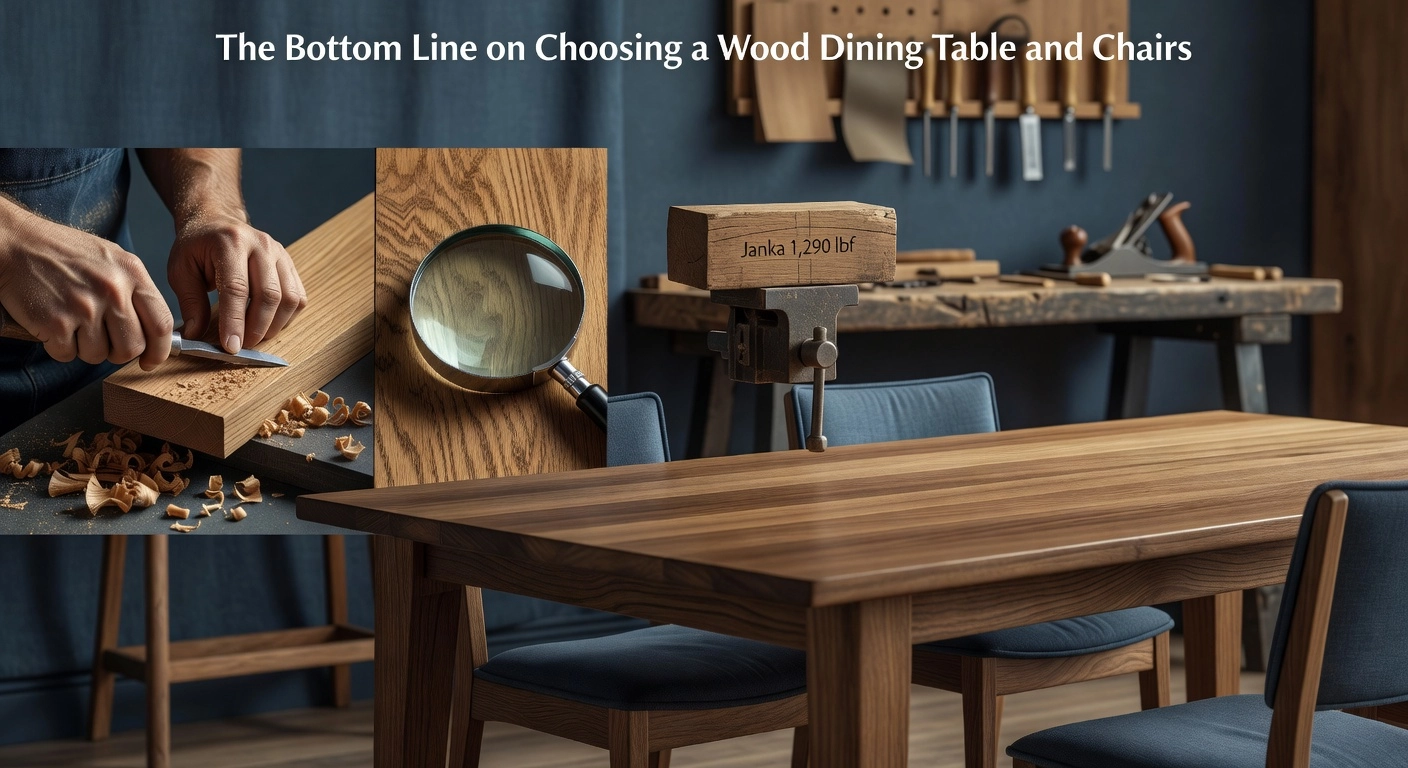
Solid wood, particularly oak, remains the smartest choice for most buyers. With a Janka hardness rating around 1,290 lbf, oak resists dents and daily wear while aging gracefully. More importantly, it can be sanded and refinished multiple times over decades, turning a single purchase into a lifetime piece. Buy only from retailers who openly disclose the wood species and finish type; vague descriptions like “wood-tone” or “hardwood blend” are warning signs.
Your finish choice matters more than your wood species when it comes to daily maintenance. Households with children and frequent meals need a polyurethane or catalyzed varnish coating. Formal dining rooms used occasionally can accommodate oil-based penetrating finishes. Mismatching finish to lifestyle accelerates visible damage faster than almost any other mistake.
Prevention outperforms repair every time. Wiping spills immediately, keeping indoor humidity between 40 and 55 percent, and placing trivets under hot dishes eliminates the majority of damage before it starts.
WoodStuffHQ’s scratch repair, refinishing, and wood care guides provide the practical follow-through that turns a good purchase into a decades-long investment. The global dining table market is growing at roughly 7 percent annually precisely because people recognize this piece’s lasting value. Buy thoughtfully once, care for it consistently, and restoration beats replacement every time.
Conclusion
Choosing the right dining table and chairs does not have to be stressful when you know what to look for. Keep these key takeaways in mind: measure your space carefully before buying, prioritize durable materials like solid wood for long-term value, match your style to your existing decor, and always consider how many people you need to seat comfortably.
The right dining set is more than furniture. It is the backdrop for family dinners, celebrations, and everyday moments that matter.
Now that you are equipped with the knowledge to make a confident decision, it is time to take action. Browse collections that align with your budget and style, ask questions, and trust your instincts. Invest wisely, and your dining table will reward you with years of comfort, beauty, and memories worth keeping.