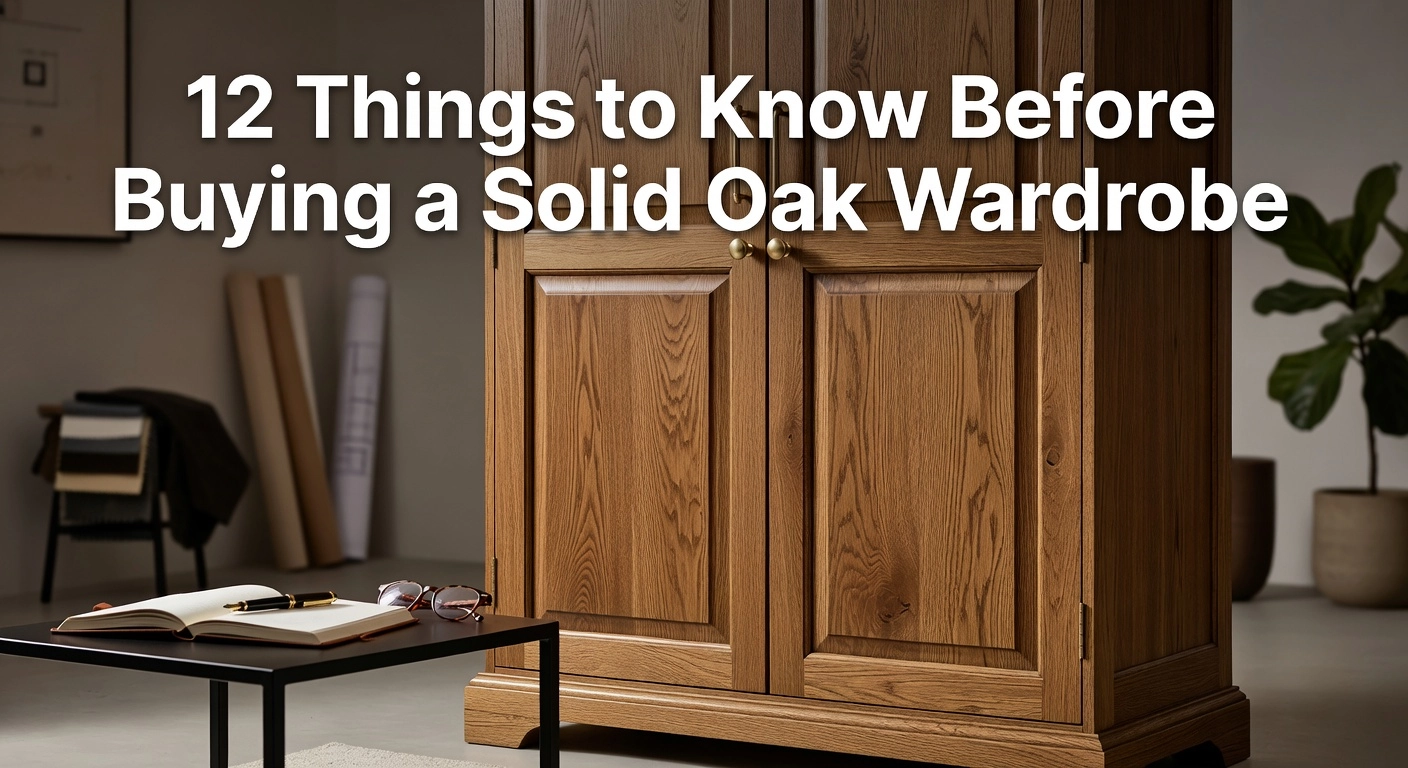
A solid oak wardrobe is one of the most rewarding furniture investments you can make for your home. But without the right knowledge, it can also become an expensive mistake that leaves you with buyer’s remorse and a piece that simply does not work for your space.
Oak furniture has been prized for centuries, and for good reason. It is durable, beautiful, and built to last a lifetime when properly cared for. However, the market is filled with options ranging from genuine solid oak to oak veneer and everything in between. Knowing the difference matters more than most beginners realize.
Before you hand over your hard-earned money, there are some critical factors every first-time buyer needs to understand. From grain patterns and wood grades to sizing, construction quality, and hidden costs, the details can make or break your purchase decision.
In this guide, we have compiled 12 essential things you need to know before buying a solid oak wardrobe. Whether you are furnishing a bedroom for the first time or upgrading an existing piece, this list will give you the confidence to shop smart and choose well.
Why Solid Oak Wardrobes Are Worth the Investment
If you’ve ever questioned whether a solid oak wardrobe justifies its higher price tag, the answer comes down to five hard-to-argue facts about what this wood actually does over time.
1. Oak Is Built to Resist Daily Punishment
Solid oak ranks among the densest hardwoods used in furniture production. White oak measures approximately 1,360 lbf on the Janka hardness scale, while red oak sits at around 1,290 lbf. To put that in plain terms, the Janka scale measures the force required to press a steel ball halfway into wood, and oak outperforms common softwoods like pine, which often scores between 380 and 660 lbf. For a wardrobe that opens and closes daily, that hardness translates directly into fewer dents, scratches, and surface failures over time.
2. You Can Restore It Instead of Replacing It
This is where solid oak truly separates itself from budget alternatives. Unlike MDF or particleboard, which crumble, swell, or delaminate when sanded, solid oak can be refinished multiple times without compromising its structural integrity. A full sand-and-refinish every 15 to 20 years is typically all that is needed to bring a worn piece back to near-original condition.
3. Every Piece Looks Different
Oak’s grain pattern is shaped by its specific growth conditions and how the wood was cut. No two wardrobes are identical, and that natural variation is something no printed laminate or thin veneer can genuinely replicate. Veneers also wear through at edges and corners, exposing the substrate beneath.
4. Heirloom Quality Is a Real Concept Here
A well-maintained solid oak wardrobe can realistically last 50 years or more, often outlasting renovations, house moves, and design trends. That kind of longevity turns a piece of furniture into a long-term asset rather than a depreciating purchase.
5. The Numbers Favor Oak Long-Term
Replacing a flatpack wardrobe every 8 to 10 years adds up faster than most buyers expect, both in purchase cost and disposal hassle. Solid wood furniture consistently delivers a lower annualized cost over decades compared to engineered alternatives that require full replacement. One refinishing session on a solid oak piece costs a fraction of buying new, making the upfront investment a genuinely smart long-term calculation.
Solid Oak vs. Oak Veneer vs. Oak-Appearance Finishes
Not all wardrobes labeled “oak” are created equal, and understanding the difference between three distinct categories can save you from a costly mistake.
100% solid oak construction means every structural component is cut directly from oak timber, with no engineered substrate underneath. The grain runs throughout the entire piece, and the wood can be sanded and refinished repeatedly over decades. Oak veneer over MDF or plywood uses a thin real-oak layer, typically 0.6 to 1.2mm thick, bonded over an engineered core. You are getting genuine oak on the surface, but the core material determines long-term performance. Oak-appearance finishes contain no real wood at all; they use printed paper, foil, or plastic laminate on particleboard or MDF to mimic the look of oak grain photographically.
How to Identify What You Are Actually Buying
Start by reading the product description carefully. Look for explicit phrases like “solid oak construction” or “solid timber frame” rather than vague language. In person, tap the surface firmly; solid oak produces a dense, resonant thud, while veneer or laminate over an engineered core sounds noticeably hollow. Examine the edges and corners closely, since solid oak shows consistent end grain on all sides, veneer reveals a thin wood layer over a different-colored core, and laminate often exposes a plastic or printed edge strip. Also check whether the grain pattern repeats identically across large panels, which is a strong sign of printed finish rather than real wood. You can read more about identifying solid oak versus veneer furniture to sharpen your inspection skills.
Why the Difference Matters for Longevity
Solid oak handles moisture, repairs, and decades of use far better than the alternatives. Veneer can delaminate or bubble when moisture reaches the glue line, and MDF cores swell irreversibly when wet, often causing visible distortion along doors and drawer fronts. Printed laminate finishes cannot be sanded or refinished at all; once the surface chips or fades, replacement is your only option.
Red Flags and Price Guidance
Terms like “oak effect,” “oak finish,” and “oak-look” in product listings almost never indicate real wood construction of any kind. Reputable listings state materials explicitly. On pricing, genuine solid oak wardrobes rarely fall below roughly £2,000 for a quality double wardrobe, with many quality pieces ranging considerably higher depending on size and craftsmanship. If a listing claims “solid oak” at a suspiciously low price point, treat that as a prompt to scrutinize the materials section carefully before purchasing. You can review the key differences between solid oak, veneer, and oak-effect furniture for a detailed breakdown of what each label actually means.
White Oak vs. Red Oak for Wardrobes
Once you have confirmed that a wardrobe is made from genuine solid oak, the next decision worth understanding is which species of oak you are actually looking at. White oak and red oak are both excellent hardwoods, but they behave differently in a bedroom environment and have distinct visual personalities.
1. Visual Differences White oak carries a cooler, more neutral tone, ranging from light tan to medium brown with subtle gray or olive undertones. Its grain is tighter and more refined, giving it a calm, contemporary quality that works well in modern or Scandinavian-inspired bedrooms. Red oak reads noticeably warmer, with a pronounced pink-red undertone and a bolder, more open grain pattern that suits traditional or rustic interiors. Standing side by side, unfinished, the color difference is easy to spot.
2. Durability and Moisture Resistance White oak scores around 1,360 on the Janka hardness scale; red oak sits at approximately 1,290. That gap is small, but the more meaningful difference is pore structure. White oak contains tyloses, tiny growths that plug its pores and create a closed-cell structure. This makes it noticeably more resistant to moisture absorption, which matters in a bedroom where humidity fluctuates with seasons or poor ventilation. You can read more about how white oak and red oak differ structurally for a deeper technical breakdown.
3. Stain and Finish Behavior Red oak’s open pores absorb stain quickly, which can cause uneven or blotchy results without careful preparation. White oak’s tighter grain accepts stain more uniformly, making it easier to achieve consistent color when you eventually want to refinish or update the look. Both species sand and refinish well as solid wood, but white oak offers more predictable results. According to a detailed species comparison, always test stain on a sample first because the pink undertone in red oak shifts the final color significantly.
4. Antique and Vintage Wardrobes If you are shopping secondhand or restoring a vintage piece, red oak is the species you will encounter most often. Red oak dominated North American furniture production throughout most of the 20th century because of its wide availability, large clear logs, and ease of machining in high-volume factories.
5. Practical Buying Advice If you are choosing between two otherwise identical solid oak wardrobes and one is white oak, it earns a slight edge for long-term bedroom use. Its closed pore structure and marginally superior hardness make it better suited to decades of humidity fluctuation. That said, red oak remains a strong, reliable choice and is typically more affordable, making it an excellent option when budget is a factor.
What Finish Types Mean for Long-Term Care
The finish applied to your solid oak wardrobe is not just a cosmetic detail. It is the single most important factor determining how you clean it, how you repair it, and how much professional help you will eventually need.
The three main finish categories work very differently from one another. Oil finishes penetrate directly into the wood’s pores, feeding the grain and delivering a natural matte appearance that lets the oak breathe and move naturally with seasonal humidity changes. Wax finishes sit on the surface, creating a soft sheen that highlights grain without yellowing, but they offer limited scratch and heat resistance and require reapplication roughly every six to twelve months to stay effective. Lacquer and polyurethane form a hard, protective film on top of the wood, offering strong resistance to moisture and daily wear, but at the cost of flexibility; when the surface is damaged, seamless spot repairs are rarely possible without visible seams or adhesion problems.
Before applying any cleaner or maintenance product, identify your finish using a simple water droplet test. Place a small drop of water on an inconspicuous area, such as the inside edge of a door. If the water absorbs or darkens the wood within a minute or two, you are most likely dealing with an oil or wax finish. If the water beads and sits cleanly on the surface, a film-forming finish such as lacquer or polyurethane is present. Getting this wrong and applying an oil-based product to a lacquered surface can cause adhesion failures and cloudiness that are difficult to reverse. You can also learn more about identifying and selecting the right finish for oak furniture before committing to any maintenance routine.
Oil-finished wardrobes are the most beginner-friendly option for ongoing DIY care. Minor scratches can be blended by lightly working along the grain with 0000-grade steel wool and then reapplying the appropriate oil. Because the finish penetrates rather than sitting on top, you are restoring the wood itself rather than patching a coating. There is no need to strip the entire surface. This repairability is a major reason why current 2026 wood finishing trends are shifting toward oils and hard wax oils for furniture, particularly as homeowners prioritize sustainability and long-term restoration over replacement.
Lacquered wardrobes demand a different and more cautious approach. Avoid any oil-based polish or conditioning product, as these cannot bond properly to a film finish and may leave a greasy, hazy residue. Use only pH-neutral, non-abrasive cleaners applied to a microfiber cloth rather than sprayed directly onto the surface. Deep scratches or gouges in lacquer cannot be touched up invisibly at home; they typically require full stripping and professional reapplication to restore a uniform appearance.
The finish you choose at the point of purchase effectively sets the trajectory for every care decision over the wardrobe’s entire life. Oil finishes reward patient, hands-on owners who enjoy maintaining their furniture directly. Film finishes suit those who prefer durability with minimal routine upkeep but are prepared for higher costs if significant damage occurs later.
How to Inspect a Solid Oak Wardrobe Before You Buy
Whether you are buying new or hunting for a secondhand piece, knowing what to look for before you commit protects your investment and helps you avoid expensive surprises down the road.
Joints and Construction Quality (New Purchases)
The single best indicator of a quality solid oak wardrobe is how it is put together. Run your fingers along drawer corners and frame connections and look for dovetail joints (interlocking wedge-shaped pins and tails) and mortise-and-tenon joints (a tenon peg seated firmly into a matching slot). These traditional joinery methods create mechanical connections that resist pulling forces and actually strengthen over time when properly glued. In contrast, dowel joints, staples, and visible screws signal lower-grade construction that is more likely to loosen or fail. While shopping, also check that doors hang evenly without gaps and that the back panel is solid wood or at minimum a quality framed panel, not thin cardboard-like MDF or particleboard that bows under weight.
Surface Condition (Vintage and Secondhand Purchases)
On a secondhand solid oak wardrobe, surface damage falls into two categories: cosmetic and structural. White haze and water rings are typically moisture trapped in the finish layer rather than the wood itself, making them cosmetic issues you can resolve with gentle heat or a vinegar-oil treatment. Dark staining, however, means liquid has penetrated the wood fibers, requiring sanding and refinishing to fully address. Shallow scratches are cosmetic; deep gouges that expose raw wood throughout large areas signal heavier restoration work. Always inspect under strong light and run your hand across the surface to feel what your eyes might miss.
Doors, Hinges, and Humidity Damage
Sticking or binding doors on a solid oak wardrobe almost always point to past humidity exposure that caused swelling or warping. Open and close every door several times and watch for rubbing, uneven gaps, or resistance. Check hinges for rust, looseness, or missing screws. Replacement hinges are affordable individually, but factor in the cumulative cost across multiple doors when negotiating a secondhand price.
Interior Inspection
Open every drawer and door and give the interior a thorough check. A musty or damp smell indicates moisture damage or mildew in the unfinished wood, which can transfer to clothing. Look for clothing dye stains, old paper lining that may be hiding surface problems, and greasy buildup that will require degreasing before any refinishing. Each of these issues adds time and materials to your restoration project, so use them as negotiating points rather than dealbreakers.
Quick Refinishability Field Test
On an inconspicuous spot such as the inside of a drawer or the back edge, lightly sand a small area with 150 to 220-grit paper. If the finish lifts cleanly to reveal sound, consistent oak grain underneath, the piece has plenty of life left and will respond well to a standard refinish. If the surface resists unevenly, crumbles, or reveals damaged fibers beneath, you are looking at a more involved restoration. This 30-second test gives you real information that no amount of surface inspection alone can provide, and it is the same starting point covered in the refinishing guides here at WoodStuffHQ.
The 2026 Design Trends Driving Oak Wardrobe Demand
If you have been watching interior design shift over the past few years, the growing demand for solid oak wardrobes makes complete sense. Five intersecting trends are pulling buyers toward solid oak storage in 2026, and understanding them helps you see why this purchase is well-timed.
1. The ‘Brown Furniture’ Revival Oak, walnut, mahogany, and cherry are all surging in popularity as homeowners reject the all-white and cool grey interiors that defined the 2010s. A Country Living survey of 100 interior designers named darker brown furniture one of the two dominant 2026 furniture trends, alongside traditional silhouettes. Buyers want warmth, depth, and a sense of permanence that sterile pale schemes simply could not deliver.
2. Richer, Warmer Oak Finishes Are Replacing Washed Scandi Stains Light, bleached oak tones dominated bedroom furniture for nearly a decade. In 2026, deeper amber and honey finishes that celebrate natural grain are taking over. Design guides confirm that visible grain, warm blondes, and refined mid-browns are now the preferred direction for oak furniture, with cool grey-washed wood declining noticeably.
3. Japandi and Minimalist Styles Are Embracing Solid Oak Storage Japandi design, the fusion of Japanese and Scandinavian minimalism, uses solid oak as a grounding anchor. A solid oak wardrobe pairs naturally with linen textiles, mixed wood tones, and organic forms, providing both function and a calming material presence in the bedroom.
4. Sustainability Is Shifting Buying Priorities Buyers are increasingly choosing furniture that can be refinished and restored rather than discarded. Solid oak wardrobes routinely last 50 to 80 years with proper care, making them a practical choice for anyone reducing long-term furniture waste. This aligns directly with the content covered here at WoodStuffHQ, where restoration over replacement is a core principle.
5. What This Means for Your Buying Decision A solid oak wardrobe purchased in 2026 can move through multiple finish updates, textile changes, and style shifts without becoming dated. Its natural grain works across Japandi minimalism, quiet luxury, and traditional schemes alike, meaning the piece adapts to your home rather than the other way around.
Common Problems Solid Oak Wardrobes Develop Over Time
Even the most well-built solid oak wardrobe will develop predictable issues over time. Knowing what to look for helps you catch problems early, when they are still simple and inexpensive to fix.
1. Warping and Swelling in Door Panels
Oak is a hygroscopic wood, meaning it absorbs and releases moisture from the surrounding air. In bedroom environments where humidity rises in summer and drops sharply in winter with central heating, this constant movement puts stress on door panels. The most reliable sign is a door that sticks during humid months and then loosens again in winter, or visible gaps that shift with the seasons. Furniture care specialists consistently identify swelling and shrinkage as the number one customer complaint for solid wood furniture. Keeping indoor humidity between 40 and 45 percent year-round using a hygrometer and a humidifier or dehumidifier prevents most of this movement from becoming permanent distortion.
2. Surface Scratches and Scuff Marks
Scratches are the most common cosmetic issue on any solid oak wardrobe, and they concentrate predictably on door faces, drawer fronts, and the edges you grip daily. Clothing, hangers, keys, and casual contact all leave their mark over years of use. Oak’s natural hardness provides better resistance than softer species, but no finish is permanent. The good news is that light surface scuffs rarely require professional attention and typically respond well to DIY methods covered throughout this site.
3. Water Rings and Moisture Staining on Vertical Surfaces
Water staining on wardrobe doors and side panels is less discussed than tabletop rings, but wardrobes placed near windows or in bathrooms are genuinely vulnerable. Condensation, splashed water, and high ambient humidity all create the same cloudy white rings or dark discoloration you would see on a dining table. Addressing moisture exposure promptly and keeping the wardrobe at least two feet from direct moisture sources prevents most of this damage.
4. Loose or Failing Hinges
Solid oak doors are heavy, and that weight works against hinges continuously over years of use. On older pieces especially, screws gradually pull away from the frame, causing doors to sag, misalign, or scrape along the base. This problem worsens quickly if ignored, eventually damaging the frame itself. Checking hinge tightness annually and addressing any wobble immediately with longer screws or a simple wood glue repair keeps the problem manageable. This guide to caring for solid wood furniture reinforces why early intervention matters for hardware issues.
5. Interior Buildup
The inside of a wardrobe accumulates more than most owners expect. Grease from hands, clothing dye transfer onto shelves, dust, and general grime build up over years in corners, along hanging rails, and on flat shelf surfaces. Standard furniture polish is the wrong tool here; it leaves a sticky residue that attracts more debris. A damp cloth with mild soap, followed by thorough drying, is far more effective. Regular light cleaning every few months prevents the kind of deep staining that requires more aggressive treatment.
How to Maintain Your Oak Wardrobe’s Finish Year to Year
A consistent care routine is the single most effective way to protect your solid oak wardrobe’s finish and extend its life by decades. The routine itself is straightforward. Dust the surface weekly using a soft, dry microfibre cloth, always working in the direction of the grain. This prevents fine abrasive particles from dulling the finish over time. Every three months, wipe the wardrobe down with a slightly damp cloth and a single drop of mild dish soap, then dry it immediately and thoroughly with a separate clean cloth. Once or twice a year, apply a protective product matched to your finish type, either a furniture oil such as Danish oil or a paste wax, depending on what was applied originally. High-use surfaces like door fronts may need attention more frequently than shelving.
What to avoid is just as important as what to use. Silicone-based spray polishes are one of the most common mistakes made on solid oak furniture. They create an appealing short-term shine but deposit a residue that penetrates the finish layer over time, making future refinishing nearly impossible without a dedicated silicone remover. Harsh chemical cleaners, all-purpose sprays, and vinegar-based solutions strip the protective oils and break down the finish faster than normal wear. Excessive water is equally damaging; oak absorbs moisture readily, which raises the grain, causes swelling, and can lead to permanent staining. Use moisture sparingly and always dry the surface immediately after any damp cleaning.
Applying furniture oil correctly makes a measurable difference in the result. Work in the direction of the grain using a lint-free cloth, applying the oil in thin, even strokes rather than pooling it on the surface. Let the oil absorb for the time specified on the product label, then buff away any excess with a clean, dry cloth. Do not close the doors or load the wardrobe until the oil has fully cured, which typically takes between 24 and 72 hours depending on the product. Trapping solvent vapours or smudging uncured oil against surfaces creates a sticky, uneven result that is harder to correct than the original dryness.
For light scratches on an oil-finished surface, a targeted repair often works without touching the rest of the wardrobe. Lightly sand the scratched area with 240-grit sandpaper, following the grain, to smooth any raised edges. Then apply a small amount of matching furniture oil directly to the scratch using a lint-free cloth or a cotton swab, blending it into the surrounding area. Buff off the excess and allow it to cure fully. The oil penetrates and darkens the scratch so it blends with the surrounding wood, often making it nearly invisible.
When routine maintenance stops working, a full refinish becomes the right call. The key signs are a finish that remains dry or rough even after oiling, water that soaks in immediately rather than beading, or widespread scratching and dulling that spot treatment cannot address. Before committing to a full refinish, inspect the wood itself. If the underlying oak is solid, flat, and free from rot or deep structural damage, refinishing will restore it completely. A tired finish sitting on sound wood is always a restoration project worth taking on.
Humidity Control to Prevent Warping and Cracking
Solid oak is a ring-porous hardwood, meaning it contains large, open vessel cells that readily absorb and release moisture from the surrounding air. This hygroscopic nature makes your wardrobe expand when humidity rises and contract when conditions dry out. Unlike denser, closed-grain species, oak moves more dramatically with these changes, placing stress on joints, door panels, and surface finishes over time. Repeated cycles of expansion and contraction are cumulative, and what starts as a mildly sticking drawer can eventually become a warped door that no longer closes flat.
The target range to aim for is between 35% and 55% relative humidity (RH) year-round. Seasonal swings outside this window cause the most damage because they force rapid, repeated dimensional changes. In winter, central heating commonly drops indoor RH below 30%, causing the wood to shrink, which leads to visible cracks and gaps at joints. In summer, RH spikes above 60% drive swelling, sticking doors, and loosened joints. Keeping conditions stable within that 35 to 55% band minimizes the stress your wardrobe experiences across every season.
The most practical starting point is a small digital hygrometer, available for under $20, placed in the bedroom where your wardrobe lives. Check it regularly during seasonal transitions. When winter readings drop too low, run a humidifier near the room. When summer humidity climbs, use air conditioning or a dehumidifier to pull excess moisture out of the air. These are low-cost tools that provide reliable protection.
Placement decisions matter just as much as climate control. Position your solid oak wardrobe away from exterior walls with poor insulation, radiators, heating vents, and windows that receive direct sunlight. Each of these creates a localized micro-environment where one side of the wardrobe experiences conditions that differ sharply from the other, which drives uneven movement and accelerates warping.
If you have already noticed seasonal door sticking, take a measured approach before reaching for sandpaper. Mild swelling that affects the full door evenly and appears only during humid months will often resolve on its own once RH stabilizes. Monitor the situation over several weeks and address the environment first. Applying a thin coat of paste wax to door edges provides temporary friction relief without removing material. If the door no longer closes flat, shows a visible twist, or the problem persists through multiple seasons regardless of humidity levels, that indicates permanent warping. At that point, a carpenter’s assessment is the appropriate next step rather than a DIY fix.
How to Restore a Vintage or Antique Solid Oak Wardrobe
Vintage and antique solid oak wardrobes deserve restoration rather than disposal, and the reason starts with the wood itself. Old-growth oak, harvested from mature trees decades or even centuries ago, features significantly tighter grain rings and greater density than the fast-grown plantation timber used in most contemporary furniture. This translates to a piece that is more resistant to warping, less prone to cracking under humidity shifts, and structurally more stable than many brand-new wardrobes on the market today. Add in the quality of hand-cut joinery common in older cabinetmaking, and you frequently have a piece that outperforms modern alternatives in every measurable way.
A Basic Restoration in Five Steps
A straightforward restoration follows a logical sequence, even for complete beginners.
1. Clean and degrease the interior. Remove shelves and drawers where possible. Wipe all interior surfaces with a mild solution of warm water and a small amount of dish soap or diluted white vinegar to lift dust, grime, and musty odors. Dry thoroughly and allow the piece to air out fully before proceeding.
2. Address surface damage. Before touching the finish, deal with scratches, water rings, and haze on exterior panels using the targeted methods described below.
3. Strip or scuff-sand the old finish. For heavy lacquer buildup, progressive sanding through 150-grit then 220-grit removes the old surface while preserving the wood beneath. A light scuff-sand is often sufficient for refresh projects that do not require a full strip.
4. Apply a new oil or wax finish. Tung oil or Danish oil applied in thin, even coats, buffed lightly between applications, produces a natural matte-to-satin result that brings out oak’s grain beautifully. Follow with a clear wax for added protection.
5. Service the hardware. Remove handles and hinges, clean off rust with a vinegar soak, and reinstall or replace as needed.
Removing Water Rings and White Haze
White haze, that cloudy film that appears on finished oak surfaces, responds well to #0000 fine steel wool lubricated with a small amount of mineral spirits. Rub gently in the direction of the grain, wipe clean, then apply a fresh coat of wax. For white water rings on vertical panels, place a dry cloth over the mark and briefly apply a warm iron on low heat, moving it constantly to avoid scorching. The gentle heat draws trapped moisture back out through the finish. Always test both methods on an inconspicuous area first.
Fixing Loose Hinges and Sticking Doors
Stripped screw holes are one of the most common problems on older wardrobes, and the fix requires nothing more than wooden toothpicks and wood glue. Coat two or three toothpicks in wood glue, push them firmly into the stripped hole, let the glue cure overnight, then trim the toothpicks flush and re-drive the original screw. The swollen wood fibers grip the screw tightly and hold reliably. For doors that stick after hinge repair, check alignment first, then lightly sand binding edges or rub them with a wax candle as a simple lubricant.
The Upcycling Opportunity
Replacing a tired lacquered finish with a penetrating oil finish is the single most transformative step you can take with a dated oak wardrobe. Oil finishes emphasize natural grain, warm the tone, and create the kind of tactile, lived-in surface that fits seamlessly into Japandi and Scandi interiors. Pair this with new minimalist hardware in matte black or unlacquered brass, and finish with two or three coats of clear wax buffed to a soft sheen. The result retains all the structural superiority of old-growth oak while giving the piece a look that aligns directly with 2026’s preference for warm natural materials and refined simplicity.
Restore vs. Replace: The Sustainability Case for Solid Oak
The sustainability case for choosing restoration over replacement is one of the most compelling arguments for owning solid oak furniture, and it plays out across environmental, financial, and practical dimensions.
1. Flat-pack and MDF furniture cannot be recycled and ends up in landfill. Most mass-market wardrobes are built from MDF or particleboard, materials held together with formaldehyde-based resins that standard recycling facilities cannot process. The result is disposal by landfill or incineration. US furniture waste has grown from roughly 2.1 million tons in 1960 to over 12 million tons annually in recent years, with the vast majority going directly to landfill. Solid oak avoids this fate entirely. It can be sanded, refinished, and structurally repaired indefinitely. At true end of life, it can be repurposed into smaller pieces or reclaimed for other uses, and it biodegrades without releasing the chemical byproducts that engineered wood produces.
2. Refinishing an existing piece uses a fraction of the resources required to manufacture a new one. A 2025 life-cycle assessment found that raw material extraction and processing account for roughly 76% of a new furniture piece’s total environmental impact. Refinishing bypasses nearly all of that. The process requires labor, abrasives, and finish products, with no new timber harvesting, no board manufacturing, and no long-distance shipping of a bulky replacement item.
3. Restoration typically costs 30 to 70 percent less than purchasing a comparable quality replacement. A solid oak wardrobe of equivalent craftsmanship can cost thousands new. Refreshing an existing piece through sanding, staining, and hardware updates preserves the inherent material value at a fraction of that cost, making restoration the economically rational choice in most situations.
4. Solid oak fits naturally into a broader sustainable home strategy. Pairing a durable hardwood investment with consistent maintenance, including proper humidity control and protective finishes, extends product life well beyond what any engineered wood alternative can match. Engineered pieces frequently fail within 5 to 10 years through sagging or delamination. A well-maintained oak wardrobe can serve reliably for generations.
5. If you already own a solid oak wardrobe that looks worn or dated, restoration should always be explored before replacement. The wood itself retains structural integrity long after the finish has dulled or the hardware has aged. Restoration delivers environmental savings, financial advantages, and a renewed aesthetic while keeping quality materials out of the waste stream entirely.
Where to Buy Solid Oak Wardrobes (A Neutral Overview)
Knowing where to shop is just as important as knowing what to look for, and different sources serve very different needs when it comes to solid oak wardrobes.
1. Specialist solid oak retailers offer the most reliable starting point for buyers who want confirmed solid construction without extensive research. Retailers dedicated to solid oak furniture carry broad ranges across multiple styles, from natural and rustic finishes to painted options, and typically provide detailed product information confirming that shelves, panels, and frames are all solid hardwood rather than mixed materials. The tradeoff is price. Premium, verified solid oak commands a premium cost, and that is accurate rather than inflated when you consider the material and build quality behind it.
2. Amish and custom furniture makers represent the highest standard of craftsmanship available for solid oak wardrobes. Makers like those found through Snyder’s Furniture build pieces to order using traditional joinery techniques such as dovetails and mortise-and-tenon construction. This route also solves the non-standard sizing problem. If your bedroom has an awkward alcove or ceiling height, made-to-order Amish pieces can be built to fit precisely.
3. Etsy and local antique dealers are worth exploring if budget is a priority or if you are drawn to vintage character. Secondhand solid oak wardrobes often sell at a fraction of new prices and can be fully restored using the methods covered earlier in this guide.
4. Broad online retailers like Wayfair carry solid wood wardrobe options, but product descriptions require careful scrutiny. Always verify whether the listing confirms solid oak throughout or uses terms like oak veneer, oak finish, or oak-appearance, which indicate very different materials.
Before purchasing from any source, run through this checklist:
- Confirm solid wood construction throughout, not just the frame
- Verify the finish type to understand future care and refinishing needs
- Check the return and delivery policy carefully, given the size and weight involved
- Look for visible joinery details that signal quality craftsmanship
Making Your Solid Oak Wardrobe Last a Lifetime
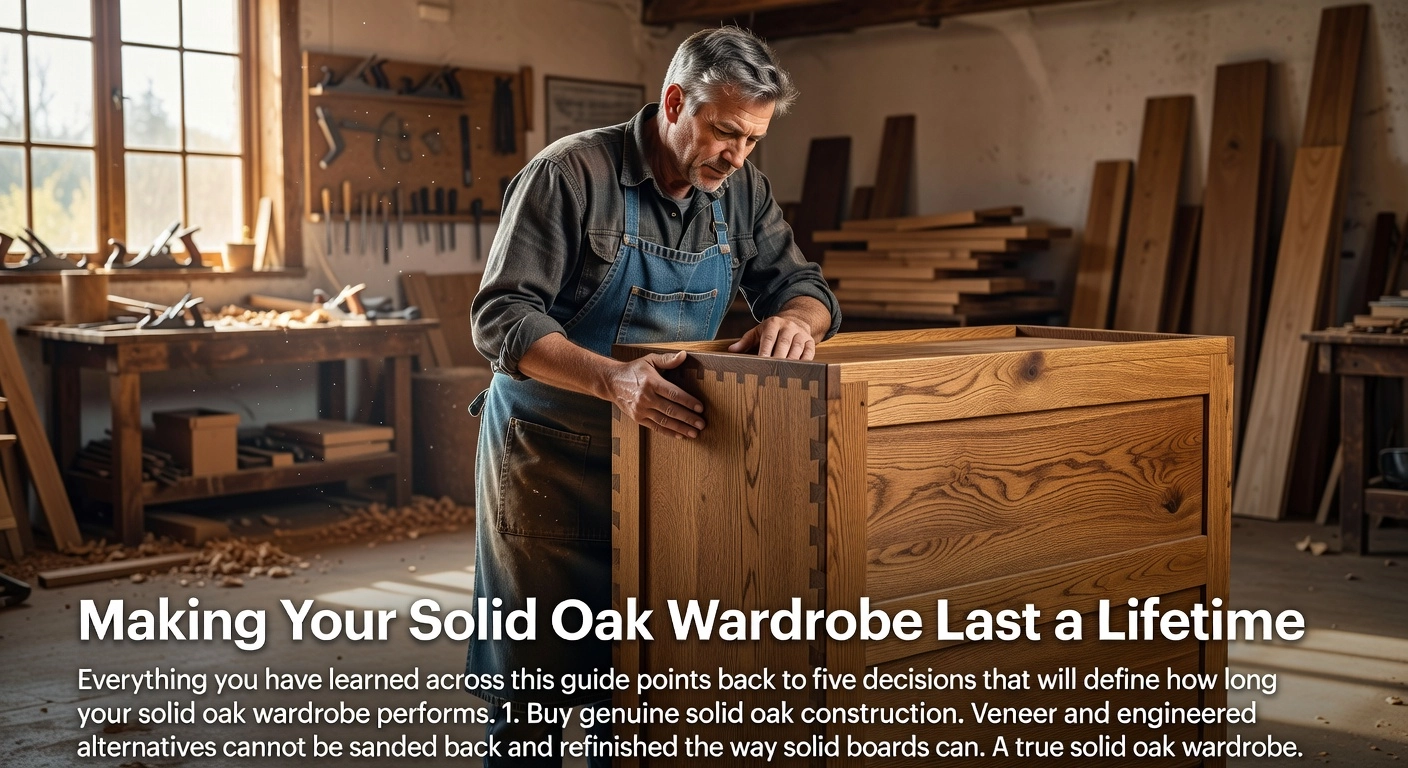
Everything you have learned across this guide points back to five decisions that will define how long your solid oak wardrobe performs.
1. Buy genuine solid oak construction. Veneer and engineered alternatives cannot be sanded back and refinished the way solid boards can. A true solid oak wardrobe, built with real oak throughout, can last 30 to 100 or more years with basic attention.
2. Know your finish type. Oil, wax, lacquer, and polyurethane all require different care approaches. Identifying yours before you clean or treat the surface prevents accidental damage.
3. Control bedroom humidity above all else. Keeping relative humidity between 40 and 55 percent is the single most impactful step you can take. It prevents warping, cracking, and finish failure more effectively than any polish or product.
4. Take three actionable first steps today. Test your finish type with a small drop of water or oil. Pick up an affordable hygrometer for your bedroom. Schedule one annual oiling or waxing session on your calendar.
Whether you are buying new, sourcing vintage, or restoring an inherited piece, solid oak rewards care in a way that mass-produced furniture simply cannot. Proper maintenance genuinely changes the outcome over decades, and that is rare in any furniture purchase.
Conclusion
Buying a solid oak wardrobe is a significant investment, and going in prepared makes all the difference. By understanding wood grades and construction quality, you can separate genuine solid oak from cheaper alternatives. Knowing your measurements and room layout prevents costly sizing mistakes. And recognizing the hidden costs upfront means no unpleasant surprises after purchase.
Armed with these 12 key insights, you are now equipped to shop with confidence rather than guesswork. You know what questions to ask, what warning signs to avoid, and what genuinely good craftsmanship looks like.
Take your time, do your research, and choose a wardrobe that truly fits your space, your style, and your budget. A well-chosen solid oak wardrobe does not just store your clothes; it becomes a cherished piece of furniture your family will treasure for generations to come.
Frequently Asked Questions
How can I tell if a wardrobe is genuinely solid oak or just an oak veneer or laminate?
There are several practical ways to check. Tap the surface firmly — solid oak produces a dense, resonant thud, while veneer or laminate over an engineered core sounds hollow. Examine the edges and corners closely: solid oak shows consistent end grain on all sides, veneer reveals a thin wood layer over a different-colored core, and laminate often exposes a printed or plastic edge strip. Also check whether the grain pattern repeats identically across large panels, which strongly indicates a printed finish rather than real wood. In product listings, look for explicit phrases like 'solid oak construction' or 'solid timber frame' and be wary of terms like 'oak effect,' 'oak finish,' or 'oak-look,' which almost never indicate real wood.
What is the difference between white oak and red oak for a bedroom wardrobe, and does it matter?
Both are excellent hardwoods, but they differ in appearance, moisture resistance, and finishing behavior. White oak has a cooler, neutral tone with tighter grain and suits modern or Scandinavian-inspired bedrooms. Red oak has a warmer pink-red undertone with a bolder grain that fits traditional or rustic interiors. White oak also has a closed-cell pore structure due to tyloses, making it more resistant to moisture absorption — an advantage in bedrooms where humidity fluctuates seasonally. Red oak absorbs stain more unevenly due to its open pores, while white oak accepts stain more uniformly. That said, red oak is typically more affordable and remains a strong, reliable choice if budget is a factor.
How should I maintain a solid oak wardrobe's finish to keep it looking its best long-term?
A consistent routine makes a significant difference. Dust weekly with a soft, dry microfibre cloth following the grain direction. Every three months, wipe down with a slightly damp cloth and a drop of mild dish soap, then dry immediately and thoroughly. Once or twice a year, apply a protective product matched to your finish type — furniture oil like Danish oil for oil-finished pieces, or paste wax for wax-finished ones. Critically, avoid silicone-based spray polishes, which deposit residue that makes future refinishing nearly impossible. Also avoid harsh chemical cleaners, vinegar-based solutions, and excessive water, all of which strip protective oils and raise the grain. Always identify your finish type first using a simple water droplet test before applying any product.
How does humidity affect a solid oak wardrobe, and what can I do to prevent warping or cracking?
Oak is a hygroscopic wood that absorbs and releases moisture from the air, causing it to expand in humid conditions and contract when the air dries out. Repeated seasonal swings are cumulative and can lead to sticking doors, warped panels, cracks at joints, and loosened hardware. The target range to maintain is between 35% and 55% relative humidity year-round. A small digital hygrometer placed in the bedroom, available for under $20, lets you monitor conditions easily. Use a humidifier in winter when central heating drops humidity below 30%, and a dehumidifier or air conditioning in summer when humidity climbs above 60%. Also position the wardrobe away from radiators, heating vents, exterior walls with poor insulation, and windows with direct sunlight, as these create uneven micro-environments that accelerate warping.
Is it worth restoring a vintage or secondhand solid oak wardrobe rather than buying new?
In most cases, yes — and for compelling reasons. Old-growth oak used in vintage pieces typically features tighter grain rings and greater density than modern plantation timber, making it more stable and resistant to warping. Restoration also costs 30 to 70 percent less than purchasing a comparable quality replacement new. Environmentally, refinishing bypasses the raw material extraction and manufacturing that account for roughly 76% of a new furniture piece's total environmental impact. A basic restoration involves cleaning and degreasing the interior, addressing surface damage like water rings or scratches, sanding and applying a fresh oil or wax finish, and servicing hinges and hardware. As long as the underlying oak is structurally sound, a tired finish is never a reason to discard a quality piece.
1 thought on “12 Things to Know Before Buying a Solid Oak Wardrobe”