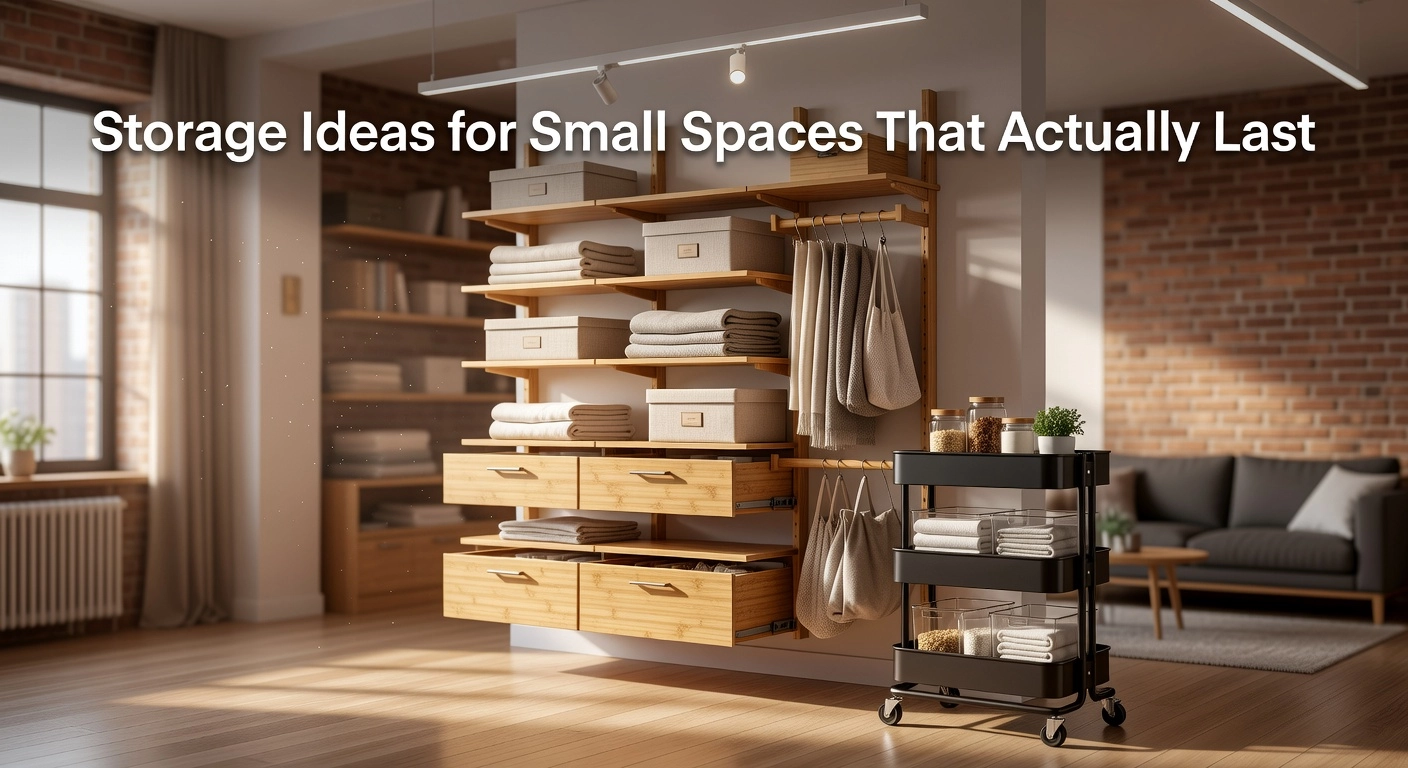
Living in a small space can feel like a constant battle against clutter. You put something away, and somehow it ends up right back on the counter, the floor, or that one chair that seems to collect everything. Sound familiar?
The good news is that you do not need a massive home or a huge budget to get organized. You just need the right storage ideas for small spaces, and that is exactly what this post is all about. Whether you are living in a studio apartment, a tiny bedroom, or just dealing with a particularly cramped kitchen, there are simple solutions that can make a real difference.
What makes this list different is that we focused on ideas that actually hold up over time. No flimsy quick fixes that fall apart after a month. Just practical, beginner-friendly storage solutions that work with your space instead of against it. By the end of this post, you will have a solid list of ideas you can start using right away, even if you have never tackled home organization before. Let’s dive in.

Why Small Spaces Demand a Smarter Approach
Here’s the reality: more Americans than ever are living with less square footage, and storage has quietly become one of the most pressing problems in modern home life. According to survey data from IPX1031, 73% of Americans would consider tiny home living, and median new single-family home sizes have been declining steadily since around 2015. This isn’t a niche trend anymore. It’s a widespread shift, and it means millions of people are actively trying to solve real, everyday storage problems right now.
The scale of the challenge becomes clear when you look at the numbers. The average tiny home measures roughly 225 square feet, which is about nine times smaller than a typical single-family home. At that size, storage stops being a nice-to-have and becomes something closer to a survival skill. Every shelf, drawer, and corner has to earn its place.
Here’s where most storage advice falls short, though. It points you toward products, fills your cart, and stops there. It rarely covers what happens six months later when your wood shelves are drying out, your cabinet doors are scuffed, or your storage bench needs a little love to keep looking good. That follow-through matters just as much as the initial setup.
That’s exactly where WoodStuffHQ comes in. The focus here is on beautiful storage solutions that actually hold up, with practical wood care woven into every recommendation. Think of it as a mindset shift: instead of constantly buying more stuff, you learn to use what you have smarter, maintain it properly, and get years of great-looking function out of every piece you bring home.
Go Vertical: Use Your Walls From Floor to Ceiling
One of the easiest wins in any small room is the space you’re probably ignoring completely: your walls, all the way up to the ceiling. Most people stop hanging things at eye level, but that leaves a huge amount of usable space just sitting there empty. Vertical storage solutions can dramatically increase your storage capacity without sacrificing a single square foot of floor space.
Tall Shelving Units and Floor-to-Ceiling Bookcases
Installing a tall shelving unit or a floor-to-ceiling bookcase is one of the smartest moves you can make in a compact room. These units pull the eye upward, which actually makes a small room feel larger and more open rather than cramped. You can use the lower shelves for everyday items and the upper sections for things you access less often, like seasonal decor or extra blankets. The key is to avoid stuffing every shelf completely full; leaving a little breathing room between objects keeps the whole wall from feeling visually overwhelming.
Floating Shelves Above Doors, Windows, and Desks
Those blank strips of wall above your doorframes, windows, and desk are prime real estate. A simple floating shelf in any of these spots creates a storage or display zone that sits completely out of your normal line of movement. Use them for books, small baskets, or decorative objects. Because these shelves sit high, they keep counters and floors clear while adding function to spaces you’d never think to use otherwise. Slim shelf profiles work best here so the additions feel intentional rather than cluttered.
Wall-Mounted Pegboards for Flexible Storage
Pegboards are genuinely one of the most flexible vertical storage options available for kitchens, entryways, and home offices. Hooks, small shelves, and baskets can be rearranged any time your needs change, which is a huge advantage over fixed cabinetry. If you’re choosing between a solid wood pegboard and an MDF version, go with solid wood every time. Solid wood handles daily humidity fluctuations far better, resists swelling, and can be sanded and refinished if it gets scratched or worn over time. MDF tends to swell along edges when moisture gets in, and once that happens, it’s difficult to restore.
Prepping Your Wood Shelf to Last
Before you mount any new wood shelf, taking a few minutes to finish it properly will save you headaches later. Let the wood acclimate in your home for several days so it adjusts to your indoor humidity levels. Then apply two to three coats of a water-based polyurethane to all sides, including the back and the ends. Sealing every surface evenly prevents the wood from absorbing moisture unevenly, which is the main cause of warping and cupping over time. A well-finished shelf resists dust, everyday contact, and the occasional spill without losing its good looks.
A Quick Tip on Wood Tones for 2026
If you’re shopping for new shelving or pegboards, consider darker wood tones. Walnut and acacia are both trending strongly for wall storage right now because their rich, warm grain adds depth and coziness to a small room without making it feel heavy or closed in. Paired with light-colored walls, a walnut floating shelf or acacia pegboard creates a grounded, sophisticated look that feels curated rather than chaotic.
Multi-Functional Furniture That Pulls Double Duty
Once you’ve claimed your wall space, the next big opportunity is rethinking the furniture already sitting in your rooms. Multi-functional furniture is exactly what it sounds like: pieces that do more than one job at a time, quietly solving your storage problem without making your home feel like a warehouse.
Storage Ottomans and Benches
A storage ottoman or bench might be the hardest-working piece of furniture you can buy for a small space. It gives you a place to sit, a spot to rest your feet, and a hidden compartment for blankets, books, board games, or seasonal items, all in one compact footprint. The best part? You don’t need to buy brand new. A thrift store wooden bench that you sand down, restain, and add a cushion to will often outperform a flimsy plastic alternative in both durability and style. Solid wood frames hold up far longer, and you can customize the finish to match your existing decor exactly. The global small-space furniture market shows storage units capturing nearly 28% of market share in 2025, which tells you plenty of people are catching onto this trick.
Bed Frames with Built-In Drawers
In a small bedroom, a dresser can eat up a shocking amount of floor space. A platform bed with built-in drawers solves this completely. You store your clothing, linens, or extra towels directly under your sleeping area, freeing up the rest of the room to breathe. You’re not sacrificing any sleeping surface, and you’re eliminating a bulky piece of furniture in the process. This is one of the simplest swaps you can make with an immediate, visible payoff.
Lift-Top Coffee Tables and Nesting Side Tables
Lift-top coffee tables open up to reveal hidden compartments for remotes, magazines, or charging cables, while also converting into a raised work surface when you need it. Nesting side tables tuck under each other when guests aren’t around, then spread out when you need the extra surface. Neither option adds visual clutter to your sight lines because they’re low-profile by design. The multifunctional furniture market is growing rapidly for exactly this reason: people want pieces that adapt, not just sit there.
Bookshelves as Room Dividers
In a studio or open-plan apartment, a freestanding bookshelf can do something walls can’t: create a defined zone while offering storage on both sides. Position one between your sleeping area and living area, and suddenly you have a bedroom nook, accessible shelving, and a visual boundary without losing any light or making the space feel boxed in. This is a completely non-permanent solution, which means you can reconfigure whenever your needs change.
A Quick Wood Care Note
If you invest in an upholstered storage bench with a wooden frame, don’t neglect the legs and base. These high-contact surfaces take a beating from shoes, humidity, and daily friction. Applying a protective finish every one to two years keeps the wood from drying out, scratching, or absorbing moisture damage. It’s a small maintenance step that extends the life of your furniture significantly, which matters even more when you’ve put time and effort into refinishing a thrifted piece yourself.
Hidden Storage in the Spaces You Walk Past Every Day
Some of the best storage in your home is hiding in plain sight. You walk past it every single day without realizing it could be working for you. These overlooked spots won’t cost you a single square foot of floor space, and once you start seeing them, you’ll wonder how you ever ignored them.
Behind Every Door
Over-the-door organizers are one of the most underused tools in small-space living. A standard door offers roughly 21 square feet of usable surface on its back, and that space works just as well in your pantry, bathroom, bedroom closet, or entryway. The key upgrade for 2026 is ditching the old wire pocket organizers and swapping in wooden or rattan-backed versions instead. These look intentional and warm rather than like something you grabbed at a dollar store. A rattan-backed hook organizer in your entryway, for example, holds coats, bags, and keys while looking like a design choice rather than a workaround. According to 2026 home organization trends covered by Veranda, natural materials like rattan, seagrass, and wood are replacing plastic and wire across the board because they bring texture and calm to everyday spaces.
Under the Bed and Behind the Sofa
The space under your bed is basically a free storage room you already own. A standard queen bed sits over roughly 20 to 33 square feet of floor area, and low-profile rolling bins or flat lidded boxes can fill that space with seasonal clothing, extra linens, or shoes without touching your room layout at all. Use clear bins so you can actually see what’s inside, and label everything so the space stays usable rather than becoming a black hole.
The gap behind your sofa is another spot worth a second look. Most sofas sit 4 to 6 inches away from the wall, which is just enough room for a slim console table. Add one with a lower shelf and you’ve instantly created a spot for books, a basket of remotes, or a small plant.
Awkward Nooks and Bedside Walls
Under-stair spaces, corners with slanted ceilings, and odd-shaped nooks are perfect candidates for custom-cut wooden shelves. The irregular angles that make these spots feel unusable are exactly what makes them ideal for fitted storage. One important tip: always seal the cut edges of any wood you install in a stairwell or temperature-variable space. Stairwells heat and cool unevenly, and raw cut edges absorb moisture quickly, which leads to warping over time. A coat of sealant or varnish on those edges takes five minutes and protects your work for years. For more on keeping wood in great shape in tricky environments, the guides at Simply Organized For You also highlight how small maintenance steps make storage last longer.
Finally, swap out bulky bedside tables for floating wall-mounted nightstands. They hold everything you actually need at night, including your lamp, book, phone, and glasses, while keeping the floor completely clear. That open floor space makes even a small bedroom feel noticeably bigger and easier to move around in.
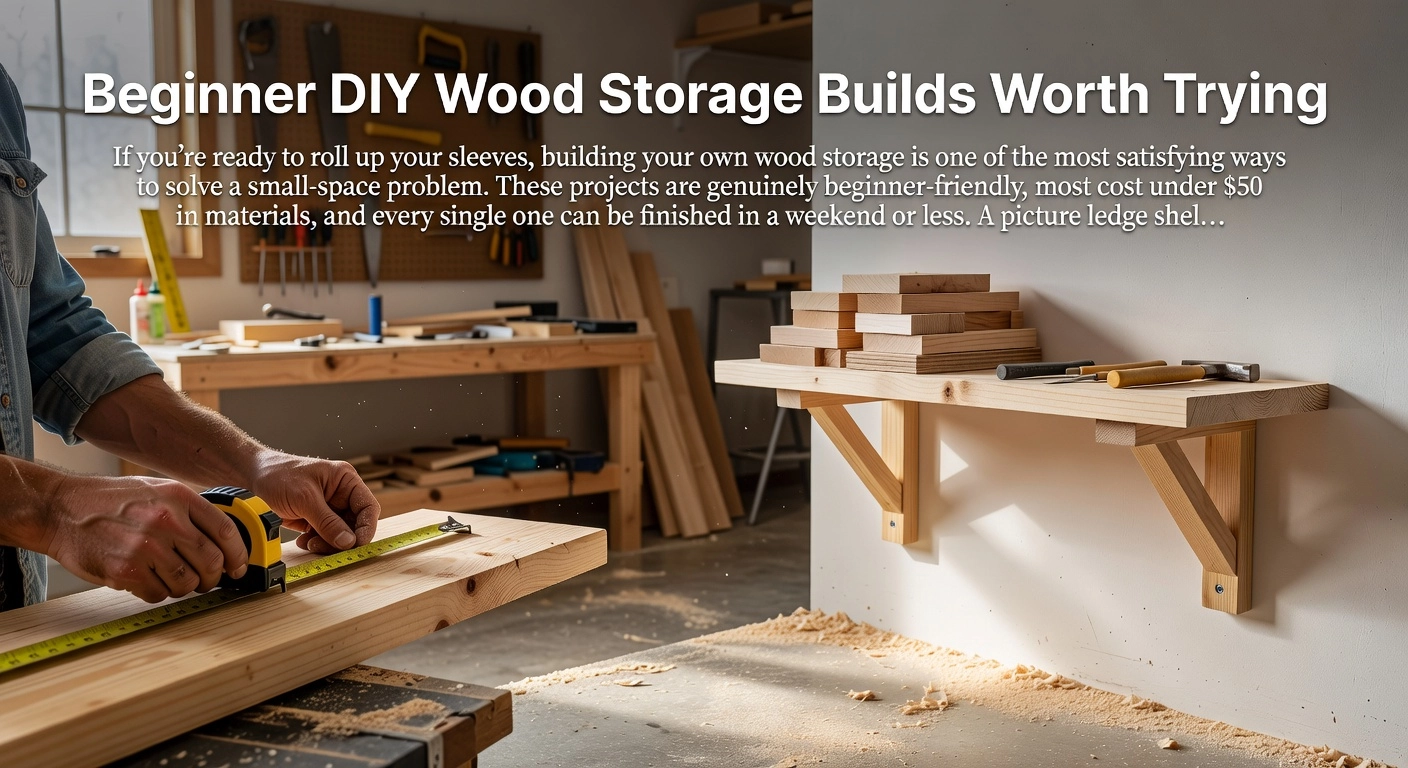
Beginner DIY Wood Storage Builds Worth Trying
If you’re ready to roll up your sleeves, building your own wood storage is one of the most satisfying ways to solve a small-space problem. These projects are genuinely beginner-friendly, most cost under $50 in materials, and every single one can be finished in a weekend or less.
1. Wall-Mounted Picture Ledge
A picture ledge shelf is probably the easiest wood project you’ll ever build, and it punches way above its weight for storage. All you need is a 1×4 board for the back, a 1×2 for the front lip, some wood glue, and a handful of screws. The whole thing goes together in under two hours, even if you’ve never made anything from scratch before. Once it’s mounted to your wall studs, you’ve got a clean, floating shelf that holds books, small plants, tiny bins, or anything else cluttering a surface. Build a few at different heights and you’ve essentially created a mini gallery wall that actually does something useful.
2. Narrow Rolling Cart
That awkward gap beside your refrigerator, bathroom vanity, or desk? A narrow rolling cart built from a single sheet of plywood fits right in. Cut your sides, shelves, and a simple back panel, then add four casters to the bottom for easy pull-out access. The key finishing step that most beginners skip is sealing the exterior with a wipe-on oil, especially if the cart will live in a bathroom or kitchen. Wood in humid rooms absorbs moisture fast, which leads to warping and swelling. One coat of wipe-on oil takes about 20 minutes and protects the wood for years.
3. Wooden Crate Shelf Stack
Wooden crates from craft stores are incredibly cheap, and stacking them into shelving costs a fraction of anything you’d buy retail. Arrange them in a grid or alternate the orientation for visual interest, then secure everything to the wall with L-brackets so nothing tips over. From there, paint them, stain them, or give them a whitewash finish to match your room. This is a great project for entryways, kids’ rooms, or anywhere you need flexible, casual storage.
4. Repurpose Old Wooden Furniture
Before you build anything new, look at what you already have. An old dresser with good bones becomes an entryway organizer with a quick sand and a fresh coat of paint. A beat-up wooden ladder leaned against a bathroom wall instantly becomes a towel rack and shelf. A thrifted cabinet with solid shelves works perfectly as a linen closet in a hallway or bedroom. Repurposing existing pieces saves money, reduces waste, and often produces the most charming results, since older wood furniture tends to have real character.
5. Prep Your Wood the Right Way First
No matter which project you try, a little prep work upfront makes a huge difference in how long your build lasts. Sand all rough surfaces to at least 150-grit before finishing, and work up to 220-grit if you want a really smooth result. If you’re using plywood, seal the end grain with a thin layer of wood glue or sanding sealer before applying your final finish, since exposed edges absorb moisture much faster than flat faces. Finally, match your finish to the room. The U.S. home storage market is booming right now partly because more people are investing in solutions that actually last, and proper wood finishing is exactly what separates a storage piece that looks great for a decade from one that warps and cracks within a year.
Restoring Old Wooden Storage Pieces for Modern Small Spaces
Before you spend money on brand-new storage pieces, take a walk through your local thrift store. You’ll almost always find wooden benches, shelves, crates, and cabinets that look rough on the surface but are completely solid underneath. That’s the key insight: older wooden furniture was typically built from dense, quality solid wood that outlasts most modern flat-pack alternatives by decades. The cosmetic damage, scratches, grime buildup, and faded finishes are just surface-level problems, and surface-level problems are exactly what a little DIY effort can fix. Refinishing a thrifted piece rather than buying new can save you anywhere from 30 to 70 percent compared to purchasing a comparable high-quality item, and the end result is often more durable because you’re working with genuinely solid wood.
The Simple Restoration Process
Restoring a thrifted wooden storage piece doesn’t require professional tools or advanced skills. The process breaks down into three straightforward stages.
Start by cleaning the surface with a good degreaser to cut through years of built-up grime, grease, and residue. This step matters more than most beginners expect because a grimy surface won’t sand evenly and won’t hold a finish properly. WoodStuffHQ’s degreasing cabinet guides walk you through exactly this process with before-and-after photos and no-tool-required methods that work on everything from kitchen cabinets to old shelving units.
Next, sand progressively. Begin with 80-grit sandpaper to remove the old finish and work out any rough patches, then step up through 120-grit and finish with 220-grit for a silky-smooth surface. Always sand with the grain to avoid visible scratch marks.
Finally, choose your finish based on how the piece will be used. A penetrating oil like Danish oil works beautifully for natural wood that you want to highlight, bringing out the grain with a warm, matte look. Paint is the better choice when you want a color refresh or a more polished, modern aesthetic.
Tackle Stains Before You Finish
One step beginners often skip is dealing with water rings and stains before applying the new finish. This is a mistake. If you seal a stain underneath fresh polyurethane or oil, it stays there permanently and can actually prevent the finish from bonding correctly. WoodStuffHQ’s water ring removal tutorials cover simple methods like the iron-and-cloth technique that pull trapped moisture out of the wood before you ever pick up sandpaper.
The $20 Transformation
Here’s what this looks like in practice. Picture a $20 wooden crate shelf from a thrift store, dinged up and grimy. After degreasing, progressive sanding, and a single coat of Danish oil, that same piece becomes a warm, character-rich storage display that fits perfectly in an entryway, bathroom, or living room corner. The grain pops, the wood feels solid, and the finished result looks like something you’d pay $150 for in a boutique home store. That’s the real value of choosing second-hand furniture and putting in a few hours of simple restoration work.
Which Wood Materials Work Best for Small-Space Storage
Not all wood materials are created equal, and choosing the right one for your specific storage need makes a real difference in how long your pieces last and how well they hold up.
Solid hardwoods like walnut, acacia, and oak are your best bet for high-contact storage pieces. Think benches by the front door, bedroom shelves, or nightstands that get handled every single day. These woods resist dents and scratches better than softer alternatives, and the real bonus is that they can be sanded down and refinished multiple times over their lifespan. A solid oak shelf you buy today could still look great in 30 years with basic maintenance. Walnut is a favorite for its rich color and stability; it rarely warps or cracks. Acacia often has a higher Janka hardness rating than many oaks, plus natural water resistance that makes it surprisingly practical for storage furniture in rooms that see a lot of activity. You can read more about choosing the best wood types for long-lasting furniture investments to help narrow down your options.
Bamboo is worth serious consideration for bathroom and kitchen storage. It is technically harder than most traditional hardwoods and handles humidity fluctuations better than you might expect. A bamboo shelf or storage rack in a steamy bathroom will hold up far better than standard pine or MDF in the same conditions.
Rattan and woven baskets bring texture and breathability to dry spaces like living rooms and closets. They are lightweight, easy to move around, and genuinely trending for 2026 storage design. Just keep them away from humid rooms and give them an occasional conditioning treatment to prevent cracking.
For DIY builds, plywood is more reliable than MDF because it holds screws better and handles minor moisture exposure more gracefully. MDF gives you a beautifully smooth painted finish, but unsealed edges in a humid kitchen or bathroom will swell and crumble quickly. Always seal every edge completely before installation.
It is worth noting that wood holds roughly 37.7% material share in the tiny homes market as of 2026 projections. That number reflects a genuine consumer shift toward natural, durable materials over plastic, not just an aesthetic preference but a practical one.
Organizers and Accessories That Actually Do the Job
The right organizers and accessories can quietly double your storage capacity without adding a single shelf or drilling a single hole. Here are five that consistently deliver real results.
Clear and open-front bins are one of the simplest upgrades you can make. Being able to see exactly what’s inside at a glance means less rummaging and less of that frustrating “I know it’s in here somewhere” spiral. For a warmer look, woven baskets in rattan, seagrass, or natural fiber do the same job while actually looking intentional and styled rather than purely functional. They sit on shelves or tuck under benches and genuinely blend into a room rather than screaming “I needed somewhere to put my stuff.”
Modular cube shelving systems in wood finishes or painted white are a smart long-term investment, especially for renters. Unlike fixed shelving that goes with the apartment when you leave, cube systems stack, reconfigure, and move with you. You can add doors, fabric inserts, or drawers as your needs shift, making them far more adaptable than anything screwed permanently into a wall.
Drawer dividers solve the junk drawer problem without any tools or construction. A 2025 survey found that 42% of homeowners waste time daily searching for items in disorganized drawers, and 88% agreed that dividers improve overall functionality. Bamboo or adjustable inserts in kitchen drawers or dressers can effectively double the usable space you already have.
Magnetic knife strips and wall-mounted hooks keep kitchens and entryways clear and functional. Wooden-backed versions especially complement the warmer, texture-forward aesthetic that has dominated home design heading into 2026.
Rolling carts with wood-finish shelves are the ultimate flexible accessory. Use one as a bar cart on Saturday, roll it into the pantry on Sunday, and park it in the bathroom during the week. A slim profile fits between appliances or beside a dresser, and the wood finish keeps it looking cohesive rather than purely utilitarian.
Room-by-Room Storage Ideas for Every Corner of Your Home
Once you’ve got your walls and furniture working harder, it’s time to zoom in on each room specifically. Every space in your home has its own clutter challenges, and the fixes are simpler than you might think.
Kitchen
The kitchen is usually the hardest room to keep organized, especially when counter space disappears fast. Start by pulling out everything buried in your deep cabinets and adding pull-out organizers inside. These slide-out trays make it easy to actually see and reach what’s in the back, so nothing gets lost or forgotten. Mount a pegboard on the wall above your counter and hang your most-used utensils, measuring cups, and small tools directly on it. This single move clears an entire drawer. Finally, swap one set of upper cabinets for open wood shelving and keep your everyday dishes and glasses there. Your cabinet space is now free for bulkier appliances you don’t want sitting on the counter.
Bathroom
Most bathrooms have one obvious storage blind spot: the wall above the toilet. A simple over-toilet shelving unit fits that vertical space perfectly and holds towels, toiletries, and extra supplies without touching the floor. Add a slim wall-mounted wood shelf above the sink to keep your daily items within reach without crowding the vanity. Under the vanity, tuck in a couple of wicker baskets to corral cleaning supplies, hair tools, or backup products. Wicker is especially nice here because it adds warmth and texture to a room that can easily feel cold and clinical. None of these changes require a single tile to be moved.
Living Room
Three pieces handle most living room clutter without making the room feel smaller. A floating media console keeps your electronics organized and the floor completely clear underneath. Flank your TV with wall-mounted shelves on both sides to create a custom built-in look for books, plants, and decor. Then replace your coffee table with a storage ottoman. It works as a surface, extra seating, and hidden storage for blankets, remotes, and anything else that tends to pile up.
Entryway
A narrow wood bench with wall hooks above and baskets below is the single most efficient entryway setup you can build. The bench gives you a seat for putting on shoes, the hooks handle coats and bags, and the baskets underneath catch mail, keys, and accessories. The whole thing fits in about 18 inches of depth, making it workable even in a tight hallway.
Bedroom
Swap your bulky nightstands for simple wall-mounted shelves beside the bed. They hold the same items but take up zero floor space. Roll a set of flat drawers under your bed to store off-season clothing or extra linens, since that under-bed zone is one of the most underused spots in any bedroom. If your closet is too small, a freestanding wardrobe with built-in shelves, rods, and dividers handles everything a built-in closet would, and you can take it with you if you move.
When Built-In Storage Is Worth the Investment
Sometimes the best storage solution isn’t a product you buy off a shelf. It’s something you build right into the bones of your home. Built-in storage costs more upfront, but done right, it pays off in ways that freestanding furniture simply can’t match.
Ceiling-height cabinets are one of the smartest moves you can make in a small kitchen or bathroom. Most standard upper cabinets stop short of the ceiling, leaving a gap of 12 to 24 inches that does nothing but collect dust and visual clutter. Extending cabinets all the way to the ceiling captures that wasted zone and turns it into real storage for seasonal items, bulk supplies, or anything you don’t need daily. Houzz Pro named ceiling-height cabinetry one of the top smart storage trends for 2026, and the data backs it up: 76% of renovating homeowners added specialty built-in storage features in recent projects. The design bonus is that tall cabinets draw the eye upward, making rooms feel noticeably larger.
Window seats with hinged lids are a brilliant fix for awkward alcoves and bay windows. Instead of a dead corner that nobody quite knows what to do with, you get comfortable seating on top and hidden storage underneath, all without using a single square foot of floor space. These work beautifully in bedrooms, mudrooms, and living rooms, and they integrate cleanly with surrounding shelving for a custom, built-in look.
Hidden compartments take this idea even further. Storage tucked behind mirrors, beneath raised platform floors, or inside staircase walls keeps your surfaces completely clear while adding serious capacity. Small spaces benefit enormously from this approach because it removes visual clutter without sacrificing function.
One thing beginners often overlook: built-in wood needs proper finishing after installation. Any wood that gets painted or stained on-site requires a durable topcoat suited to how hard that surface will work. Kitchens and bathrooms need something tough enough to handle moisture and daily contact, otherwise chipping and damage follow quickly.
Not ready to commit, or renting your space? Floor-to-ceiling tension shelving and modular wall systems give you almost the same visual impact with zero permanent changes. They install without drilling, reconfigure easily, and move with you when you leave.
Making the Most of Every Square Foot
You’ve covered a lot of ground in this guide, so here’s a quick recap before you dive in. The strategies that consistently move the needle in small spaces are the same five worth returning to again and again: go vertical, choose furniture that multitasks, tap the overlooked corners and gaps you walk past daily, lean toward natural materials like wood and rattan, and restore or build rather than defaulting to buying new every time.
Here’s what sets a well-organized small space apart from one that just looks tidy for a week: the quality and condition of what you’re working with. Wood storage pieces that are properly cleaned, finished, and maintained can last decades. That matters more in a small space, because every single piece is pulling extra weight.
Start with one project before scaling up. Pick one cabinet to degrease, one thrifted shelf to restore, or one surface to refinish. WoodStuffHQ has beginner-friendly guides covering how to degrease kitchen cabinets, restoring wood furniture, caring for butcher block countertops, and painting kitchen cabinets, all with no professional tools required.
A small space absolutely can be a beautifully organized one. The secret is choosing storage built to last, then taking care of it.
Conclusion
Living in a small space does not have to mean living in chaos. Throughout this post, you discovered that smart storage is about working with your space, not against it. You learned that durable solutions beat cheap quick fixes every time, that beginner-friendly options exist for every room, and that real organization is achievable without a big budget or a bigger home.
Now it is time to take action. Start small. Pick one area that bothers you most, whether it is your kitchen counter, your closet, or that overwhelmed entryway, and apply just one idea from this list today.
Small changes build real momentum. Once you see how much breathing room even one good storage solution creates, you will wonder why you waited so long. Your space is smaller than you would like, but your potential to transform it is not.
Frequently Asked Questions
What are the best vertical storage solutions for a small space?
The most effective vertical storage solutions include floor-to-ceiling bookcases, floating shelves mounted above doors and windows, and wall-mounted pegboards. These options maximize wall space without taking up any floor area. When choosing materials, opt for solid wood over MDF since it handles humidity better, resists swelling, and can be sanded and refinished over time. Trending wood tones for 2026 include walnut and acacia, which add warmth and depth to small rooms without making them feel cramped.
What type of multi-functional furniture works best for small spaces?
The top multi-functional furniture picks for small spaces include storage ottomans or benches with hidden compartments, platform bed frames with built-in drawers, lift-top coffee tables with internal storage, and freestanding bookshelves that double as room dividers. These pieces serve multiple purposes at once, reducing the total number of furniture items you need. Storage units currently capture nearly 28% of the small-space furniture market, reflecting how widely people have embraced this approach to maximizing limited square footage.
How can I find and restore thrifted wooden storage pieces on a budget?
Start by visiting thrift stores and looking for wooden benches, shelves, crates, and cabinets that appear rough but feel structurally solid. Older furniture is often built from dense solid wood that outlasts modern flat-pack alternatives. The restoration process involves three steps: clean the surface with a degreaser to remove grime and grease, sand progressively from 80-grit up to 220-grit, and apply a finish suited to how the piece will be used, such as Danish oil for a natural look or paint for a modern refresh. Restoring thrifted pieces can save 30 to 70 percent compared to buying new, and the results are often more durable.
Which wood materials are best suited for different storage needs in a small home?
Solid hardwoods like walnut, acacia, and oak are ideal for high-contact storage pieces such as entryway benches, bedroom shelves, and nightstands because they resist dents and can be refinished multiple times. Bamboo is an excellent choice for bathroom and kitchen storage due to its hardness and ability to handle humidity fluctuations better than pine or MDF. For DIY builds, plywood outperforms MDF because it holds screws better and handles minor moisture exposure more gracefully. Rattan and woven baskets work well in dry spaces like living rooms and closets, adding texture and breathability. Always seal MDF edges completely before installation to prevent swelling in humid environments.
What are the most overlooked storage spots in a small home that I can start using today?
Several commonly ignored areas offer significant storage potential without requiring any additional floor space. The back of every door provides roughly 21 square feet of usable surface ideal for hooks and organizers. The space under a standard queen bed covers 20 to 33 square feet and fits low-profile rolling bins or flat lidded boxes perfectly. The gap behind your sofa, typically 4 to 6 inches, is wide enough for a slim console table with a lower shelf. Awkward nooks, under-stair spaces, and areas above doorframes can all be fitted with custom-cut wooden shelves. Swapping bulky bedside tables for wall-mounted floating nightstands also frees up floor space and makes small bedrooms feel noticeably more open.
3 thoughts on “Storage Ideas for Small Spaces That Actually Last”