Table of Contents
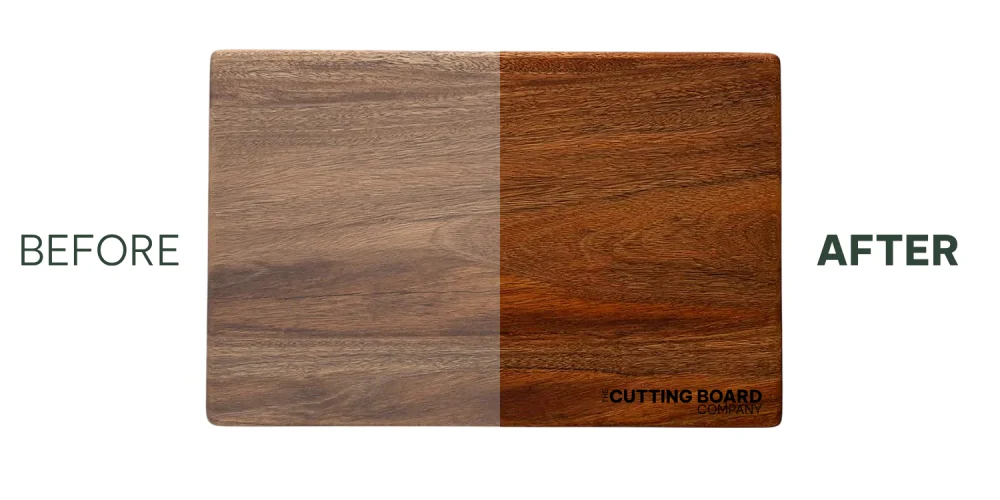
Seasoning is the single most important
step to ensure your board lasts for decades instead of months.
Unlike simple oiling, proper seasoning deeply saturates the wood fibers. It creates a protective barrier against moisture, bacteria, and warping.
In this comprehensive 2026 guide, we will walk you through the exact process professionals use. You get photos, product recommendations, and a maintenance schedule that works.
📋 What You Need for the Process
- Food-grade mineral oil (2-3 tablespoons per board)
- Beeswax board cream or cutting board wax (optional but recommended)
- Clean microfiber cloth or paper towels
- Mild dish soap for initial cleaning
- 8-12 hours of drying time
Why Seasoning Matters More Than Just Oiling
Most people confuse oiling with seasoning — and that mistake costs them their cutting boards.
Here is the critical difference:
| Aspect | Oiling | Seasoning |
|---|---|---|
| Purpose | Surface hydration | Deep fiber saturation + seal |
| Penetration | Shallow (top layer only) | Deep (full wood thickness) |
| Duration | 1-2 weeks protection | 1-2 months protection |
| Best For | Regular maintenance | New boards & restoration |
| Extra Step | None | Beeswax seal recommended |
When you season a board, the oil penetrates deep into the end grain and side grain. It displaces air pockets that would otherwise trap moisture and bacteria.
The beeswax topcoat then creates a water-repellent barrier. Think of it like waxing a car after washing it.
How to Season a Wooden Cutting Board Step by Step
Clean the Board Thoroughly
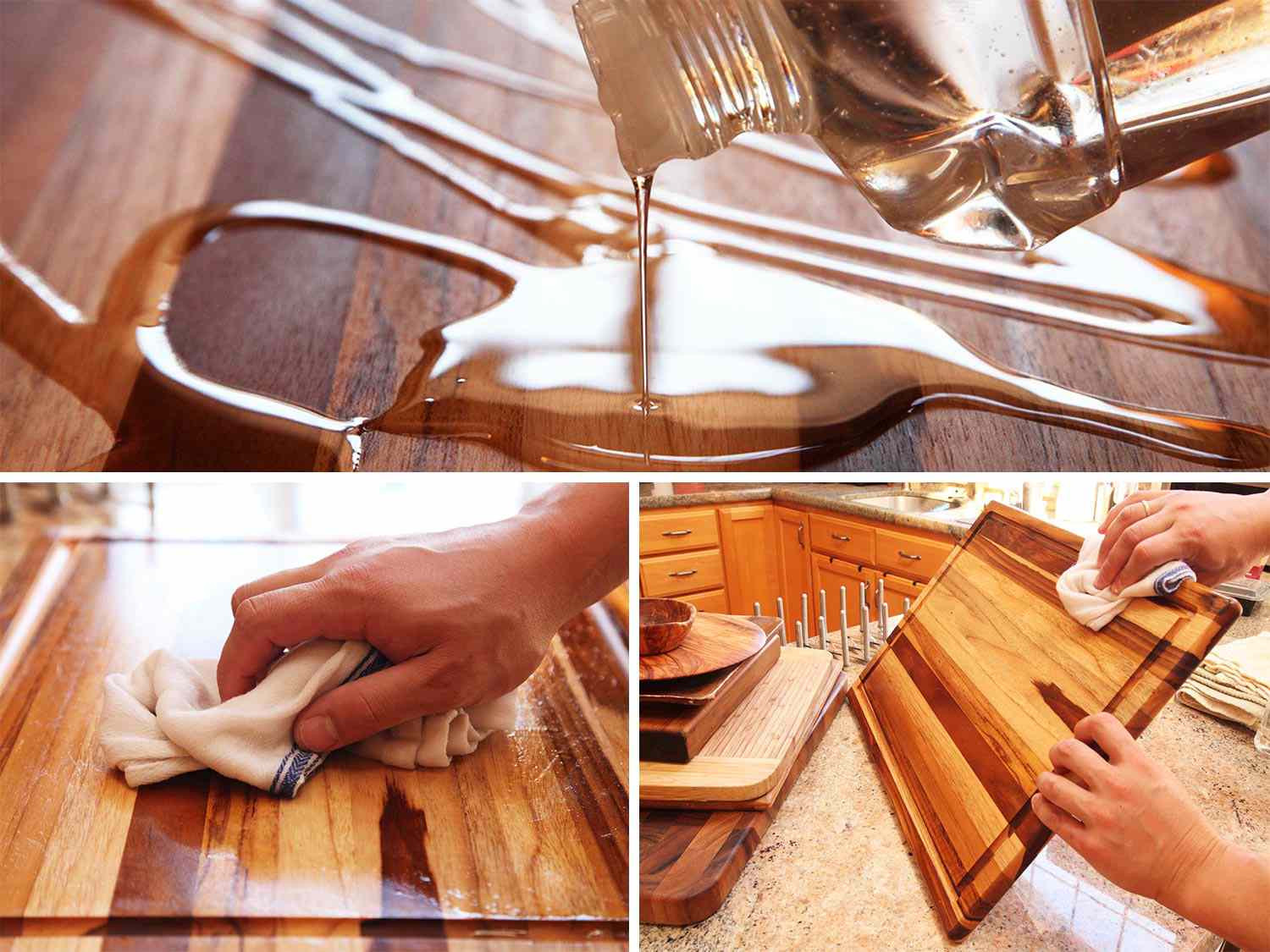
Start with a completely clean surface. Wash your cutting board with warm water and mild dish soap.
Use a non-abrasive sponge to scrub away all food particles, stains, and residue. Pay special attention to knife marks.
Never soak your board in water or put it in the dishwasher. This causes warping and cracking.
Let It Dry Completely
This step is non-negotiable. Stand your board on its edge in a well-ventilated area.
Allow 2-4 hours minimum for surface drying. Ideally wait overnight if the board is thick.
Why does this matter? If you apply oil to damp wood, you trap moisture inside. This creates mold.
The oil will also sit on top instead of penetrating. This wastes your effort.
Apply Food-Grade Mineral Oil
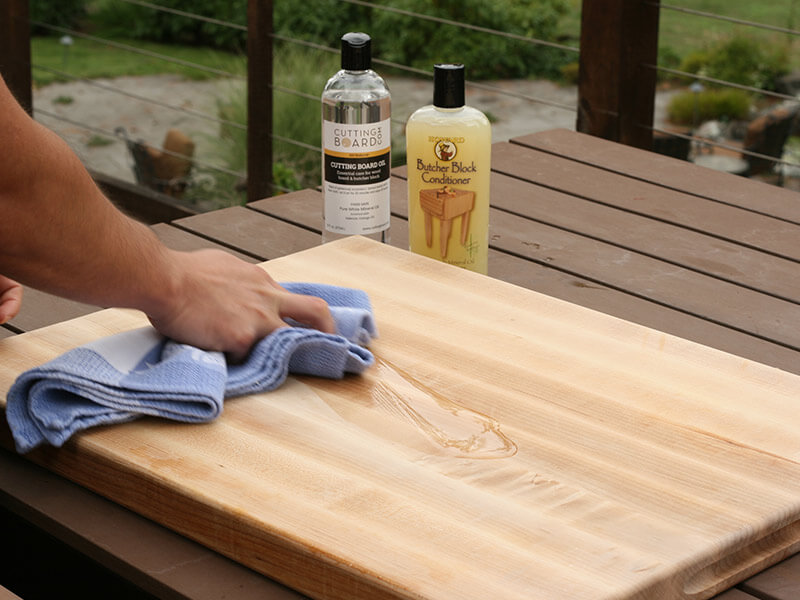
Pour 2-3 tablespoons of food-grade mineral oil directly onto the center.
Less is more. You can always add more, but removing excess is harder.
Using your hands or a clean cloth, spread the oil in circular motions. Work with the wood grain. Cover:
- The entire top cutting surface
- All four sides and edges
- The bottom surface to prevent warping
- Any juice grooves or handles
The board should look wet but not pooling. If you see puddles, spread them or wipe excess.
Let the Oil Soak In
Place the board on a wire rack. Let it rest for 8-12 hours. Overnight is perfect.
The oil needs time to migrate deep into the wood fibers.
You will know it is working when:
- The board looks darker and richer
- The surface feels slightly tacky but not greasy
- No visible oil pools remain after 4 hours
If the board still looks dry after 8 hours, apply a second light coat. Wait another 4 hours.
Apply Beeswax Board Cream to Seal
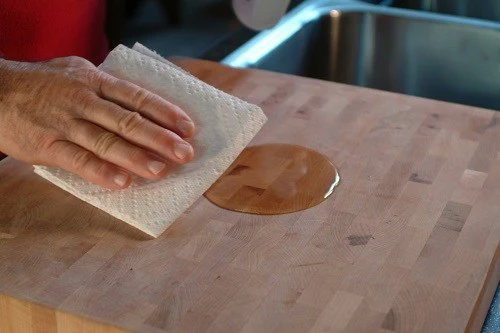
While mineral oil hydrates the wood, beeswax seals the surface. This dual-layer protection is key.
Scoop a quarter-sized amount of beeswax cream onto the surface. Buff it in using circular motions.
The wax will look cloudy at first. Keep buffing until it becomes clear and smooth.
The beeswax creates a barrier that:
- Repels water and food juices
- Fills small knife marks temporarily
- Provides a silky-smooth cutting surface
- Adds a subtle natural sheen
- You can see a great example of this in the [Bevel & Bond End-Grain Maple Cutting Board]
Buff to a Smooth, Non-Greasy Finish
Use a clean, dry microfiber cloth to buff the entire surface. Buff until it feels smooth and dry.
There should be no greasy residue. If your fingers come away oily, keep buffing.
The final board should:
- Have a warm, rich color
- Feel silky smooth, not sticky
- Show no fingerprints when touched
- Have a subtle beeswax aroma
Your cutting board is now properly seasoned and ready for use.
📅 Maintenance Schedule
Consistency beats intensity. Follow this simple schedule to keep your board in prime condition.
Wash with soap & water, dry immediately
Quick oil wipe if board looks dry
Full mineral oil application
Deep season + beeswax cream
Best Oils to Use vs Oils to Avoid
Not all oils are created equal. Using the wrong oil can ruin your board — or worse, make you sick.
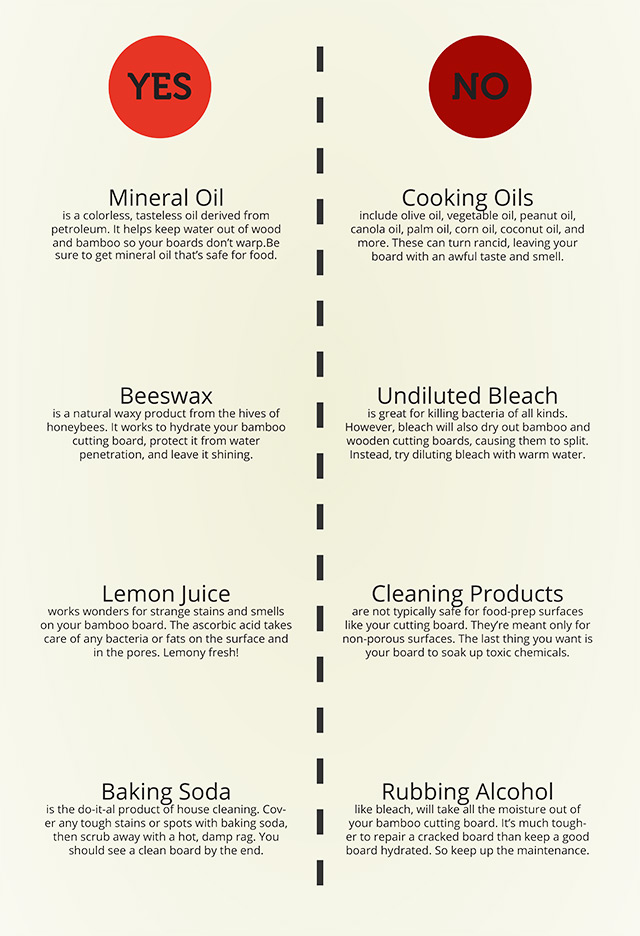
| Oil Type | Safe to Use? | Why? |
|---|---|---|
| Food-Grade Mineral Oil | ✓ YES | Colorless, odorless, never goes rancid. The gold standard. |
| Beeswax + Mineral Oil Blend | ✓ YES | Natural sealant with water-repellent properties. |
| Fractionated Coconut Oil | △ MAYBE | Only if labeled “fractionated” — regular coconut oil goes rancid. |
| Walnut Oil (Heat-Treated) | △ MAYBE | Safe but allergen risk. Must be polymerized/heat-treated. |
| Olive Oil / Vegetable Oil | ✗ NO | Goes rancid quickly, creates odors, harbors bacteria. |
| Linseed / Flaxseed Oil | ✗ NO | Becomes sticky and polymerizes unevenly. Not food-safe raw. |
| Tung Oil | ✗ NO | Toxic when raw. Only polymerized tung oil is safe. |
⚠️ Critical Warning: The “Cooking Oil” Trap
We have seen countless boards ruined by olive oil and coconut oil. These cooking oils oxidize and go rancid within weeks, creating:
- Unpleasant, sour odors that penetrate deep into wood
- Sticky surfaces that attract dust and food particles
- Bacterial growth in the rancid oil residue
- Permanent staining that cannot be removed
Always use oil specifically labeled “food-grade mineral oil” or “cutting board oil.”
Common Seasoning Mistakes (And How to Fix Them)
❌ Mistake #1: Using Too Much Oil
The Problem: Excess oil sits on the surface, creating a greasy film that attracts dirt.
The Fix: Start with 1 tablespoon. Add only if the board absorbs it completely within 30 minutes.
❌ Mistake #2: Seasoning a Wet Board
The Problem: Oil and water do not mix. The oil sits on top of moisture, trapping it inside where mold grows.
The Fix: Wait the full drying time. When in doubt, wait longer. A dry board is thirsty.
❌ Mistake #3: Ignoring the Bottom and Sides
The Problem: Uneven oiling causes warping. The board warps as dry sides shrink faster.
The Fix: Oil all six surfaces every single time. It takes 30 extra seconds and doubles your board’s lifespan.
❌ Mistake #4: Using the Same Cloth for Cleaning and Oiling
The Problem: Soap residue from cleaning cloths contaminates the oil and prevents absorption.
The Fix: Keep separate cloths — one for washing, one for oiling, one for waxing.
FAQ: Seasoning Your Cutting Board
What is the best oil for this?
Food-grade mineral oil is the best choice. It is colorless, odorless, and chemically stable. It never goes rancid, no matter how long it sits in the wood.
How often should I do it?
For daily-use boards: Deep season with mineral oil monthly. Apply beeswax cream every 2-3 weeks. For occasional-use boards: Season every 2-3 months. If water no longer beads, it is time to season again.
Can I use coconut oil?
No — with one exception. Regular coconut oil will go rancid over time. However, fractionated coconut oil will not go rancid. Otherwise, stick with mineral oil.
What is the difference between oiling and seasoning?
Think of it as moisturizing vs. deep conditioning. Oiling is the weekly/monthly maintenance where you apply a light coat. Seasoning is the intensive treatment where you fully saturate the wood fibers, often with a beeswax seal.
How do I know if my cutting board needs seasoning?
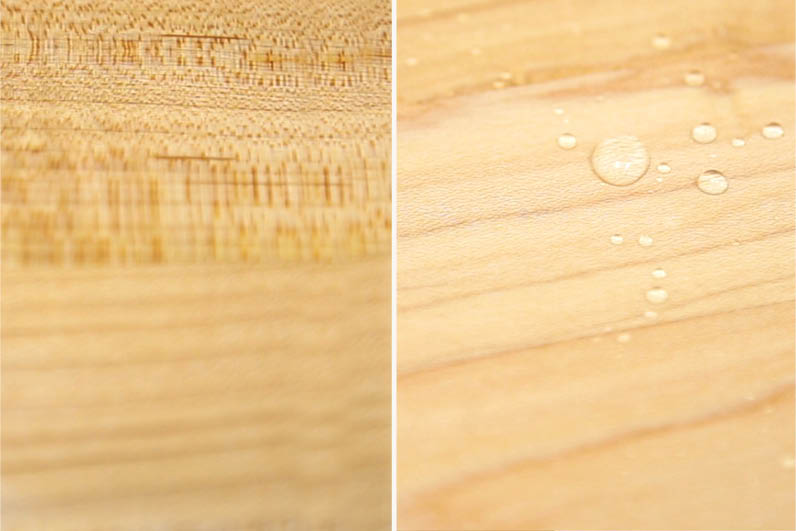
Run the water bead test: Sprinkle a few drops of water on the board. If they form round beads and sit on top, your seal is intact. If they soak in within 10 seconds, the wood is thirsty. Other signs: the wood looks lighter or feels rough.
Can I season a bamboo cutting board the same way?
Yes, but with caution. Bamboo is denser and less porous than hardwoods. It absorbs oil more slowly and can become oversaturated. Use half the amount of oil you would for a hardwood board and allow extra drying time.
Recommended Products to Use
While you can make your own board cream, these types of commercial products are trusted by professionals:
Food-Grade Mineral Oil
The essential base for any seasoning routine. Look for USP-grade, odorless varieties at your local pharmacy or hardware store.
Beeswax Board Cream
Pre-blended mineral oil + beeswax for easy application. Creates a durable water-resistant seal. Available at woodworking stores.
Complete Care Kit
Includes mineral oil, wax, and applicator cloths. Perfect for beginners who want everything in one package.
🎯 Ready to Protect Your Investment?
You can see a great example of this in the [Bevel & Bond End-Grain Maple Cutting Board]
A quality wooden cutting board costs $50-200. Proper seasoning costs less than $15 in supplies and 30 minutes of your time. That small investment protects your board for 10+ years.
Start tonight: Clean your board, let it dry while you sleep, and season it tomorrow morning.
Now you know how to season a wooden cutting board like a pro…”
4 thoughts on “How to Season a Wooden Cutting Board Ultimate Guide”