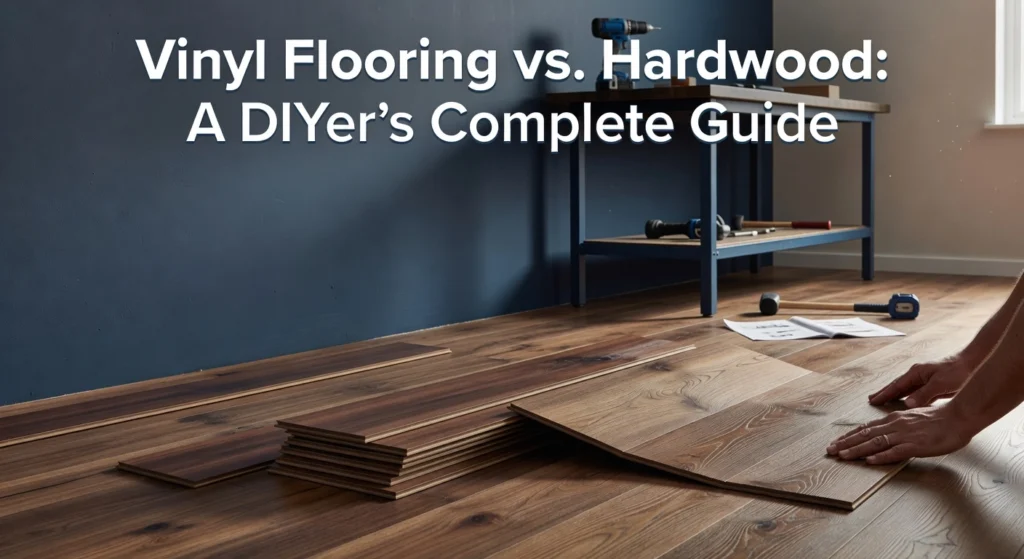

Standing in the flooring aisle of your local home improvement store, surrounded by samples and price tags, can feel completely overwhelming. You know you want a beautiful floor, but choosing between vinyl flooring and hardwood feels like a decision that could make or break your entire renovation project.
Here is the truth: both options have real advantages, and the right choice depends entirely on your specific situation. As a beginner DIYer, you deserve straightforward information without the confusing jargon that most flooring guides throw at you.
In this complete comparison, you will learn exactly how vinyl flooring and hardwood stack up against each other across every category that matters. We will cover installation difficulty, upfront costs, long-term durability, moisture resistance, and overall maintenance requirements. By the time you finish reading, you will have a clear understanding of which flooring type suits your skill level, your budget, and the specific room you are tackling. No guesswork, no sales pressure, just honest and practical guidance to help you make a confident decision before you spend a single dollar.
What Is Vinyl Flooring? Types and Construction Explained
Vinyl flooring is a synthetic, multi-layer material built primarily from polyvinyl chloride (PVC), engineered to mimic the look and feel of natural wood, stone, or tile. Unlike the thin, flexible sheet vinyl of decades past, today’s products are sophisticated constructions with multiple functional layers working together to deliver durability, water resistance, and realistic aesthetics. Understanding the key formats and what separates them helps you make a confident purchasing decision before you ever set foot in a flooring store.
The Five Core Types You Need to Know
LVP (Luxury Vinyl Plank) comes in long, narrow plank shapes, typically 4 to 9 inches wide and 36 to 72 inches long, designed specifically to replicate hardwood flooring. It is the most popular format for residential renovation projects and pairs naturally with click-lock installation systems. LVT (Luxury Vinyl Tile) shares nearly identical construction but arrives in modular tile shapes, usually 12×12 or 12×24 inches, to mimic stone, ceramic, or concrete surfaces. Both LVP and LVT describe the format of the product, not the core material inside it.
Sheet vinyl is the traditional option, sold in continuous rolls up to 16 feet wide with a flexible, felt-backed construction. It creates a seamless, waterproof surface ideal for bathrooms and laundry rooms, but its flexibility means it telegraphs subfloor imperfections more readily than rigid formats. The two rigid core technologies found inside modern LVP and LVT are SPC (Stone Polymer Composite) and WPC (Wood Polymer Composite). SPC cores blend roughly 60% limestone with PVC, producing a dense, dimensionally stable plank that handles temperature swings and resists dents under heavy loads. WPC cores incorporate wood flour or bamboo powder with foaming agents, creating a softer, quieter plank with better underfoot comfort. According to The Spruce’s overview of vinyl flooring materials, these rigid core formats represent the most significant leap forward in resilient flooring technology.
Wear Layer Thickness and Why It Matters
The wear layer is the clear protective coating sitting directly above the printed design layer, and its thickness measured in mils (1 mil equals 0.001 inch) is the single most important specification for durability. A 6 to 8 mil wear layer suits low-traffic areas like guest bedrooms or closets. A 12 mil layer covers standard residential rooms adequately. For busy households with pets, children, or heavy kitchen traffic, a 20 mil wear layer is widely considered the residential sweet spot, offering meaningful scratch and scuff resistance without jumping to commercial pricing. Commercial-grade products push to 28 mil and beyond for maximum longevity. Thicker wear layers directly support longer manufacturer warranties and determine which rooms a product can realistically handle over time.
Click-Lock vs. Glue-Down Installation
For DIY installers, the installation method is a practical dealbreaker. Click-lock floating systems use interlocking tongue-and-groove edges that snap together over an underlayment without any adhesive bonding to the subfloor. This approach is faster, forgiving of minor subfloor imperfections, and allows you to lift and replace individual planks if needed, making it the clear first choice for home renovators. Glue-down (dryback) installation permanently bonds vinyl to the subfloor using a full-spread adhesive, delivering a firmer, more rigid feel underfoot that suits large commercial spaces or areas with heavy rolling loads. Repairs require cutting out sections, and application demands precise timing and subfloor preparation, making it significantly less beginner-friendly.
How EIR Textures Create Realistic Wood Grain
Modern luxury vinyl uses high-resolution digital printing to capture photographic-quality wood grain, knots, and mineral streaking in a dedicated design layer. What truly elevates premium products is embossed-in-register (EIR) technology, which synchronizes the physical surface texture with the printed image beneath it. A visible knot in the print has a corresponding raised or recessed texture directly above it in the wear layer, creating genuine tactile depth rather than a flat image under generic embossing. This alignment produces a realistic wood-look finish that holds up visually at close range, which is especially noticeable in wide-plank formats where grain detail is more prominent.
Quick-Reference Vinyl Comparison
| Type | Best Use Case | Typical Thickness | Installation |
|---|---|---|---|
| LVP (SPC/WPC core) | Wood-look living areas, kitchens | 4 to 8 mm; 12 to 20+ mil wear layer | Click-lock floating |
| LVT (SPC/WPC core) | Stone-look bathrooms, entryways | 3 to 7 mm; 12 to 28 mil wear layer | Click-lock or glue-down |
| Sheet Vinyl | Seamless wet areas, budget installs | 1.5 to 3.5 mm overall | Glue-down or loose-lay |
| SPC | High-traffic, temperature-variable spaces | 3.5 to 7 mm overall | Click-lock floating |
| WPC | Comfort-priority rooms, condos | 5 to 8 mm overall | Click-lock floating |
With these distinctions clear, you can evaluate any product on a shelf by its core type, wear layer, and installation method rather than relying solely on brand marketing or price point.
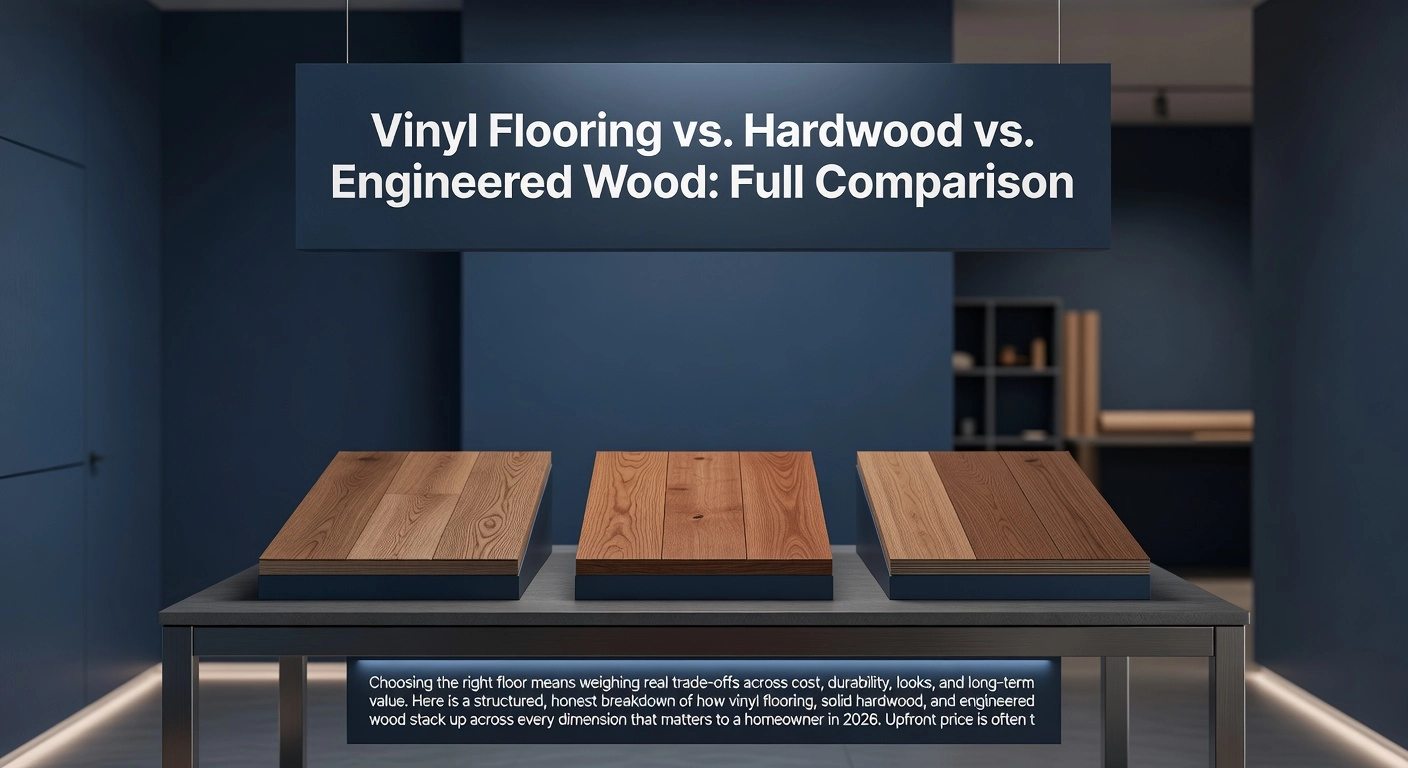
Vinyl Flooring vs. Hardwood vs. Engineered Wood: Full Comparison
Choosing the right floor means weighing real trade-offs across cost, durability, looks, and long-term value. Here is a structured, honest breakdown of how vinyl flooring, solid hardwood, and engineered wood stack up across every dimension that matters to a homeowner in 2026.
Cost Per Square Foot: What You Will Actually Pay
Upfront price is often the deciding factor, and the gap between options is significant. Vinyl flooring (primarily LVP) runs approximately $4 to $16 per square foot installed, combining materials at $2 to $10 per square foot with labor at $2 to $6 per square foot. Most mid-range projects land between $4 and $10 installed, making it the most accessible option for budget-conscious buyers. Solid hardwood installation costs range from $8 to $25 or more per square foot, with premium species and complex patterns pushing well past that upper limit. Engineered wood sits in the middle at roughly $7 to $20 per square foot installed, offering a genuine wood surface at a lower price than solid hardwood. Vinyl also wins on DIY savings since its click-lock floating installation requires no nailing, gluing, or specialized tools, which can cut labor costs entirely for confident DIYers.
Durability: Scratch, Water, and Dent Resistance
In real-world household conditions, each material reveals clear strengths and weaknesses. Vinyl leads on scratch resistance, particularly rigid-core LVP with a thick wear layer (look for 12 mil or higher for pet and high-traffic households). Hardwood and engineered wood surfaces show pet nail marks and furniture drag more readily, though individual scratches in wood can sometimes be spot-repaired or sanded out during refinishing. On water resistance, vinyl is the clear winner; it is 100% waterproof throughout its entire thickness, making it the right call for kitchens, bathrooms, laundry rooms, and basements. Solid hardwood is genuinely vulnerable to standing water, swelling, and warping, while engineered wood offers better moisture stability than solid due to its cross-ply core but is still not fully waterproof. For dent susceptibility, vinyl’s resilient construction handles impact well, whereas natural wood dents under heavy furniture or high heels. Lifespan estimates tell the full story: vinyl typically lasts 10 to 25 years and cannot be refinished; engineered wood lasts 20 to 30-plus years with limited sanding cycles; solid hardwood can last 50 to 100-plus years when refinished multiple times over its life.
Aesthetics: How Close Does 2026 LVP Actually Get?
Modern luxury vinyl has made remarkable progress. High-definition printing, embossed-in-register (EIR) textures, wire-brushed effects, and matte low-sheen finishes now allow premium LVP to convincingly replicate wood grain, natural knots, and color variation in photos and even at a glance. The 2026 trend toward warm tones like light coastal oak, honey, and mid-tone blonde further closes the visual gap. However, vinyl still lacks the authentic warmth, natural depth, and tactile quality of real wood. It will not develop patina, and close inspection or bare-foot feel often reveals its synthetic character. Engineered wood bridges this gap meaningfully because it has a genuine hardwood veneer on top, delivering authentic grain, natural color variation, and true wood texture. Solid hardwood remains the gold standard for buyers who want an irreplaceable, living material that improves with age.
Resale Value and Home Equity Impact
Real estate data consistently favors wood. Solid hardwood and high-quality engineered wood typically deliver 70 to 80 percent ROI on flooring investment, and hardwood can add $5,000 to $6,500 or more in perceived home value in many markets. Buyers and appraisers still regard real wood floors as a premium feature, particularly in mid-to-upper-tier homes. Vinyl flooring provides a moderate resale boost in the 50 to 60 percent ROI range and signals a clean, modern update, but it does not carry the same premium status with traditional buyers. The refinishing lifecycle of hardwood is a key equity advantage; a solid hardwood floor installed today can be sanded and refinished three to five times, effectively renewing its appearance and value across decades.
Environmental Profiles
Vinyl is a petroleum-based PVC product, and production raises legitimate concerns around carbon footprint and end-of-life disposal. The good news is that 2025 to 2026 formulations increasingly emphasize low-VOC emissions and FloorScore certification, reducing indoor air quality risks. Wood, when responsibly sourced, is renewable, biodegradable, and carries a smaller environmental footprint overall. Look for FSC-certified solid hardwood or engineered wood with low-VOC adhesives and finishes to minimize impact. Engineered wood also uses less old-growth timber per board than solid hardwood, improving resource efficiency.
Full Comparison Table
| Criteria | Vinyl (LVP) | Solid Hardwood | Engineered Wood |
|---|---|---|---|
| Installed Cost (2026) | $4 to $16/sq ft | $8 to $25+/sq ft | $7 to $20+/sq ft |
| Water Resistance | Excellent (100% waterproof) | Poor | Moderate |
| Scratch Resistance | Excellent | Moderate | Moderate to good |
| Aesthetics | Very realistic; lacks natural warmth | Authentic premium feel | Real wood veneer; close to solid |
| Lifespan | 10 to 25 years | 50 to 100+ years | 20 to 30+ years |
| Refinishable | No | Yes, multiple times | Limited (1 to 2 times) |
| Resale Value Impact | Moderate | Highest | High |
| Environmental Profile | PVC concerns; improving low-VOC | Renewable; best with FSC | Efficient; best with FSC/low-VOC |
If engineered wood is on your shortlist, the decision involves more nuance than this table alone can capture. For a deeper breakdown of engineered wood’s stability advantages, care requirements, and how it compares to solid hardwood specifically, visit the WoodStuffHQ engineered wooden floors guide for practical, expert guidance tailored to homeowners.
Honest Pros and Cons of Vinyl Flooring for Homeowners
Vinyl flooring delivers a compelling package of practical benefits, but it also carries real limitations that matter differently depending on how you think about floors. Here is an honest look at both sides.
The Strongest Advantages
Waterproofing stands as vinyl’s single most decisive selling point. Rigid-core SPC products are fully waterproof through their entire construction, making them reliable in kitchens, bathrooms, laundry rooms, and basements where hardwood or laminate would swell, warp, or delaminate. Many products carry lifetime residential waterproof warranties, which is a commitment no wood floor can match. Scratch resistance follows closely; premium wear layers of 20 mil or more use aluminum oxide or urethane topcoats that hold up against pet claws, dropped tools, and heavy foot traffic for 15 to 25 years with normal care.
DIY-friendly installation is another major advantage. Most modern vinyl uses click-lock floating systems that require only basic tools, no adhesive, and no professional expertise. A motivated beginner can complete a room in a weekend. Low maintenance seals the deal for busy households; regular sweeping and occasional damp-mopping with a mild cleaner is genuinely all that is required. Affordability completes the picture, with quality materials typically running $2 to $7 per square foot, compared to $8 or more per square foot installed for solid hardwood.
The Limitations Worth Knowing
The refinishing limitation is where vinyl diverges most sharply from natural wood. Once the wear layer is gone, the floor cannot be sanded, refinished, or restored; it must be replaced entirely. For the average buyer focused on low upkeep, this rarely matters. For wood-care-oriented homeowners who understand that hardwood can be refinished multiple times over 50-plus years, this is a fundamental difference in long-term value and renewability.
Woodworkers and homeowners with heavy solid-wood furniture, tool chests, or workbenches should also note that vinyl is more susceptible to dents under prolonged point loads than hardwood or tile. Rigid-core SPC performs better than flexible vinyl, but wide felt furniture pads and area rugs remain essential precautions in any workshop or furniture-heavy room.
On the environmental side, PVC production carries real concerns around emissions and end-of-life disposal. However, the vinyl flooring market is shifting meaningfully toward low-VOC formulations. Certifications like GREENGUARD Gold and FloorScore now verify emissions well below regulatory thresholds, and phthalate-free options are increasingly standard in 2025 and 2026 product lines.
Finally, vinyl cannot replicate how real wood ages. It does not develop patina, respond to oils, or deepen in character over decades of use. For homeowners who see a floor as a living surface that improves with time, vinyl’s consistent manufactured appearance can feel flat by comparison, and that gap in emotional satisfaction is worth weighing honestly before committing.
Where Vinyl Flooring Performs Best: A Room-by-Room Breakdown
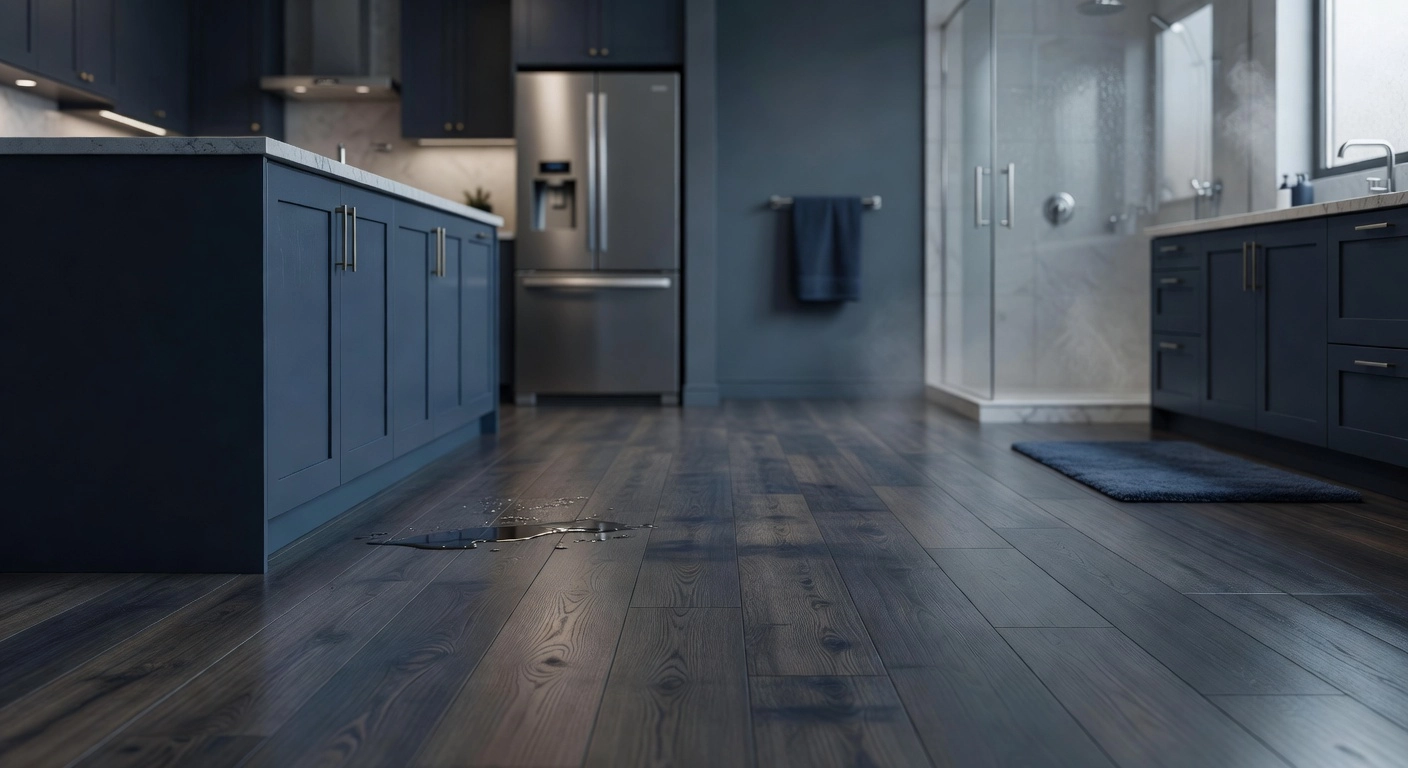
Kitchens and bathrooms are where vinyl flooring earns its strongest reputation, and for good reason. Both rooms combine frequent spills, humidity, and constant foot traffic into conditions that would damage hardwood or laminate over time. Rigid-core luxury vinyl plank (LVP) is fully waterproof at its core, meaning standing water from a dishwasher leak or splashing around a bathtub will not cause swelling or warping. The surface is also stain-resistant and simple to wipe clean, making daily maintenance effortless for busy households. According to Good Housekeeping’s 2026 flooring roundup, top-rated vinyl products consistently earn their highest marks specifically in wet-zone performance categories.
Basements and laundry rooms introduce a different challenge: moisture vapor rising through concrete slabs rather than surface spills. This ground-level moisture can compromise many flooring types from underneath, but rigid-core SPC vinyl handles it well when paired with a proper vapor barrier or moisture-blocking underlayment. Subfloor levelness is also critical in basements, where concrete is often uneven. Floating click-lock vinyl installations bridge minor surface imperfections that would disqualify hardwood entirely. NJ Creative Floors’ 2026 guide on basement vinyl confirms that testing subfloor moisture before installation is a non-negotiable first step in these spaces.
Mudrooms and entryways handle tracked-in water, mud, and road salt with ease when finished in vinyl. The practical challenge arises when these spaces border hardwood flooring in adjacent rooms. Planning transitions early matters here. T-molding strips work well when both floors sit at similar heights, while reducer strips handle height differences smoothly. Choosing an LVP color tone that complements rather than exactly copies your hardwood creates a more intentional look than trying to match materials perfectly.
Vinyl underperforms in formal dining rooms, traditional living rooms, and any space where resale value or premium aesthetics drive the decision. Buyers in higher-priced markets still respond more favorably to real hardwood in main entertaining areas, and heavy dining furniture can leave dent impressions in vinyl over time. A practical hybrid approach works well for most homes: install vinyl throughout kitchens, bathrooms, basements, and entryways, then use hardwood or engineered wood in formal or high-visibility rooms. Place transition strips at doorways or natural architectural breaks to create clean, logical dividing lines between flooring zones.
2026 Vinyl Flooring Trends That Actually Matter for DIYers
If you are choosing vinyl flooring in 2026, the design landscape has shifted meaningfully in ways that directly affect which products will look timeless versus dated within a few years. Understanding these trends before you buy saves you from costly regret.
Warm Wood Tones Are Taking Over
The cool gray palette that dominated floors through the mid-2010s and early 2020s is being replaced by warmer, more organic tones. Light coastal oak, natural blonde, soft honey, butterscotch, and mid-tone oak shades are now the leading LVP color choices according to 2026 luxury vinyl flooring trend reports. These tones complement white cabinetry, brass hardware, and neutral walls far more naturally than icy grays. They also hide minor scuffs and everyday wear more forgivingly, which matters in high-traffic areas. For DIYers, warm-toned LVP is widely stocked at most retailers, making selection and color matching straightforward.
Matte Finishes and Embossed-in-Register Texture
High-gloss vinyl is fading fast. Matte and low-sheen satin finishes reduce glare, camouflage micro-scratches and dust, and simply look more like real wood. Paired with embossed-in-register (EIR) technology, where the surface texture is precisely aligned with the printed grain pattern underneath, the result is a product that closely rivals the visual and tactile qualities of genuine hardwood. Wire-brushed and hand-scraped effects are particularly convincing. These products install identically to standard click-lock LVP, so the upgrade in realism costs no extra effort during installation.
Wide Planks vs. Herringbone: Know Your Skill Level
Wide plank formats, typically 7 to 9 inches or broader, are now the mainstream default. They create fewer seams, a more seamless visual flow, and make rooms feel larger. Wide plank click-lock LVP is beginner-friendly and manageable with basic tools. Herringbone and parquet layouts are a different story. Pre-cut herringbone LVP kits have made the pattern more accessible, but accurate layout requires patience, precise angle cuts, and some experience. Beginners should budget extra material for waste or consider hiring help for complex patterns. You can explore current LVP color and format options to see how these trends translate into real products.
Eco-Friendly Formulations and Certifications
Low-VOC vinyl is no longer a niche feature; it is increasingly a baseline expectation. When shopping in 2026, look for FloorScore certification, which tests resilient flooring specifically for indoor air quality, and GREENGUARD Gold, which applies stricter emission thresholds suitable for sensitive households with children or allergy sufferers. Phthalate-free formulations and products with recycled content are also worth prioritizing. These certifications are usually listed on product spec sheets and packaging.
Trends Worth Skipping
Glossy finishes show every footprint, scratch, and dust particle, and they already read as dated in most design contexts. Busy, high-contrast grain patterns that look more artificial than natural are losing ground to moderate, realistic variation. Most importantly, stark cool gray palettes are aging spaces noticeably. If longevity matters to you, lean toward textured matte finishes in warm, neutral tones that will remain relevant well beyond the current design cycle.
How to Choose the Right Vinyl Flooring: A Practical DIY Checklist
Making the right vinyl flooring choice comes down to matching the product’s specs to your specific situation before you ever swipe a card. Work through each of these five areas systematically and you will avoid the most common and costly beginner mistakes.
Wear Layer Thickness by Traffic Level
The wear layer is the clear protective coating on top of every vinyl plank, measured in mils (1 mil equals roughly 0.025 mm). This single number determines how long your floor holds up under real conditions, so match it carefully to each room.
- Light residential (bedrooms, guest rooms, closets): 6 to 12 mil is sufficient. Foot traffic is minimal and the risk of abrasion is low.
- Heavy residential (kitchens, hallways, living rooms, homes with kids or pets): 20 mil is widely considered the sweet spot. It handles daily grit, pet claws, and furniture movement without premature wear.
- Commercial and light commercial (offices, retail, rental properties): 28 mil and above. These spaces face abrasive tracked-in debris and near-constant traffic that would rapidly degrade lighter options.
Always verify what warranty the manufacturer ties to a specific mil rating. A thicker wear layer almost always means a longer and broader warranty.
Subfloor Evaluation and Preparation
A flawed subfloor will cause click-lock joints to fail, gaps to open, and planks to creak. For wood subfloors, the standard flatness tolerance is no more than 3/16 inch over a 10-foot span. Use a long straightedge to identify high and low spots, then sand down high points and fill low areas with a floor-patching compound. Check moisture content using a pin or pinless moisture meter calibrated for wood; the target range is 6 to 12 percent. Address any leaks or ventilation problems before installing because moisture issues will not disappear under new flooring. Acclimate your planks in the installation room for at least 48 hours before laying them down.
Matching Vinyl Tone to Existing Wood Elements
Focus on undertone harmony rather than exact color matching. Identify whether your cabinets, trim, and furniture read as warm (yellow, orange, or red undertones) or cool (gray, blue, or ash). Then select a vinyl within the same temperature family. Pair warm oak cabinets with a honey or natural oak LVP in a slightly lighter or darker shade for depth without conflict. Bring physical samples home and view them under both natural daylight and your artificial lighting before committing. Current 2026 vinyl flooring trends favor warm neutrals and light blonde oaks, which coordinate easily with a wide range of existing wood tones.
Budget Framework and Realistic Expectations
| Tier | Price Range | What You Get |
|---|---|---|
| Entry-level | Under $2 per sq ft | 6 to 12 mil wear layer, basic visuals, shorter lifespan in busy homes |
| Mid-range | $3 to $5 per sq ft | 12 to 20 mil, rigid-core construction, realistic textures, solid warranties |
| Premium | $4 to $8 and above | 20 to 28 mil, advanced acoustics, commercial-grade durability, longest lifespan |
For most households, mid-range rigid-core LVP delivers the best balance of performance and cost. Budget an additional 5 to 10 percent of material for waste from cuts and layout adjustments. DIY installation saves a typical $2 to $6 per square foot in labor costs, which can meaningfully offset choosing a higher-quality product.
Five Questions to Answer Before You Purchase
- What wear layer thickness does my specific room and household require? Base this on traffic level and whether you have kids, pets, or both.
- Does this product require a separate underlayment, and what type is compatible? Many rigid-core products include attached underlayment; adding an extra layer can void the warranty.
- What locking system does it use, and can I install it myself with basic tools? Angle-and-tap click systems are beginner-friendly; confirm the method before buying.
- What does the warranty actually cover? Look for wear-through coverage, waterproof guarantees, and whether improper subfloor prep voids the claim.
- What is the retailer’s return and exchange policy on opened boxes? Order large samples first, test them in your space under real lighting, and confirm you can return surplus material to avoid paying for unused flooring.
Answering these five questions honestly before purchasing will put you well ahead of the majority of first-time vinyl flooring buyers.
Installing Vinyl Flooring Over a Wood Subfloor: What DIYers Need to Know
A successful vinyl flooring install begins well before you open the first box of planks. The work you do on your wood subfloor determines whether your finished floor looks professional and lasts for decades, or develops squeaks, gaps, and movement within a year.
Subfloor Flatness and How to Fix Problem Areas
Most vinyl flooring manufacturers require your wood subfloor to be flat within 3/16 inch over any 10-foot span. To check this, drag a long straightedge or level across the floor in multiple directions and mark any gaps underneath it with chalk. Walk the entire surface slowly, noting any soft spots, bouncy areas, or squeaks, since these signal loose fasteners or damaged plywood. Fix soft spots by driving screws every 6 inches along the joists beneath, sinking each fastener head just below the surface. Sand or plane down high spots until they fall within tolerance. Fill low spots and dips with a Portland cement-based floor patching compound, feather the edges smooth once dry, then sweep the entire subfloor clean before moving on.
Moisture Testing Before You Lay a Single Plank
Excess moisture in a wood subfloor causes vinyl flooring to buckle, mold to develop underneath, and warranties to become void. Use a pin-type or pinless moisture meter and take readings in at least six locations, including corners, the center, and areas near exterior walls or windows. For plywood or OSB subfloors, moisture content should read at or below 12 to 13 percent before installation. If readings come in higher, locate and fix the source, whether that is a plumbing leak, poor ventilation, or an exposed crawl space. A 6-mil polyethylene vapor barrier over any crawl space ground is strongly recommended. Once repairs are made, let the subfloor dry and retest before proceeding.
The Click-Lock Installation Process
Click-lock floating vinyl is genuinely beginner-friendly when the subfloor is properly prepared. Place 1/4-inch spacers along every wall to maintain the expansion gap the floor needs to move with temperature and humidity changes. Begin your first row with the groove side facing the wall. Angle each plank’s long edge into the previous row at roughly 20 to 25 degrees, lower it flat, and press to click the joint closed. Stagger end joints by at least 6 to 8 inches between adjacent rows, using offcuts from previous rows to start new ones. This prevents structural weak points and creates a natural, random appearance. Undercut door jambs with a jamb saw so planks slide cleanly underneath. For pipes and vents, notch planks precisely and use manufacturer-supplied cover plates for a clean finish.
Finishing Edges Professionally
The gap between your vinyl floor and the wall is intentional, but it needs to be hidden neatly. The cleanest approach is to remove baseboards before installation and reinstall them after, sitting them down to just cover the gap without pressing against the floor. If removing baseboards is not practical, nail quarter-round molding directly to the baseboard, never to the vinyl itself, so the floor remains free to float. In doorways, install T-molding transition strips that bridge the gap between rooms and allow each floor section to move independently. Use reducer strips where vinyl meets a lower floor surface, such as tile or hardwood in an adjacent room.
When to DIY and When to Call a Pro
Most DIYers with basic tool skills can confidently handle a single room under 400 square feet when the subfloor is flat, dry, and structurally sound. According to 2025 flooring trend insights from Floor Coverings International, LVP’s popularity is driven in large part by its high DIY success rate. However, call in a professional when your subfloor requires extensive leveling or structural repairs, when moisture problems persist after your initial fixes, or when your project spans multiple large rooms with complex transitions. Pros also document subfloor conditions in ways that protect your product warranty, which matters significantly on higher-end vinyl installations.
Maintaining and Repairing Vinyl Flooring: What Works and What Doesn’t
Cleaning Routine: Weekly and Monthly
Keeping vinyl floors looking sharp requires consistency, not complexity. Daily, sweep or vacuum without a beater bar to remove grit that can grind into the wear layer over time. Weekly, damp-mop using a well-wrung microfiber mop with a pH-neutral cleaner formulated specifically for vinyl or LVP. For stubborn scuffs, rubbing alcohol on a cloth works well for spot treatment; rinse the area with water and dry it thoroughly afterward.
Safe products to use:
- pH-neutral vinyl-specific floor cleaners
- Diluted white vinegar (1 cup per gallon of warm water)
- Microfiber mops and soft-bristle brooms
- Rubbing alcohol for spot cleaning
Products that will damage your wear layer:
- Abrasive scrubbers, scouring powders, or steel wool
- Bleach or ammonia-based cleaners
- Steam mops (heat weakens seams and locking systems)
- “Mop and shine” polish products
Why Wood Cleaners Belong on Wood Only
If your household already uses Murphy Oil Soap or wax-based wood polishes, keep them away from your vinyl floors entirely. These products are engineered for porous wood surfaces that absorb conditioning agents. On vinyl’s sealed, non-porous wear layer, they leave a sticky, hazy film that attracts dirt, dulls the finish over time, and can void your manufacturer’s warranty. The buildup is difficult to remove without professional stripping. The rule is simple: if it says wood floor cleaner, oil soap, or floor wax, it does not belong on vinyl.
Repairing Scratches and Setting Realistic Expectations
Minor scratches can be minimized with color-matched vinyl filler kits, wax repair sticks, or touch-up pens available from flooring retailers. Clean the area, apply the filler, smooth it flush, and allow it to cure. The honest limitation here is significant. Unlike hardwood, vinyl cannot be sanded down and refinished. Repairs camouflage damage rather than restore the original surface, and complex textures or patterns rarely match perfectly after patching.
For a damaged plank in a click-lock floating floor system, the repair process is more practical than most beginners expect. Cut out the damaged plank carefully with incisions along its length, staying several inches from the adjoining planks to avoid damage. Remove debris, inspect the underlayment, then modify the replacement plank by trimming the locking groove and tongue for easier insertion. Apply a thin bead of bonding adhesive to the edges, fit the new plank into position, and weight it down for at least two hours. Always acclimate the replacement plank to the room beforehand and consult your manufacturer’s specific instructions.
The Replacement Reality of Vinyl Flooring
Quality LVP lasts between 10 and 25 years depending on wear layer thickness, traffic volume, and how well you maintain it. Thicker wear layers (12 mils and above for residential use) hold up noticeably longer in busy households. When the wear layer thins, fades, or sustains deep damage, refinishing is not an option. Replacement is the solution, and that is a fundamental difference from solid hardwood that beginners should factor into long-term budgeting. Protect your investment with furniture pads under heavy pieces, walk-off mats at every entry point, and prompt spill cleanup, and quality vinyl will reliably reach the upper end of that lifespan range.
Which Flooring Is Right for Your Home? Final Recommendations
Your room’s specific needs should drive the final call. Choose vinyl flooring when waterproofing, budget, and low maintenance are non-negotiable, particularly in kitchens, bathrooms, basements, and laundry rooms. With installed costs often ranging from $3 to $10 per square foot and zero refinishing requirements, it delivers the lowest upfront investment and minimal ongoing expense. The tradeoff is lifespan; expect 15 to 30 years before full replacement is needed.
Choose solid hardwood when long-term resale value, authentic aesthetics, and restoration potential matter most. At $8 to $15 or more per square foot installed, the initial cost is highest, but hardwood lasts 50 to 100-plus years with periodic refinishing every 7 to 15 years at roughly $1 to $3 per square foot per cycle. Over a 50-year horizon in a stable, low-moisture room, that total ownership cost often beats multiple vinyl replacements.
Engineered wood serves buyers who want genuine wood character with better dimensional stability, especially in wider plank formats. Costing $4.50 to $16 per square foot, it allows one to two refinishing cycles on thicker veneers and lasts 25 to 50-plus years, sitting comfortably between the other two options on every cost and performance metric.
For deeper guidance, explore WoodStuffHQ’s engineered wooden floors guide and floor care tutorials to plan maintenance and make confident, informed decisions for your specific space.
Conclusion
Choosing between vinyl flooring and hardwood does not have to be stressful. Keep these key takeaways in mind as you move forward: vinyl wins on moisture resistance, affordability, and beginner-friendly installation, while hardwood delivers timeless beauty and long-term home value. Your budget, the room’s purpose, and your DIY skill level should guide every decision. Neither choice is wrong; the right floor is simply the one that fits your life.
Now it is time to take action. Grab a few samples from your local store, hold them against your walls, and walk through the decision checklist from this guide. You already have the knowledge you need to make a confident, informed choice. Your dream floor is closer than you think, and the satisfaction of installing it yourself makes the finished result even better.