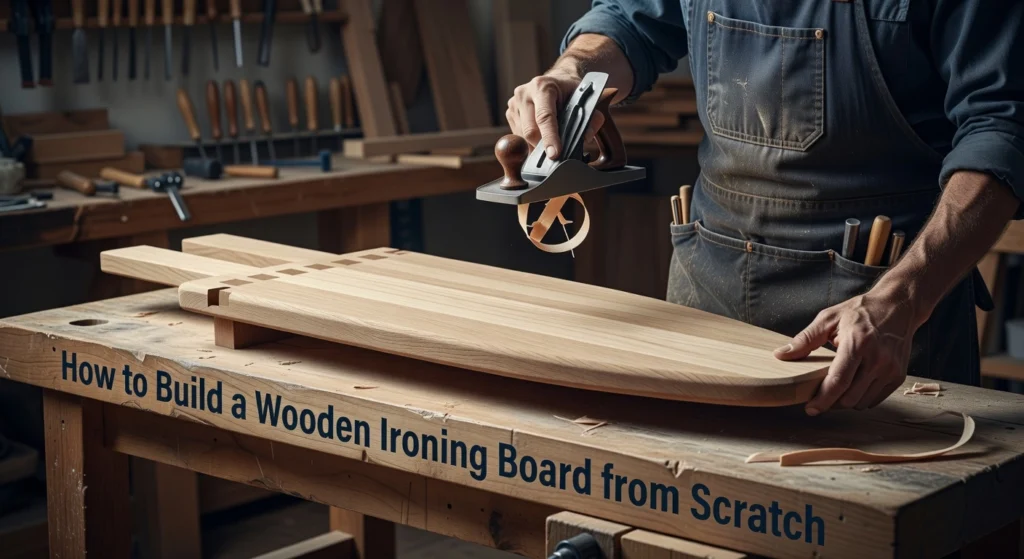

Ever looked at your pile of wrinkled clothes and thought, “There has to be a better way”? Well, what if I told you that you could solve that problem AND pick up a fun new woodworking skill at the same time? Building your own wooden ironing board is one of those projects that feels impressive but is actually totally doable, even if you’ve never picked up a saw before.
A homemade ironing board is not just a practical addition to your home. It’s also a chance to create something sturdy, customized to your height and needs, and built to last way longer than most store-bought versions. Plus, there’s something genuinely satisfying about pressing your shirts on a board you built with your own two hands.
In this guide, I’ll walk you through the entire process, step by step, from gathering your materials to sanding down the final edges. No confusing jargon, no intimidating techniques. Just simple, clear instructions that any beginner can follow. By the end, you’ll have a beautiful, functional ironing board and a serious boost of DIY confidence. Let’s get building!
Why Build Your Own Wooden Ironing Board
If you’ve ever tried pressing a large quilt top on a standard narrow ironing board, you already know the frustration. The fabric droops off the sides, seams won’t lie flat, and the whole thing feels like a wrestling match. Building your own wooden ironing board solves this problem completely, and it’s one of those projects that pays you back every single time you use it.
Custom sizing is the biggest win here. Standard commercial boards are typically tapered and narrow, designed for dress shirts rather than yards of quilting fabric. A DIY wooden board can be cut to exactly what you need, whether that’s a generous 22″ x 54″ rectangle that spans your entire sewing table or a compact 18″ x 24″ tabletop version that tucks away easily. Sewers and quilters consistently report that having a surface sized for their actual projects is a complete game-changer for pressing accuracy and speed.
The cost savings are real and significant. A piece of 3/4″ plywood or MDF plus some batting and fabric typically runs well under $50, especially if you’re pulling from leftover shop offcuts. Compare that to premium commercial boards, which can run anywhere from $100 to $500 or more for large or professional-grade models. According to market research on the global ironing boards industry, the market is valued at approximately USD 2.88 billion in 2026 and growing, which tells you there’s serious demand for better, more specialized pressing solutions. Building your own puts a premium-quality surface in your hands without the premium price tag.
There’s a sustainability bonus too. Using reclaimed wood, plywood scraps, or offcuts from other projects means you’re diverting material from the waste pile and putting it to practical use. Many woodworkers find this project is a perfect way to use up those oddly sized pieces that are too good to throw away but too small for furniture builds.
Finally, a solid wood surface simply performs better than a flimsy metal mesh board. The rigid base holds fabric firmly, supports heavy steam irons without flexing, and gives you precise control when pressing crisp seams. As this DIY pressing station tutorial demonstrates, even a basic plywood build covered with batting and fabric outperforms most commercial options for serious fabric work.
Choosing the Right Wood for Your Ironing Board Top
Not all wood is created equal when it comes to building an ironing board top, and picking the wrong material can lead to a warped, lumpy, or downright unusable surface. Here is a quick breakdown of your best options so you can make a confident choice before you ever pick up a saw.
Hard Maple: The Premium Choice
If budget is not a concern, hard maple is the gold standard for a DIY ironing board top. It is one of the hardest domestic hardwoods available, which means it resists denting and stays flat even after months of repeated steam and heat exposure. The tight, consistent grain creates a naturally smooth surface under your batting layers, and it does not have the pronounced wood texture that cheaper options can show through fabric. Woodworking community discussions confirm that builders who choose hard maple rarely regret it, and premium handcrafted boards from traditional makers often use maple or birch for exactly this reason.
Plywood (Birch or Cabinet Grade): The Smart Middle Ground
For most beginners, birch plywood or cabinet-grade plywood is the practical sweet spot. It is affordable, easy to find at any home center in convenient 1/2″ or 3/4″ sheets, and far more dimensionally stable than solid wood because of its cross-laminated layers. That construction means it resists warping even when steam hits it regularly, which is a real concern with any ironing surface. Quilters and sewers building large custom pressing boards consistently reach for plywood, and detailed community tutorials on large plywood pressing boards show it performing reliably for years with proper batting protection. For a first build, this is the material most likely to give you a great result without breaking the bank.
MDF, OSB, and Why to Avoid Pine
MDF gives you an impressively flat surface right out of the box, but it is heavy and genuinely hates moisture. Steam will cause it to swell and soften over time, so only consider MDF if you are building a fixed, stationary tabletop board that will never be moved or heavily steamed.
OSB is the true budget option, and some crafters have built functional boards with it. The catch is that the surface is noticeably rougher than plywood, so you will need extra batting layers to get a smooth pressing surface, which adds cost and bulk.
Softwoods like pine might seem tempting since they are cheap and everywhere, but skip them for the top surface. Pine dents easily under iron pressure, and its strong, open grain telegraphs right through your batting and cover fabric, giving you an uneven pressing surface. Stick with hardwood or engineered sheet goods for a top you will actually enjoy using.
Tools and Materials You Will Need
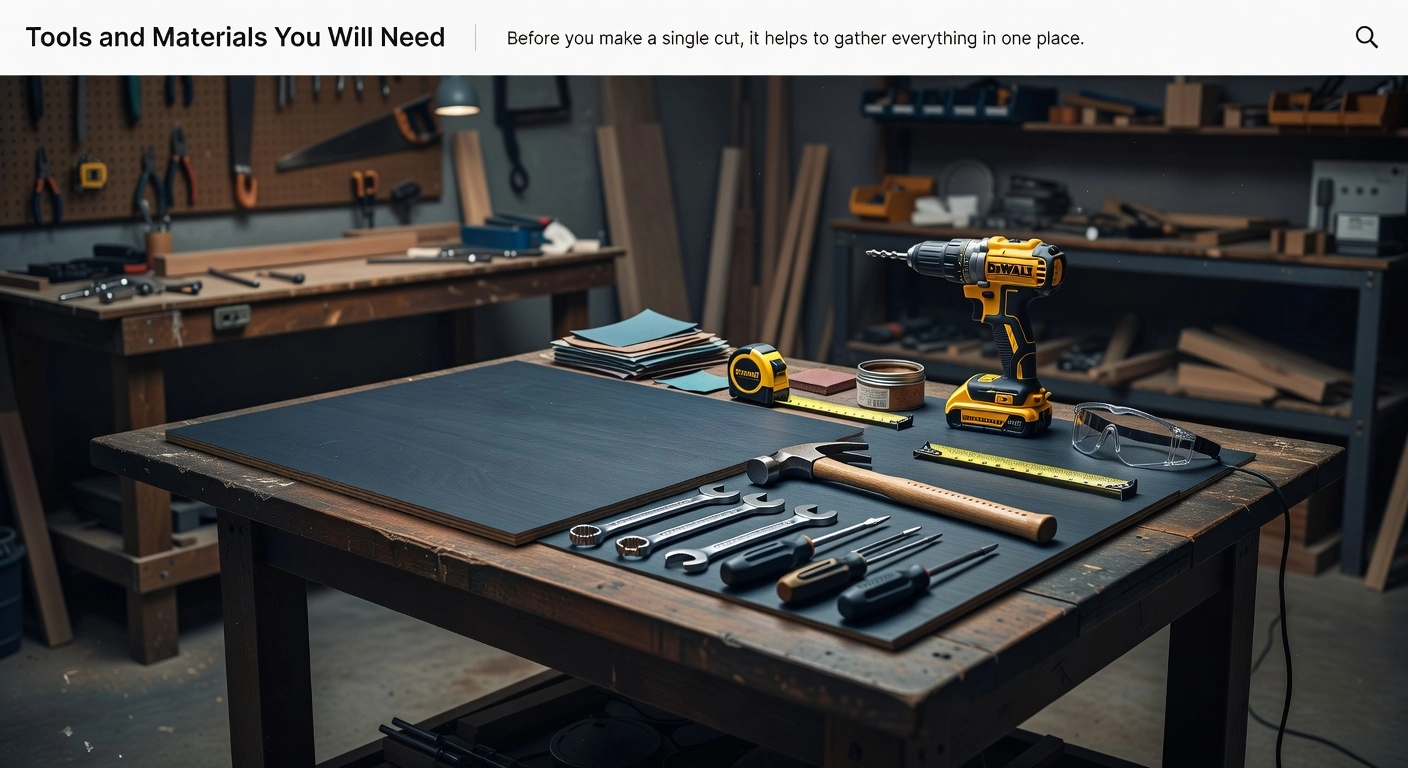
Before you make a single cut, it helps to gather everything in one place. Having the right materials on hand will save you extra trips to the hardware store and keep the whole project moving smoothly. Here is a breakdown of exactly what you will need.
Wood Panel or Sheet
Start with a sheet of 1/2-inch or 3/4-inch plywood as your board top. Half-inch plywood strikes a nice balance between weight and rigidity, while 3/4-inch gives you a rock-solid surface that will not flex under pressure. For a standard ironing board shape, aim for roughly 54 x 15 inches, which works well for everyday garment pressing. If you plan to use it as a quilting pressing board, go bigger, something in the range of 24 x 48 inches or even larger, so quilt blocks lie flat without hanging off the edges. Most hardware stores will make straight cuts for you at little or no cost, which is a great option if you do not own a saw yet.
Cutting Tools
To shape the tapered nose end of the board (that pointed tip that makes it easier to press sleeves and collars), you will need a circular saw or jigsaw. A jigsaw is the friendlier choice for beginners because it handles curves easily. Grab a measuring tape and a straightedge or clamps to guide your cuts cleanly.
Legs or Base
You have three practical options here. Fold-up leg hardware lets you attach the board to an existing frame for a collapsible design. Fixed dowel legs screwed into the underside work well for a simple semi-permanent setup. A pedestal base built from 2×4 stock gives you the sturdiest result and can even double as a sewing station with added shelving underneath.
Batting and Fabric
Skip the polyester batting. It compresses under heat and can even melt with a hot iron. Instead, choose wool or 100% cotton batting for real heat tolerance and moisture management. Cut it several inches larger than your board so you have enough overhang to wrap underneath. For the cover fabric, a sturdy 100% cotton canvas or drill cloth works best. As explained in this quilter’s pressing board guide, natural fibers hold up far better through repeated high-heat use than synthetic blends.
Staple Gun and Sandpaper
You will need a staple gun loaded with 3/8-inch heavy-duty staples to secure the batting and fabric tightly to the underside of the board. Finally, grab two grits of sandpaper: 120-grit to smooth the cut edges and knock down any splinters, then 220-grit to finish everything silky smooth before you add padding. This detailed DIY ironing board tutorial walks through the surface prep steps nicely if you want a visual reference.
Once everything is gathered, you are ready to start building.
Step-by-Step Instructions for Building the Board
Now that you have everything gathered and your workspace is ready, it is time to actually build the board. Take your time with each step, and do not rush the process. A little patience here pays off with a board that will last for years.
1. Cut the Board Shape
Start by laying your plywood panel flat and marking out your desired dimensions with a pencil and straight edge. A good beginner size is around 15 inches wide by 54 inches long, but you can adjust to fit your space. To create the nose, draw a gentle taper starting roughly 12 inches from one end, angling both sides inward toward a slightly rounded tip. This shape mimics a traditional ironing board and gives your iron room to maneuver around collars, cuffs, and quilt corners. Cut along your lines with a jigsaw, keeping a steady hand and following the curve slowly. If you have never used a jigsaw before, practice on a scrap piece first so you get a feel for the tool before touching your good panel.
2. Sand Everything Smooth
Once your shape is cut, grab your sandpaper and work through the grits up to 220. Start with 80 or 100 grit to knock down any rough saw marks on the edges, then move to 150, and finish with 220 for a silky smooth surface. Pay close attention to the edges and the tapered nose because these spots tend to have the most jagged cuts. Any rough patch you leave behind can snag your batting or poke through your fabric cover over time, and nobody wants a hole in their cover after all this work. Run your hand slowly across every edge and the entire top surface to check for rough spots before moving on. This step takes maybe ten minutes but makes a noticeable difference in the finished result.
3. Attach the Legs
Now decide whether you are building a tabletop board or a freestanding one. For a tabletop version, you can skip legs entirely and simply set the board on a sturdy table or countertop when you need it, which is honestly the easiest option for beginners. For a freestanding board, pick up a set of fold-up leg hardware from your local hardware store and follow the included instructions to mount them to the underside. Position the legs so the board sits at roughly hip height when you are standing, which reduces back strain during long pressing sessions. Make sure all screws are tight and test the legs by pressing down firmly before you move on to padding. A wobbly board is frustrating and potentially unsafe.
4. Add the Batting Layer
Cut your batting so it extends about three to four inches beyond the board on all sides. Lay it flat on the floor, then place your board face down on top of it, centered. Starting at the middle of one long side, pull the batting up and over to the underside and drive a staple into the wood. Move to the opposite long side and repeat, pulling the batting snug before stapling. Work your way outward from the center toward the ends, placing staples every two to three inches and keeping consistent tension throughout. At the corners and nose, fold the batting neatly like you are wrapping a gift, trimming away any thick bunched sections so the underside stays relatively flat. Check out this helpful quilters ironing board guide for visual reference on getting the padding just right.
5. Stretch and Staple the Cover Fabric
Cut your cover fabric four to six inches larger than the board on all sides. Lay it right side down on a clean floor, then place your batting-covered board face down on top. Using the same center-out approach, pull the fabric taut from the middle of each long side and staple it to the underside. Work in small alternating sections, always pulling firmly before each staple. Save the nose for last, pulling the fabric into tight pleats and stapling closely together to keep everything smooth on top.
Common Beginner Mistakes to Avoid
Three mistakes trip up almost every first-timer. First, using too little batting leaves you with a hard surface that distorts fabric rather than cushioning it, so always use at least two layers of cotton batting or one thick layer of polyester. Second, stapling the fabric too close to the board edge means the staples have almost no holding power and the cover will pull free within a few uses. Aim to fold the fabric over so your staples land at least half an inch from the edge. Third, skipping the sanding step is surprisingly common, and it almost always leads to a snagged or lumpy cover. Also, be sure to maintain adequate tension on your cover fabric throughout the stapling process since a loose cover shifts around every time you press and makes the whole board feel unprofessional.
Should You Finish a Wooden Ironing Board Top
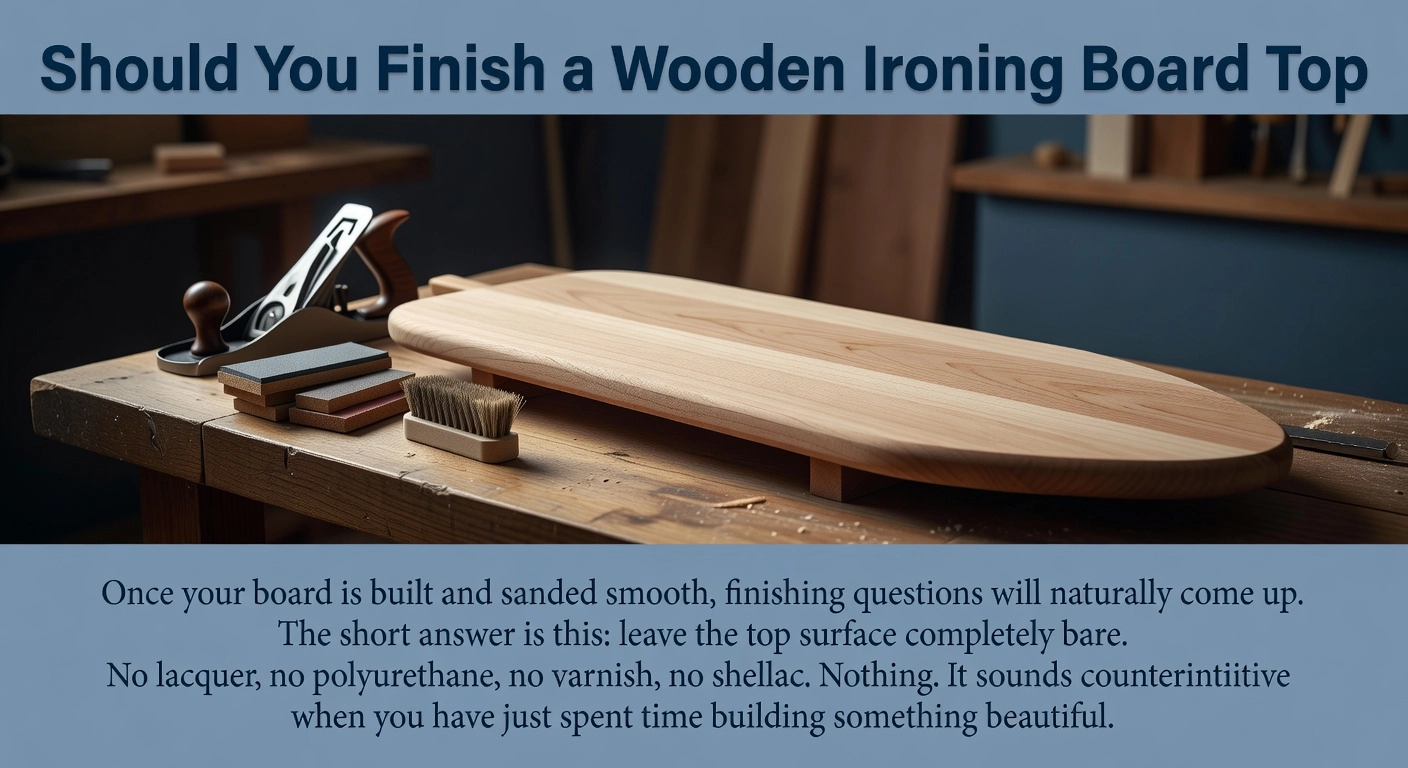
Once your board is built and sanded smooth, finishing questions will naturally come up. The short answer is this: leave the top surface completely bare. No lacquer, no polyurethane, no varnish, no shellac. Nothing. It sounds counterintuitive when you have just spent time building something beautiful, but applying any kind of finish to the ironing surface is a mistake that can ruin your clothes and your board at the same time.
Why the Top Must Stay Unfinished
Irons operate at temperatures between 300 and 450 degrees F depending on the fabric setting you are using. At those temperatures, most wood finishes do not just sit there quietly. They off-gas, blister, soften, or break down entirely. Even with a padded cover and batting between the iron and the board, steam penetrates layers easily and reaches the wood surface below. That heat and moisture combination is enough to cause real problems with any coating you have applied. Woodworkers who have tested this firsthand consistently report the same outcome: a bare wood top, sanded to 220 or 320 grit for smoothness, simply performs better and safer than any finished alternative.
What Actually Happens to Finished Wood Under an Iron
Lacquer and shellac are the most vulnerable. They soften quickly under heat and can transfer a sticky or discolored residue directly onto your fabric. Polyurethane, including the solvent-based varieties that are generally considered more durable, is not immune either. At ironing temperatures, it can melt, gum up, or leave staining marks on clothing that are extremely difficult to remove. Steam makes everything worse by driving moisture into the finish from below, which leads to clouding, white heat marks, and adhesion failure. If you have ever seen those hazy white rings on a finished wood table after a hot cup was left on it, the damage from an iron on a finished board is a similar process but far more intense. If you have already applied a finish and run into that exact problem, the guide to fixing heat stains on wood is worth bookmarking. WoodStuffHQ also covers this topic in depth with a dedicated walkthrough on removing white heat marks from wood tables.
What You Should Finish and How
Here is the good news: the rest of the board absolutely benefits from a protective finish. The legs, frame, stretchers, and underside of the board top are all fair game. These parts never contact the iron directly, so there is no heat or steam risk. Protecting them prevents moisture absorption, warping from humidity changes, and general wear from storage and handling.
For these non-heat-exposed parts, three finish options work particularly well:
- Danish oil: Penetrates into the wood rather than sitting on top, enhances the natural grain, and provides solid water resistance. Easy to apply with a cloth and very beginner-friendly.
- Hard wax oil: Offers a durable matte or satin look with good moisture protection. It is easy to touch up over time if a section gets worn.
- Water-based polyurethane: Dries clear, has low odor and low VOCs, and builds a tough protective film in thin coats. Apply it lightly and let each coat cure fully before adding another.
Whichever option you choose, always test it on a scrap piece of the same wood first. Allow the finish to cure completely before assembling the board, and double-check that every inch of the top surface remains completely bare before you add your padding and cover.
Custom Ironing Board Designs Worth Considering
Once you have your basic board built, it is worth knowing that the same core skills open the door to some really creative variations. Whether you are working with a tiny studio apartment or a full laundry room, there is a design out there that fits your space and workflow perfectly.
Tabletop Pressing Board
A compact tabletop version, typically around 24×16 inches, is one of the most beginner-friendly builds you can tackle. It sits right on your cutting table, counter, or any flat work surface, so there is no dedicated floor space required. Cut your plywood to size, layer on cotton batting, pull canvas tightly over the top, and staple everything down from the back. The result is a firm, portable pressing surface that quilters with small studio spaces absolutely love. You can even add a felt backing to protect whatever surface it rests on.
Hideaway Cabinet Build
If you have a laundry room or a closet with a little wall space, a hideaway cabinet build is a seriously satisfying project. The basic concept involves building a simple plywood cabinet frame and mounting a fold-down board inside it using heavy-duty hinges. When you are done ironing, the board folds back up, the cabinet door closes, and nobody knows it is there. Many builders add a small shelf above the board for storing the iron itself, which makes the whole setup feel like a real built-in feature.
Wall-Mounted Fold-Up Design
A wall-mounted fold-up board takes the space-saving idea even further. You mount the board directly into a wall stud, and it folds completely flat against the wall when not in use, protruding only an inch or two. This works beautifully in narrow hallways, laundry closets, or craft rooms where every square foot counts. Secure mounting into studs is non-negotiable here for safety, so always locate your studs before drilling.
Oversized Quilting Pressing Board
For serious quilters, a wide 60×30 inch pressing surface changes everything. You can build this by edge-gluing two plywood panels together, clamping them flat overnight, and then covering the whole surface with batting and canvas just like a standard board. Check out this DIY professional ironing table tutorial for a great real-world example of a large-format build done right.
Adding a Lip at the Narrow End
One small addition that makes a big difference is a simple wood stop at the narrow end of your board. Glue or screw a thin strip of wood, roughly 1/4 inch tall, along that edge before you add your padding. This little lip catches fabric before it slides off, which is especially handy when you are pressing long strips or large quilt pieces. It is a five-minute addition that you will appreciate every single time you use the board.
How to Restore a Vintage Wooden Ironing Board
Maybe you inherited a solid wooden ironing board from a grandparent, or you spotted one at a thrift store and could not resist bringing it home. Either way, restoring a vintage wooden ironing board is one of the most satisfying woodworking projects you can tackle, and the skills involved connect directly to everything covered in this guide so far.
Start With a Thorough Inspection
Before you touch a tool or open a glue bottle, spend a few minutes giving the board a proper assessment in good lighting. Run your fingers along the top surface, feeling for cracks that follow the wood grain. These splits usually appear near the ends or around old screw holes where stress concentrates over decades of use. Check the leg joints by gently wiggling each leg while the board is folded out flat. Any noticeable movement means the joint needs attention. Finally, set the board on a flat surface like your workbench and look for warping or cupping, where the edges lift or one end sits lower than the other. A small amount of warp is often workable, but if the board rocks significantly or the wood feels soft and spongy, you may be dealing with deeper moisture damage worth evaluating carefully before investing more time.
Repairing Cracks and Stabilizing Legs
For cracks along the grain, start by cleaning out any debris using a thin blade or a blast of compressed air so the glue can actually bond. Work quality PVA wood glue deep into the crack using a syringe or thin applicator, then clamp firmly across the split using bar clamps with small scrap wood blocks between the clamp jaws and the board surface to avoid denting the wood. Wipe away any squeeze-out immediately and let it cure for a full 24 hours. Once dry, press a color-matched wood filler into any remaining gap, let it harden, then sand flush starting around 150 grit and finishing with 220 grit for a smooth result.
Wobbly legs on vintage fold-up boards are almost always caused by dried-out mortise and tenon joints. Disassemble the joint if you can, scrape away the old glue residue, then apply fresh wood glue and reassemble with clamps. If the tenon has shrunk and no longer fits snugly, glue a thin strip of wood veneer to the tenon cheek to build it back up before reassembling. For legs that connect with older pivot hardware, adding small triangular corner blocks glued and screwed into the frame corners gives you a big stability boost without changing the board’s vintage look.
Cleaning and Re-covering the Surface
Vintage boards tend to have years of buildup hiding under layers of old batting and tacked-on fabric. Peel or cut away those layers carefully, using a staple remover or flat putty knife to lift out any nails or tacks without gouging the wood. For rust stains on the wood or hardware, a paste made from baking soda and water applied for a few minutes before scrubbing works well for light staining. Old adhesive residue responds to a gentle adhesive remover product. Water stains and discoloration can often be addressed with a light sanding followed by a damp wipe-down. Always test any liquid cleaner on a hidden spot first, and work in a well-ventilated space.
Once the surface is clean and dry, you can follow this pictorial re-covering tutorial for a clear visual walkthrough of the padding and fabric steps. Lay down two or three layers of cotton quilt batting cut slightly wider than the board, then stretch your chosen fabric tightly over the top and secure it underneath with a drawstring casing or staples. Pull it taut as you go to avoid wrinkles. For a complete before-and-after inspiration on what a restored vintage board can look like, this YouTube restoration video shows the full process in action. With a bit of patience and the woodworking fundamentals already covered in this guide, a tired old board becomes something genuinely useful and worth keeping around for years.
Caring for Your Wooden Ironing Board Over Time
Once your board is built and in regular use, a little ongoing maintenance goes a long way toward keeping it functional for years. Think of it like caring for any good piece of wooden furniture: small, consistent habits prevent bigger problems down the road.
Replace the fabric cover every 12 to 24 months with regular use, or sooner if you notice scorch marks, thinning spots, stretching, or areas where the cover no longer lies flat and taut. A worn cover is not just an aesthetic issue; it reduces the effectiveness of your ironing and offers less protection to the wood underneath. When you swap out the cover, go ahead and replace the batting at the same time for the best results.
Moisture is the biggest threat to a wooden ironing board top. After each ironing session, stand the board upright rather than folding it flat immediately. This allows steam and condensation to evaporate from the batting and wood surface instead of sitting trapped against the grain. Give it at least 15 minutes of airtime before storing it away. If the wood top does develop a white water stain or a heat mark through the cover, do not panic. These are usually surface-level issues, and our guide on removing white heat marks from wood covers several easy methods for tackling them at home.
Check the leg hardware at least once per season. Wooden boards can develop a wobble when bolts or screws loosen over time, especially with regular folding and unfolding. A quick pass with a screwdriver or wrench keeps everything tight and safe.
Finally, store the board upright or hang it on a wall hook rather than leaving it flat on the floor or stacked under things. Flat storage puts uneven pressure on the wood over time, which can lead to warping. Upright storage also keeps airflow moving around it, which supports the moisture prevention habits you are already building.
Building a Board That Works the Way You Need It To
When it comes to building a wooden ironing board that actually performs well, three decisions matter more than anything else: your wood species choice, leaving the top surface completely unfinished, and getting your batting thickness right. Hard maple or quality plywood gives you a stable, warp-resistant foundation. Keeping the top bare lets steam move freely without reacting to finishes. And two to three layers of 100% cotton batting hits the sweet spot between cushioning and firmness. Nail those three things and the rest falls into place naturally.
If you are just getting started, build a simple tabletop version first. It is faster, cheaper, and much easier to modify if something does not feel quite right. You can always graduate to a freestanding or wall-mounted design once you know what you actually want from your board.
And if you already have a vintage wooden board sitting in the garage, consider restoring it before starting from scratch. Re-covering and light sanding often takes just an afternoon and costs a fraction of a full build.
For extra support on related wood projects, WoodStuffHQ has practical guides on heat damage repair and wood finishing that pair nicely with this kind of work. A well-built wooden ironing board, made with care and quality materials, can genuinely last decades with very little upkeep required.
Conclusion
Building your own wooden ironing board is more achievable than you might think. You now know how to gather the right materials, follow beginner-friendly steps, customize the board to your height, and create something that outperforms anything you’d find in a store.
The real reward here goes beyond solving a laundry problem. You’ve gained a practical woodworking skill, built something durable and personal, and proven to yourself that DIY projects are within your reach.
Now it’s time to stop reading and start building. Gather your materials this weekend, clear some workspace, and take that first step. Share your finished board in the comments below; we’d love to see what you create. Once you experience the satisfaction of using something you built yourself, you’ll wonder why you ever settled for buying one in the first place.