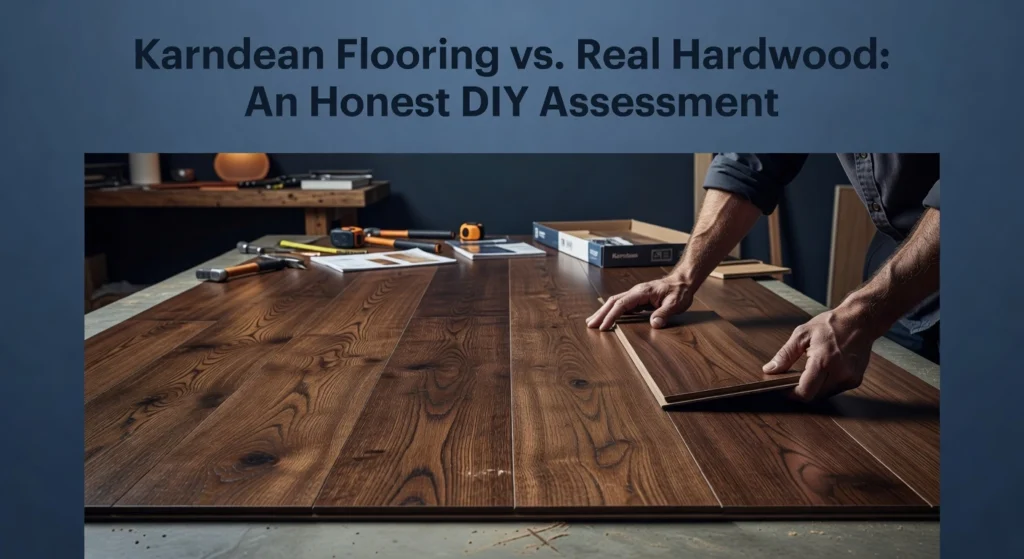

So you’re standing in a flooring showroom, completely overwhelmed by the options in front of you. Real hardwood looks gorgeous but comes with a price tag that makes your eyes water. Then someone points you toward Karndean flooring and suddenly you’re wondering if it’s too good to be true.
If this sounds familiar, you’re in the right place. I’ve spent time researching and living with both options, and I’m here to give you the honest, straightforward comparison that most flooring guides skip over. No sales pitches, no confusing jargon, just real talk about what works and what doesn’t.
In this post, we’re going to break down everything a beginner needs to know about Karndean flooring versus real hardwood. We’ll cover cost, durability, installation difficulty, and how each option holds up in everyday family life. By the time you finish reading, you’ll have a much clearer picture of which flooring actually makes sense for your home, your budget, and your lifestyle. Let’s dig in and make this decision a whole lot easier for you.
What Is Karndean Flooring, Really?
If you’ve been scrolling through flooring options and keep seeing “LVT” and “LVP” thrown around, you’re not alone in feeling a little confused. Let’s break it down simply. Luxury Vinyl Tile (LVT) comes in square or rectangular formats that mimic stone, marble, or ceramic. Luxury Vinyl Plank (LVP) comes in longer, narrower pieces designed to look like real hardwood. Karndean makes both, and what makes them stand out is how convincingly realistic they look. Using high-definition digital printing, the brand captures real wood grain, natural knots, and stone veining from actual material samples. Then synchronized embossing adds a physical texture that matches the printed image underneath, so when you run your hand across a “wood” plank, it actually feels like wood. Multiple design variations per pack mean no two pieces look identical, which is exactly what separates quality LVT from cheap vinyl.
That realistic surface is protected by Karndean’s proprietary K-Guard+ wear layer, a polyurethane coating that sits on top of every plank or tile. Think of it as a tough, invisible shield. It resists scratches from pet claws, scuffs from kids’ toys, and stains from kitchen spills, all without needing wax or polish. For anyone with a busy household, that kind of low-fuss durability is a genuine game-changer. You can learn more about what LVT flooring actually is directly from the brand’s own resources.
Karndean also offers three distinct installation formats to suit different situations. Glue-down is best for custom layouts like herringbone patterns and requires a secure adhesive bond. LooseLay uses a friction-grip backing for faster, more flexible installs with minimal adhesive. Korlok Select is the rigid core, click-lock option built for DIY-friendly floating installations with no glue required.
One of the biggest practical advantages across all formats is the 100% waterproof construction. Real hardwood warps, cups, and swells when moisture gets involved, which makes kitchens, bathrooms, and basements risky territory. Karndean’s vinyl composition contains no wood fibers, so water simply cannot penetrate or cause damage. You can explore the full Karndean flooring range to see how different collections handle these spaces.
This category is clearly resonating with homeowners on a large scale. The global LVT market is valued at approximately $29.4 billion in 2025 and is projected to grow at a 13.4% CAGR, reaching $53.52 billion by 2030. That growth reflects exactly what everyday buyers are prioritizing: durable, waterproof, good-looking floors that don’t require a professional to maintain or a fortune to install.
How Much Does Karndean Flooring Actually Cost?
Let’s talk numbers, because this is usually the first question people have before falling in love with a floor they can’t afford. The good news? Karndean is more accessible than it might seem at first glance, especially once you factor in the full picture.
Material costs typically run from about $4 to $8 or more per square foot, depending on which collection you choose and the format you go with. Entry-level lines like Knight Tile glue-down sit closer to the $3 to $4.50 range, while popular mid-range collections such as Van Gogh and Korlok Select land around $4 to $6.50 per square foot. Premium collections like Art Select, especially in complex formats like herringbone or basketweave, can push past $7 per square foot. According to Grosvenor Flooring’s Karndean price breakdown, the format and wear layer thickness make a big difference in where a product falls on that spectrum.
Installation labor is where things can shift quite a bit. Glue-down formats require a professional installer, since the subfloor needs to be perfectly smooth, level, and clean before anything goes down. Labor for glue-down typically adds another $2 to $4 per square foot on top of materials, plus the cost of adhesive. If your subfloor needs leveling work beforehand, expect that number to climb. On the other hand, Korlok Select uses a click-lock rigid core system that confident DIYers can tackle themselves, which meaningfully reduces your overall spend. LooseLay formats are even more beginner-friendly for smaller rooms, though professional installation is still the safest route for warranty purposes.
How Does Karndean Compare to Other Flooring Options?
Here is where context really helps. Solid hardwood materials can run anywhere from $5 to $28-plus per square foot, with installed costs regularly hitting $12 to $20 or more. Engineered wood is a closer comparison, ranging from $3 to $16 per square foot in materials, but it still requires refinishing over time. Entry-level LVT brands cost less upfront than Karndean, but they typically offer thinner wear layers, less realistic visuals, and weaker warranty backing. For budget-conscious shoppers, Palio by Karndean serves as a more affordable sister line, with material costs closer to $3 to $4.50 per square foot while still offering solid construction and warranty access. Floor City’s guide to affordable Karndean options breaks down where Palio fits nicely if you need to stretch your budget further.
What a Real Project Actually Costs
For a typical 150 square foot kitchen or bathroom using a mid-range collection, here is a realistic ballpark:
- Materials (150 sq ft at $4 to $7/sq ft, plus 10% waste): $660 to $1,155
- Underlayment or adhesive: $75 to $225
- Professional installation and prep: $300 to $600
- Trim and accessories: $100 to $300
Total: roughly $1,135 to $2,280 for the full project, or about $7 to $15 per square foot installed. DIY click-lock installation on the low end of that range is very achievable.
The Warranty Math That Changes Everything
Here is the part most beginners overlook. Karndean carries a lifetime residential warranty on most collections, covering manufacturing defects when installed correctly. Real hardwood floors typically need refinishing every 7 to 15 years, at a cost of $3 to $8 per square foot each time. On a 150 square foot kitchen, that is $450 to $1,200 per refinishing cycle, sometimes more with current labor rates. Over a 10 to 20 year window, skipping even two refinishing cycles puts Karndean firmly ahead in true lifetime cost, not to mention the peace of mind that comes from a completely waterproof surface in a high-moisture space.
Karndean vs. Real Hardwood: The Side-by-Side Comparison
So you’ve seen the price tag on Karndean and you’re wondering: is it actually worth choosing over real hardwood? That’s a fair question, and the honest answer is that it depends on what you value most. Let’s walk through the five biggest differences side by side so you can make a decision that actually fits your home and lifestyle.
Water: The Game-Changer for Wet Rooms
This is where Karndean wins convincingly. Because it’s 100% vinyl, it simply cannot absorb water. Spill a full glass of wine, let your dog shake off after a walk, or install it in a bathroom without a second thought. The planks won’t swell, warp, or cup. Real hardwood, on the other hand, genuinely struggles with moisture. Solid hardwood expands and contracts with humidity changes, and standing water can cause permanent warping or cupping within hours. Even engineered hardwood, which handles moisture better than solid, is not fully waterproof and should still be kept away from bathrooms and regularly splashed kitchen areas. If you’re flooring a kitchen, bathroom, basement, or laundry room, Karndean is the practical choice here without much debate. You can read Karndean’s own comparison of LVT versus solid hardwood for more detail on this point.
Maintenance: Easy Routine vs. Ongoing Commitment
Living with Karndean is genuinely low-effort. A regular sweep, the occasional damp mop with a pH-neutral cleaner, and a Refresh treatment every six to twelve months to keep the surface looking sharp. That’s essentially it. Real hardwood asks a lot more of you over time. You’ll need to clean it with specialized products, avoid excess moisture during mopping, apply oil or recoat it every few years, and eventually pay for professional sanding and refinishing every 7 to 15 years depending on traffic levels. In a busy household with kids or pets, that refinishing cycle can creep closer to every five years. Those costs and disruptions add up significantly over a decade.
Durability: Scratch Resistance vs. Restorability
Karndean’s K-Guard+ wear layer does a solid job resisting everyday scratches, pet claws, and scuffs from shoes and furniture. For most households, it holds up well under normal use. The catch comes when the wear layer is eventually compromised. Once it’s scratched through or deeply damaged, there’s no fix; the affected plank needs replacing. Real hardwood works differently. It can dent and scratch more visibly in the short term, especially in softer species, but here’s the key advantage: it can be sanded back and refinished. A solid hardwood floor can typically go through four to seven full sanding cycles over its lifetime, which is why you still see gorgeous original hardwood floors in century-old homes. According to durability comparisons from flooring installers, Karndean typically lasts 15 to 35 years residentially, while well-maintained solid hardwood can exceed 100 years.
Authenticity and Resale Value: Feel vs. Function
Modern Karndean flooring is impressively realistic. The embossed textures and detailed printing mean many people genuinely can’t tell the difference visually. But underfoot, there is a difference. Real wood has a warmth, slight give, and natural grain variation that vinyl hasn’t fully replicated yet. For buyers touring homes, real hardwood still carries a premium perception. It signals quality, longevity, and character. LVT is gaining ground in buyer acceptance, but hardwood remains the gold standard for resale value in most markets.
The Refinishability Gap: The Biggest Long-Term Difference
This one point might matter more than anything else over a 30-year horizon. A solid hardwood floor installed in 1990 can, in many cases, still be sanded and restored to near-original condition today. It’s a renewable surface. Karndean installed this year cannot be refinished when its wear layer eventually thins out. Replacement is the only option. That’s not a dealbreaker for everyone, but it’s the most important trade-off to understand before you commit. Understanding how solid versus engineered hardwood compares in terms of restorability can also help you weigh all your options honestly.
The bottom line is that Karndean excels in practicality, and real hardwood wins on longevity and authenticity. Knowing which matters more to you makes the choice much clearer.
Maintenance: What You Are Actually Signing Up For
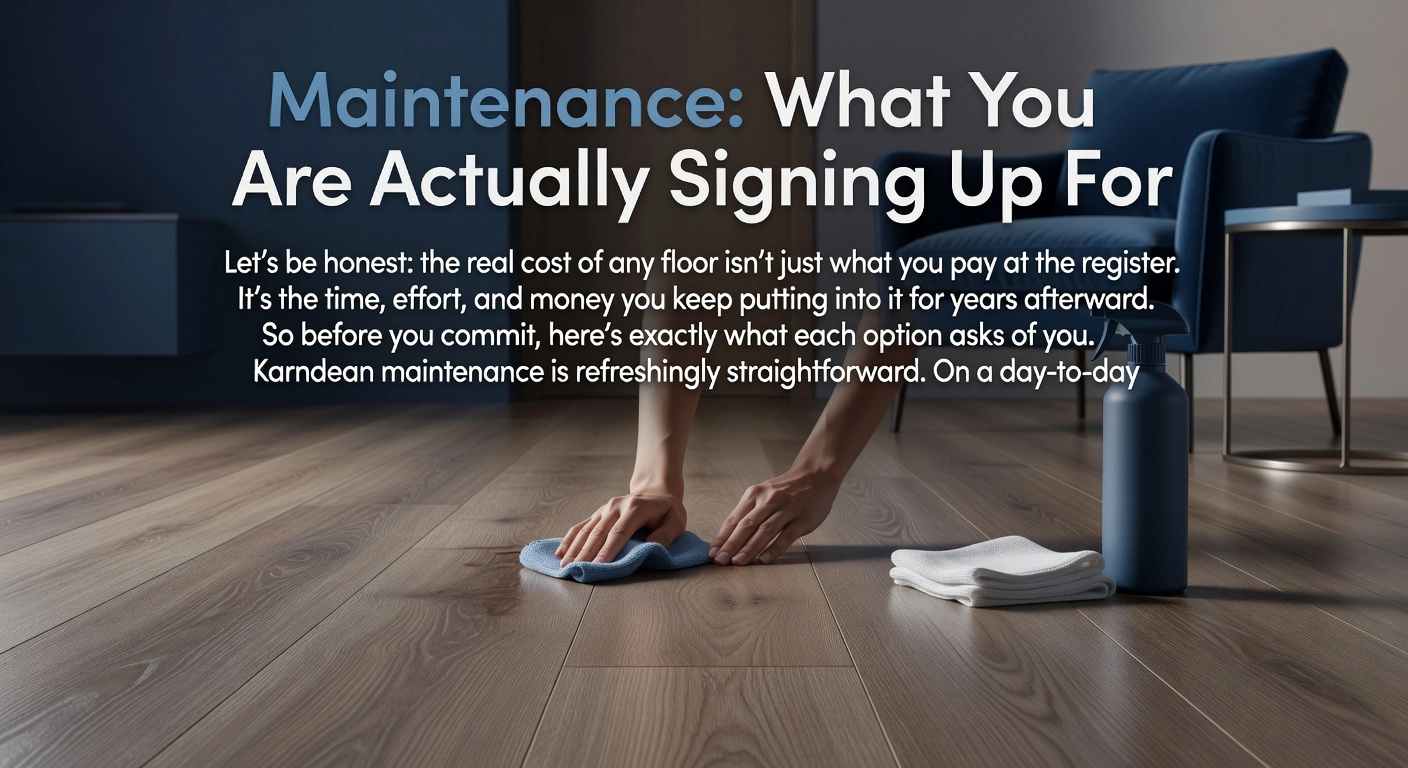
Let’s be honest: the real cost of any floor isn’t just what you pay at the register. It’s the time, effort, and money you keep putting into it for years afterward. So before you commit, here’s exactly what each option asks of you.
The Karndean Routine in Practice
Karndean maintenance is refreshingly straightforward. On a day-to-day basis, you’re looking at a quick dry sweep or vacuum on the hard floor setting to lift grit and dust before it can scratch the surface. For damp mopping, you’ll want a pH-neutral cleaner that’s safe for vinyl, such as Karndean Clean diluted in a bucket of water, applied with a well-wrung microfiber mop. The key word there is “well-wrung.” Damp, not wet. You can find the full breakdown directly on the Karndean cleaning and care page if you want to go deeper on the specifics. Once or twice a year, a deeper reset using Karndean Refresh brings back the sheen and adds a fresh layer of surface protection. That’s genuinely the whole routine.
The Hardwood Routine in Practice
Real hardwood asks for more. Daily sweeping is the same, but moisture control becomes a much bigger deal because wood and water simply do not get along well. If you have an oiled hardwood floor, plan on re-oiling it roughly every 12 to 18 months to keep the finish nourished and protective. Beyond that, sealed hardwood floors typically need a professional buff-and-recoat every three to five years, and a full sand-and-refinish cycle every seven to fifteen years depending on traffic, pets, and how much sunlight the floor gets. That refinishing process is disruptive and costs real money, but it also gives your floor an entirely fresh start.
The Overlap Worth Knowing About
Here’s something useful if you already follow the WoodStuffHQ approach to caring for oiled wood floors or butcher block surfaces: the pH-neutral, low-moisture cleaning method recommended for those surfaces is directly compatible with Karndean’s vinyl-safe cleaning requirements. Both systems want neutral pH formulas, minimal standing water, and no harsh residues. If you’ve already built those habits, switching to or adding Karndean won’t require relearning much at all.
What Karndean Cannot Handle
A few things will genuinely damage Karndean and potentially void your warranty. Steam mops are the big one; the heat can compromise the wear layer and lift the adhesive bond. Highly alkaline cleaners, abrasive scrubbers, bleach-based products, vinegar, and solvent-based solutions all fall into the “never use” category. The detailed care guide from Tapi covers several of these pitfalls clearly. Stick to approved pH-neutral vinyl cleaners, use furniture pads, and put a doormat down at every entry point.
The Honest Five-Year Comparison
Over a five-year window, Karndean wins on time and ongoing cost with no oiling, no refinishing, and no professional visits needed. Your annual spend beyond basic cleaning products is minimal. Hardwood will cost more in maintenance, effort, and periodic professional work during that same period. That said, hardwood holds one advantage that vinyl simply cannot match: when a hardwood floor looks truly worn out, you can sand it back and restore it completely. Karndean cannot be refinished once the wear layer is gone. Replacement is the only option at that point, which is worth factoring into your long-term thinking.
Restore or Replace? A Framework for Making the Call
So you’ve weighed the costs and compared the maintenance routines. Now comes the real decision: do you restore what you already have, or start fresh with something like Karndean? Here’s a practical framework to help you think it through without second-guessing yourself later.
When Restoring Your Existing Wood Floor Makes Sense
Restoration is absolutely worth considering when your hardwood is structurally healthy but just looks tired. If you’re dealing with surface scratches, a dull finish, or worn traffic lanes, a sand-and-refinish can make those floors look brand new for a fraction of replacement cost. The key conditions to check are: the subfloor is dry and solid with no buckling or rot, the room has consistently low moisture (think living room or bedroom, not bathroom), and your boards are thick enough for another sanding cycle. For solid hardwood at 3/4 inch thick, you need at least 3/32 to 1/8 inch of wood above the tongue-and-groove joint. If you can hit those marks, DIY restoration materials often come in under $3 per square foot, making it one of the best-value moves in home improvement.
When Replacing With Karndean or Similar LVT Makes More Sense
There are situations where no amount of sanding will solve the problem. If your floors have a history of water damage, repeated flooding, or visible cupping and warping, the wood structure itself is compromised. Similarly, if the wear layer is already depleted from multiple prior refinishes (you can sometimes see nail heads or the tongue peeking through at edges), there simply isn’t enough material left to work with. Bathrooms and basements are classic examples where hardwood was probably the wrong choice to begin with, and replacing with a waterproof LVT like Karndean removes the ongoing battle against moisture entirely. Rental properties are another strong case for LVT: individual planks can be swapped out if damaged, and tenants can clean it with a damp mop without any special care routine.
Room-by-Room Guidance
The room itself often makes the decision for you. Kitchens and bathrooms should almost always go with LVT; the moisture risk is simply too high and too constant for hardwood to win long-term. Living rooms and bedrooms are where hardwood earns its keep, because the low moisture, the aesthetic payoff, and the ability to refinish in 10 to 15 years all work in its favor. Basements are nearly always better served by waterproof rigid-core LVT; even a “dry” basement has enough humidity variability to cause problems for wood over time. Hallways and mudrooms lean toward LVT too, especially if outdoor moisture gets tracked in regularly.
A Simple Cost Calculation
For a 1,000 square foot space, professional hardwood restoration typically runs $3,000 to $8,000 total. A Karndean installation covering materials and labor usually lands between $6,000 and $12,000 or more for the same area. If your floors qualify for restoration and the cost comes in under 60 percent of full replacement, restoration wins on value. If restoration quotes are creeping toward replacement costs because of subfloor repairs or extensive prep work, the math shifts toward LVT.
Your Five-Question Checklist
Before making any calls, answer these honestly:
- Is your subfloor dry, level, and structurally sound? If not, you’re paying for repairs either way.
- What do moisture meter readings say? Readings above 12 to 15 percent or any history of leaks point strongly toward Karndean’s waterproof options.
- How thick is your wear layer? Measure at a vent opening or floor edge to check remaining wood above the tongue.
- What is the room used for? High moisture or heavy traffic tips the scale toward LVT every time.
- How long are you staying? If you’re planning a decade-plus in the home and care about resale value, restored hardwood often commands a premium. If you’re renting out or renovating to sell soon, LVT’s durability and low upkeep make more practical sense.
Getting even one professional assessment before deciding is worth the time. Local installers can give you a moisture reading, check your board thickness, and give you a real-world quote to compare against.
What Real Homeowners Say About Karndean Long-Term
Real homeowner feedback tells you a lot about a floor that marketing materials won’t. On Trustpilot, Karndean holds an impressive 4.6 out of 5 stars across more than 1,000 verified reviews, landing it firmly in the “Excellent” category. The themes that come up again and again in satisfied reviews are pretty consistent: the floors look genuinely realistic even after years of use, cleaning is fast and fuss-free, and the surface holds up surprisingly well in homes with dogs, cats, and kids who treat the floor like an obstacle course. Many reviewers mention that their floors still look new after several years, which is exactly what you want to hear before making a significant investment.
That said, some complaints are worth paying attention to before you buy. A portion of users report plank cupping or gap formation, sometimes appearing a year or two after installation. Planks warp slightly or small gaps open up between boards. The important context here is that these issues are almost always traced back to improper subfloor preparation, skipped acclimation steps, or installation shortcuts rather than a flaw in the product itself. The floor is only as good as the prep work underneath it, so professional installation really does matter.
One honest limitation you should know going in: there is no refinishing option with Karndean. When the wear layer eventually thins after heavy long-term use, you replace the affected planks. You cannot sand it back like real hardwood. For most homeowners, this won’t become relevant for many years, but it is a ceiling worth understanding.
On the color and texture side, Karndean performs well over time thanks to UV stabilizers built into the product. However, rooms with direct, sustained sunlight can see some gradual fading in certain collections. Using blinds during peak sun hours helps significantly.
Finally, Karndean’s 2026 SURFACES launches introduced new designs inspired by Hawaiian koa, Italian marble, travertine, and other global materials, signaling that the brand is actively investing in staying design-relevant for years to come. That matters for long-term resale appeal and interior cohesion.
Karndean Alternatives Worth Considering
Karndean is a strong choice for many homeowners, but it’s not the only game in town. Depending on your budget, room type, and priorities, one of these alternatives might actually be a better fit.
Amtico is the brand most directly comparable to Karndean in the premium LVT space. Both deliver highly realistic wood and stone visuals, commercial-grade durability, strong warranty coverage, and professional-level surface protection. Amtico’s wear layer lineup mirrors Karndean’s quite closely, ranging from 0.3mm entry options up to a 1.0mm top-tier Signature range that has no direct Karndean residential equivalent. Pricing sits in a similar premium bracket, though Amtico’s higher-end ranges can nudge slightly more expensive depending on your project. If you’re already getting Karndean quotes, it’s worth requesting an Amtico quote side-by-side for the same square footage.
Moduleo, Invictus, and Tarkett occupy the sweet spot between budget vinyl and full premium pricing. Moduleo brings Belgian engineering and up to 50% recycled content, with solid scratch and stain resistance across its ranges. Invictus maps its tiers almost directly to Karndean’s specs at a typically lower price point, with strong independent installer feedback to back it up. Tarkett rounds out this group as a reliable, well-established option with good everyday durability. For budget-conscious renovations where you still want something that looks and performs well, these three are worth a serious look.
Palio by Karndean deserves special mention because it comes from the same brand, uses similar design aesthetics, and shares some core technology at a noticeably lower price. If you love Karndean’s look but the full-range pricing is stretching things, Palio is an honest, practical step down without completely changing direction.
Budget LVT brands like Lifeproof and TrafficMaster make sense in specific situations: rental properties, low-traffic bedrooms, or short-term installs where long-term wear performance simply isn’t the priority.
When comparing any LVT brand, focus on four things: wear layer thickness in mils (thicker means more durable), warranty terms and exactly what voids them, whether the installation format works with your subfloor, and what real installers say beyond the brand’s own marketing materials.
Our Verdict: Who Should Actually Buy Karndean?
Here’s the bottom line, broken down by who you actually are.
Buy Karndean if you have a bathroom, kitchen, basement, or entryway that sees regular moisture and foot traffic. If you have pets, young kids, or both, the scratch-resistant K-Guard+ wear layer and fully waterproof construction are genuinely worth the premium. You’re also a good fit if you want a floor that looks beautiful without demanding much from you in return. Just be honest with yourself about two things: the per-square-foot cost is real, and when the wear layer eventually gives out, you’re replacing planks rather than refinishing them.
Consider alternatives if your budget is tight and the job is straightforward. Palio by Karndean delivers similar waterproof LVT performance at a friendlier price point, and for low-traffic, dry rooms like a spare bedroom or a home office, even a solid mid-range LVT option does the job without overspending. Not every room needs a premium solution.
Stick with real hardwood if you’re laying floors in a dry living room or dining room where moisture isn’t a factor. Hardwood develops character over time, can be sanded and refinished multiple times, and still carries weight with buyers in certain resale markets. That refinishability advantage is genuinely meaningful if you’re playing a long game.
The honest middle ground: for kitchens and bathrooms specifically, quality LVT like Karndean makes strong practical sense even if you’re a wood lover at heart. Moisture and solid hardwood are a notoriously bad combination, and no amount of sealing fully changes that reality over the long term.
One last thing worth knowing: if you already have wood floors showing wear or water damage, they may not need replacing yet. WoodStuffHQ has practical guides on removing water stains, restoring dry wood surfaces, and protecting wood in moisture-prone rooms. Sometimes a good restoration saves you the replacement cost entirely.
Making the Right Call for Your Home
At the end of the day, the right flooring comes down to four things: how much moisture the room sees, how much maintenance you’re willing to do, what your budget looks like over 10-plus years, and whether being able to refinish your floors someday actually matters to you. Run those four questions through your head for each room, and the answer usually becomes pretty clear.
Karndean wins in kitchens, bathrooms, and basements where waterproofing is non-negotiable. Hardwood wins in dry living spaces and bedrooms where authenticity and long-term restoration value take priority. Many homeowners end up using both, and that hybrid approach often makes the most practical sense.
If you’re still on the fence, start with one simple test: check the moisture levels in your target room before committing to anything. That single factor will drive your decision more than cost or aesthetics ever will.
Managing wood surfaces nearby during your renovation? WoodStuffHQ has you covered with water stain removal guides, wood floor restoration tutorials, and kitchen cabinet degreasing content to help you protect adjacent wood while your new floor goes in.
Finally, if Karndean is your choice, get at least two installation quotes. The plank cupping and gap issues that show up in long-term reviews almost always trace back to subfloor prep and installer technique, not the product itself. A great floor deserves a great installer.
Conclusion
Choosing between Karndean and real hardwood does not have to be stressful. Here are the key takeaways to keep in mind:
- Budget matters: Karndean delivers stunning results at a fraction of the cost of real hardwood.
- Durability wins for busy homes: Karndean resists scratches, moisture, and heavy foot traffic better than most hardwoods.
- Installation is friendlier: DIYers will find Karndean significantly more approachable than nailing down solid wood boards.
- Real hardwood adds timeless value: For long-term investment and resale appeal, nothing quite matches the authentic look and feel of natural wood.
Now it is your turn. Grab your measurements, set your budget, and visit a showroom to see both options in person. The perfect floor for your home is closer than you think. You have got this!