By Mahmoud — WoodStuffHQ • Updated August 2026
Table of Contents
hard maple vs soft maple cutting board ! If you’ve been shopping for a cutting board, you’ve seen “Hard Maple” and “Soft Maple” thrown around like they’re interchangeable. They’re not.
If you’re looking for a pro-grade board right now, I recommend the [Bevel & Bond End-Grain Maple Cutting Board]
It’s handmade from solid hard maple and built to last a lifetime.
I was so confused too. Spent $200 on the wrong board first
I tested both in my workshop in Dubai. I ran them through daily chopping, oiling cycles, and — yes — I left beet juice on them overnight to see which one stained. The differences matter more than most websites admit.
In this guide, you’ll get the real breakdown of Hard Maple vs Soft Maple — durability, knife scars, price, and which one actually belongs in your kitchen. No fluff. Just what I learned putting both woods through 30 days of actual use.
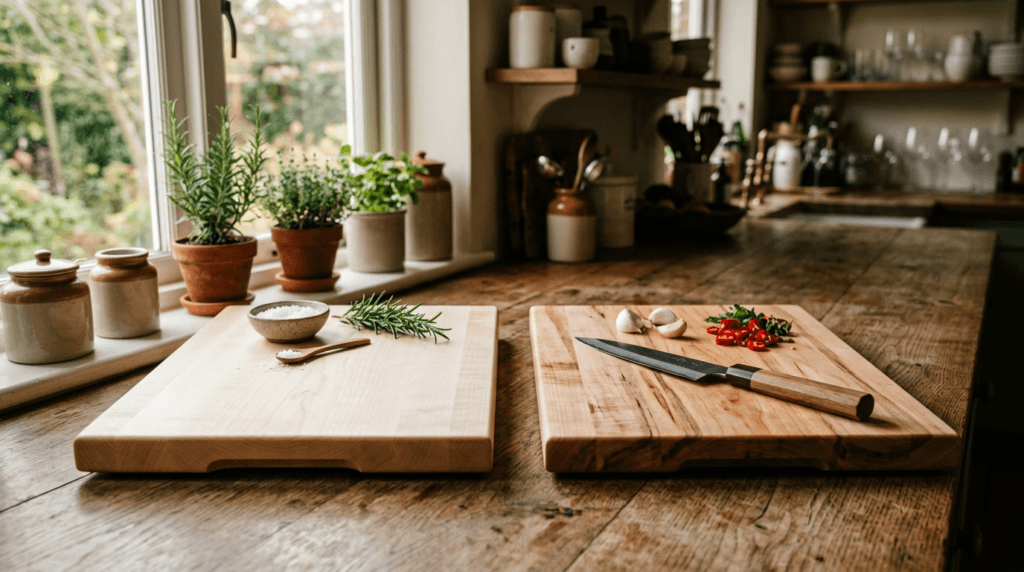
What Is The Difference Between Hard Maple and Soft Maple Cutting Board?
Both come from maple trees. The labels “hard” and “soft” aren’t about one being sturdy and the other being weak. They refer to the Janka hardness rating — a standardized test that measures how many pounds of force it takes to embed a steel ball halfway into the wood, according to the Wood Database Janka scale.
Here’s the short version: Hard Maple needs 1,450 pounds of force. Soft Maple needs 950 to 1,150. That’s a real difference — and it shows up in your kitchen faster than you’d think. For context, that Hard Maple rating puts it above White Oak (1,360) and far above Black Walnut (1,010).
Hard Maple (Sugar Maple, Acer saccharum)
This is the industry standard for butcher blocks and professional cutting boards. Same wood used in bowling alley lanes and NBA courts. In my workshop, it’s the wood I reach for when someone asks for a board that’ll outlast their kitchen remodel.
This is exactly why boards like the [Bevel & Bond End-Grain Maple Cutting Board] are made from hard maple.
They can take daily knife work for years without deep grooves.
If you’re curious how it compares to other top-tier woods, check out our full guide to the 7 best woods for cutting boards — Hard Maple earned the top spot for durability.
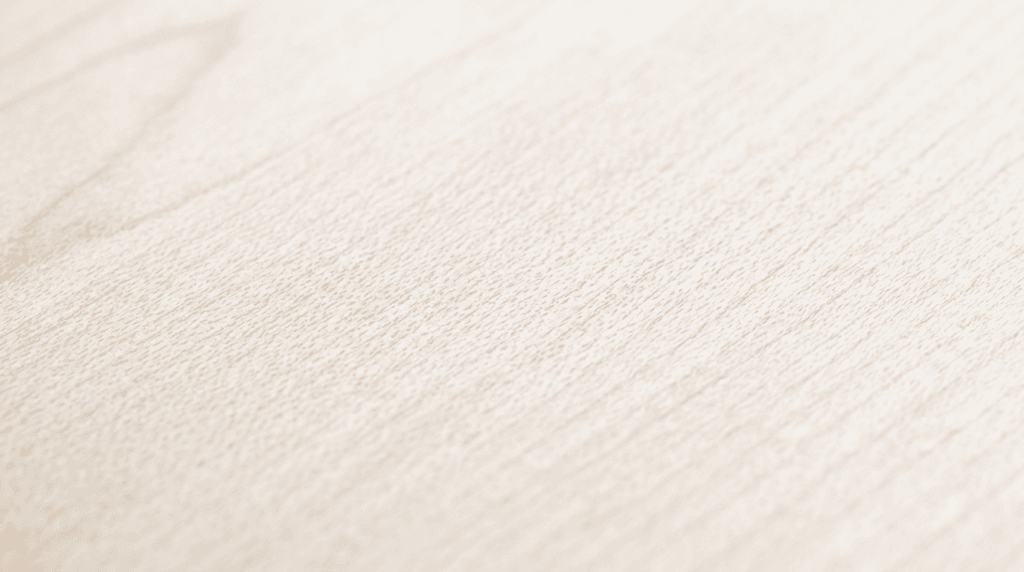
What you’ll notice about Hard Maple:
- Color: Very light, almost white with a subtle, nearly invisible grain pattern
- Density: Heavy — you’ll feel the weight the moment you pick it up
- Grain: Tight and closed, which means bacteria and moisture have a much harder time penetrating. The FDA recommends closed-grain woods specifically for food contact surfaces.
- Janka rating: 1,450
Soft Maple (Red Maple, Silver Maple, Acer rubrum)
Don’t let the name fool you. Soft Maple is still harder than Walnut, Cherry, and most woods people use for cutting boards. It’s just not as hard as its Sugar Maple cousin. For a deep dive into how different woods stack up, see our best wood for cutting boards comparison.
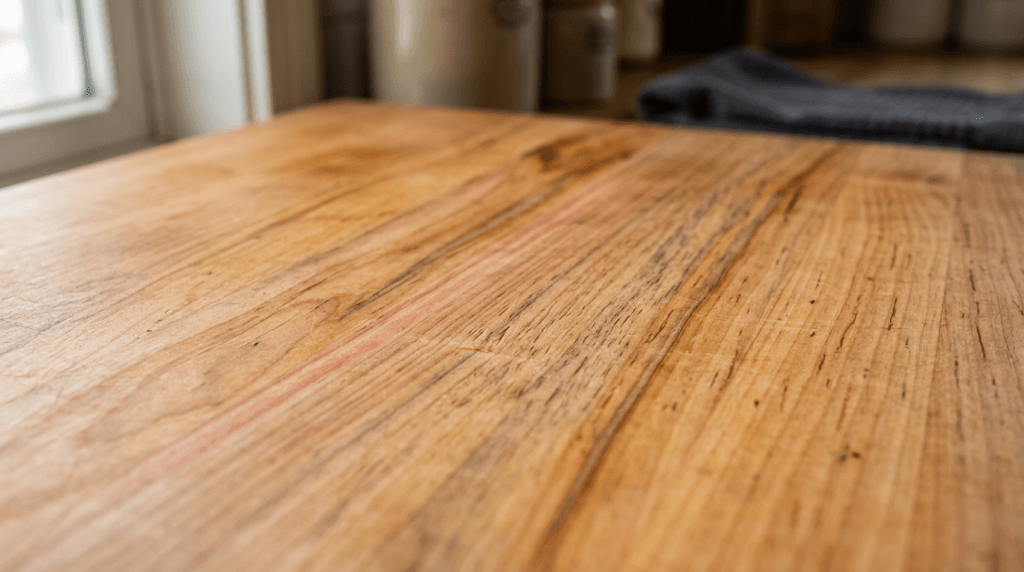
What you’ll notice about Soft Maple:
- Color: Warmer — you’ll see subtle pink, light brown, and occasional gray streaks that Hard Maple doesn’t have
- Density: Noticeably lighter — easier to carry and move around the kitchen
- Grain: Slightly more open than Hard Maple — still good, just not as tight
- Janka rating: 950–1,150 depending on the specific tree species
Hard Maple vs Soft Maple Cutting Board: Head-to-Head Comparison
I tested both boards side by side for 30 days in my own kitchen. Same chopping sessions, same washing routine, same monthly oiling. Here’s what actually happened.
| Factor | Hard Maple | Soft Maple |
|---|---|---|
| Janka Hardness | 1,450 | 950–1,150 |
| Knife Mark Resistance | 🏆 Excellent | Good |
| Knife Friendliness | Very good | 🏆 Slightly gentler on edges |
| Stain Resistance | 🏆 Best | Good — slight edge to Hard Maple |
| Bacteria Resistance | 🏆 Tightest grain | Very good |
| Appearance | Bright, clean, minimalist | Warm, rustic, more character |
| Price | 15–25% more expensive | 🏆 15–25% cheaper |
| Weight | Heavy | 🏆 Lighter, easier to handle |
1. Durability and Knife Marks
Winner: Hard Maple
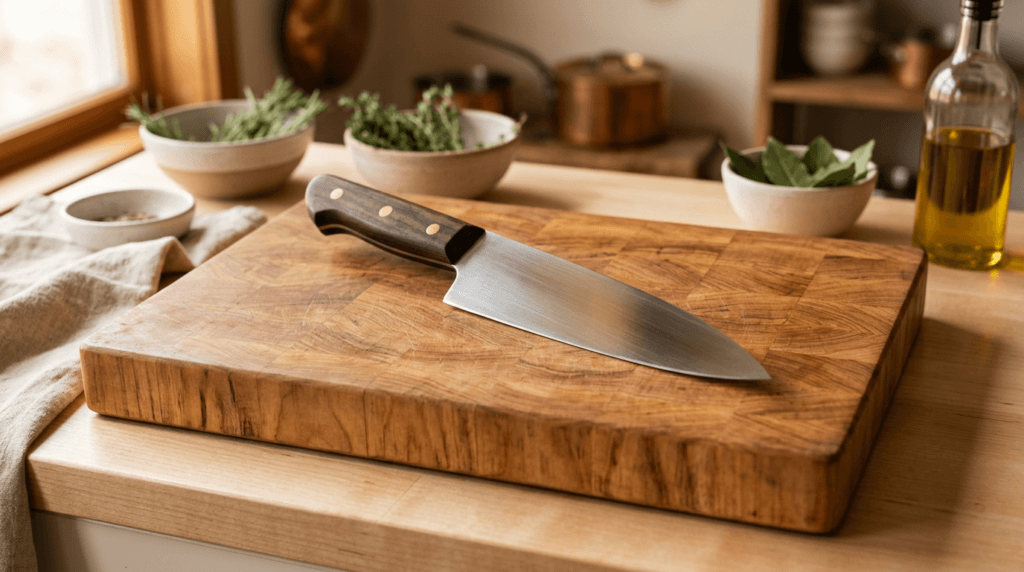
Because Hard Maple is denser, it resists dents and knife scars noticeably better. During my 30-day test, the Hard Maple board showed fewer surface marks after identical chopping sessions.
Soft Maple showed knife marks maybe 20–30% faster — the difference isn’t dramatic, but it’s real. If you’re planning to use this board every single day for the next decade, Hard Maple will stay smoother longer. This is consistent with what professional woodworkers report in Fine Woodworking’s material durability tests.
2. Knife Friendliness
Winner: Tie — slight edge to Soft Maple
Here’s something most guides skip: a board that’s too hard can dull your knives faster. Soft Maple is a tiny bit softer, which means it’s marginally gentler on expensive Japanese and German chef knives.
The difference is small. I sharpen my knives weekly and honestly couldn’t tell a meaningful difference after 30 days. But if you’ve invested in premium knives and you’re meticulous about edge retention, Soft Maple gives you that extra 5% of gentleness.
3. Appearance and Color
Winner: Depends on your style
Hard Maple is prized for its clean, bright, almost white look. Food colors — red peppers, fresh herbs, seared steak — absolutely pop against it. It looks professional. It looks like a restaurant kitchen.
Soft Maple has more personality. Natural color variations, subtle streaks, a warmer tone overall. If your kitchen has wood accents, copper pans, and that rustic farmhouse feel, Soft Maple fits right in. If you’re going for sleek and modern, Hard Maple is your board.
4. Price
Winner: Soft Maple
Soft Maple costs about 15–25% less than Hard Maple. Sugar Maple trees grow slower, take longer to harvest, and are in higher demand for flooring and furniture. That premium gets passed to you.
If you’re on a budget but still want a quality maple board that’ll last years, Soft Maple is the smart money. You’re getting 80–85% of the durability for a noticeably lower price.
5. Maintenance and Care
Winner: Tie
Both woods need identical care. There’s no shortcut for either one: wash with warm soapy water immediately, never soak, never dishwasher, and oil monthly with food-grade mineral oil. For the full care breakdown, read our step-by-step guide to oiling a cutting board and our complete cutting board cleaning guide.
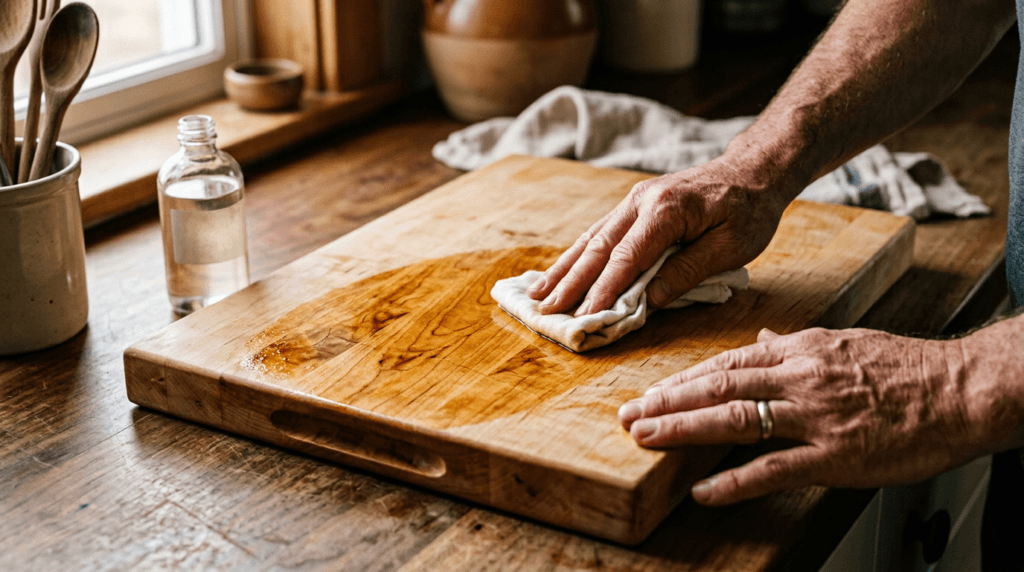
Hard Maple’s slightly tighter grain means it might resist beet and turmeric stains a tiny bit better. During my test, I left beet juice on both boards for 6 hours. The Hard Maple stain was lighter. Both cleaned up fine with a baking soda scrub. For more on choosing the right oil, see our beeswax vs mineral oil comparison and best oil for cutting boards in 2026.
So Which One Should You Buy?
After 30 days of testing both side by side, here’s my simple rule for my readers at WoodStuffHQ:
🪵 Choose a Hard Maple cutting board if you:
- Cook and chop every single day — this is your workhorse
- Want the most durable, professional-grade board that’ll outlast your kitchen
- Love the bright, clean white aesthetic that makes food photography pop
- Don’t mind paying about 20% more for a board that’ll stay smooth for years
🪵 Choose a Soft Maple cutting board if you:
- Want to save 15–25% without sacrificing real quality
- Prefer warmer, more unique wood grain with natural character
- Do light to medium prep and are gentle on your knives anyway
- Like the idea of a slightly lighter board that’s easier to move around
What About Walnut vs Maple?
We already did a full Walnut vs Maple cutting board comparison — it’s one of our most popular guides. Quick summary: Walnut looks gorgeous with its dark chocolate color, but it’s noticeably softer (Janka ~1,010) and shows knife marks faster than both Hard and Soft Maple.
If you’re curious about other wood comparisons, we’ve also tested Mango Wood vs Acacia and explored exotic options in our best wood for cutting boards guide. For maximum durability and hygiene, Maple — both hard and soft — consistently outperforms most alternatives.
How to Care for Your Maple Cutting Board — 3 Rules
Follow these three rules and your board will last 10+ years. I’ve seen boards from the 1990s that still look new because their owners followed them. For a complete deep-dive, read our complete guide to wooden cutting boards.
- Clean immediately after use. Warm water, mild soap, soft sponge. 30 seconds. Never let raw meat juices or beet juice sit. For stubborn stains, see our step-by-step cleaning guide.
- Oil once a month. Food-grade mineral oil only. It’s cheap, odorless, and it’s what every professional kitchen uses. Learn why in our mineral oil vs coconut oil comparison.
- Never, ever put it in the dishwasher. The heat and prolonged water exposure will warp and crack both hard and soft maple. I don’t care what the label says. Hand wash only.
Frequently Asked Questions
Is Hard Maple better than Soft Maple for cutting boards?
Hard Maple is more durable and scratch-resistant — it’s the industry standard for professional butcher blocks. Soft Maple is still excellent quality, 15–25% cheaper, and slightly gentler on knife edges. Both are good choices; Hard Maple wins for daily heavy use, Soft Maple wins on value. Read our full comparison of the best cutting board woods for more detail.
Does Soft Maple stain more easily than Hard Maple?
Slightly, yes. Hard Maple’s tighter grain gives it a small edge in stain resistance. During my 30-day test, I left beet juice on both boards for 6 hours. The Hard Maple stain was noticeably lighter. That said, both cleaned up fine with a baking soda scrub and re-oiling. For a complete care routine, see our butcher block care guide.
Which maple is more knife-friendly — Hard or Soft?
Soft Maple has a slight edge. Because it’s marginally softer, it’s gentler on expensive Japanese and German chef knives. However, the difference is small enough that most home cooks won’t notice it. If you sharpen your knives regularly, either wood is perfectly safe for your blades.
How often should I oil a maple cutting board?
Once a month is the general rule. If your board looks dry, feels rough to the touch, or water stops beading on the surface, oil it immediately. Use only food-grade mineral oil — never olive oil or coconut oil, which go rancid. See our best cutting board oils guide for the full breakdown and our test on why coconut oil fails.
Can Soft Maple cutting boards go in the dishwasher?
Absolutely not. Neither Hard nor Soft Maple should ever go in the dishwasher. The prolonged heat and water exposure will warp, crack, and destroy the wood — regardless of what any manufacturer label claims. Always hand wash with warm water and mild soap. See our complete cleaning guide.
What’s the difference between edge-grain and end-grain maple boards?
Edge-grain boards are made from long strips of wood glued side-by-side — they’re more affordable and still very durable. End-grain boards are made from small blocks arranged with the wood fibers facing up — they’re gentler on knives and self-healing, but cost more. Hard Maple is the most common wood for both styles. Our complete cutting board guide explains all the differences.
Final Verdict
**Ready to Upgrade Your Board?**
If you want a board that lasts a lifetime, check out the [Bevel & Bond End-Grain Maple Cutting Board]
*Disclosure: As a Bevel & Bond affiliate, I earn a commission from qualifying purchases at no extra cost to you.*
Both Hard Maple and Soft Maple make excellent cutting boards. You genuinely can’t go wrong — either one will protect your countertops, be kind to your knives, and age beautifully with basic care.
🏆 If budget isn’t your main concern and you want maximum durability → Go Hard Maple.
💰 If you want the best value and a warm, unique look → Go Soft Maple.
The best cutting board isn’t the one with the highest Janka rating. It’s the one you’ll actually use, oil, and take care of. Both of these woods will serve you for years. Pick the one that fits your kitchen and your budget — and start chopping.
So if you are choosing between hard maple vs soft maple cutting board
Still stuck? Drop a comment below. Tell me what you cook most and I’ll tell you which board I’d pick for your kitchen. I answer every question personally.
— Mahmoud, WoodStuffHQ
Disclosure: Some links may be affiliate links. I never recommend a product I haven’t tested in my workshop. Full affiliate disclosure.