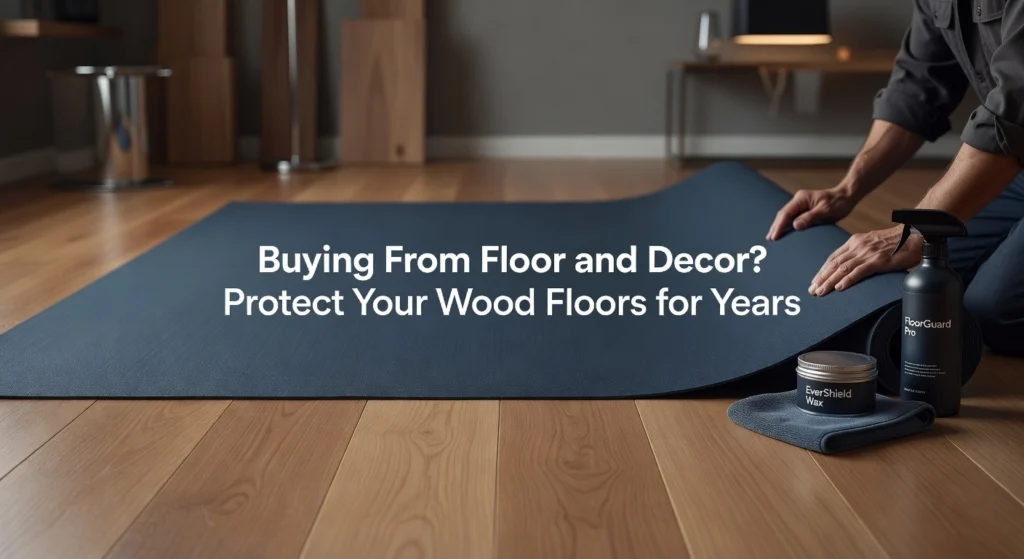

You just invested in beautiful hardwood flooring from Floor and Decor, and now you want to make sure it stays stunning for decades to come. That is a smart instinct. Wood floors are one of the most valuable upgrades you can make to a home, but without proper care, they can scratch, warp, and fade far sooner than they should.
The good news is that protecting your investment does not require expensive services or complicated routines. With the right knowledge and a few simple habits, even a first-time homeowner can keep their floors looking brand new year after year.
In this guide, we have put together a practical list of proven strategies to help you protect your wood floors from everyday wear and tear. Whether you are just unboxing your new planks or have already completed your installation, these tips will help you get the most out of your purchase. From choosing the right finish to setting up protective routines, you will walk away knowing exactly how to preserve your floors for the long haul.
Why Wood Floor Care Starts the Day They Are Installed
Most homeowners pour tremendous energy into selecting the perfect floor, comparing samples, calculating square footage, and coordinating installation. Then the installers leave, and the floor largely gets forgotten until something goes visibly wrong. According to industry surveys, over 60% of homeowners delay wood floor maintenance until damage is already apparent, at which point repairs become far more costly and complicated than simple prevention would have been.
Hard-surface flooring now commands a significant and growing share of the U.S. flooring market, with millions of new installations completed every year. Retailers like Floor and Decor excel at putting beautiful products into homes, offering roughly 4,400 in-stock products per store and dedicated wood care guides online. However, at the physical point of sale, the emphasis naturally falls on product selection, pricing, and installation logistics rather than the detailed, ongoing DIY maintenance routines that actually determine how long a floor looks its best.
The first 30 days after installation represent the single highest-risk window for permanent damage. Newly laid finishes are still curing and remain vulnerable to scratches from foot traffic, moisture intrusion from spills, and finish disruption from improper cleaning. Flooring professionals consistently stress that this initial period demands dry-only cleaning methods, controlled indoor humidity between 35% and 55%, and protective pads under any furniture.
Establishing a straightforward care routine from installation day forward changes the entire trajectory of a floor’s lifespan. Simple daily habits, including dry dust mopping, prompt spill response, and periodic protective maintenance, can extend wood and wood-look floors by decades. As Wood Floor Business research confirms, the homeowners who prioritize early maintenance consistently report better long-term results and lower overall flooring costs.
How to Identify Your Floor Wood Species and Finish Type
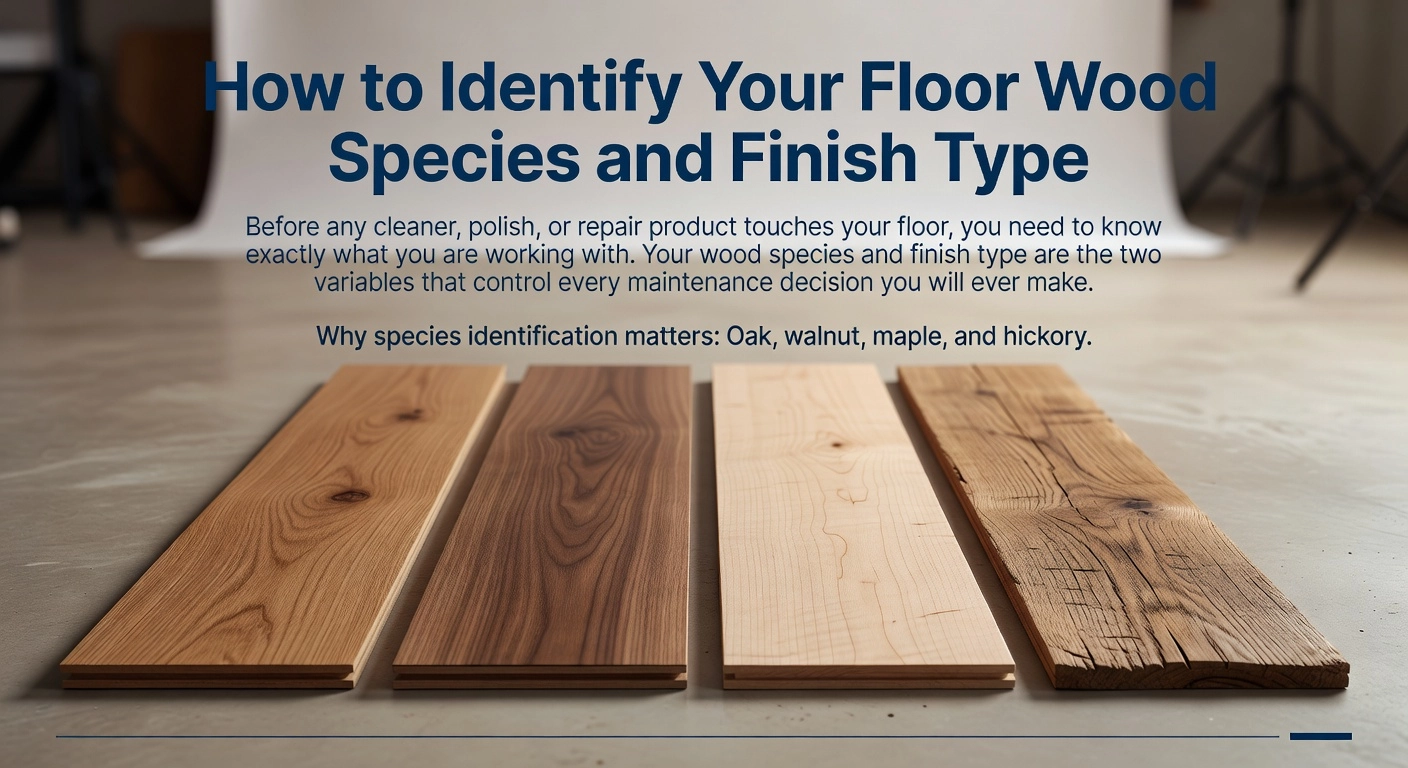
Before any cleaner, polish, or repair product touches your floor, you need to know exactly what you are working with. Your wood species and finish type are the two variables that control every maintenance decision you will ever make.
Why species identification matters: Oak, walnut, maple, and hickory each behave differently under stress, moisture, and foot traffic. Hickory ranks among the hardest domestic species and resists denting, while maple’s tight grain makes it sensitive to moisture fluctuations. Walnut’s rich, dark tones show scratches differently than pale maple, meaning touch-up stain choices vary dramatically. Using the wrong repair product on the wrong species creates mismatched color patches that are difficult to reverse.
Finish type is equally critical. Floor and Decor carries approximately 4,400 products per store, and finish types span polyurethane, oil-based, wax, and aluminum oxide-enhanced coatings. Each requires a different cleaning approach. Applying a wax product to a polyurethane-finished floor, for example, creates a cloudy buildup that traps dirt and dulls the surface.
Simple identification tests you can do at home:
- Touch test: Run your fingertips across the surface. If you feel the wood grain texture directly, you likely have a penetrating oil or wax finish. A smooth, glassy feel points to polyurethane.
- Water drop test: Place a small drop on a hidden area. Beading indicates a surface film finish. Absorption or a slight darkening suggests oil or wax.
- Sheen test: High gloss typically signals polyurethane; matte or subtle sheen suggests oil, wax, or a newer low-sheen coating.
According to hardwoodinfo.com’s guide to identifying floor finishes, these tactile and visual checks are reliable starting points that require no specialized tools.
Protect your documentation from day one. Save your purchase receipt, note the product SKU, and store any leftover planks in a dry location. With roughly 4,400 SKUs per store, finding an exact match months later without that reference becomes genuinely difficult. A photograph of the product label stored in your phone takes seconds and saves hours later.
Misidentifying your finish is one of the most frequent causes of DIY floor damage. Steam mops, ammonia-based cleaners, and wax products applied to incompatible finishes cause etching, residue buildup, and premature finish breakdown. The Floor and Decor Wood Buying Guide offers species-specific care details that pair directly with this identification process. When in doubt, always test any new product on a concealed area first.
Protecting New Wood Floors From Scratches and Dents
Once your new wood floors are down, protecting them becomes your most important ongoing task. The good news is that the most effective protection steps cost very little and take only minutes to implement.
1. Apply felt pads to every furniture leg immediately. This is the single highest-impact, lowest-cost step any homeowner can take. A pack of adhesive felt pads costs just a few dollars and prevents the kind of cumulative scratching that gradually dulls a floor’s finish over months and years. Hard plastic or metal feet concentrate weight and drag across the wood surface with every shift in position. Felt absorbs that friction and lets furniture glide cleanly. Check and replace pads every few months, especially on dining chairs, which move constantly. Worn or dirty felt can actually become abrasive itself, so fresh pads matter. According to flooring protection experts at Carolina Pro Flooring, this single habit prevents more cumulative damage than almost any other routine measure.
2. Place area rugs in every high-traffic zone. Entryways, hallways, and kitchen transitions take far more abuse than the rest of your floor. Rugs create a physical barrier that traps grit, absorbs foot traffic impact, and dramatically reduces surface wear in those corridors. Use a quality felt or rubber-hybrid rug pad underneath to prevent moisture trapping and keep the rug from sliding.
3. Address pet nails and tracked-in grit consistently. Pet claws and the fine grit carried in on shoes and paws act like sandpaper on your finish with every step. Trim pet nails regularly and use layered doormats at every entrance to capture debris before it reaches the wood. Sweep or vacuum with a hard-floor attachment daily in active areas.
4. Understand what your finish can and cannot hide. Matte and satin finishes dominate 2026 flooring trends because they naturally scatter light and make minor scuffs far less visible than high-gloss surfaces. That forgiveness is real, but it is not a substitute for protection. The finish layer still wears down without consistent care.
5. Never drag furniture, not even once. A single drag across a new floor can cut a deep gouge that requires spot refinishing or full sanding to correct, a far more involved repair than years of routine cleaning combined. Always lift furniture fully, or use furniture sliders designed for hard floors to move heavier pieces safely.
The Right Way to Clean Hardwood Floors Without Damaging the Finish
Cleaning hardwood floors correctly is less about how hard you scrub and more about what tools and products you choose. Getting this wrong is one of the fastest ways to destroy a finish that might otherwise last decades.
1. Never use steam mops or excessive water.
Steam mops rank among the most destructive tools you can use on hardwood. The National Wood Flooring Association explicitly warns against both wet mops and steam mops, stating they damage both the finish and the wood over time. Heat and vapor penetrate even sealed floors at the joints, causing cupping, warping, and finish delamination. A floor that looks fine today can develop permanent damage after just a few months of steam mopping. Stick to dry or barely damp methods only.
2. Choose pH-neutral, hardwood-specific cleaners.
Not all floor cleaners are safe for wood. Products containing ammonia, bleach, oil soaps, or strong alkaline agents will degrade your finish over repeated use. A pH-neutral cleaner formulated specifically for hardwood preserves the protective layer without leaving residue or causing premature dullness. Always verify that your chosen product is compatible with your specific finish type before applying it broadly.
3. Dry microfiber mopping comes first, and most often.
In high-traffic homes, dry microfiber mopping should happen several times per week. Fine grit and debris act like sandpaper underfoot, and removing them regularly is the single most effective way to prevent surface scratches. Consumer Reports also confirms that residual moisture is a persistent risk, reinforcing why dry methods should always come before any wet cleaning step.
4. Skip the vinegar-and-water solution.
Vinegar is a popular DIY cleaner, but its acidity gradually strips polyurethane and oil finishes with each application. The damage is cumulative and often invisible until the finish looks dull and worn. Despite widespread recommendations online, professional flooring organizations and manufacturers consistently advise against it for finished hardwood floors.
5. Build a simple weekly routine.
A sustainable cleaning schedule looks like this: dry sweep or microfiber mop several times per week, and follow with a lightly dampened microfiber mop every two weeks using an approved hardwood cleaner. Wring the mop until it is barely moist, never wet. This routine prevents the grime buildup that causes dullness and eliminates the need for aggressive deep-cleaning interventions down the road.
Fixing Minor Scratches and Scuffs Using Household Products
Most surface-level scratches in hardwood floors are far more manageable than they appear. Wood markers, wax sticks, and scratch filler products available at any hardware store can eliminate the majority of everyday scuffs without a professional ever setting foot in your home. DIY scratch repair materials typically cost between $20 and $50, compared to professional repair rates of $3 to $8 per square foot. For isolated damage, targeted fixes make far more financial sense than full refinishing or replacement.
Color matching is the single most important factor in a successful repair. A filler or marker that is even slightly off-tone will draw more attention to the damaged area than the scratch itself. This is precisely why saving leftover planks from your original installation is so valuable. You can hold the actual plank next to store products for a direct comparison, or test markers and stains on the scrap piece before touching your floor. Prefinished floors with factory-applied aluminum oxide coatings can be especially difficult to blend, so always test in an inconspicuous spot first.
Not every scratch actually damages the wood beneath. Light scratches on polyurethane-finished floors frequently only mar the protective topcoat, leaving the wood fiber completely intact. In these cases, filling is unnecessary. Instead, buff the area gently using #0000-grade steel wool along the grain, or apply a finish restorer product to rebuild sheen. A simple mixture of equal parts apple cider vinegar and olive oil, dabbed on and buffed after a few minutes, can minimize the appearance of shallow finish scratches effectively. According to Family Handyman and The Spruce, this distinction between finish damage and wood damage is the critical first diagnostic step every homeowner should make before reaching for any product.
For deeper scratches that reach bare wood, wood filler or putty applied with a plastic putty knife in the direction of the grain produces results that are nearly invisible after drying, sanding flush with fine-grit paper, and tinting with a matching floor marker or stain. Avoid overfilling; work in small, controlled amounts and allow adequate drying time before sanding.
WoodStuffHQ provides detailed scratch repair guides specifically designed for non-professionals, walking beginners through each repair type using basic tools most homeowners already own.
What to Do When Water Hits Your Wood Floor
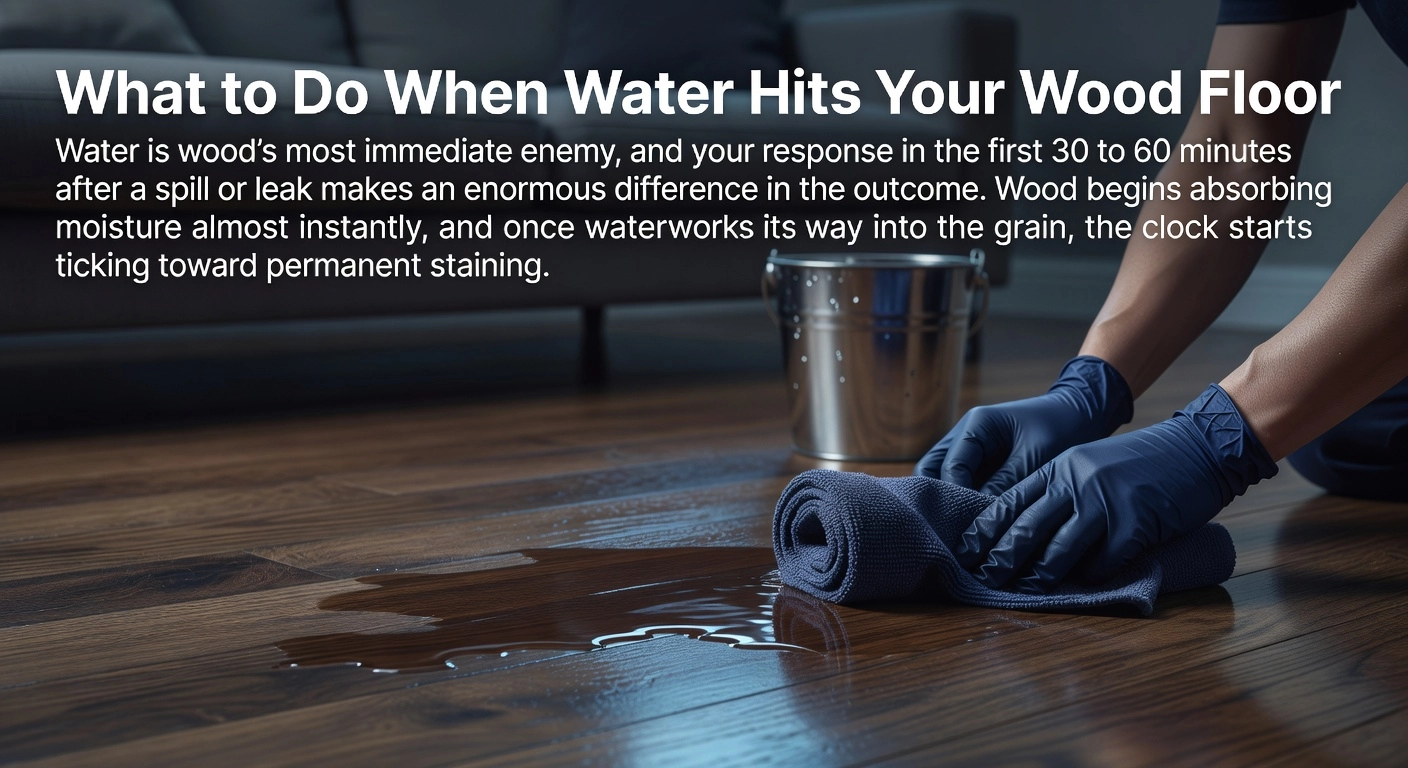
Water is wood’s most immediate enemy, and your response in the first 30 to 60 minutes after a spill or leak makes an enormous difference in the outcome. Wood begins absorbing moisture almost instantly, and once water works its way into the grain, the clock starts ticking toward permanent staining, cupping, and warping. Remove standing water immediately using dry towels, a mop, or a wet/dry vacuum. Blot rather than rub, and pay close attention to the edges of planks where water disappears fastest.
One reason speed matters so much is that plank seams are essentially open channels. Even a modest puddle left unattended for a few minutes can migrate through seam gaps and reach the underlayment or subfloor beneath. This risk is especially pronounced in floating-floor installations, where planks sit on underlayment rather than being glued or nailed down, allowing water to travel freely underneath. Once moisture reaches the subfloor, the drying process becomes far more complex and often requires professional intervention.
If you notice boards developing a wavy, concave appearance where the edges sit higher than the center, that is cupping, and it signals moisture imbalance between the top and bottom of the planks. The encouraging news is that cupping caught early can sometimes reverse itself. Address the moisture source, run a dehumidifier, and increase airflow with fans positioned across the floor. Avoid the temptation to sand cupped boards immediately; sanding before moisture levels stabilize can create the opposite problem, known as crowning, which is even harder to fix.
Long after a spill is cleaned up, your home’s ambient humidity continues acting on your floors every single day. Keeping indoor relative humidity between 35% and 55% year-round prevents the expansion and contraction cycles that lead to gaps, cracks, and cupping even without any visible water event. A basic hygrometer costs very little and tells you exactly where your home stands.
For water stains that do appear, prompt treatment dramatically improves your chances of full removal. Light white stains often respond to gentle heat from a clothes iron held over a dry cloth for a few seconds. Darker stains that have penetrated deeper into the wood require more targeted approaches. WoodStuffHQ’s water stain removal guides walk through step-by-step methods matched to specific stain types and finish conditions, which is exactly the kind of targeted guidance that prevents well-meaning homeowners from accidentally making damage worse.
How to Match 2026 Warm Wood Trends If You Are Refinishing Existing Floors
If your floors are structurally sound but visually dated, you have more options than you might think. Refinishing existing floors to align with current trends is one of the most cost-effective upgrades a homeowner can make, and 2026 gives you a clear, unified direction to work toward.
1. Understand Where Color Trends Are Heading
According to Floor and Decor’s own 2026 Design Trends Forecast, the dominant shift is away from the cool, blue-toned grays that defined the previous decade and toward warm wood tones including walnut, whitewash, espresso, and charcoal. These tones create a grounded, organic feeling that pairs naturally with brass fixtures, stone surfaces, and natural textiles. If your current floor leans gray or ashy, restaining toward a warmer brown or honey base can modernize an entire room without touching a single wall.
2. You Do Not Need New Flooring to Feel Current
Patterned layouts like herringbone and chevron are among the strongest 2026 hardwood trends, but installing them from scratch is expensive. If your existing floor is strip-laid, changing the stain color alone brings it meaningfully closer to current aesthetics. A walnut or espresso stain on straight-laid boards creates the warm tone that defines 2026 interiors without the disruption or cost of full pattern installation.
3. Choose Matte or Satin Finish Over High Gloss
Matte and satin topcoats are the 2026 standard, and they carry a practical advantage for older floors. These finishes hide minor unevenness, light scratches, and previous wear far better than high gloss, which amplifies every imperfection. Water-based polyurethane in a matte or satin sheen is your best finishing choice when refinishing boards with history.
4. Match Your Stain to the Room, Not Just the Floor
Coordinating a new stain with existing trim, cabinetry, and furniture is the most common mistake beginners make when refinishing. WoodStuffHQ’s wood finish selection guides walk through practical techniques including testing stain samples on scrap pieces of the same species, adjusting for undertones, and making decisions based on how finish color shifts as it cures.
5. Start With a Screen-and-Recoat If the Structure Is Sound
Screen-and-recoat refinishing involves lightly abrading the existing finish with a buffer and fine-grit screen, then applying fresh topcoat layers. It skips full sanding, dramatically reduces dust and project time, and costs a fraction of complete refinishing. Professional rates often start around two dollars per square foot compared to four or more for full jobs, and with a rented buffer, proper cleaning, and careful edge work, this method is well within reach for a prepared beginner.
When to Restore Your Wood Floors Instead of Replacing Them
Before committing to a full replacement, it helps to understand exactly what that decision actually costs. Purchasing new flooring from any major retailer is only the first line on the invoice. You still need to budget for demolition labor, subfloor inspection and repair, disposal fees for the old material, and professional installation. In total, full hardwood replacement typically runs between $10 and $25 per square foot when all those costs are combined. Refinishing the same floor generally costs $3 to $8 per square foot, often less than half the replacement price. Beyond money, replacement also means several days of furniture removal, dust, noise, and household disruption that most homeowners significantly underestimate at the planning stage.
The case for restoration becomes even stronger when you consider how many useful cycles a solid hardwood floor has left. Most solid hardwood, which is typically three-quarters of an inch thick, can be sanded and refinished three to five times over its lifetime. That means a floor installed today could be refreshed multiple times across several decades before replacement becomes necessary. Each refinishing removes only a fraction of wood per pass, preserving the structural value of what is already underfoot.
Engineered hardwood requires a more careful evaluation. Its thinner veneer layer limits how many times sanding is possible, and some engineered floors with wear layers under 2mm cannot be sanded at all, only recoated. This is precisely why identifying your floor type before starting any restoration work matters so much, as covered earlier in this guide.
The clearest signals that restoration is the right path include solid structural integrity with no rot, no severe warping, and no soft spots underfoot. Surface damage limited to the finish layer, such as scratches, dullness, or worn-through topcoat, is almost always restorable.
Restoration also fits naturally into the 2026 shift toward eco-conscious renovation. Keeping your existing floors out of a landfill, avoiding new lumber demand, and using low-VOC finishes aligns directly with the nature-inspired, sustainability-forward direction reflected in current design thinking, including biophilic themes that favor authentic materials over synthetic replacements.
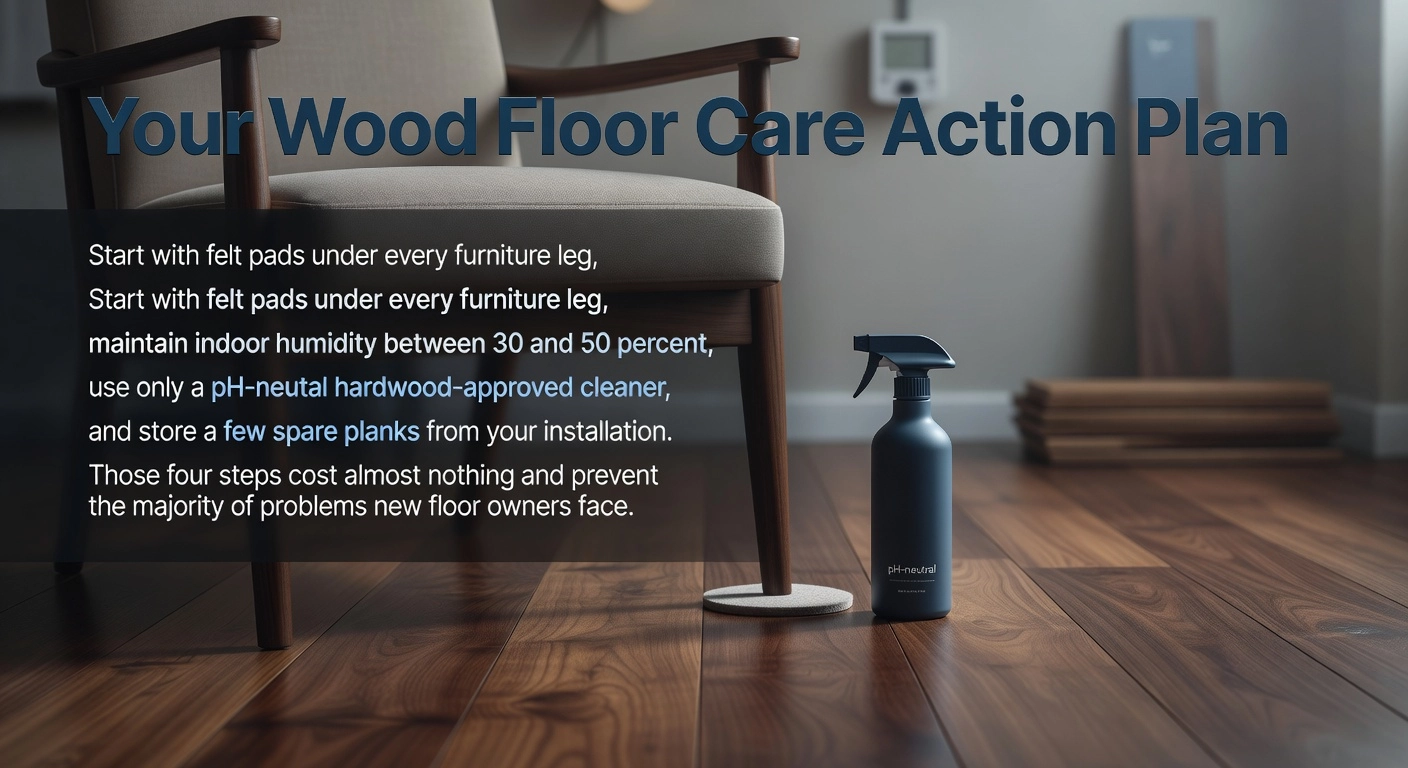
Your Wood Floor Care Action Plan
Start with felt pads under every furniture leg, maintain indoor humidity between 30 and 50 percent, use only a pH-neutral hardwood-approved cleaner, and store a few spare planks from your installation. Those four steps cost almost nothing and prevent the majority of problems new floor owners face.
The good news is that most issues you will actually encounter, including surface scratches, minor water stains, and a dull finish, are completely solvable without calling a professional. WoodStuffHQ’s guides on scratch repair, water stain removal, and wood restoration walk you through each fix with clear steps and common household products.
Think about the math for a moment. A bottle of proper hardwood cleaner and a pack of felt pads typically costs under $20 combined. A single plank replacement, factoring in materials, labor, and finish matching, can easily run several times that amount. Prevention is always the smarter investment.
Protecting your wood floors is not complicated. It simply requires knowing the right techniques before problems develop rather than scrambling after they do. Start the habits today, use the right products, and your floors will stay beautiful for decades.
Conclusion
Your hardwood floors from Floor and Decor represent a real investment in your home, and protecting that investment comes down to a few consistent habits. Remember the essentials: choose the right finish for your lifestyle, establish a regular cleaning routine, use protective pads and rugs in high-traffic areas, and control moisture levels throughout your space.
The best part is that none of this requires professional help or a big budget. Small, intentional steps taken early will save you from costly repairs and premature replacements down the road.
Start today by walking through your home and identifying your floors’ biggest vulnerabilities. Pick one or two tips from this guide and put them into action this week. Your future self will thank you every time you walk across those beautiful, well-preserved floors for years to come.