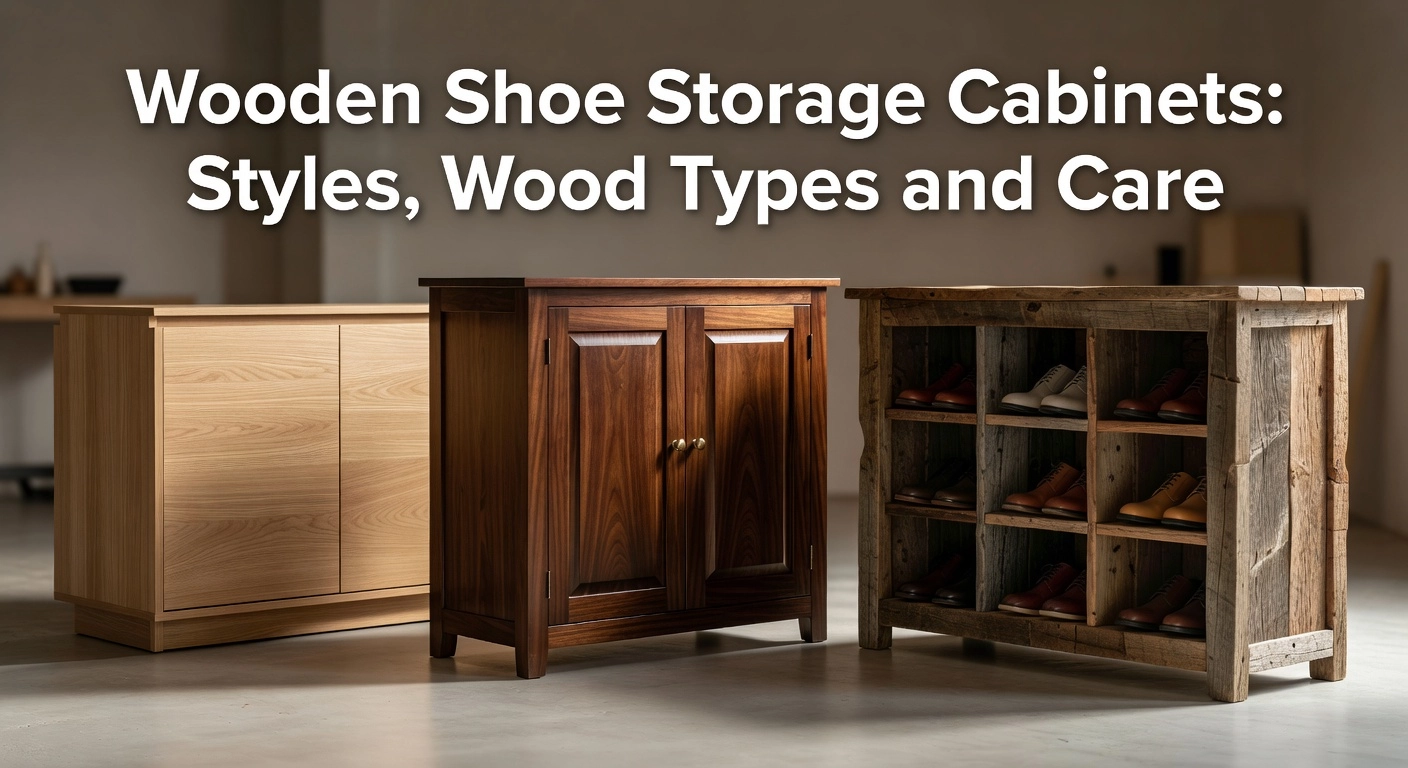
Have you ever tripped over a pile of shoes by your front door and thought, “There has to be a better way”? You’re not alone. Keeping footwear organized is a struggle in almost every home, and that’s exactly where a wooden shoe storage cabinet can completely change the game.
Unlike plastic bins or wire racks, a wooden shoe storage cabinet brings together function and style in a way that actually looks good in your space. Whether you’re furnishing your first apartment or simply trying to bring some order to a cluttered entryway, wooden cabinets are a fantastic choice for beginners who want something durable and attractive.
But with so many options out there, it can feel a little overwhelming to know where to start. That’s why we put together this easy guide just for you. We’ll walk you through the most popular styles, break down the common wood types you’ll come across, and share some simple care tips to keep your cabinet looking great for years. By the end, you’ll feel confident choosing the perfect piece for your home.
What to Look for in a Wooden Shoe Storage Cabinet
Picking the right wooden shoe storage cabinet comes down to four things: size, style, material quality, and flexibility. Get these right from the start and you’ll end up with something that actually works for your home instead of a piece that frustrates you every morning.
How Much Storage Do You Actually Need?
A good rule of thumb is to plan for about 3 to 5 everyday pairs per person, not your entire shoe collection. For a single person, a 12-pair cabinet is usually plenty. Couples tend to do well with a 24-pair option, and families of four or more will want to look at 30-pair units or larger. The key is thinking about your daily rotation shoes, the ones that actually live by the front door, while keeping seasonal boots or special-occasion heels stored elsewhere.
Depth matters just as much as capacity, especially in tight spaces. Cabinets in the 9 to 12 inch depth range are ideal for narrow hallways and apartments because they sit flush against the wall without eating into your walking space. Just know that very slim profiles can struggle with men’s larger sizes or chunky sneakers. If your entryway can handle it, a 12 to 16 inch depth gives you noticeably better fit for everyday footwear. Always leave at least 30 inches of clearance for comfortable foot traffic.
Door and Drawer Styles: Which One Fits Your Life?
Tilt-out flip drawers are a great pick for small spaces and minimalist homes. The compartments tip forward so you grab your shoes without swinging a door into the hallway, keeping things tidy and clean-looking. They work beautifully for flats and regular sneakers but can be awkward with bulkier boots.
Solid hinged doors give you full concealment, which is perfect for formal entryways or anyone who wants odors and dust completely out of sight. The trade-off is that they need swing clearance and can trap moisture if there’s no ventilation built in.
Open shelves win on speed and airflow. Kids especially do better with open storage because they can actually see their shoes, making it easier to put them away. The downside is dust buildup and a busier visual look. For more detail on comparing these styles, this shoe cabinet buying guide breaks down the pros and cons clearly.
Real Wood vs. Laminate: Why It Actually Matters
Entryways are genuinely tough environments. Wet shoes, muddy boots, kids dropping backpacks, and daily foot traffic all add up fast. Solid hardwood like oak, pine, or acacia handles that abuse for decades, while MDF or particleboard with a wood-look laminate finish often starts warping, swelling, or peeling within just a few years of moisture exposure.
The biggest advantage of real wood is refinishability. When a solid wood cabinet gets scratched or looks worn, you can sand it back and refinish it. Laminate gives you no such option; once the surface is damaged, replacement is your only real choice. This is especially relevant for DIY homeowners who want to match a cabinet’s finish to an evolving home aesthetic over time. According to this entryway organization guide, wood holds strong appeal precisely because it ages gracefully and stays repairable.
Multi-Function Options Worth Considering
If you want your cabinet to do more than just hold shoes, there are some genuinely useful hybrid options. A bench-style cabinet adds a seating surface at about 17 to 19 inches high, which is incredibly handy for putting shoes on, especially for kids or older family members. Hall tree hybrids bundle coat hooks, sometimes a mirror, and shoe storage into one footprint, which is a smart solution if your entryway is a catch-all spot.
For growing households, modular stackable units are worth a close look. You can start with a single unit and add sections as your family or shoe collection expands, without replacing the whole piece. Just make sure any tall modular unit comes with anti-tip hardware for wall anchoring, especially if you have young kids around.
Which Wood Type Is Right for Your Shoe Cabinet
Not all wood is created equal, and when it comes to building or buying a shoe storage cabinet, the material you choose makes a real difference. Your entryway deals with wet boots, humidity swings, and daily foot traffic, so picking the wrong wood can mean warped shelves and a cabinet that looks rough after just one winter. Here is a breakdown of the five most common options so you can make a confident choice.
1. Plywood: The Smart DIY Pick
Plywood is hands down the most popular choice for anyone building their own shoe storage cabinet, and for good reason. It is made from thin wood veneers layered with alternating grain directions, which gives it excellent resistance to warping even when humidity levels change, something that happens constantly in entryways. It is affordable, widely available at any hardware store, and it takes paint or stain beautifully, especially birch or maple plywood varieties. For shelves specifically, 3/4-inch birch plywood is a go-to recommendation because it handles the weight of shoes across typical shelf spans without sagging. If you are planning a DIY build, start here. You will get solid performance without breaking your budget, and the full breakdown of how to choose plywood for furniture is worth bookmarking before you buy.
2. Solid Oak and Hardwood: The Long-Term Investment
If you want a shoe cabinet that looks premium and lasts for decades, solid oak or another hardwood like maple or walnut is worth the extra cost. These woods are dense, highly durable, and can be sanded and refinished multiple times as they pick up scuffs and wear over the years. That refinishability is a huge deal for something sitting in a high-traffic entryway. White oak is especially impressive because it adds natural moisture resistance on top of its hardness. Yes, solid hardwood costs more upfront, but you are essentially buying a piece of furniture you will never have to replace. For a visible, statement-worthy shoe cabinet, this is your best long-term option.
3. MDF: Good Surface, Bad Entryway Match
MDF produces a beautifully smooth, consistent surface that holds paint exceptionally well, which is why you see it used in painted kitchen cabinetry so often. The problem is that entryways are genuinely tough environments for MDF. Wet shoes, rain tracking in, and seasonal humidity changes cause MDF to swell, and once it swells or gets damaged, you cannot sand it back like real wood. It is also not refinishable in any meaningful way. MDF can work fine for interior cabinets in dry, climate-controlled spaces, but for a shoe storage cabinet near your front door, it carries real risk. Keep this one as a last resort if budget is extremely tight and moisture is not a concern.
4. Bamboo: The Eco-Friendly Standout
Bamboo has quietly become one of the most exciting material options for shoe cabinets in recent years. Technically a grass rather than a hardwood, bamboo is naturally moisture-resistant, lightweight, and sustainably harvested, which aligns perfectly with the growing consumer interest in eco-friendly home products. It processes into planks and sheets similar to traditional wood, and its hardness is often comparable to or better than oak. It also carries a clean, modern aesthetic that works well with minimalist or Scandinavian-inspired entryway designs. If sustainability matters to you and you want something that handles entryway humidity without complaint, bamboo is a genuinely strong contender.
5. Pine: Beginner-Friendly but Finish It Well
Pine is soft, lightweight, and very easy to cut and sand, making it a popular starting point for beginner woodworkers. It is also one of the cheapest solid wood options available. The downside is that softness works against it in a shoe cabinet. Boots scuff it, humidity affects it, and it dents more easily than hardwoods. That said, pine is totally workable if you apply a solid protective finish such as a quality sealer, exterior-grade varnish, or a few coats of durable paint. Think of the finish as non-negotiable with pine rather than optional.
Quick Comparison Summary
| Wood Type | Cost | Durability | Moisture Resistance | DIY-Friendly | Refinishable |
|---|---|---|---|---|---|
| Plywood | Moderate | High | Good with finish | Excellent | Fair |
| Oak/Hardwood | High | Highest | Good to very good | Moderate | Excellent |
| MDF | Low | Moderate | Poor | Good | No |
| Bamboo | Moderate-High | High | Naturally good | Good | Good |
| Pine | Low | Moderate | Fair | Excellent | Good |
For most beginners building their first shoe storage cabinet, plywood offers the best balance of price, stability, and workability. If you are buying rather than building and want something that ages beautifully, solid oak is worth stretching your budget for. Whatever material you land on, the finish you apply will always be a major factor in how well your cabinet holds up over time.
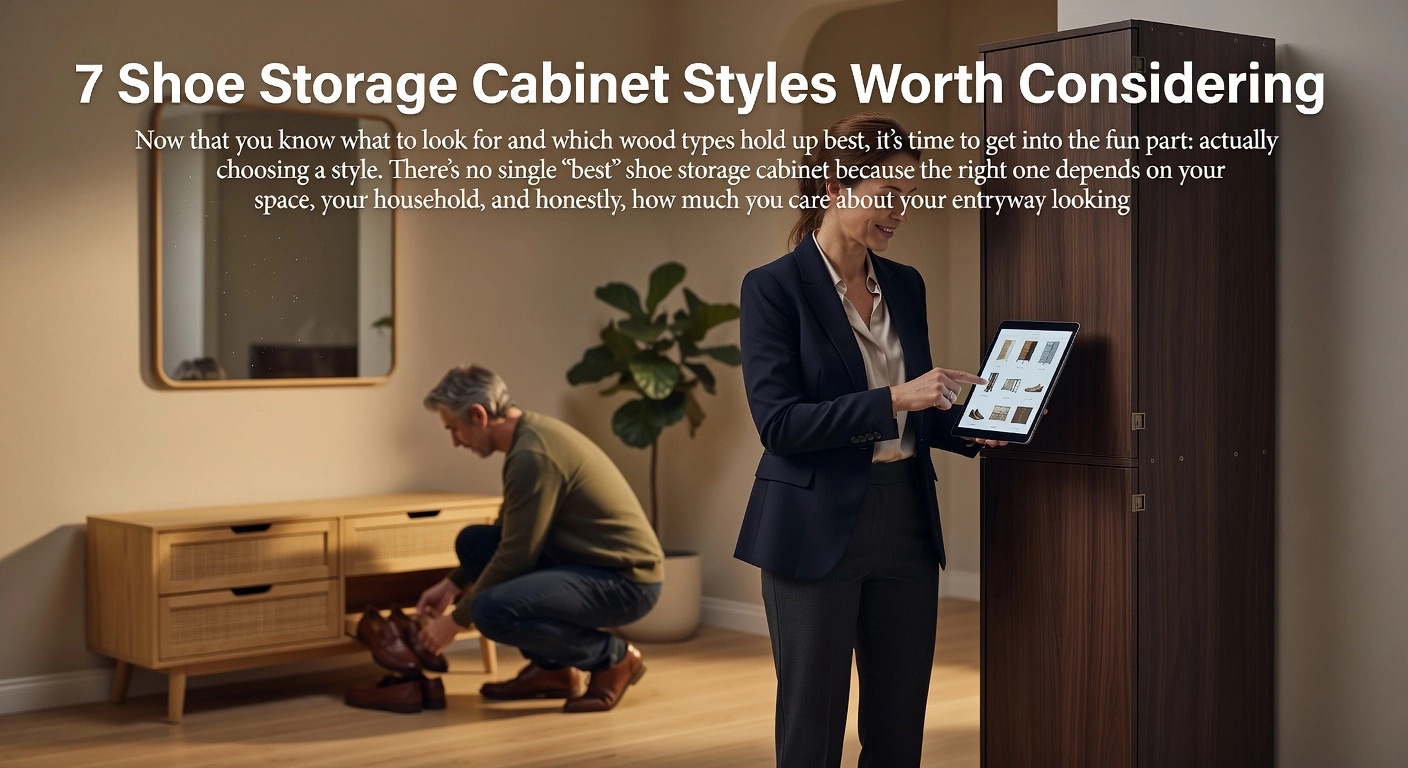
7 Shoe Storage Cabinet Styles Worth Considering
Now that you know what to look for and which wood types hold up best, it’s time to get into the fun part: actually choosing a style. There’s no single “best” shoe storage cabinet because the right one depends on your space, your household, and honestly, how much you care about your entryway looking pulled together. Here are seven styles worth putting on your radar.
1. Slim Tilt-Out Flip-Drawer Cabinet
If you live in an apartment or have a narrow hallway that barely fits two people side by side, this style was basically designed for you. Tilt-out cabinets typically sit under 12 inches deep, sometimes as shallow as 6 or 7 inches, so they hug the wall without eating into your walkway. The flip compartments swing open at an angle, you drop your shoes in, and the front closes back up flat. From the outside, it looks like a sleek little console cabinet. These units usually hold anywhere from 8 to 18 pairs depending on the height and number of compartments you choose. The IKEA STÄLL line is the most well-known version of this style and has inspired countless DIY copies and woodworking builds. If you want something a step above flat-pack furniture, you can find plans online to build your own version in oak or pine with a custom finish.
2. Bench with Integrated Shoe Storage
For families with kids, mudrooms, or anyone who has ever sat on the floor trying to wrestle on a boot, a storage bench is a game-changer. You get a place to sit and a place to stash shoes, all in one piece of furniture. Most designs include either open cubbies below the seat or a hinged top that lifts to reveal hidden storage. A bench around 36 to 48 inches wide typically handles 6 to 14 pairs comfortably, which is more than enough for a household of three or four. Some versions also include hooks or a backboard above for coats, bags, and keys, turning the whole thing into a proper mudroom station. This style works best when you measure your entry carefully before buying because a bench that’s too wide can block a door swing or crowd a tight hallway.
3. Stackable Modular Units
Here’s the thing about shoe collections: they grow. A modular system lets you start small and add units as your needs change, without having to buy an entirely new piece of furniture. These are typically open shelves or small cabinet blocks that stack vertically or connect side by side. Bamboo and solid wood options are popular because they’re lightweight enough to rearrange but sturdy enough to hold up over time. The real appeal here is flexibility. You can configure them to fit a short hallway one year and expand them into a larger closet setup the next. If you’re renting or you just aren’t sure how much storage you’ll need long-term, modular units are a low-commitment starting point that still look intentional and organized.
4. Fluted-Front Cabinet
This one is for the person who wants their entryway to actually make a design statement. Fluted fronts feature vertical grooves carved or routed into the cabinet doors, adding texture and visual depth that plain flat panels simply don’t have. According to Good Housekeeping’s roundup of furniture trends for 2026, fluted details are one of the standout design directions for furniture this year, appearing across cabinets, millwork, and storage pieces. On Pinterest and Instagram, searches for fluted shoe cabinets have surged, with dedicated boards showcasing everything from natural oak versions to painted black statement pieces. Most fluted-front shoe cabinets still use flip drawers or adjustable shelves inside, so you’re not giving up function for looks. Capacity typically lands around 16 or more pairs. This style works especially well if your entryway is visible from your main living area and you want the storage to feel like furniture rather than an afterthought.
5. Wall-Mounted Floating Cabinet
When your entryway floor space is genuinely limited, the only direction left is up. A wall-mounted shoe cabinet attaches directly to your wall studs, leaving the floor completely clear underneath. That open floor space makes the whole entry feel larger and easier to clean. Most floating shoe cabinets are slim and hold a modest number of pairs, roughly 6 to 12, which is fine for one or two people. Some versions include a mirror on the front, which doubles the visual purpose. The main requirement is making sure you mount it into studs or use appropriate wall anchors because a cabinet full of shoes is heavier than it looks. This is one of the smartest upgrades you can make to a tight apartment entryway.
6. DIY Tilt-Out Build Using Plywood or Oak
If you want something completely custom and you’re willing to put in a weekend of work, building your own tilt-out shoe cabinet is more beginner-friendly than it sounds. Free plans from woodworking sites like Ana White walk you through shopping lists, cut lists, and step-by-step assembly using basic 1x lumber and simple hinge hardware. You can size the compartments to fit your specific shoes, choose your wood species based on the other pieces in the rest of your home, and finish it exactly the way you want. Plywood keeps costs down; oak or poplar bumps up the look significantly. One of the biggest advantages is that you can add a solid wood top that doubles as a small landing zone for keys and mail. For beginners with access to a circular saw and a drill, this is one of the most satisfying weekend builds you can take on.
7. Reclaimed or Upcycled Shoe Cabinet
The most sustainable option on this list skips new materials entirely. Current shoe storage trends for 2025 and 2026 show a strong consumer shift toward reclaimed wood, FSC-certified lumber, and pieces that can be refinished rather than replaced. In practice, this might mean picking up an old cabinet at a thrift store and refinishing it with a fresh stain or paint, repurposing barn wood or pallet boards into a simple shelf unit, or transforming a dated piece of furniture with new hardware and a couple coats of finish. The results are one-of-a-kind, and the cost is usually a fraction of buying new. This style rewards basic refinishing skills, and if you’re already comfortable with wood care and restoration, it’s a natural fit. The only requirement is a good eye for what’s structurally sound versus what’s too far gone to save.
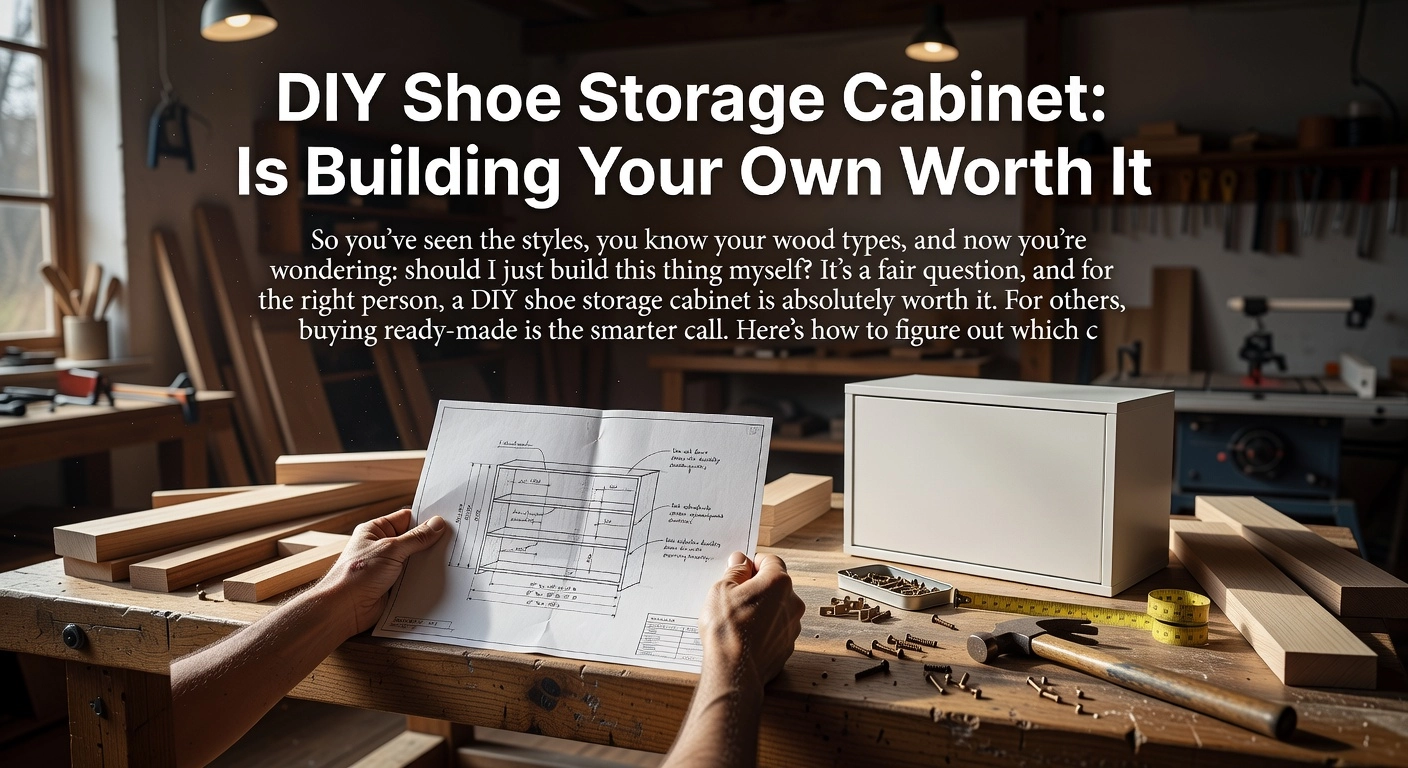
DIY Shoe Storage Cabinet: Is Building Your Own Worth It
So you’ve seen the styles, you know your wood types, and now you’re wondering: should I just build this thing myself? It’s a fair question, and for the right person, a DIY shoe storage cabinet is absolutely worth it. For others, buying ready-made is the smarter call. Here’s how to figure out which camp you fall into.
When DIY Makes Sense (and When It Doesn’t)
Building your own cabinet pays off when you need custom dimensions, want to use specific materials, or are targeting a larger unit like a 20-pair tilt-out design. If your entryway is an awkward 34 inches wide or you want a cabinet that sits flush against an angled wall, no retail option will fit perfectly. DIY solves that. It also makes sense if you have basic tools already, like a drill, circular saw, and pocket-hole jig, and you’re comfortable spending a weekend on a project.
Buying ready-made wins when you need something fast, have no tools, or just need a simple solution for a standard space. If you’re storing six pairs of sneakers in a normal-sized entryway, a pre-built cabinet gets the job done without the learning curve.
Your Basic Materials List
A beginner-friendly tilt-out shoe cabinet doesn’t require exotic supplies. Here’s what a typical build needs:
- Plywood sheets (3/4-inch birch or sanded pine plywood works well for the main carcass and tilt-out bins)
- Hardwood or dimensional lumber for face frames (1×6 or 1×8 pine is budget-friendly and easy to work with)
- Wood glue (a reliable PVA glue like Titebond creates strong, lasting joints)
- Pocket screws (1-1/4 inch screws used with a pocket-hole jig keep everything tight and hidden)
- Protective topcoat finish (polyurethane, paint, or a water-based sealant protects the wood from the moisture and dirt your shoes bring in)
You’ll also want dowels or simple pivot hardware for the tilt mechanism, plus knobs or pulls for the bin fronts. Total material costs typically land between $150 and $300 for a 20-pair build, depending on wood grade and hardware choices.
Beginner-Friendly Plan Sources
The good news is that free tilt-out shoe cabinet plans are easy to find. Ana White offers a popular shoe dresser plan using dimensional lumber and basic cuts that many beginners have completed successfully. This Old House has a detailed tilt-out build using plywood with walnut-veneer accents, rated moderate skill and estimated at around 10 hours. Reality Daydream’s scrap wood version uses leftover sheet goods and downloadable templates, making it especially budget-friendly. YouTube also has a growing library of “bucket flip” style builds that show every step visually, which is ideal if you learn better by watching than reading.
The Custom Dimension and Sustainability Advantage
This is where DIY really shines compared to retail. When you build your own shoe storage cabinet, you decide the exact width, height, and depth. You can also choose sustainable wood species like FSC-certified birch or reclaimed pine that most retail options simply don’t offer, at least not without a significant price premium. With shoe cabinet demand growing steadily and more homeowners prioritizing eco-conscious materials, building with responsibly sourced wood is a meaningful choice that store-bought pieces rarely make accessible.
Time and Cost Reality Check for First-Timers
For a first-time builder tackling a 20-pair tilt-out cabinet, expect to spend 15 to 25 hours from first cut to finished piece. That includes measuring, cutting, assembly, sanding, and at least two finishing coats with drying time in between. Materials will run roughly $150 to $300 using standard plywood and pine, or up to $400 if you upgrade to hardwood faces or premium hardware.
It’s a real time commitment, but most first-time builders report that the result feels genuinely satisfying, especially when the cabinet fits their space perfectly and holds up better than anything they could have bought at a similar price point.
How to Maintain and Protect a Wooden Shoe Cabinet
You’ve already put thought into choosing the right wood and style for your shoe storage cabinet. Now comes the part that actually determines how long it stays looking great: keeping up with regular care. The good news is that maintaining a wooden shoe cabinet doesn’t require special skills or expensive products. A simple routine goes a long way.
1. Keep Up With a Simple Cleaning Routine
Dust your cabinet weekly with a dry microfiber cloth, wiping along the grain to pick up dirt and debris before it scratches the finish. For a deeper clean every week or two, mix a few drops of mild dish soap into warm water, dampen (not soak) a microfiber cloth, and wipe down all surfaces. The key step that most people skip: dry everything immediately and thoroughly with a separate dry cloth. Leaving moisture on wood, even for a few minutes, can lead to water stains, swelling, or finish damage over time. Every three to six months, you can do a more thorough clean using a diluted white vinegar solution to cut through any grime buildup, but always test a small hidden spot first and dry completely afterward. Avoid abrasive sponges, spray cleaners with harsh chemicals, or anything that leaves the wood wet. If you want a deeper look at how to clean wooden shoe racks safely, gentle and dry methods consistently come out on top.
2. Tackle Odors Before They Take Over
Shoes carry moisture and bacteria, and inside an enclosed wooden cabinet, those odors can build up fast. Cedar inserts or cedar shoe trees are one of the best natural fixes because cedar naturally absorbs moisture and has antimicrobial properties that neutralize odors rather than just covering them up. Baking soda sachets placed on shelves work in a similar way; you can also leave a small open dish of baking soda inside overnight, then vacuum it up in the morning. Activated charcoal bags are another reusable option that you can refresh by setting them in sunlight for a few hours. Beyond the inserts, proper airflow matters just as much. Avoid overcrowding the cabinet, leave the doors slightly open when shoes are freshly worn, and always let shoes dry out fully before storing them.
3. Protect the Wood Finish for the Long Haul
Entryways are tough on furniture. Between humidity, tracked-in moisture, and constant contact with shoes, the finish on a wooden shoe cabinet takes a real beating. Paste wax applied with a soft cloth and buffed to a light sheen creates a protective barrier that holds up well and only needs refreshing every six to twelve months. Penetrating oils like Danish oil soak into the wood rather than sitting on top, making them a great option for cabinets that see a lot of daily contact. Low-VOC topcoats are worth considering if you want something more durable, especially in high-traffic entryways where scuffs are frequent. Whatever you use, apply thin coats, let them cure fully, and reapply when the surface starts to look dull or feels rough to the touch.
4. Manage Humidity to Prevent Warping
Wood is constantly reacting to moisture in the air. Understanding why wood shrinks and warps comes down to one thing: uneven moisture absorption. Keeping your home’s relative humidity between 40 and 55 percent year-round is the single most effective prevention strategy. In winter, heated air dries out wood quickly, so consider a small humidifier near your entryway and rub a penetrating oil into the wood periodically to keep it conditioned. In humid seasons, a dehumidifier or good ventilation helps prevent swelling and mold. Sealing all edges of the cabinet, not just the visible faces, is especially important because unsealed edges absorb moisture faster and are the first place warping starts.
5. Spot-Treat Scratches and Scuffs as They Happen
Shoe contact means scratches are inevitable, but most minor ones are easy to fix before they become eyesores. Wood touch-up markers in a color matched to your cabinet’s finish can blend in light surface scratches quickly. For a slightly deeper fix, apply a small amount of Danish oil to the area, let it penetrate for a few minutes, and wipe away the excess. The oil nourishes the wood and helps blend the scratch into the surrounding finish. For more noticeable scuffs, a light sand with 220-grit sandpaper along the grain followed by a thin finish coat will tidy things up. Always work in a small area, test in an inconspicuous spot first, and feather the repair into the surrounding finish so it doesn’t stand out. Staying on top of small fixes prevents bigger restoration jobs down the road.
How to Restore a Worn or Thrifted Shoe Cabinet
Thrifting a shoe storage cabinet is a great way to save money and give a solid piece of furniture a second life. But before you grab a brush or open a can of stain, you need to know exactly what you’re working with.
Step 1: Diagnose the Damage First
Run your hands across every surface and inspect the piece in good lighting. You’re looking for four distinct problems, and each one has a different fix.
Surface finish failure shows up as dullness, cloudiness, white rings, or peeling topcoat. This is the best-case scenario because it’s almost always a surface-level fix. Deep scratches are different. Drag your fingernail across the mark; if it catches, the scratch has gone through the finish into the actual wood, and you’ll need more than a light scuff-sand to address it. Humidity warping is trickier to spot at first. Look for swollen panels, doors that stick or won’t close flush, soft or spongy spots, and any musty smell lingering around the joints. Finally, check for structural joint problems by gently rocking the cabinet side to side. Loose, wobbly joints need glue and clamping before any cosmetic work happens; otherwise, you’re just decorating a piece that’s going to fall apart.
Step 2: The Weekend Refresh Process
For most thrifted cabinets with surface-level wear, this three-step process gets impressive results without a full rebuild.
Start by cleaning thoroughly with a proper wood degreaser. Shoe cabinets collect grime, oils, and product buildup near the doors and shelves, and none of your new finish will stick properly over that layer. A dedicated cabinet degreaser works best here. Next, sand lightly with 220-grit paper, following the grain with gentle pressure. You’re not removing material; you’re just scuffing the surface to give your new finish something to grip. Wipe away all dust with a tack cloth. Finally, apply a gel stain or a fresh clear topcoat. Gel stains are beginner-friendly because they go on over existing sealed surfaces without requiring full stripping. Wipe on, wait a few minutes, wipe off the excess, then protect everything with two or three coats of polyurethane.
Gel Stain vs. Stripping: Making the Right Call
A gel stain refresh is enough when the original finish is structurally sound but just looks tired, faded, or slightly scratched. It’s a low-commitment, low-risk approach that works especially well on laminate-surface cabinets with intact veneer.
You’ll need to strip back to bare wood when deep scratches expose raw timber, when old finishes are peeling in large sections, or when you want a dramatically different color. Chemical stripper or aggressive sanding opens up the wood properly so new stain penetrates evenly. Always test on a hidden spot first, especially with thin veneers, since over-sanding can eat right through them.
The before-and-after difference on even a basic laminate cabinet can be striking. A piece with scuffed surfaces, faded edges, and dated hardware can come out of a weekend looking clean, modern, and intentional, especially after a hardware swap.
For deeper repairs along the way, WoodStuffHQ has beginner-friendly tutorials covering how to fix dry and thirsty-looking wood, remove water rings and surface damage, and choose the right wood finish product for your specific cabinet material. All of it is written for DIYers with no professional tools required, which makes it a natural companion to any restoration project like this one.
Choosing Sustainable Wood for a Shoe Cabinet That Lasts
If sustainability matters to you when choosing a shoe storage cabinet, knowing what to look for makes the whole process a lot easier.
FSC Certification: What It Means and How to Spot It
When you’re browsing product listings for a solid wood shoe cabinet, you might notice the letters “FSC” on the label or description. This stands for Forest Stewardship Council, an independent nonprofit that verifies wood comes from responsibly managed forests. Think no illegal logging, protected wildlife habitats, and fair treatment of workers. When a cabinet carries FSC certification, there’s a traceable paper trail from the forest all the way to your entryway. To spot it on a listing, look for the tree-and-checkmark logo and a license code formatted as FSC-C######. The gold standard is the “FSC 100%” label, meaning all the wood comes from certified forests. You can also verify any code through the FSC’s official furniture certification resources before you buy.
Solid Wood vs. Cheap Laminate: The Long Game
A solid wood cabinet you can sand and refinish is almost always the more sustainable choice over a laminate or particleboard unit you’ll need to replace every few years. Hardwood cabinets made from oak or similar species can realistically last several decades with basic upkeep, while budget laminate pieces often delaminate or warp within five to fifteen years and typically can’t be repaired.
Reclaimed Wood for DIY Builds
If you’re building your own cabinet, reclaimed wood is worth serious consideration. Habitat for Humanity ReStores sell donated lumber and building materials at discounted prices. Local salvage yards often stock beams and boards from demolished buildings with real character. Free pallets from warehouses are another option, just make sure they’re stamped “HT” for heat-treated rather than chemically treated.
Maintenance as a Sustainability Strategy
Keeping your cabinet in good shape is genuinely one of the most eco-friendly things you can do. Regular dusting, maintaining indoor humidity between 30 and 50 percent, and applying a wood conditioner periodically can add years, sometimes decades, to a cabinet’s life. Every year you delay replacement is one less piece of furniture heading to a landfill.
Choosing the Right Shoe Cabinet Starts With the Wood
By now, you have everything you need to make a confident decision. Match your cabinet size to the actual space you have, pick a wood that fits your moisture exposure and budget, and then stick to a simple care routine. That three-step framework keeps things manageable even if you are completely new to wood furniture.
Here is the part worth repeating: a properly maintained wood cabinet will outlast a laminate alternative by years, sometimes decades. Wood rewards patience. When the finish starts looking tired, you sand it back and refinish it rather than hauling the whole piece to the curb. Laminate does not give you that option.
If you want to go deeper on any of the care steps, WoodStuffHQ has beginner-friendly guides covering how to clean wood furniture, fix dry or cracked wood, and refinish cabinets from start to finish. Real methods, tested on real wood, with no professional tools required.
Now we want to hear from you. What wood did you go with? How has the finish held up near your front door? Drop your questions or share your project in the comments below.
Conclusion
Finding the right wooden shoe storage cabinet does not have to be complicated. To recap the key points: style matters because the right design complements your existing decor; wood type determines both durability and price range; and regular care keeps your cabinet looking beautiful for years to come. Most importantly, even a simple wooden cabinet can transform a chaotic entryway into a welcoming, organized space.
Now it is time to take action. Measure your entryway, consider your storage needs, and browse options that match your style and budget. Whether you choose a classic oak bench cabinet or a sleek walnut design, you are making a worthwhile investment in both your home and your daily routine.
A clutter-free entryway starts with one good decision. Make yours today.
Frequently Asked Questions
What size wooden shoe storage cabinet do I need for my household?
The right size depends on the number of people in your home. A 12-pair cabinet is typically sufficient for a single person, while couples tend to do well with a 24-pair option. Families of four or more should look at 30-pair units or larger. Focus on storing your daily rotation shoes near the door and keep seasonal or special-occasion footwear stored elsewhere. Also consider depth: cabinets between 9 and 12 inches deep work well for narrow hallways, while 12 to 16 inches offers better fit for everyday footwear if space allows.
What is the best wood type for a shoe storage cabinet in an entryway?
For most people buying a cabinet, solid oak or hardwood is the best long-term choice because it is durable, handles moisture well, and can be sanded and refinished multiple times. For DIY builders on a budget, 3/4-inch birch plywood offers excellent stability and moisture resistance at a lower cost. Bamboo is a strong eco-friendly alternative with natural moisture resistance. Avoid MDF for entryway use, as it swells and cannot be refinished when exposed to the wet shoes and humidity typical of entryways.
How do I prevent odors from building up inside a wooden shoe cabinet?
Odor control comes down to two things: absorption and airflow. Place cedar inserts, cedar shoe trees, or baking soda sachets on the shelves to naturally absorb moisture and neutralize bacteria-caused odors. Activated charcoal bags are another reusable option that can be refreshed by setting them in sunlight. Beyond inserts, avoid overcrowding the cabinet, leave the doors slightly open after storing freshly worn shoes, and always allow shoes to dry fully before putting them away. These habits prevent moisture from building up and significantly reduce odor over time.
Is it worth building a DIY shoe storage cabinet instead of buying one?
Building your own cabinet is worth it if you need custom dimensions, want specific materials like FSC-certified or reclaimed wood, or are targeting a larger unit that retail options do not offer affordably. A beginner-friendly 20-pair tilt-out build typically costs between $150 and $300 in materials and takes 15 to 25 hours from start to finish. Free plans are available from sources like Ana White and This Old House. However, if you need a quick solution for a standard space and have no tools, buying a ready-made cabinet is the more practical choice.
How do I maintain and protect a wooden shoe cabinet so it lasts for years?
A consistent care routine makes the biggest difference. Dust weekly with a dry microfiber cloth and do a deeper clean every one to two weeks using a damp cloth with mild dish soap, always drying the surface immediately afterward. Apply paste wax or a penetrating oil like Danish oil every six to twelve months to protect the finish from moisture and scuffs. Keep indoor humidity between 40 and 55 percent to prevent warping, and seal all edges of the cabinet, not just the visible faces. Address small scratches promptly using a color-matched wood touch-up marker or Danish oil to prevent them from becoming larger restoration projects.
1 thought on “Wooden Shoe Storage Cabinets: Styles, Wood Types and Care”