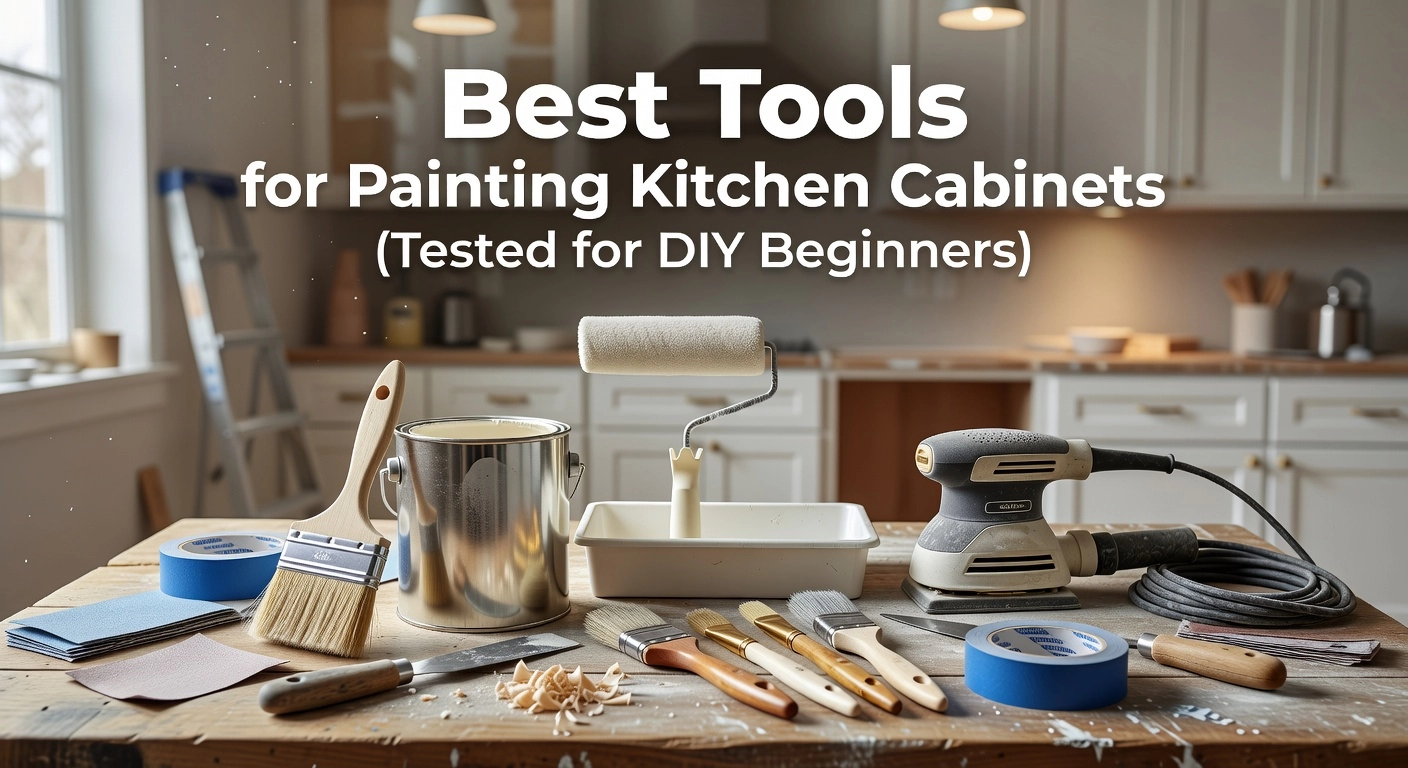
So you’ve decided to paint your kitchen cabinets. Maybe you’re tired of staring at those outdated oak doors, or perhaps you just want to refresh your space without spending a fortune on a full renovation. Either way, you’ve made a great choice! Painting your cabinets can completely transform your kitchen, but here’s the thing: having the right tools makes all the difference between a smooth, professional-looking finish and a streaky, frustrating mess.
If you’ve never tackled a project like this before, the tool aisle at your local hardware store can feel pretty overwhelming. Brushes, rollers, sprayers, sanders… where do you even start?
That’s exactly why we put together this list of the best tools for painting kitchen cabinets, specifically tested and curated with beginners in mind. We’ll walk you through everything you need, explain what each tool actually does, and help you avoid the common mistakes most first-timers make. By the end, you’ll feel confident, prepared, and ready to give your kitchen the makeover it deserves. Let’s dive in!
Why Your Tool Choice Makes or Breaks the Finish
Painting your kitchen cabinets instead of replacing them can save you 40 to 70% compared to a full cabinet replacement, making it one of the smartest budget-friendly upgrades you can tackle as a homeowner. But here’s the thing most beginners don’t realize: the difference between a finish that looks professional and one that looks, well, like a first attempt, almost never comes down to skill. It comes down to the tools in your hand.
Brush marks, streaky coverage, and that frustrating orange-peel texture are the most common complaints from DIYers who tackled cabinet painting and weren’t happy with the results. In nearly every case, the culprit is a cheap brush that can’t hold a clean edge or a roller with the wrong nap thickness, not bad technique. A low-cost brush sheds bristles, applies uneven pressure, and simply can’t level paint the way a quality brush can. A too-thick roller nap leaves behind texture that no amount of careful brushwork will fix.
The good news is that investing in the right tools genuinely closes the gap between DIY and professional results. You don’t need a sprayer, a paint booth, or years of experience. Quality brushes and rollers, paired with a self-leveling cabinet paint, can produce a finish that’s smooth, durable, and impressive.
When it comes to tools, most DIYers work within three main approaches. Brush-only gives you great control in tight spots but increases your risk of visible stroke marks. The brush-plus-roller combo uses a small foam roller for flat surfaces and a brush for edges, delivering faster, smoother coverage with minimal setup. HVLP sprayers produce a near-factory finish but come with a steep learning curve, overspray mess, and equipment costs that aren’t beginner-friendly.
For most beginners, the brush-plus-roller combo is the clear winner, and that’s exactly where this guide focuses its attention.
Quick-Pick Tool Summary by Category
Every tool pick in this guide has been tested and evaluated specifically for beginner use, so you can shop with confidence before diving into the detailed breakdowns below. Use this table to jump straight to the category you need.
| Tool Category | Top Pick | Best For | Why Choose It |
|---|---|---|---|
| Angled sash brush | Purdy Clearcut Glide | Cutting in edges, frames, and detailed areas | Angled bristles give beginners precise control with fewer visible brush marks |
| Mini foam roller | Whizz high-density foam (4-inch) | Smooth, even coverage on flat cabinet surfaces | Delivers a near-spray finish without any sprayer skill or mess |
| Degreaser | Krud Kutter original formula | Removing kitchen grease before priming | Cuts through tough buildup with a simple spray-and-wipe application |
| Sandpaper | 120-150 grit + 220 grit combo | Scuffing surfaces for better paint adhesion | Two-step grit system is forgiving and prevents accidental over-sanding |
| Tack cloth | Standard cotton tack cloth | Lifting fine dust after sanding | A quick wipe removes invisible particles that cause bumpy, rough finishes |
| Painter’s pyramids | Plastic pyramid stands (10-pack) | Elevating doors to paint all sides at once | Keeps pieces off the work surface so edges dry cleanly without sticking |
According to Benjamin Moore’s cabinet painting guide, thorough prep combined with the right application tools consistently produces the smoothest, most durable results for DIYers. Each category above feeds directly into that process, from cleaning and scuffing to laying on a glass-smooth topcoat.
The Best Brushes for Painting Kitchen Cabinets
When it comes to brushes, angled sash brushes are the clear consensus pick among DIYers and pros alike for painting kitchen cabinets. The angled tip gives you precise control when cutting in along edges, rails, and stiles, and it lets you work paint into corners and detailed profiles without dragging or leaving streaks behind. Think of it like writing with a pen held at an angle: you get a clean, controlled line every time. For beginners especially, this type of brush is forgiving and easy to maneuver around cabinet frames.
Top Brush Picks and Why They Work
Three brushes come up again and again in expert recommendations, and each one has a specific strength worth knowing about.
Purdy Nylox Dale is a go-to for water-based paints, including the popular acrylic alkyd and urethane formulas most beginners use on cabinets. Its nylon bristles release paint smoothly and leave minimal brush marks, which means less sanding between coats. Wooster Silver Tip has a slightly firmer polyester blend that lays paint down with a near-sprayed-on finish, making it ideal for final coats on doors and drawer fronts. The Purdy Clearcut Glide is the precision tool of the group; its firm nylon/polyester blend is perfect for cutting clean lines on narrow rails, frames, and detailed trim work without the bristles splaying out on you.
Synthetic vs. Natural Bristles
This is a rule worth memorizing: synthetic bristles only for water-based paints. Nylon and polyester blends stay firm and hold their shape when they get wet. Natural bristles absorb water, go limp, and make it nearly impossible to maintain consistent strokes. Since most beginner-friendly cabinet paints are water-based alkyds or urethanes, you will almost always want a synthetic brush. Natural bristles are reserved for traditional oil-based paints, which most beginners will not be using anyway.
Size Matters More Than You Think
Match your brush size to the job at hand. A 2.5-inch angled brush handles cabinet doors and large flat panels efficiently without losing control. Drop down to a 1.5-inch angled brush for narrow rails, stiles, and edges; a wider brush will overlap and deposit too much paint in tight spots, leading to drips and buildup.
Why Cheap Brushes Will Sabotage Your Project
Skimping on brushes is one of the most common beginner mistakes, and it shows in the final finish. Cheap brushes splay out within minutes, leaving visible line marks baked right into your paint. Bristle shedding, paint pooling, and streaks caused by poor-quality tools cannot be fixed with better technique or more expensive paint. A quality brush holds more paint, flexes properly at the tip, and cleans up easily so you can reuse it across multiple coats. Spending a little more upfront on a brush saves you hours of sanding and touch-ups later.
The Best Rollers for Painting Kitchen Cabinets
If brushes handle the detail work, rollers are what give your cabinet doors and drawer fronts that smooth, even base coat. But not just any roller will do — the wrong size or material can leave you with a bumpy, streaky mess that takes hours of sanding to fix.
Size Matters: Stick With 4-Inch Mini Rollers
The single most important roller decision you’ll make is choosing the right size. A 4-inch mini roller is the standard recommendation for cabinet doors and drawer fronts, and for good reason. Full-size 9-inch rollers are built for walls, where you have wide, uninterrupted flat space. On a cabinet door, a 9-inch roller creates uneven pressure across the surface, dumps too much paint at the edges, and makes it nearly impossible to apply consistent coverage without lap marks. A 4-inch mini roller fits the job perfectly, giving you control, even pressure, and clean results on smaller surfaces.
Foam vs. Microfiber vs. Mohair: Which Cover Should You Use?
Once you have your 4-inch frame, you need to choose the right roller cover. The three main options each have their strengths:
- High-density foam is the top choice for smoothness on flat cabinet surfaces. Because foam has no fibers, it releases paint in a thin, even film with almost no stipple texture. Testing consistently shows foam rollers produce near-spray results for DIYers without any of the learning curve that comes with a sprayer. The trade-off is that foam holds less paint, so you may need an extra coat.
- Microfiber covers hold more paint and release it consistently, making them a great option if your cabinets are made from porous wood or raw MDF. They produce a smooth finish with only slight texture, and quality microfiber covers shed very little. Many pros prefer microfiber for its balance of coverage and smoothness.
- Mohair blends split the difference. They offer good coverage and a fine, light texture that works well for alkyd or oil-based paints and high-gloss finishes. Mohair can shed a little on first use, so run it over masking tape before you start to pull off loose fibers.
For most beginners painting primed or previously painted cabinets, foam is the winner.
Top Roller Picks to Consider
The Whizz concave foam roller is frequently called out as a standout option for cabinet work. Its slight curvature helps feather the edges of each pass, which reduces the ridging you can sometimes see where roller strokes overlap. If budget is a concern, generic high-density foam 4-inch covers work well too. The key word is “high-density” — thin, flimsy foam compresses unevenly and can leave air bubbles in your finish.
The Lay-Off Technique: Your Secret Weapon
Here is the step that separates a good cabinet finish from a great one. After rolling a section, immediately take a dry angled brush and drag it lightly across the surface in long, unidirectional strokes. This is called the lay-off technique, and it smooths out any roller stipple before the paint has a chance to dry in place. Work quickly with water-based paints because they flash fast, especially in warm or dry conditions. This one extra step can make a rolled finish look almost indistinguishable from a sprayed one.
Common Roller Mistakes to Avoid
A few missteps will cost you a smooth finish every time. Using a thick nap roller (anything over 3/8 inch) leaves a noticeable texture that won’t level out on reflective cabinet surfaces. Overloading your roller causes drips and uneven buildup, so always roll off excess paint on a tray grid before touching the cabinet. And skipping the lay-off step on fast-drying water-based paints means roller stipple hardens in place, leaving you with extra sanding between coats. Keep your coats thin, work in manageable sections, and take the extra 30 seconds to lay off each panel while it’s still wet.
Should Beginners Use an HVLP Sprayer? An Honest Answer
Let’s be honest: HVLP sprayers are genuinely impressive tools. They atomize paint into an ultra-fine mist that lays down a glass-smooth, factory-like finish that brushes and rollers technically can’t replicate on their own. But impressive and beginner-friendly are two very different things, and conflating them is how a lot of first-time cabinet projects go sideways.
The Setup Burden Is Real
Before you spray a single inch of cabinet, you’re looking at a significant prep commitment. Every surface in your kitchen needs to be masked: appliances, floors, ceilings, countertops, and any open doorways. Paint mist travels farther than you’d expect. On top of that, you’ll need to thin your paint to the correct viscosity so it atomizes properly through the gun, and you’ll need to run multiple test passes on cardboard or scrap wood just to dial in your pressure, fan pattern, and spray distance. That’s a solid hour or two of work before painting even starts.
The Skill Gap Catches Beginners Off Guard
Overspray, drips, runs, and uneven coverage are the four most common beginner sprayer mistakes, and they’re genuinely harder to fix on cabinets than on walls. Cabinet doors have edges, recessed panels, and corners that catch excess paint. A run on a flat wall gets sanded in 30 seconds; a run on a raised-panel cabinet door means careful spot-sanding and another full coat. According to Better Homes and Gardens, even experienced painters emphasize that spraying cabinets well requires real practice, not just a quick read-through of the manual.
When a Sprayer Actually Makes Sense
There are situations where an HVLP sprayer earns its place. If you have 20 or more cabinet doors, prior experience with spray equipment, and access to a garage or outdoor workspace where overspray and fumes aren’t a problem, a sprayer can genuinely speed up the job and deliver stunning results. Professionals often remove all doors and drawers, spray them in a controlled environment, and achieve that showroom finish efficiently. For that scenario, the setup cost in time makes sense.
When to Skip It Entirely
Skip the sprayer if you’re a first-time DIYer, if your kitchen has fewer than 15 to 20 doors, or if you’re working indoors without a dedicated spray area. The prep time alone often exceeds the actual painting time for smaller kitchens, and the fume exposure indoors without proper ventilation is a real safety consideration. As Painter’s Solutions notes, brush and roller methods are simply more practical for the majority of home DIY scenarios.
The Brush Plus Roller Combo Is Not a Consolation Prize
Here’s what needs to be said clearly: choosing the brush and roller method isn’t settling for second best. It’s choosing the right tool for your skill level and environment. When you roll a smooth base coat onto a cabinet door with a high-density foam roller and then immediately lay off the surface with a quality angled brush using long, light strokes in one direction, the result can genuinely rival a sprayed finish. The lay-off technique is what closes the gap, smoothing out any stipple before the paint skins over. With a self-leveling cabinet enamel and proper thin coats, most people viewing your finished cabinets won’t be able to tell the difference.
Essential Prep Tools That Matter More Than the Paint Brush
Here’s something most beginners get backwards: they spend hours researching the perfect brush or roller, then rush through prep and wonder why their paint job is peeling six months later. The truth is, thorough preparation determines whether your paint job lasts for years or fails before the season changes. The tools covered in this section aren’t glamorous, but skipping any one of them is the single fastest way to undo all your hard work.
Degreasing First, Always
Kitchen cabinets are grease magnets. Even if your cabinets look clean, years of cooking vapors, hand oils, and splatter create an invisible film that completely blocks paint adhesion. No amount of quality paint or expensive primer can bond to a greasy surface, and the result is peeling within months regardless of what you spent.
For heavily soiled cabinets, reach for a TSP substitute. These phosphate-free formulas cut through built-up grease reliably and are available at any hardware store. For cabinets that are only lightly soiled, a diluted dish soap and warm water solution works well. Pair either option with a stiff-bristle brush or a Scotch-Brite pad to physically scrub the residue loose, then rinse thoroughly. Leftover cleaner residue is just as problematic as leftover grease, so do not skip the rinse step.
Sandpaper Grit Matters More Than You Think
Sanding is not just about roughing up a surface so paint sticks. Different wood types behave differently under abrasives, and using the wrong grit at the wrong stage creates more problems than it solves.
For smooth surfaces like MDF and maple, start with 120-grit to create enough tooth for primer without cutting too deep. Oak is a different story. Its grain is open and aggressive, so begin with 100-grit to knock down the raised texture before priming. Regardless of wood type, always follow up with a light 220-grit pass between coats to smooth out any brush marks or raised fibers before the next layer goes on.
Tack Cloths and Painter’s Pyramids
After every single sanding step, wipe down your surfaces with a tack cloth before touching any paint or primer. Fine sanding dust is nearly invisible to the naked eye, but it causes two frustrating problems under paint: fish-eye craters and adhesion failures. Vacuum first, then follow with the tack cloth to pick up what the vacuum leaves behind. This two-step dust removal habit takes under two minutes and saves hours of fixing defects later.
Painter’s pyramids are another prep-stage tool worth having on hand. These small plastic stands elevate cabinet doors off your work surface so you can paint one face, let it dry, then flip and paint the other without the door sticking to your table or leaving contact marks in wet paint.
A Quick Word on Wood Types
Oak raises grain aggressively after a coat of water-based primer, so plan on an extra 220-grit pass before your topcoat. Pine bleeds tannins through paint over time, turning your finish yellow or brownish; a shellac-based stain-blocking primer stops this before it starts. MDF edges are extremely porous and will swell and bubble if water-based products hit them unsealed; apply a coat of primer or wood filler to all edges before proceeding with anything water-based.
Best Paints to Pair With Your Brush and Roller Setup
Once you have your brushes and rollers sorted, the paint you choose will either make all that effort pay off or quietly undermine it. Not all paints are created equal for cabinets, and picking the wrong one is one of the most common beginner mistakes.
Why Hybrid Paints Are the Right Choice for Cabinets
The clear winner for brush and roller application is water-based alkyd or urethane hybrid paint, sometimes called hybrid enamel. These formulas are specifically engineered to self-level as they cure, meaning brush strokes and roller stipple gradually flow out and flatten before the surface fully dries. The end result is a hard, durable finish that resists chipping, grease, and moisture, which is exactly what a busy kitchen demands. They clean up with water like a standard latex paint, but they cure with the toughness of a traditional oil-based enamel.
The Two Paints Worth Knowing by Name
Benjamin Moore Advance is the go-to recommendation for beginners, and for good reason. Its longer open time means the paint stays workable longer after you apply it, giving brush marks more time to level out on their own before the surface begins to set. If you tend to work slowly or stop and start between cabinet doors, this forgiving quality is genuinely helpful. It is available in satin and semi-gloss, and both pair beautifully with quality angled brushes and foam rollers.
Sherwin-Williams Emerald Urethane Trim Enamel cures slightly harder and delivers a very consistent sheen across surfaces. It pairs especially well with high-density foam rollers on flat cabinet doors, producing a near-factory finish without a sprayer. Recoat times can also be a bit shorter, which is useful if you want to move through your project efficiently.
Why Regular Wall Paint Will Let You Down
Standard latex wall paint might seem like a budget-friendly shortcut, but it stays soft after curing and chips quickly along cabinet edges with daily use. It also struggles to bond well to wood surfaces without a dedicated oil-based or shellac primer. The result is a finish that looks fine on day one but starts failing within months.
Picking the Right Sheen
For kitchens, satin and semi-gloss are the practical sweet spot. Semi-gloss is especially durable near sinks and stoves where moisture and grease are constant. Satin offers a slightly softer appearance while still being easy to wipe clean. Matte finishes are trending right now and can look stunning, but they show fingerprints readily and are harder to clean in high-traffic areas without wearing down the surface. For most beginners, satin or semi-gloss will deliver the best long-term results with the least maintenance headache down the road.
Tools to Skip: What Not to Waste Money On
Before we wrap up the good stuff, let’s talk about what to leave on the shelf. Knowing what not to buy is just as valuable as knowing what works, and these five items show up constantly in beginner shopping carts for all the wrong reasons.
Chip brushes and cheap foam chip brushes look like a harmless way to save a dollar or two, but they will cost you hours. These brushes shed bristles directly into wet paint, and once a bristle is stuck in your finish, you’re sanding, recoating, and starting over. They also drag and skip across the surface, leaving a heavy, uneven texture that’s hard to fix without going back to bare wood. The sub-dollar price tag is simply not worth the rework on a project this size.
Full-size rollers on cabinet doors are another common mistake. Even a 6-inch roller applies too much paint volume and edge pressure on the small, flat surfaces of a cabinet door. The result is uneven film thickness, roller marks at the edges, and paint buildup that shows up as ridges once it dries. Cabinet surfaces need mini rollers, typically 4 inches, for proper control and even coverage.
Wax-based cleaners and oil soaps are the sneaky ones. A lot of beginners reach for whatever is already under the sink, and products like oil soap leave behind a thin waxy residue that blocks paint from bonding properly. You can prime and paint over it and everything will look fine initially, then the paint starts peeling weeks later. Use a dedicated degreaser instead and rinse thoroughly before priming.
Bargain sprayers under $80 lack the pressure consistency that cabinet-grade paints actually require. They spit, clog, and produce orange-peel texture instead of a smooth finish. If you are not ready to invest in a quality HVLP setup, the brush and mini-roller combo covered earlier will honestly get you better results with less frustration.
Single-use foam brushes for detail work seem handy for tight spots, but they break down mid-stroke when used with water-based alkyds. The foam deteriorates, introduces tiny air bubbles into the finish, and those bubbles show up clearly under raking light on any smooth cabinet surface. A quality angled synthetic brush handles detail work far better and will last through the entire project.
Complete Beginner Starter Kit: Everything in One List
You’ve made it through the full breakdown. Now here’s everything pulled together in one clean checklist so you can screenshot it, print it, or shop straight from it without flipping back through the guide.
Brushes
- 2.5-inch angled sash brush (Purdy Nylox Dale or Wooster Silver Tip): Your go-to for cabinet frames, edges, and cutting in; synthetic bristles lay water-based paint smoothly with minimal brush marks.
- 1.5-inch angled detail brush: Handles narrow stiles, inside corners, and tight spots where your bigger brush simply won’t fit cleanly.
Rollers
- 4-inch high-density foam mini roller covers (buy four to six): Foam produces the smoothest possible rolled finish on flat cabinet doors; grab extras because these covers are single-use and you’ll want a fresh one for each coat.
- 4-inch mini roller frame (one compatible metal cage frame): Pairs with your foam covers and cleans up easily between sessions for repeated use across future projects.
Prep Kit
- TSP substitute or diluted degreaser (such as Krud Kutter): Strips the grease and cooking residue that would otherwise prevent your paint from bonding properly.
- 100-grit and 120-grit sandpaper sheets: Scuffs the existing finish so primer has something to grip.
- 220-grit sanding sponge: Lightly smooths between coats without cutting through your finish layer.
- Tack cloths (pack of four or more): Lifts every last dust particle after sanding so you’re not trapping debris under your paint.
- Blue painter’s tape: Protects hinges, walls, and countertops for clean, crisp edges.
- Painter’s pyramids (pack of 10 or more): Elevates doors off your work surface so you can paint all four edges and both sides without waiting or causing sticking.
The Cost Case for DIY
This full kit typically runs $150 to $350 before paint. Add primer and a quality topcoat and your total material investment lands somewhere around $250 to $500 for an average kitchen. Compare that to professional cabinet painting, which nationally averages $1,200 to over $4,000 in labor and materials. That’s a potential savings of well over $1,000, which is hard to argue with.
Buy Quality Once, Use It Everywhere
One last thing worth repeating: quality brushes and metal roller frames are not throwaways. A Purdy or Wooster brush cleaned properly with warm soapy water after each use can last for years and multiple projects. Cheap brushes shed bristles mid-stroke, lose their shape after one job, and ultimately cost you more in replacements and frustration. The upfront investment in good tools actually works out cheaper over time, and your finish will show the difference from the very first coat.
Ready to Start: What to Do Before You Buy Anything
Before you add a single item to your cart, two quick steps will determine whether your whole project succeeds or fails. First, degrease your cabinets. Kitchen surfaces collect years of cooking grease, oils, and residue, and paint simply will not bond to that buildup. Skipping this step makes every brush, roller, and primer pick in this guide completely irrelevant. A simple solution of dish soap, warm water, and white vinegar handles most kitchen grease in about 15 minutes per cabinet run.
Second, identify your cabinet material before buying sandpaper or primer. Oak needs grain filling to prevent texture from telegraphing through your finish. Pine requires a shellac-based primer to seal sap-bleeding knots. Maple and MDF are the most beginner-friendly surfaces, accepting paint smoothly with standard prep. Getting this wrong means buying supplies twice.
Once prep is handled, stick with the brush and roller combo covered throughout this guide. It costs a fraction of a sprayer setup, requires zero specialized skills, and delivers results that are genuinely comparable when you use the lay-off technique.
For the complete step-by-step workflow from degreasing through your final coat, the kitchen cabinet painting guide on WoodStuffHQ walks you through every stage in detail.
Cabinet painting consistently delivers strong return on investment, the tools are affordable, and every method here is built for beginners willing to prep properly. You have everything you need to get started.
Conclusion
Painting your kitchen cabinets is one of the most rewarding DIY projects you can take on, and the right tools make all the difference. To recap the key takeaways: quality brushes and rollers designed for cabinetry give you a smoother finish, proper sanding tools ensure your paint actually adheres, a good primer is non-negotiable, and patience during prep work saves you hours of frustration later.
You now have everything you need to walk into that hardware store with confidence, skip the guesswork, and choose tools that actually work for beginners.
So go ahead. Pull those cabinet doors off their hinges, set up your workspace, and take that first satisfying stroke of paint. Your dream kitchen is closer than you think, and you have exactly what it takes to create it yourself.
Frequently Asked Questions
What is the best tool combination for a beginner painting kitchen cabinets?
For beginners, the brush-plus-roller combo is the clear winner. Use a 4-inch high-density foam mini roller for flat cabinet surfaces and a 2.5-inch angled sash brush for edges, frames, and detail work. This setup is affordable, requires no specialized skills, and can deliver results comparable to a sprayer when you use the lay-off technique — lightly dragging a dry brush over freshly rolled sections to smooth out any stipple before the paint dries.
Should beginners use an HVLP sprayer to paint kitchen cabinets?
For most beginners, HVLP sprayers are not recommended. While they produce a glass-smooth, factory-like finish, they come with a steep learning curve, require extensive masking of your entire kitchen, and demand practice to avoid common issues like drips, runs, and uneven coverage. Sprayers make sense if you have 20 or more cabinet doors, prior spray experience, and a dedicated outdoor or garage workspace. Otherwise, the brush and foam roller combo is more practical and still delivers impressive results.
What type of paint works best when using brushes and rollers on kitchen cabinets?
Water-based alkyd or urethane hybrid paints, sometimes called hybrid enamels, are the best choice for brush and roller application. These formulas self-level as they cure, meaning brush strokes and roller stipple flow out and flatten before the surface fully dries. Top picks include Benjamin Moore Advance, which has a longer open time ideal for beginners, and Sherwin-Williams Emerald Urethane Trim Enamel, which cures very hard and pairs especially well with foam rollers. Avoid standard latex wall paint, as it stays soft after curing and chips quickly with daily cabinet use.
Why is surface preparation more important than the brush or roller you choose?
Thorough prep is what determines whether your paint job lasts for years or starts failing within months. Kitchen cabinets accumulate an invisible film of grease, cooking vapors, and hand oils that prevent paint from bonding properly — no primer or quality paint can overcome a greasy surface. Proper sanding with the right grit creates the tooth primer needs to grip, and wiping down with a tack cloth after every sanding step removes fine dust particles that cause fish-eye craters and adhesion failures under paint. Skipping any one of these steps can undo all your painting effort regardless of the tools or paint you use.
How much does a beginner DIY cabinet painting kit typically cost compared to hiring a professional?
A complete beginner tool kit including brushes, foam rollers, prep supplies, painter's tape, and painter's pyramids typically runs between $150 and $350. Adding primer and a quality topcoat brings your total material investment to roughly $250 to $500 for an average kitchen. By comparison, professional cabinet painting nationally averages $1,200 to over $4,000 in labor and materials. That means a well-prepared DIYer can potentially save over $1,000, making cabinet painting one of the highest-return budget-friendly upgrades a homeowner can tackle.
4 thoughts on “Best Tools for Painting Kitchen Cabinets (Tested for DIY Beginners)”