Beeswax vs Mineral Oil for Cutting Boards: Which Is Better ?
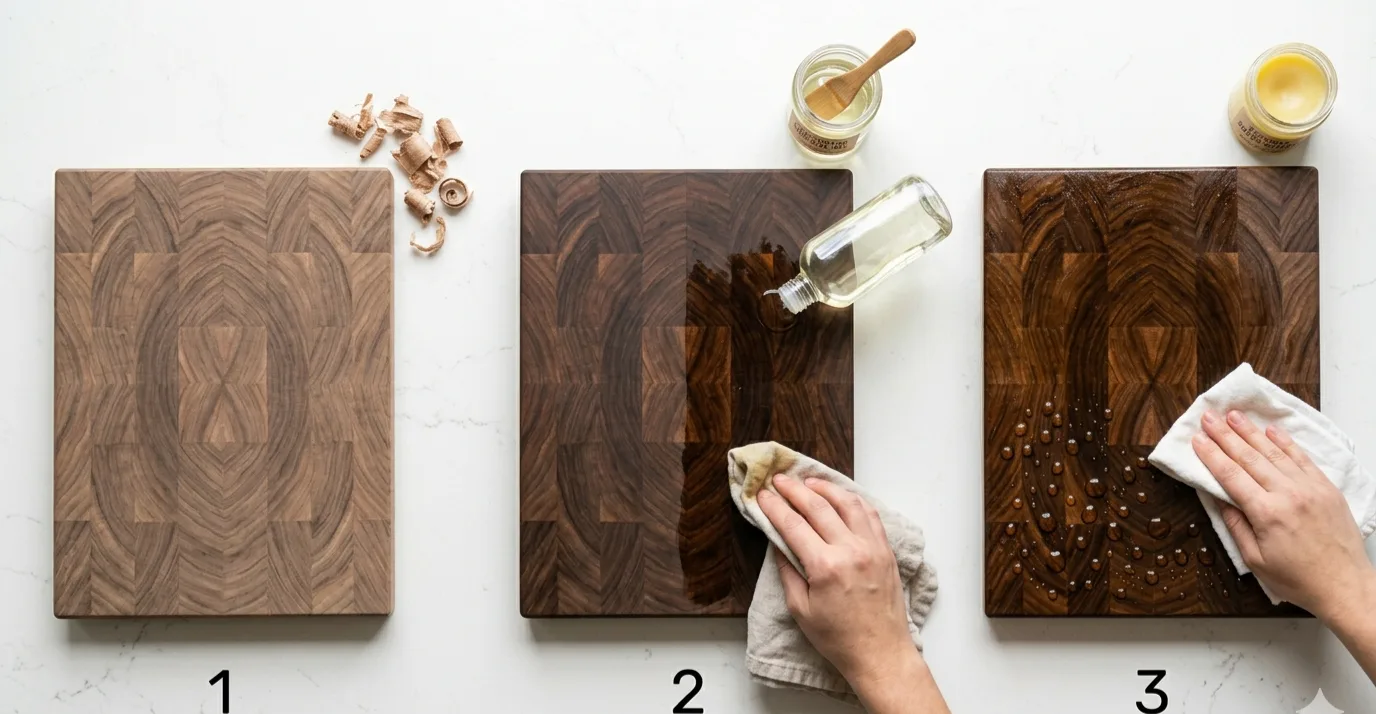
After testing and maintaining dozens of wooden cutting boards, the answer is clear: mineral oil and beeswax are best used together, not separately.
In this guide, we’ll break down everything you need to know — including which one is better, when to use each, and how to get the longest life out of your cutting board. If you’re new to this, check our complete guide on how to oil a cutting board first.
When comparing beeswax vs mineral oil for cutting boards, many woodworkers agree that using both together provides the best protection, moisture resistance, and long-term durability.
Table of Contents
What Is Mineral Oil?
Mineral oil is a clear, odorless oil derived from petroleum. When labeled food-grade, it is considered safe for kitchen use and is one of the most recommended treatments for wooden cutting boards.
According to official food safety guidance, food-contact surfaces should be properly maintained and protected to prevent cracking, moisture damage, and bacterial buildup.
You can review general food safety recommendations here:
FDA Food Safety Guidelines
This combination gives you the best of both worlds: hydration + protection.
For official food safety recommendations, you can also review the USDA food safety guide here:
What Is Mineral Oil?
Mineral oil is a clear, odorless oil derived from petroleum. When labeled food-grade, it is completely safe for use on cutting boards. We cover this in detail in our cutting board oiling guide.
Benefits of Mineral Oil
- Penetrates deep into wood fibers
- Prevents drying and cracking
- Easy to apply
- Very affordable
Downsides
- Needs frequent reapplication
- Doesn’t seal the surface
Think of mineral oil as a moisturizer for your wood.
What Is Beeswax?
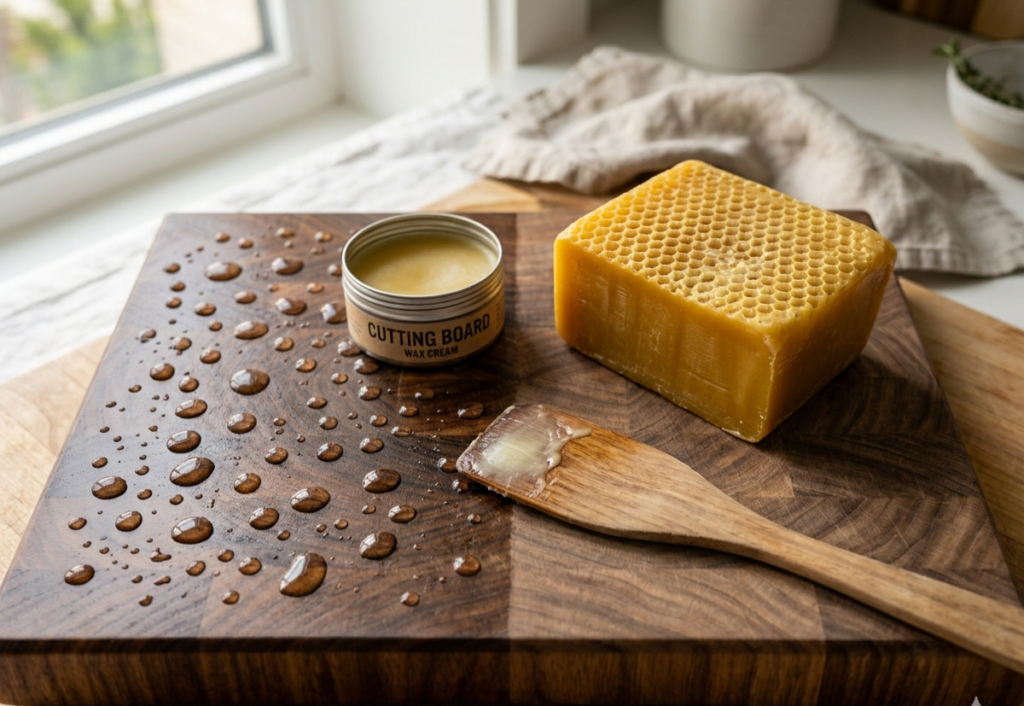
Beeswax is a natural wax produced by bees. It is often used as a wood finish because of its ability to create a protective barrier.
Benefits of Beeswax
- Creates a water-resistant seal
- Adds a smooth, polished finish
- Lasts longer than oil alone
Downsides
- Doesn’t penetrate deeply
- Not effective alone for dry boards
Think of beeswax as a protective shield on top of the wood.
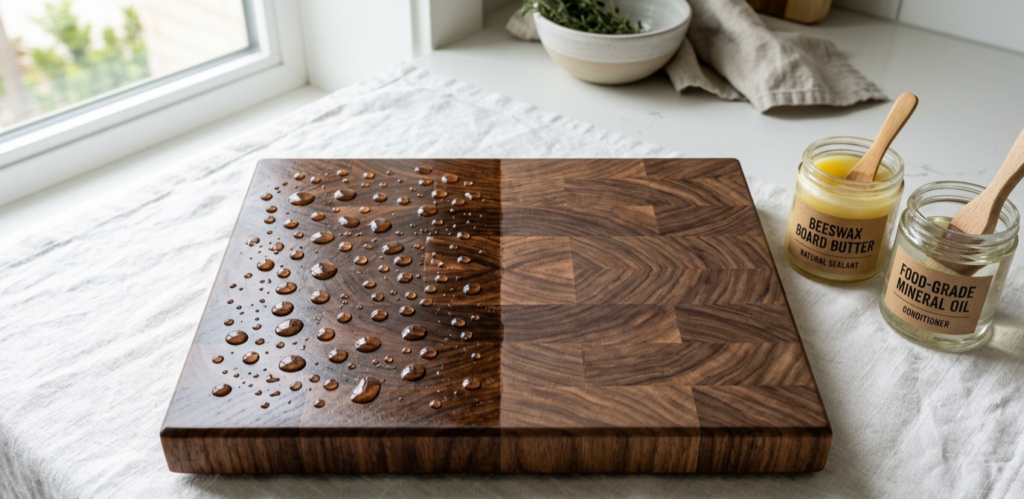
Beeswax vs Mineral Oil: Key Differences
| Feature | Mineral Oil | Beeswax |
|---|---|---|
| Penetration | Deep | Surface only |
| Protection | Low | High |
| Durability | Short-term | Long-lasting |
| Best Use | Hydration | Sealing |
The type of wood also matters. An end grain cutting board will absorb more oil than an edge grain board due to its structure.
Why You Should Use Both (Best Method)
Using only one is a mistake many beginners make.
The correct method is:
- Apply mineral oil to hydrate the wood
- Let it soak for several hours
- Apply beeswax to seal the surface
This creates a strong, long-lasting finish that protects against water, bacteria, and cracking.
How to Apply Mineral Oil and Beeswax
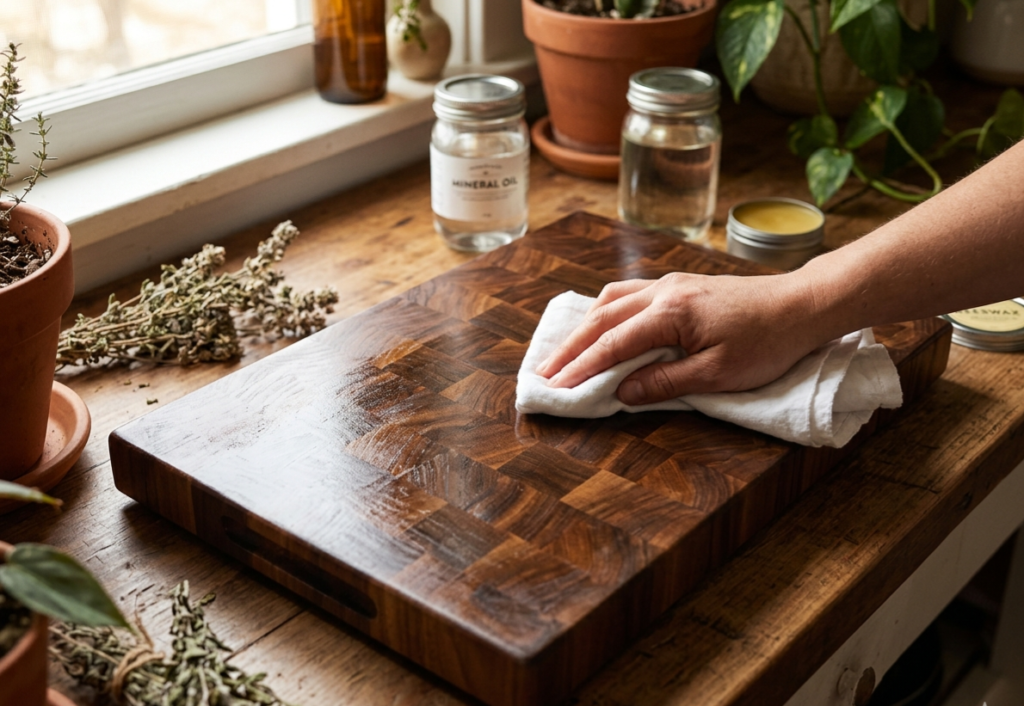
Step 1: Clean the Board
Wash your board with warm water and mild soap. Let it dry completely.
Step 2: Apply Mineral Oil
Use a clean cloth and apply a generous amount. Let it soak overnight. For a full step-by-step, see how to oil a cutting board properly.
Step 3: Wipe Off Excess
Remove any remaining oil from the surface.
Step 4: Apply Beeswax
Rub a thin layer of beeswax and buff it into the wood.
Step 5: Polish
Use a dry cloth to polish until smooth.
Common Mistakes to Avoid
- Using cooking oils like olive oil (they go rancid)
- Skipping oil and using wax only
- Not reapplying regularly
- Using too much wax
- Choosing the wrong board material — not all woods are equal. Check our bamboo vs wood cutting board comparison before you buy
How Often Should You Oil a Cutting Board?
- New boards: 2–3 times per week (first month)
- Regular use: Once per week
- Maintenance: Once every 2–3 weeks
Tip: If the wood looks dry, it’s time to oil.
Which One Should You Choose in 2026?
If you must choose one:
- Go with mineral oil for basic care
- Use beeswax for long-term protection
But the real winner is using both together.
Frequently Asked Questions
Can I use beeswax only on my cutting board?
Yes, but it is not ideal. Beeswax protects the surface, but it does not deeply hydrate the wood like mineral oil does. For best results, use both together.
Is coconut oil better than mineral oil?
Regular coconut oil can go rancid over time, which may cause odors. Fractionated coconut oil is safer, but food-grade mineral oil is still the most reliable option for most cutting boards.
How often should I oil my cutting board?
Most cutting boards should be oiled every 2 to 4 weeks depending on usage, climate, and washing frequency.
Can mineral oil go bad?
Food-grade mineral oil has a very long shelf life and does not usually spoil like cooking oils do.
Should I use butcher block conditioner instead?
Yes, many butcher block conditioners are simply a blend of mineral oil and beeswax, which makes them an excellent all-in-one option.
Final Verdict
Mineral oil keeps your board alive. Beeswax keeps it protected.
If you want your cutting board to last for years without cracking or warping, don’t choose between them — combine them.
Related Guides
- How to Oil a Cutting Board: Step-by-Step Guide for 2026
- End Grain vs Edge Grain Cutting Board: Which is Better?
- Bamboo vs Wood Cutting Board: Pros, Cons & Which to Choose
4 thoughts on “Beeswax vs Mineral Oil for Cutting Boards: 7 Key Differences”