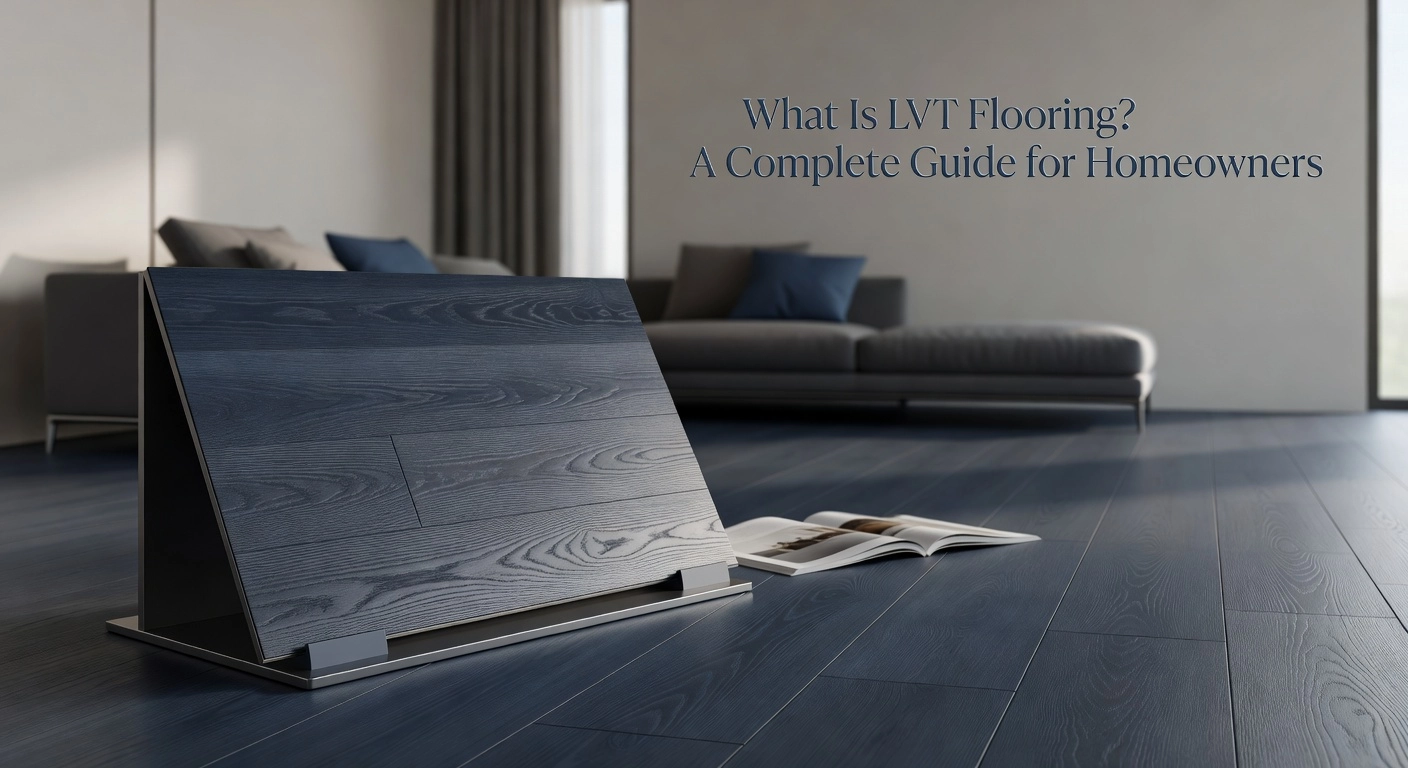
Choosing the right flooring for your home can feel overwhelming, especially with so many options competing for your attention.
If you have been researching durable, stylish, and budget-friendly flooring solutions, chances are you have come across the term LVT flooring. But what exactly is it, and why has it become one of the most talked-about flooring choices among homeowners today?
LVT flooring, which stands for Luxury Vinyl Tile, has transformed the way people think about home renovation.
It delivers the sophisticated look of natural materials like wood and stone without the high cost or demanding maintenance that typically comes with them. Whether you are renovating a single room or upgrading your entire home, understanding this flooring type is a smart first step.
What Is LVT Flooring?
Luxury vinyl tile flooring, commonly called LVT, is a premium synthetic flooring product engineered from multiple bonded layers of polyvinyl chloride (PVC). Understanding what goes into each layer helps you make smarter purchasing decisions and set realistic expectations before your project begins.
The Multi-Layer Construction Explained
At the base sits the backing layer, a stabilizing PVC foundation that keeps the product flat, prevents shifting, and improves adhesion in glue-down installations.
Directly above that is the core layer, which forms the structural body of the plank or tile and determines its overall thickness and rigidity. On top of the core sits the photographic print layer, a precision-printed decorative film that carries the visual design, whether that is wood grain, stone veining, or ceramic patterns. Finally, the wear layer caps everything off with a clear, protective coating measured in mils (thousandths of an inch).
Residential applications typically use 12 to 20 mil wear layers, while commercial or high-traffic spaces benefit from 20 to 40 mil options. A thicker wear layer directly correlates with greater scratch, stain, and abrasion resistance, which is why this number matters so much when comparing products. You can explore wear layer thickness guidance for luxury vinyl flooring to better understand how to match thickness to your specific traffic conditions.
Tile Format vs. Plank Format (LVP)
LVT technically refers to the tile format, cut into square or rectangular pieces designed to replicate stone, ceramic, or porcelain. This format suits kitchens, bathrooms, entryways, and any space where a structured, grid-based layout adds visual elegance.
Luxury vinyl plank (LVP) uses the identical multi-layer construction but in longer, narrow plank shapes that convincingly mimic hardwood boards. LVP works especially well in living rooms, bedrooms, and open-plan spaces where continuous, flowing lines make rooms feel larger. Both formats are built the same way internally; the choice is almost entirely driven by the aesthetic you want to achieve.
How Photographic Print Technology Creates Realism
The photographic print layer uses high-definition digital or rotogravure printing to capture extraordinarily fine details, including wood knots, grain variation, stone veining, and subtle color shifts.
Manufacturers pair these prints with surface embossing that physically textures the wear layer to align with the printed image underneath, creating a tactile sensation that feels remarkably close to the real material. According to detailed LVT construction breakdowns from industry sources, some premium products even use translucent print films that allow underlying layers to show through, adding depth and color dimension. Recent advances in digital printing are accelerating this realism further, enabling longer pattern repeats and reducing the repetitive look that once made vinyl easy to identify.
SPC vs. WPC: Rigid-Core Variants Taking Over
Traditional flexible LVT uses a standard PVC core that can shift or gap with temperature fluctuations. Rigid-core variants have addressed this limitation decisively, which is why they now dominate category growth. SPC (stone plastic composite) cores blend limestone powder with PVC to create an exceptionally dense, rigid structure. SPC excels in high-traffic areas, kitchens, basements, and commercial spaces because it resists dents, handles moisture perfectly, and stays stable across wide temperature swings. WPC (wood plastic composite) incorporates wood fibers into a foamed PVC structure, producing a slightly softer, warmer feel underfoot with better sound absorption. WPC suits bedrooms, upper floors, and spaces where comfort during long periods of standing matters more than maximum hardness. Both rigid formats support click-lock floating installations, making them genuinely DIY-friendly without requiring adhesive.
Why LVT Is Classified as Resilient Flooring
LVT belongs to the resilient flooring category because its vinyl composition allows it to flex slightly under load and recover without permanent damage, a characteristic shared with rubber, linoleum, and cork. This built-in give delivers comfort underfoot and reduces fatigue during extended standing. Hardwood, by contrast, is a rigid natural material that can be sanded and refinished but is vulnerable to moisture damage and seasonal expansion. Laminate uses a high-density fiberboard core topped with a photographic layer, making it harder and more susceptible to swelling if water penetrates the surface. LVT’s resilience, combined with its fully waterproof construction in rigid-core formats, positions it as a practical middle ground that addresses the weaknesses of both alternatives without sacrificing visual appeal.
Key Benefits of LVT Flooring
Now that you understand what LVT flooring is made of, the next logical question is: why are so many homeowners choosing it? The answer lies in a combination of practical performance advantages and genuine cost savings that few other flooring materials can match.
Complete Waterproofing for Moisture-Prone Spaces
One of LVT’s most compelling advantages is its 100% waterproof construction. Unlike hardwood or laminate, which can warp, swell, or buckle when exposed to standing water, LVT features a rigid PVC core that simply does not absorb moisture. This makes it the go-to choice for kitchens, bathrooms, basements, and laundry rooms where spills, humidity, and occasional flooding are facts of life. Many modern rigid-core products also incorporate interlocking edge systems that seal against moisture penetration from above, giving you whole-floor protection rather than just surface resistance. For households managing everything from toddler bath splashes to basement sump pump failures, this level of protection is genuinely transformative.
Durability That Stands Up to Real Life
LVT is engineered specifically to handle the punishment that busy households dish out daily. The wear layer, typically ranging from 8 to 22 mils thick, functions as a hardened shield against scratches from pet claws, dents from dropped cookware, and stains from food spills or tracked-in dirt. For households with dogs, cats, or young children, industry experts consistently recommend a minimum 20-mil wear layer for heavy-traffic areas. Many current product lines also incorporate reinforced UV coatings that resist fading under sunlight exposure. Matte and lightly textured surface finishes, which are trending strongly in 2025 and 2026, further help conceal minor scuffs between cleaning sessions, keeping floors looking newer for longer.
DIY-Friendly Installation That Saves Real Money
Saving money with luxury vinyl flooring starts before you even open the first box. Most LVT products use click-lock floating systems that snap together without adhesives, allowing planks or tiles to be installed directly over existing subfloors in most cases. A determined beginner with basic tools can realistically complete an average room over a single weekend. Eliminating professional installation labor, which can run $3 to $6 per square foot depending on your region, represents significant savings on top of the already lower material costs. The floating format also means the floor can be disassembled and reinstalled if you move or renovate, adding long-term flexibility that glue-down installations simply cannot offer.
Meaningful Cost Savings Versus Hardwood
The financial case for LVT is straightforward and substantial. In 2026, typical installed costs for luxury vinyl plank run between $5 and $14 per square foot, while comparable hardwood installations generally range from $14 to $34 or more per square foot. Depending on the product tier and your local labor market, that translates to installed cost savings of 30 to 60 percent or greater. A 400-square-foot living room that might cost $8,000 or more in hardwood could come in well under $4,000 with a mid-grade LVT product.
Design Realism That Has Closed the Gap With Natural Materials
Flooring trends for 2026 confirm that LVT’s visual and tactile quality has advanced dramatically. Embossed-in-register technology, often abbreviated as EIR, precisely aligns the surface texture with the printed grain pattern beneath it, creating a three-dimensional feel that mirrors real wood or stone rather than simply printing a flat image. Wider planks, matte low-sheen finishes, and warm natural tones dominate current collections, making modern LVT increasingly difficult to distinguish from genuine hardwood at a glance. Many premium lines now include attached cork underlayments that meaningfully improve acoustic performance and cushioning underfoot, addressing two of the most common criticisms leveled at earlier vinyl products. Industry analysis heading into 2026 consistently highlights these design and comfort enhancements as key reasons LVT delivers strong return on investment, often recouping 85 to 95 percent of its cost in real estate valuations.
Taken together, these five advantages explain why LVT has become the fastest-growing flooring category in residential renovation, and why understanding its limitations matters just as much as appreciating its strengths.
LVT vs. Hardwood Flooring: An Honest Comparison
Choosing between LVT and hardwood flooring is one of the most consequential decisions you will make during a renovation. Both options have genuine strengths, and the right choice depends entirely on your specific situation. Here is an honest, data-driven breakdown of how these two flooring categories compare across every factor that matters.
Cost: Upfront and Over Time
The price difference between LVT and hardwood is significant. LVT material typically runs $2 to $9 per square foot, with professional installation adding another $2 to $5 per square foot. Total installed costs generally land between $3 and $14 per square foot. Hardwood, by contrast, costs $5 to $22 or more per square foot for materials alone, with installation ranging from $3 to $12 per square foot. That brings total installed hardwood costs to roughly $8 to $30 or more per square foot depending on species, region, and subfloor preparation requirements. For a 1,500 square foot home, that difference can easily amount to $10,000 or more upfront.
Long-term ownership costs tell a more nuanced story, however. Hardwood can be refinished repeatedly over its lifespan, which means you are restoring the same floor rather than buying a new one. LVT, once its wear layer is exhausted, requires complete replacement. Many flooring professionals recommend a hybrid strategy: hardwood in primary living spaces and LVT in moisture-prone or high-traffic zones, which balances upfront costs against long-term value.
Durability and Lifespan: A Clear Divide
LVT typically lasts 10 to 20-plus years, with premium products featuring thicker wear layers potentially reaching 25 years or more under normal residential use. It excels in everyday toughness, resisting scratches, dents, and stains that would visibly damage wood. Rigid-core LVT formats, in particular, handle heavy furniture and active households with impressive consistency. According to a detailed 2026 LVT versus hardwood comparison for Southern California homeowners, LVT’s performance in high-traffic and pet-friendly environments makes it a practical frontrunner for busy families.
Hardwood, however, operates on a completely different timeline. Quality hardwood floors installed correctly can last 50 to 100-plus years. Scratches and surface wear are not endpoints for hardwood; they are simply a signal that the floor is ready for refinishing. That renewable quality gives hardwood an extraordinary lifespan advantage that no synthetic product currently replicates.
The Refinishing Gap
This is perhaps the most important structural difference between the two flooring types. Hardwood can be sanded and refinished anywhere from 5 to 10 times over its life, each time restoring the surface to near-original condition. A hardwood floor installed today could, with proper care and periodic refinishing using quality wood floor finishes, remain in service for generations. That long-term sustainability is a defining characteristic of real wood.
LVT offers no such option. When the wear layer, the thin protective coating on top of the printed design layer, is worn through from foot traffic or abrasion, the floor cannot be repaired or restored. Full replacement is the only path forward. This is not a flaw in lower-quality products alone; it applies to all LVT regardless of price point. The hardwood versus luxury vinyl plank overview from Monarch Floors reinforces that this refinishing gap remains one of the clearest arguments for choosing real wood when long-term ownership is a priority.
Water Resistance: LVT Wins Decisively
In moisture-prone rooms, LVT has no equal among common flooring options. It is fully waterproof, meaning spills, pet accidents, humidity fluctuations, and even minor flooding cause no structural damage. Kitchens, bathrooms, laundry rooms, basements, and entryways are natural environments for LVT.
Hardwood, especially solid wood planks, reacts poorly to sustained moisture exposure. Water can cause warping, cupping, swelling, and permanent structural damage. Even engineered hardwood, which offers better dimensional stability than solid wood, still requires careful humidity management and prompt spill cleanup to avoid long-term problems.
Resale Value and Authenticity
Hardwood retains a clear advantage when it comes to home resale value and buyer perception. Real estate data consistently shows that hardwood flooring can increase home sale prices by 3 to 5 percent and deliver a return on investment of 70 to 80 percent or more in many markets. Buyers view hardwood as a premium, authentic feature, particularly in living rooms, dining rooms, and master bedrooms.
LVT contributes moderate resale value, with estimates typically ranging from 2 to 3 percent or roughly 50 to 60 percent ROI. It is well-regarded for practicality but does not carry the same prestige as natural wood. Even today’s hyper-realistic LVT, with embossed textures and high-definition printed layers, cannot fully replicate the authentic grain, warmth, and aging character of real hardwood.
Making the Right Choice for Your Project
Choose LVT if you are working with a tighter budget, need quick installation with minimal disruption, are flooring moisture-prone rooms, or have a household with pets and young children. It is especially well-suited for rental properties or shorter-term ownership scenarios where replacement cycles are acceptable.
Choose hardwood if you are prioritizing long-term home value, authentic beauty, and generational durability. Homeowners planning to stay in their homes for many years and who are willing to invest in periodic refinishing will find that hardwood pays for itself over time in both enjoyment and resale return.
Where to Use LVT Flooring in Your Home
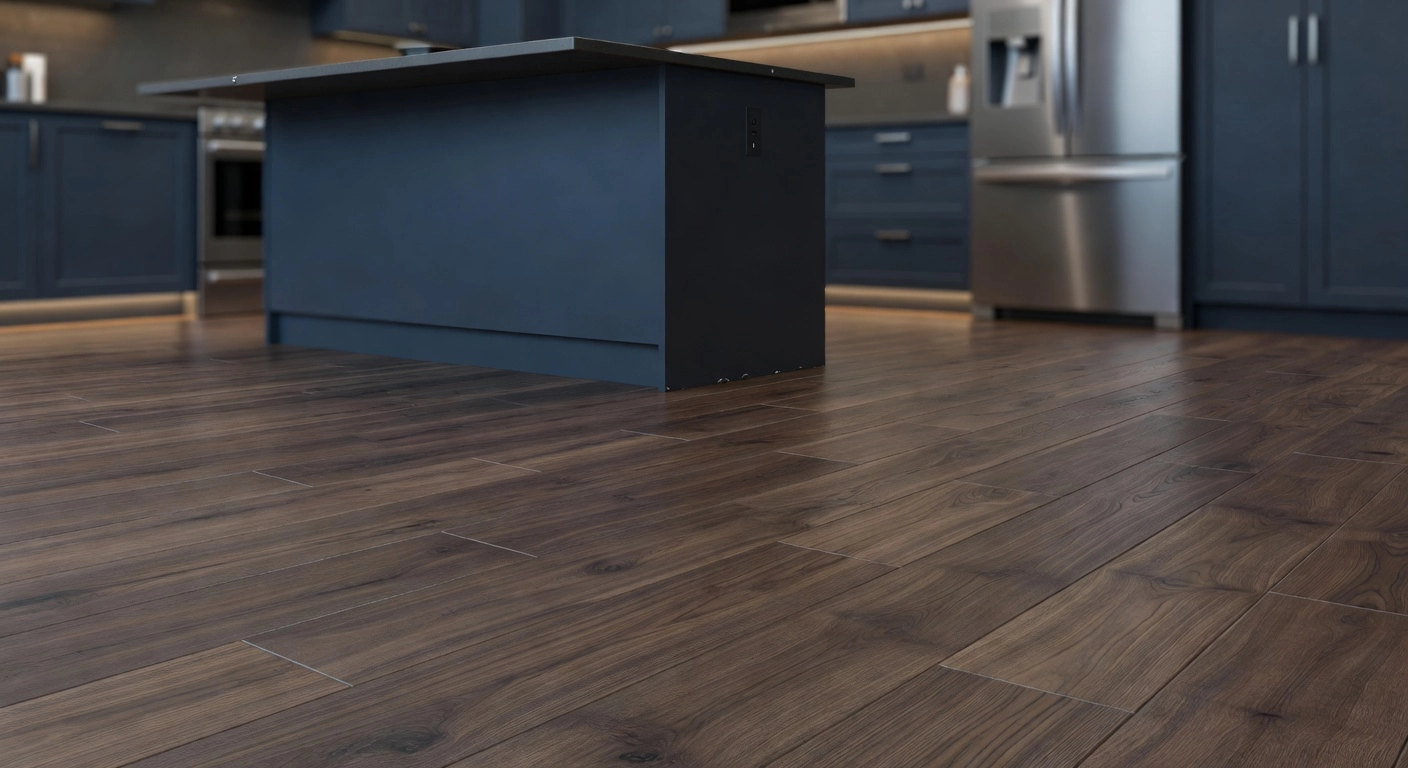
LVT flooring earns its strongest performance reviews in rooms where moisture, heavy foot traffic, and easy cleanup are top priorities. Understanding which spaces truly benefit from its properties helps you make smarter renovation decisions throughout your home.
Room-by-Room Applications
The kitchen is one of the best candidates for LVT installation. Spills, splashes from the sink, and dropped items are daily realities, and LVT’s waterproof construction handles all of them without warping or staining. Its scratch-resistant wear layer stands up to chairs, pet claws, and heavy foot traffic, while realistic wood and stone looks complement virtually any cabinet style.
Bathrooms benefit equally from LVT’s moisture resistance. Unlike solid hardwood, which can buckle and swell when exposed to humidity and water, LVT remains dimensionally stable. Textured surface options also provide slip resistance, adding a practical safety advantage in wet conditions.
Basements represent another ideal application. Concrete subfloors are prone to moisture vapor transmission, and rigid-core LVT handles that environment far better than carpet or hardwood. According to room-by-room flooring analysis from Braid Flooring, LVT installs directly over concrete and withstands minor moisture fluctuations without damage.
Mudrooms and laundry rooms round out the moisture-prone zones where LVT excels. Both spaces endure wet boots, leaky appliances, and constant foot traffic. LVT cleans quickly, resists staining, and maintains its appearance far longer than softer flooring alternatives in these demanding environments.
Managing Transitions and Height Differences
Open-plan layouts that mix LVT with existing hardwood require careful transition planning. T-molding strips work well when both floors sit at the same height, creating a clean visual bridge between materials. When a height difference exists, because LVT typically measures 4 to 8 millimeters while hardwood runs thicker, reducer strips solve the problem by creating a gradual slope rather than an abrupt step. Adding thin underlayment beneath the LVT can also minimize elevation gaps before installing transition hardware.
Commercial Adoption
Beyond residential use, LVT is expanding rapidly into commercial environments. Healthcare facilities prioritize it for easy disinfection and seamless installation. Retail spaces value its durability under constant foot traffic and quick renovation turnaround. Office environments benefit from its acoustic properties and modern design options. The global LVT flooring market reflects this momentum, with projections reaching $53.52 billion by 2030, driven substantially by commercial sector growth.
Where Hardwood Still Wins
Formal living rooms, dining rooms, and primary bedrooms remain spaces where solid or engineered hardwood delivers superior long-term value. These rooms see lower moisture exposure, and hardwood’s ability to be sanded and refinished multiple times over decades gives it a lifespan advantage that LVT, which must be fully replaced when worn, simply cannot match. For homeowners focused on resale value and timeless aesthetics, investing in hardwood for these showcase spaces while reserving LVT for high-moisture and utility zones represents the most strategic approach to whole-home flooring.
LVT Flooring Installation: What You Need to Know
Once you have selected the right LVT product for your space, the installation process becomes the next critical decision point. The method you choose, and how well you prepare your subfloor, will determine whether your floor performs beautifully for 15 years or develops problems within the first season.
Click-Lock Floating Systems: The DIY Advantage
Click-lock floating systems are the most beginner-friendly installation format available in flooring today. Planks connect through a tongue-and-groove locking mechanism, angling together and snapping into place without adhesive bonding to the subfloor. The assembled floor essentially rests on top of the subfloor, held in position by its own weight, perimeter expansion gaps, and the interlocking joints themselves. Many modern rigid-core LVT products include a pre-attached underlayment layer, eliminating one additional step. According to surveys, over 60% of homeowners chose to install flooring themselves in 2025, and click-lock LVT is a primary reason why. The required tool list is minimal: a measuring tape, chalk line, utility knife or vinyl plank cutter, rubber mallet, tapping block, pull bar, spacers for maintaining 1/4-inch expansion gaps, and basic safety gear.
Glue-Down vs. Floating: Choosing by Situation
The floating method suits most residential rooms up to approximately 30×30 feet, works over existing hard surfaces, and tolerates minor subfloor imperfections better than glue-down formats. Glue-down installation bonds planks directly to the subfloor using pressure-sensitive adhesive, creating a firmer, denser feel underfoot with no flex or bounce. For large open-plan spaces, commercial settings, or rooms with heavy rolling loads, glue-down delivers superior stability and prevents the subtle movement that can stress floating floor joints over time. The tradeoff is significant: glue-down requires extensive subfloor prep, careful adhesive application, and considerable installation experience. The residential LVT market reflects these preferences clearly, with rigid-core floating products capturing roughly 58.6% of market share in 2026.
Subfloor Preparation: The Step You Cannot Skip
Subfloor flatness is the single most important installation variable. Most manufacturers specify a maximum variation of 3/16 inch over 10 feet; some rigid-core products tighten this to 1/8 inch over 6 feet. High spots require sanding or grinding, while low spots need self-leveling compound. Moisture control is equally critical, particularly over concrete slabs. Acceptable moisture content typically falls below 12% for wood subfloors and relative humidity below 75-85% for concrete, though specifications vary by product. Install a 6-mil poly vapor barrier over concrete when required, and always acclimate your LVT to room temperature for 24-48 hours before installation.
Handling Height Transitions with Existing Hardwood
Mixed-floor renovations create a practical challenge since LVT typically measures 4-8mm thick while solid hardwood runs 18-20mm, producing a height difference that requires careful bridging. Reducer strips slope gradually from the hardwood surface down to the LVT level, eliminating trip hazards at doorways and room transitions. T-moldings work when both surfaces sit at nearly equal heights. Undercutting door jambs with an oscillating tool creates a cleaner, more professional appearance than surface-mounted trim alone. Always plan expansion gaps at every transition point to accommodate seasonal movement in adjacent hardwood.
DIY vs. Professional Installation: An Honest Assessment
A confident beginner can successfully install click-lock floating LVT in small to medium rooms with a structurally sound, reasonably flat subfloor. Professional installation becomes the right choice when significant subfloor leveling is required, moisture mitigation systems need installation, glue-down methods are specified, or complex multi-room layouts involve numerous transitions and custom cuts. The global LVT market, valued at approximately $34.5 billion in 2025, continues expanding partly because floating systems empower homeowners to complete quality renovations independently, but knowing the limits of a DIY approach protects both your investment and your warranty coverage.
How to Care for and Maintain LVT Flooring
LVT flooring is genuinely low-maintenance, but “low maintenance” does not mean “no maintenance.” A consistent care routine preserves the wear layer, extends the floor’s lifespan, and keeps its appearance sharp for years.
Daily and Weekly Cleaning Routines
Start every week with dry cleaning before introducing any moisture. A soft microfiber dust mop or a vacuum on hard-floor mode (no rotating beater bar) lifts grit, pet hair, and fine debris that act like sandpaper underfoot. In high-traffic areas, kitchens, or homes with pets, a quick daily dry sweep prevents abrasive particles from grinding against the wear layer during normal foot traffic.
For weekly damp mopping, wring your microfiber mop until it is barely damp, not wet. Use warm water paired with a pH-neutral cleaner formulated specifically for vinyl or LVT floors, targeting a pH range of 6.5 to 7.5. Work in manageable sections and allow the floor to air dry completely. A damp-mop routine done consistently outperforms infrequent deep scrubbing, which can stress the finish unnecessarily.
What to Avoid on LVT
Knowing what to keep off your LVT is equally important. Steam mops are one of the most common mistakes homeowners make. The intense heat and pressurized moisture can soften the protective finish, weaken adhesives in glue-down installations, and force moisture into seams, causing lifting or delamination over time. Many manufacturer warranties explicitly prohibit steam mopping.
Abrasive scrubbers, steel wool, and scouring powders physically scratch the wear layer and dull the surface. Wax-based floor polishes and oil-based soaps build up a sticky, hazy film that attracts dirt and is difficult to remove without harsh intervention. LVT arrives from the factory with a built-in finish that requires no waxing whatsoever. Strong chemicals such as bleach, ammonia-based cleaners, and concentrated vinegar solutions degrade the protective coating and can cause permanent discoloration. When in doubt, warm water and a manufacturer-approved neutral cleaner are the safest combination.
Why Prompt Spill Cleanup Still Matters
Even though modern LVT is engineered to be waterproof across the surface and through the plank body, prompt spill response still matters. Water that sits at seams or edges in a floating click-lock installation can gradually work its way down to the subfloor. Over time, moisture infiltration at joints can promote mold growth, cause subfloor swelling, or lead to plank lifting at the edges. Blot spills immediately with a dry cloth, follow with a lightly damp neutral-cleaner pass if needed, and dry the area thoroughly. The floor’s waterproofing protects against accidents; it does not make prolonged puddles harmless.
Scratch and Dent Prevention Strategies
Prevention extends the wear layer far more effectively than any cleaning product. Apply felt pads to the legs of all chairs, tables, and heavy furniture. When moving large pieces, lift them rather than dragging them across the surface. In hallways, kitchens, and other high-traffic corridors, place area rugs or runners to absorb grit and foot-traffic impact. Entry mats at every exterior door trap debris and moisture before they reach the floor. Keeping pet nails trimmed also reduces fine surface scratching in households with dogs or cats.
Individual Plank or Tile Replacement
One of LVT’s most practical advantages is the ability to replace a single damaged plank or tile without touching the rest of the floor. For click-lock floating systems, carefully score and remove the damaged plank by releasing its locking joints, then snap in a matching replacement. For glue-down installations, use a heat gun to soften the adhesive beneath the damaged section, extract the piece cleanly, remove all adhesive residue from the subfloor, and install the replacement with fresh adhesive. Always keep a few extra planks from your original installation for precise color and texture matching. Complex glue-down repairs are best handled by a flooring professional to protect warranty coverage.
How LVT Care Differs from Hardwood Care
Homeowners managing both LVT and hardwood floors in the same home need to shift their approach depending on the surface. Hardwood floors demand barely-damp mopping, strict humidity control between 35 and 55 percent, and hardwood-specific cleaners because wood expands and contracts with moisture changes. LVT tolerates more moisture during cleaning and remains dimensionally stable regardless of humidity fluctuations, making it considerably more forgiving day to day.
The most significant long-term difference involves refinishing. Hardwood can be sanded and recoated multiple times over decades, essentially resetting its appearance. LVT cannot be refinished; once its wear layer is depleted, replacement is the only option. For hardwood floors, a product like Minwax® floor finish provides the recoating solution that restores protection and sheen. LVT simply requires consistent gentle maintenance from day one to maximize the life of its factory-applied finish. Understanding this distinction helps homeowners set realistic expectations and build the right habits for each floor type.
Sustainability and Environmental Considerations
Environmental awareness is an increasingly important factor in flooring decisions, and LVT deserves an honest assessment rather than a simplified verdict. Understanding where it performs well and where it falls short environmentally will help you make a genuinely informed choice.
VOC Emissions and Certifications to Prioritize
Traditional PVC-based LVT can release volatile organic compounds during manufacturing and after installation, including semi-VOCs from certain plasticizer formulations. The good news is that modern rigid-core LVT products are frequently engineered to minimize off-gassing, and several credible third-party certifications now make it straightforward to verify low-emission claims when shopping.
FloorScore, administered by SCS Global Services, is the most recognized certification specifically for hard-surface flooring. It tests against California Section 01350 standards, covering 35 specific VOCs including formaldehyde, and qualifies products for LEED and WELL building programs. GREENGUARD Gold certification applies stricter total VOC thresholds and is particularly relevant for households with children or health sensitivities. In 2026, most reputable LVT product lines prominently display these certifications, so prioritize them alongside waterproof and durability claims when comparing options.
Recyclability Limits and Hardwood’s Natural Lifecycle
The structural reality of PVC-based LVT creates a significant end-of-life challenge. Its multi-layer composite construction, often bonded with adhesives, makes mechanical recycling technically difficult and rarely available at scale. Most worn LVT ends up in landfills, where it persists for centuries without biodegrading.
Responsibly sourced hardwood follows a fundamentally different lifecycle. It is renewable, stores carbon during its service life, and can be refinished repeatedly rather than replaced entirely. A 2025 lifecycle assessment by IVL Swedish Environmental Research Institute found that refinishing hardwood floors reduces carbon emissions by approximately 89% compared to full replacement, with energy savings near 97%. That single finding reshapes the long-term sustainability comparison significantly.
Emerging Eco-Formulated LVT Products
Manufacturers are actively responding to both consumer demand and regulatory pressure. PVC-free rigid-core formats using polypropylene or recycled PET content are entering the market, and closed-loop take-back programs are becoming more common among commercial LVT lines. Environmental Product Declarations (EPDs) are also appearing more frequently, giving buyers verifiable data on embodied carbon and material sourcing.
Making an Honest Environmental Tradeoff
Choosing between LVT and hardwood environmentally comes down to use case, time horizon, and verification. For moisture-prone spaces or shorter-term renovations, certified low-VOC or PVC-free LVT with documented recyclability represents a defensible choice. For long-term ownership where refinishing is feasible, hardwood’s dramatically lower lifetime emissions and natural material cycle offer a meaningful advantage. Requesting EPDs from manufacturers and prioritizing FloorScore or GREENGUARD Gold certification will ground any decision in verified data rather than marketing language.
LVT Flooring Trends Shaping the Category in 2026
The LVT category is not standing still. Several converging forces are reshaping what products look like, how they perform, and what long-term ownership means for homeowners making flooring decisions today.
Rigid-core formats have effectively redefined the standard. Stone Plastic Composite (SPC) and Wood Plastic Composite (WPC) constructions are displacing traditional flexible, glue-down LVT in both residential and commercial settings. SPC cores offer exceptional dimensional stability and dent resistance, making them ideal for high-traffic areas, wet zones like kitchens and bathrooms, and commercial applications in healthcare or retail. WPC provides a slightly softer, warmer underfoot feel that appeals to bedrooms and living areas. The practical advantages are significant: rigid-core products click-lock into place without adhesives, tolerate minor subfloor imperfections, and handle temperature fluctuations better than flexible alternatives. For buyers, choosing a rigid-core product rather than a flexible sheet format is increasingly the straightforward recommendation.
Visual realism has become a genuine competitive differentiator. High-definition digital printing combined with synchronized embossing, where the surface texture precisely follows the printed grain pattern, now produces wood and stone visuals that are strikingly convincing. Wider plank formats, realistic beveled edges, matte finishes, and warmer natural tones such as sun oak and greige are among the leading design directions in 2026. This narrowing of the authenticity gap matters for homeowners who want the look of hardwood without the maintenance demands or moisture vulnerability.
Sustainability is moving from marketing language to measurable specification. Manufacturers across the category are introducing low-VOC formulations, phthalate-free plasticizers, recycled content cores, and end-of-life recyclability. Certifications such as FloorScore and GREENGUARD Gold are becoming baseline expectations, particularly in commercial projects.
From a market perspective, the global LVT segment was valued at approximately $29.4 billion in 2025 and is projected to reach $53.52 billion by 2030, reflecting a compound annual growth rate of roughly 12.6 percent. That trajectory signals enduring category strength even as U.S. residential growth rates moderate. Housing market slowdowns and cautious consumer spending have tempered the explosive gains of prior years, but the moderation carries a useful message for buyers: prioritize quality over price. Mid-to-premium rigid-core products with thicker wear layers, strong warranties, and certified low-VOC credentials deliver better long-term value than budget options, which face increasing commoditization pressure. In a slower market, LVT’s cost efficiency relative to hardwood and its ease of renovation position it as a resilient, practical investment.
Frequently Asked Questions About LVT Flooring
Is LVT flooring truly waterproof, and does that mean seams and subfloors are also protected?
Individual LVT planks and tiles are waterproof by composition, but the installed floor system is not a sealed waterproof barrier. Seams between planks are the primary vulnerability, since even tight click-lock joints can allow water to penetrate during prolonged flooding or standing water exposure. This moisture can reach wood subfloors, causing warping or mold, before you ever notice a problem. In wet areas like bathrooms or basements, seal perimeter edges with flexible silicone, use a vapor barrier underlayment, and address spills promptly rather than assuming full protection throughout.
How long does LVT flooring last, and what factors affect wear layer longevity?
LVT typically lasts between 10 and 25 years, with quality residential products commonly reaching 15 to 20 years under normal conditions. The wear layer thickness, measured in mils, is the single most important performance factor. Residential bedrooms may function well with 6 to 12 mil layers, while kitchens, entryways, and pet-heavy homes benefit from 20 mil or higher. Beyond thickness, rigid-core construction, consistent maintenance, furniture felt pads, and prompt spill cleanup all extend the floor’s service life significantly.
Can LVT flooring be refinished or resurfaced when it shows wear?
Unlike hardwood, LVT cannot be sanded or refinished. The printed design layer sits beneath a thin vinyl wear surface, and any abrasive treatment destroys the visual layer permanently. When wear becomes visible, the practical options are deep restorative cleaning to remove dullness and buildup, or replacing individual planks in click-lock systems. Full replacement is typically the endpoint for heavily worn LVT, which is an important cost consideration when budgeting for long-term ownership.
What is the practical difference between LVT and LVP, and does the distinction matter for buyers?
LVT refers to tile-format products mimicking stone or ceramic, while LVP uses longer plank formats to replicate hardwood. Both share the same multilayer vinyl construction and perform comparably in durability and moisture resistance. The choice between them is primarily aesthetic: select LVT for stone and tile visuals in kitchens or entryways, and LVP for wood-look warmth in living areas or bedrooms. Installation method can also differ slightly, but for most buyers, the decision comes down to the room’s desired appearance rather than any meaningful performance gap.
Is LVT a better choice than hardwood, or does the answer depend on the specific room and use case?
The honest answer is that room context determines the right choice. LVT is clearly superior in moisture-prone spaces like kitchens, bathrooms, and basements, where hardwood risks warping and cupping. It also wins for households prioritizing scratch resistance, easy cleaning, and budget-friendly installation. Hardwood holds a genuine advantage in living rooms and bedrooms where authenticity, refinishing potential, and resale value matter most, since solid hardwood can be refinished multiple times over a 50 to 100 year lifespan. The LVT market, valued at approximately $29.4 billion in 2025 and projected to reach $53.52 billion by 2030, reflects how many homeowners are prioritizing practicality, though hardwood retains its place where long-term investment and aesthetic prestige take priority.
Making the Right Flooring Decision for Your Home
LVT flooring delivers its strongest value in moisture-prone rooms, high-traffic zones, budget-conscious renovations, and rental properties where durability and easy upkeep matter most. Hardwood, however, retains a clear edge in refinishability, long-term resale value, authentic warmth, and a lifespan that can span 50 to 100 years with proper care. Hardwood consistently yields higher ROI at resale, and no vinyl product fully replicates the depth and character of real wood grain.
The smartest approach for most homeowners is a room-by-room assessment rather than a single flooring solution applied throughout the entire house. Install LVT where performance demands are highest, and preserve or invest in hardwood where authenticity and long-term equity matter.
If you are keeping hardwood floors in bedrooms, living rooms, or other areas of your home, protecting that investment is straightforward with the right products. Minwax offers a complete range of wood stains, floor finishes, and maintenance solutions designed to restore, protect, and enhance hardwood surfaces. Exploring Minwax hardwood floor care resources is a practical next step for homeowners managing both flooring types under one roof.
Conclusion
LVT flooring stands out as one of the smartest investments a homeowner can make today. It combines the beauty of natural materials with exceptional durability, easy maintenance, and a price point that fits nearly any budget. It performs well in high-traffic areas, resists moisture, and comes in styles that complement any design vision.
Now that you understand what LVT flooring is, how it is built, and where it works best, you are ready to make a confident decision for your home. Start by measuring your space, setting a realistic budget, and browsing collections from trusted brands.
The right floor does more than protect your home. It transforms how a space feels and functions for years to come. Take that first step today, and give your home the upgrade it deserves.
Frequently Asked Questions
What is LVT flooring and how is it constructed?
LVT stands for Luxury Vinyl Tile, a premium synthetic flooring product made from multiple bonded layers of polyvinyl chloride (PVC). It consists of a stabilizing backing layer at the base, a structural core layer, a high-definition photographic print layer that mimics wood or stone, and a protective wear layer on top measured in mils. The wear layer is especially important as its thickness determines the floor’s resistance to scratches, stains, and abrasion, with residential applications typically using 12 to 20 mil wear layers.
Is LVT flooring truly waterproof, and are the seams between planks also protected?
Individual LVT planks and tiles are waterproof by composition, but the installed floor system is not a completely sealed waterproof barrier. Seams between planks are the primary vulnerability, as even tight click-lock joints can allow water to penetrate during prolonged flooding or standing water exposure. To maximize protection in wet areas like bathrooms or basements, it is recommended to seal perimeter edges with flexible silicone, use a vapor barrier underlayment, and address spills promptly rather than relying solely on the floor’s waterproof properties.
How does LVT flooring compare to hardwood in terms of cost and long-term value?
LVT is significantly more affordable upfront, with total installed costs typically ranging from $3 to $14 per square foot compared to hardwood’s $8 to $30 or more per square foot. For a 1,500 square foot home, this difference can amount to $10,000 or more. However, hardwood offers better long-term value in certain respects because it can be sanded and refinished multiple times over a lifespan of 50 to 100 years, while LVT must be fully replaced once its wear layer is exhausted. Hardwood also delivers stronger resale value, typically increasing home sale prices by 3 to 5 percent compared to LVT’s 2 to 3 percent.
Where in the home is LVT flooring the best choice, and where does hardwood still win?
LVT performs best in moisture-prone and high-traffic areas including kitchens, bathrooms, basements, mudrooms, and laundry rooms, where its waterproof construction and scratch-resistant wear layer shine. It is also ideal for rental properties and budget-conscious renovations. Hardwood, however, retains a clear advantage in formal living rooms, dining rooms, and primary bedrooms where authenticity, refinishing potential, and long-term resale value are priorities. The smartest approach for most homeowners is a room-by-room strategy, using LVT where performance demands are highest and hardwood where aesthetics and long-term equity matter most.
Can LVT flooring be installed as a DIY project, and what does the installation process involve?
Yes, most LVT products are highly DIY-friendly thanks to click-lock floating systems that snap planks together without adhesives, allowing installation directly over existing subfloors in most cases. A beginner with basic tools including a measuring tape, utility knife, rubber mallet, tapping block, and spacers can realistically complete an average room in a single weekend. The most critical preparation step is ensuring subfloor flatness, with most manufacturers requiring a maximum variation of 3/16 inch over 10 feet. Professional installation is recommended when significant subfloor leveling is needed, moisture mitigation systems must be installed, or complex multi-room layouts with numerous transitions are involved.
accidental flash
stacy cruz porn
cialis 20 mg price walmart canada
embarrassed to ask for viagra
buy levitra super active online
metoprolol to lisinopril conversion
/” rel=”nofollow ugc”>see this