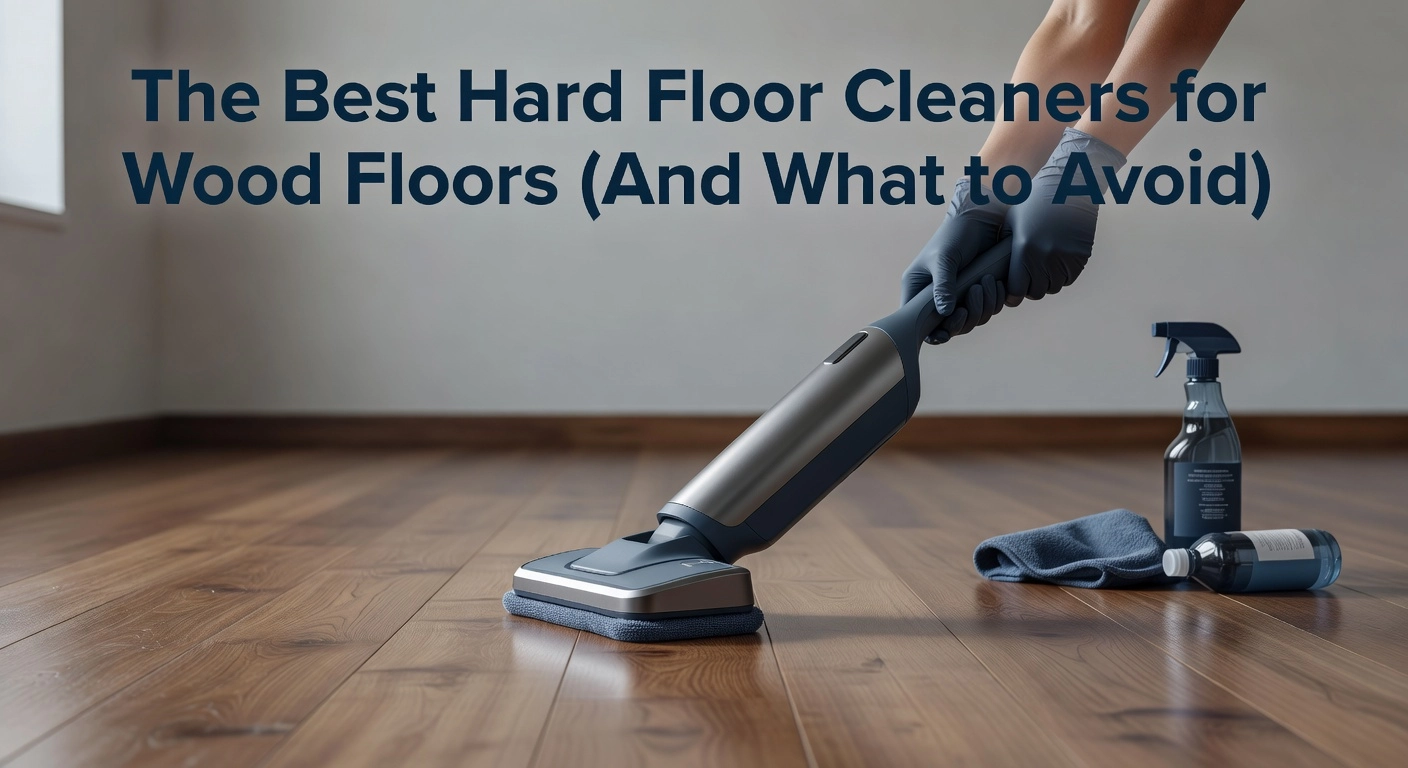
The Best Hard Floor Cleaners for Wood Floors (And What to Avoid)
You just mopped your hardwood floors, stepped back to admire your work, and… they look streaky, dull, or somehow worse than before. Sound familiar? You are definitely not alone. Choosing the right hard floor cleaner for wood floors can feel surprisingly tricky, especially when the shelves are packed with dozens of options all promising amazing results.
Here is the thing: not every cleaner is safe for wood. Some products can strip the finish, leave behind sticky residue, or even cause warping over time. And if you are new to caring for hardwood floors, it is easy to accidentally grab something that does more harm than good.
That is exactly why we put this guide together. We are breaking down the best hard floor cleaner options specifically designed for wood surfaces, so you can keep your floors looking their best without the guesswork. We will also cover what to avoid, because knowing what NOT to use is just as important as knowing what works. By the end, you will feel confident grabbing the right product and getting those floors sparkling clean.
What Makes a Hard Floor Cleaner Safe for Wood Floors
Not all hard floor cleaners are created equal, and using the wrong one on wood floors can quietly cause damage over time. Here are the five things that separate a safe, wood-friendly cleaner from one that will slowly wreck your finish.
1. pH-Neutral Formulas Protect Your Finish
The single most important thing to look for in a hard floor cleaner is a pH-neutral formula, meaning a pH close to 7. Acidic cleaners (like undiluted vinegar) and alkaline cleaners (like ammonia-based products) both gradually eat away at polyurethane and other protective finishes. You may not notice the damage right away, but over months of regular cleaning, your floors will start looking dull, discolored, or worn. According to The Spruce’s hardwood floor cleaner testing, pH-balanced products consistently protect finishes better than alternatives. Always check that the label specifically says “pH neutral” rather than just assuming.
2. Residue-Free and Quick-Drying Formulas Matter Too
Even a pH-neutral cleaner can cause problems if it leaves behind a sticky or hazy residue. Leftover film attracts dirt faster, makes floors look streaky, and builds up into a dull coating over time. Quick-drying formulas are equally important because the less time liquid sits on your wood, the better. Consumer Reports’ lab testing highlights residue-free performance as a key factor when evaluating hardwood cleaners, right alongside cleaning power.
3. Damp Mopping vs. Wet Mopping
This distinction is huge for beginners. Damp mopping means using a well-wrung microfiber mop with just enough moisture to lift dirt. Wet mopping means a soaking-wet mop that leaves water pooling on your floor. Excess moisture seeps into seams and wood pores, causing swelling, cupping, and finish damage. Always wring your mop until it is barely damp, and never let water sit on your wood floors.
4. Multisurface Cleaners Can Work Just as Well
You do not need to buy a separate wood-specific product if you have multiple floor types. Multisurface cleaners that explicitly list “safe for hardwood” on the label can perform just as effectively. The key phrase there is “explicitly listed.” Do not assume any multisurface cleaner is safe for wood without verifying on the label.
5. How to Read a Cleaner Label Quickly
Look for: “pH neutral,” “safe for sealed hardwood,” “residue-free,” and “quick-drying.” Skip anything containing bleach, ammonia, strong acids, or waxes. When in doubt, check the product’s official details and always test in a hidden corner first.
Bona Hardwood Floor Cleaner: Best Overall for Sealed Wood
If you have sealed hardwood floors, this is the cleaner most experts keep coming back to. Bona’s Hardwood Floor Cleaner uses a pH-neutral, water-based formula specifically engineered for polyurethane-sealed surfaces like oak, maple, and engineered hardwood. That gentle chemistry matters a lot because acidic or alkaline cleaners can slowly break down your floor’s protective finish, leaving it dull and vulnerable. Bona plays it safe without sacrificing cleaning power, which is exactly what you want for routine maintenance.
When it comes to performance, independent testing backs it up. Good Housekeeping’s Institute tested over 200 stains and scuffs across 24 different products and named Bona their Best Overall pick. Testers noted it dissolved sticky soil and lifted shoe scuffs faster than competing products, with quick drying and zero residue left behind. For a beginner, residue-free cleaning is huge because buildup is one of the sneakiest ways floors lose their shine over time.
The format options also make it a smart long-term investment. You can start with a ready-to-use 32 oz spray bottle (usually around $8 to $10), then switch to the larger refill jugs for better value per ounce as you get comfortable. According to flooring experts at D&G Floors, the refillable concentrate approach cuts costs significantly compared to buying individual spray bottles repeatedly.
You don’t need any special equipment to use it either. While it pairs nicely with Bona’s own microfiber mop system, any flat microfiber mop works perfectly. Just sweep or vacuum first, spray lightly in small sections, and mop in the direction of the wood grain. Simple, low-risk, and recommended by professional cleaning experts for protecting your floor investment without overcomplicating your routine.
Method Squirt + Mop: Best Eco-Friendly Pick
If you’re looking for a cleaner that’s tough on dirt but gentle on your home and the planet, Method Squirt + Mop Hard Floor Cleaner deserves a serious look. The formula is built from plant-derived and mineral-based ingredients, making it biodegradable and free from harsh solvents, phosphates, and parabens. That matters a lot if you have kids crawling around or pets who spend time on the floor. It’s designed for everyday use without the worry that comes with harsher chemical cleaners.
Performance-wise, Method holds its own against pricier options. Consumer Reports ranked the Method Squirt + Mop at the top of its multisurface floor cleaner category, scoring 63 out of 100 in lab tests that included sealed hardwood, laminate, and ceramic tile. That’s a solid edge in real cleaning performance, and it shows this isn’t just a “green” cleaner that sacrifices results for eco credentials.
The squirt-and-mop design is genuinely clever for beginners. You squeeze the bottle directly onto the floor and mop right over it. No bucket, no diluting, no separate spray bottle step. It saves time on quick weekday cleanups and helps you avoid over-wetting the floor, which is exactly what sealed wood needs.
The almond scent variant leaves a light, pleasant smell without any heavy synthetic fragrance lingering afterward. And at typically under $8 at Target and other major retailers, it’s an easy budget-friendly choice for routine floor maintenance.

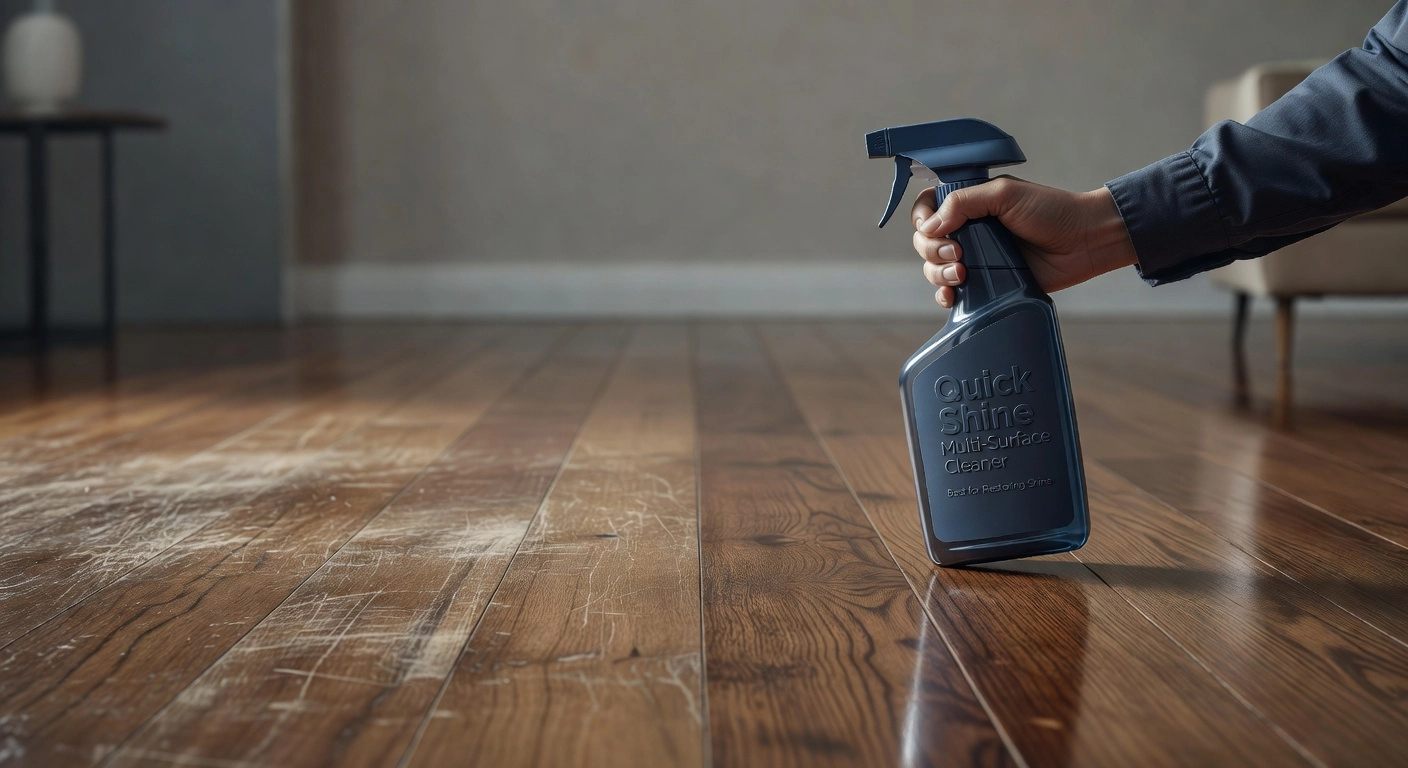
Quick Shine Multi-Surface Cleaner: Best for Restoring Shine
If your hardwood floors are looking dull and tired between deep cleans, Quick Shine Multi-Surface Floor Cleaner does something a little different from a standard cleaner. It combines everyday dirt removal with a light floor-finish enhancer, helping to restore that scuffed or faded look without requiring a full refinishing job. Think of it as a refresh button for floors that have lost their luster but don’t yet need heavy-duty treatment.
Consumer Reports included Quick Shine among its top performers for tackling scuffs on sealed wood surfaces in its April 2026 testing update. In lab tests simulating real-world messes like dried mustard and scuff marks, it held its own alongside other highly rated options, which is reassuring when you’re shopping on a budget.
The no-rinse formula dries quickly and leaves zero sticky or slippery residue when used as directed. It’s also EPA Safer Choice certified, alcohol-free, and ammonia-free, so it’s a solid pick for homes with kids or pets. Better yet, it works on laminate, luxury vinyl plank, tile, and stone in addition to hardwood, making it genuinely practical if your home has a mix of hard floor types.
One important tip: use it as a periodic refresh rather than your daily go-to. Over-applying any product with finish-enhancing ingredients can cause gradual buildup, so think of it as a bi-weekly or monthly treatment rather than an everyday cleaner.
Aunt Fannie’s FlyPunch FloorClean: Best Natural Option
If you’ve been searching for a truly natural hard floor cleaner but keep running into the vinegar problem, Aunt Fannie’s Ultra Concentrated Hardwood Floor Cleaner might be exactly what you’ve been looking for. Here’s the thing about vinegar: it sounds like a safe, natural choice, but its acidity can slowly dull and etch the protective finish on sealed hardwood over time. This cleaner skips the vinegar entirely and uses plant-derived surfactants and mild citric acid instead, giving you the natural cleaning power without the finish-stripping risk.
The formula is built around ingredients like sugar surfactants derived from coconut, orange peel extract, and lemon peel oil, making it a genuinely plant-powered option. That matters a lot for budget-conscious DIY homeowners who want to clean responsibly without spending a fortune on specialty products. It’s also EWG A-rated, cruelty-free, and safe for pets and kids.
One major bonus is the versatility. It works on sealed hardwood, laminate, tile, bamboo, and even natural stone, so you’re not buying separate cleaners for every room. The scent is a light, natural citrus that most households find pleasant without being overwhelming, and it’s formulated to be hypoallergenic for fragrance-sensitive families.
The 32 oz concentrate on Amazon makes up to 16 gallons, which is genuinely budget-friendly. If you want a natural cleaner you can actually trust around your hardwood floors, this one earns a strong recommendation.
The Only DIY Hard Floor Cleaner Worth Trying on Wood
If you’d rather skip the store and mix something up yourself, there are really only two DIY recipes worth trusting on sealed hardwood floors.
The safest option is a few drops of plain mild dish soap (not the degreasing or antibacterial kind) stirred into a gallon of warm water. Two to three drops is genuinely all you need. More soap doesn’t mean cleaner floors; it just leaves a sticky film behind. This simple mix acts as a gentle surfactant that lifts dirt and grime without attacking your floor’s protective finish.
Diluted liquid castile soap works just as well and is a popular choice among budget-conscious DIYers who prefer plant-based ingredients. Use about one teaspoon per gallon of warm water. It cleans effectively and is biodegradable, making it a solid alternative if plain dish soap isn’t your thing.
Now, here’s the one recipe you should ignore, no matter how many times you see it shared online. Vinegar-based floor cleaners dominate DIY blogs because vinegar is cheap, natural, and leaves no residue. The problem is that vinegar is acidic, sitting around a pH of 2.4 to 3.4. Repeated use on sealed hardwood slowly etches the polyurethane finish, leaving it dull, hazy, and more vulnerable over time. The damage builds gradually, so you won’t notice it right away, but eventually your floors will need refinishing sooner than expected.
Before using any homemade mix on the full floor, test it in a hidden corner first, like inside a closet or behind a door. Apply a small amount, let it dry completely, and wait a full 24 hours before checking for dulling or discoloration.
Finally, technique matters just as much as the recipe. Wring your mop until it’s barely damp, no dripping allowed, and follow immediately with a dry microfiber cloth to pull up any leftover moisture before it can soak in.
What You Should Never Use on Hardwood Floors
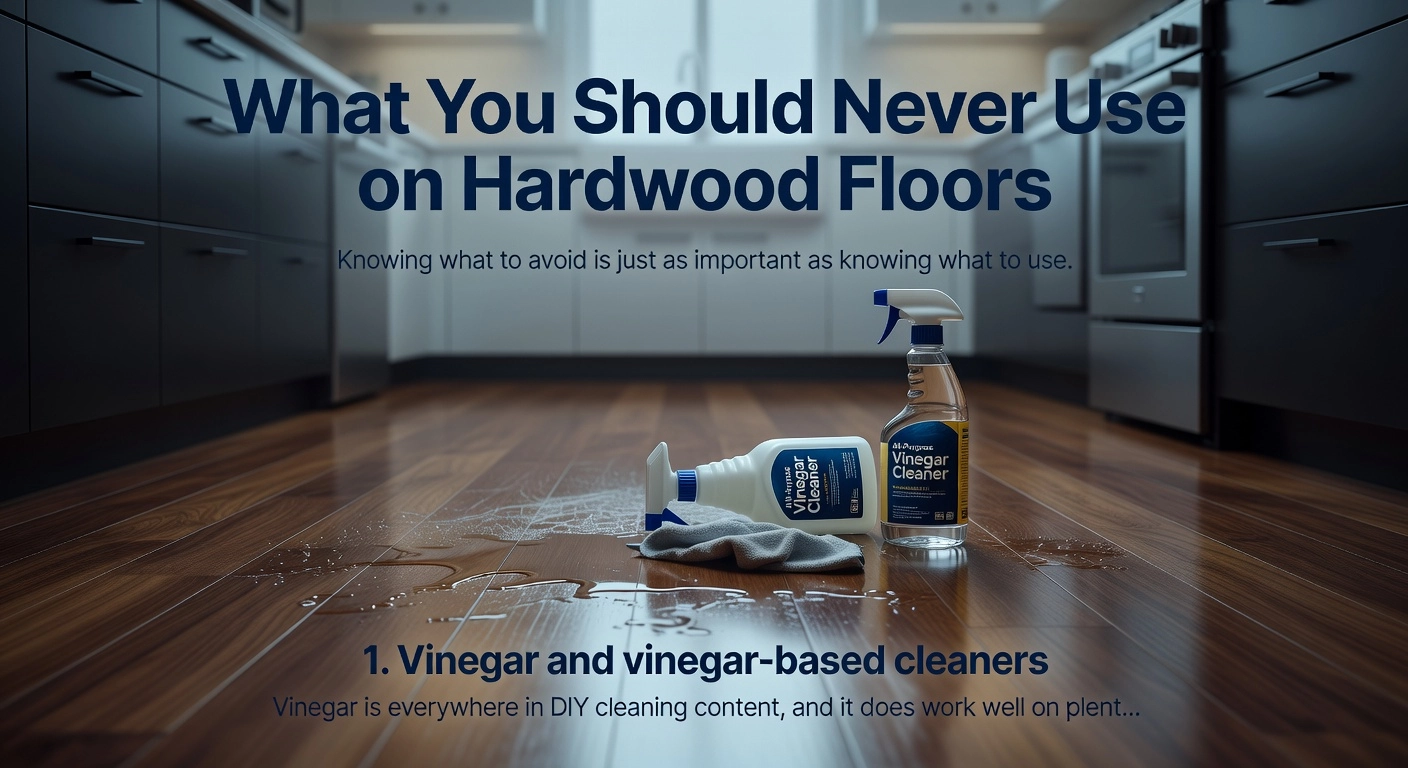
Knowing what to avoid is just as important as knowing what to use. Some of these products are ones you probably have sitting under your sink right now, so this list might surprise you.
1. Vinegar and vinegar-based cleaners Vinegar is everywhere in DIY cleaning content, and it does work well on plenty of surfaces. Hardwood floors, however, are not one of them. The acidity in vinegar gradually eats away at polyurethane and aluminum oxide finishes with each use. You might not notice it happening right away, but over time your finish gets dull, etched, and far more vulnerable to scratches and stains. Stick with pH-neutral cleaners instead.
2. Ammonia and bleach These are aggressive chemicals that strip protective finishes fast. Beyond dulling the surface, they can permanently cloud or discolor the wood itself, and no amount of cleaning will reverse that. If your floor reaches that point, you are looking at a full refinishing job.
3. Oil soaps used in excess A little oil soap occasionally is not catastrophic, but regular use leaves behind a waxy residue that builds up layer by layer. Eventually your floors look dull and feel slightly sticky, and that residue traps dirt like a magnet.
4. Steam mops Heat and moisture are two things wood absolutely hates. Steam forces its way through tiny seams and scratches in your finish, causing boards to swell, cup, or warp. Many flooring manufacturers void warranties the moment steam is used.
5. Wet mops or soaking the floor Even plain water is dangerous if left sitting on wood. Standing moisture causes swelling, buckling, and finish peeling along the edges. Always use a barely damp mop and dry the floor promptly afterward.
The Right Way to Clean Hardwood Floors: Technique Matters
Even the best hard floor cleaner won’t do much good if your technique is working against you. Here’s how to clean hardwood floors the right way, step by step.
1. Always start dry. Before any liquid touches your floor, sweep or vacuum first. Use a soft-bristle attachment or switch your vacuum to the hard-floor setting, and make sure the beater bar is turned off. That spinning brush is great for carpet but will scratch your wood finish. Dry sweeping removes the grit and dust that act like sandpaper under your feet, protecting your floor before cleaning even begins.
2. Mop with the grain, not against it. When you’re ready to mop, always move in the same direction as the wood planks run. This keeps debris from getting pushed sideways into the tiny gaps between boards, where it can cause buildup and long-term damage.
3. Keep your mop barely damp. Wring your flat microfiber mop out thoroughly. It should feel slightly cool and damp to the touch, not wet. Water is hardwood’s biggest enemy, so work in small sections and never let liquid pool on the surface.
4. Deal with spills right away. Don’t wait for your next cleaning session. Blot the spill immediately with a barely damp cloth, then dry the spot completely. A few seconds of attention now prevents staining and finish damage later.
5. Finish with a dry pass. After mopping, do one final sweep with a dry microfiber cloth, paying extra attention to baseboards and floor transitions where moisture tends to collect.
Are Cordless Vac-Mop Combos Worth It for Wood Floors
If you’ve been eyeing one of those sleek cordless vac-mop combos at the store, you’re not alone. Devices like the Tineco Floor One S9 and Bissell CrossWave have become increasingly popular because they combine vacuuming and damp mopping into a single pass. Instead of dragging out a vacuum, then switching to a mop, you handle everything in one go. For busy households, that time savings alone can feel like a game changer.
The market numbers back this up. The U.S. cordless hard floor cleaner segment is growing from roughly $1.2 billion in 2024 toward $2.5 billion by 2033, which tells you consumers are voting with their wallets. People genuinely find these devices worth the investment, especially for homes with kids, pets, or high-traffic open-plan kitchens.
That said, not every model plays nicely with wood floors. Here are the four features worth prioritizing before you buy:
- Auto water-level adjustment: Sensors that detect dirt and modulate how much water hits your floor
- Self-cleaning base: Keeps the roller fresh between uses without extra effort
- Soft roller brush: Gentle enough on sealed hardwood without scratching
- Quick-dry design: Pulls moisture back up efficiently so floors aren’t left wet
The biggest caveat with wood floors is moisture output. Too much water from the roller can raise the grain or affect your finish over time. Always confirm the device has a low-moisture or hardwood-safe mode before using it on sealed wood.
These combos shine brightest in large, open spaces where speed matters. For small spot treatments or delicate areas, a traditional spray mop still gives you more precise control.
Choosing the Right Hard Floor Cleaner for Your Home
At the end of the day, the core rule is simple: pH-neutral, low-residue, and low-moisture always wins on sealed hardwood, no matter which brand or format you choose. If a cleaner checks those three boxes, you’re in good shape.
For most homeowners, Bona and Method are the safest commercial picks. Both are pH-neutral, rinse clean without leaving sticky residue, and dry quickly. If you’re watching your budget, a few drops of mild dish soap diluted in a gallon of warm water works as a backup, just don’t make it a daily habit.
Skip vinegar, steam, bleach, and soaking wet mops regardless of what other sites recommend. They all compromise your floor’s finish over time, and the damage is usually gradual enough that you won’t notice until it’s too late.
Pair any cleaner with a solid routine: dry sweep daily, damp mop weekly, deep clean monthly. Consistency is what actually protects your floors long-term.
Ready to level up your full kitchen wood-care routine? Check out the WoodStuffHQ guides on degreasing kitchen cabinets and caring for butcher block countertops for practical, tested advice that pairs perfectly with everything covered here.
Conclusion
Your hardwood floors deserve the right care, and now you have the knowledge to give it to them. To recap the essentials: always choose a cleaner specifically formulated for wood surfaces, avoid harsh chemicals like vinegar, bleach, and oil soaps, and never over-wet your floors during cleaning. When in doubt, less is more.
The difference between floors that look dull and damaged versus floors that look warm and beautiful often comes down to one simple choice: the product you use.
So take what you have learned here and put it into action. Check your current cleaner against our recommendations, swap out anything that could be causing harm, and give your floors the fresh start they deserve. With the right products in hand, beautiful hardwood floors are not just possible. They are easy to maintain.
Frequently Asked Questions
Can I use vinegar to clean my hardwood floors?
No, vinegar is not safe for sealed hardwood floors despite being widely recommended in DIY cleaning blogs. Vinegar has a pH of around 2.4 to 3.4, which means it is acidic enough to slowly etch and dull the polyurethane or aluminum oxide finish on your floors with repeated use. The damage happens gradually, so you may not notice it for months, but eventually your floors will look hazy and worn and may need refinishing sooner than expected. Stick with pH-neutral cleaners like Bona or Method instead.
What should I look for when choosing a hard floor cleaner for wood floors?
The most important features to look for are a pH-neutral formula (close to pH 7), a residue-free finish, and a quick-drying formulation. You should also avoid any product containing bleach, ammonia, strong acids, or waxes. Check the label for phrases like 'pH neutral,' 'safe for sealed hardwood,' and 'residue-free.' If you have multiple floor types, a multisurface cleaner can work just as well as a wood-specific product, as long as the label explicitly states it is safe for hardwood.
Is it safe to use a steam mop on hardwood floors?
No, steam mops should never be used on hardwood floors. The combination of heat and moisture forces steam through tiny seams and scratches in the finish, causing the wood boards to swell, cup, or warp. Many flooring manufacturers will also void your floor's warranty if steam cleaning is used. Always use a barely damp microfiber mop instead, and dry the floor promptly after mopping to minimize moisture exposure.
What is the correct technique for mopping hardwood floors?
Start by dry sweeping or vacuuming with a soft-bristle attachment and the beater bar turned off to remove grit and debris. Then mop in the direction of the wood grain using a flat microfiber mop that has been thoroughly wrung out so it is barely damp, not wet. Work in small sections and never let water pool on the surface. After mopping, do a final pass with a dry microfiber cloth to pick up any remaining moisture, paying extra attention to baseboards and floor transitions where water tends to collect.
Are cordless vac-mop combo devices safe to use on hardwood floors?
Cordless vac-mop combos can be safe for sealed hardwood floors, but only if you choose the right model with the right features. Look for devices that offer auto water-level adjustment, a soft roller brush, quick-dry design, and a low-moisture or hardwood-safe mode. Too much water output from the roller can raise the wood grain or damage the finish over time. Models like the Tineco Floor One S9 are popular choices, but always confirm hardwood compatibility before purchasing and use the lowest moisture setting available.