
There’s something timeless about climbing into bed each night knowing your frame is built from real, solid wood. But here’s the thing: not all wooden bed frames are created equal. Some will stand strong for decades, while others might start wobbling or warping within just a few years. So how do you know which one is worth your money?
If you’re new to buying furniture or simply want to make a smarter choice for your bedroom, you’ve come to the right place. A good wooden bed frame can completely transform your sleep setup, but choosing the right wood type and knowing how to maintain it makes all the difference between a piece that lasts a lifetime and one that lets you down.
In this guide, we’re breaking everything down into simple, easy-to-follow lists so you don’t have to feel overwhelmed. You’ll learn which wood types are the most durable, which ones fit different budgets, and exactly how to care for your frame once it’s home. Let’s make sure your next bed frame is one you’ll actually love for years to come.
Why a Wooden Bed Frame Is Worth the Investment

If you’ve ever replaced a cheap bed frame after just a few years, you already know the frustration. A quality wooden bed frame flips that experience completely, and the numbers back it up.
Quality hardwood frames made from oak, walnut, or cherry are regularly cited with lifespans of 25 years or more when properly maintained. Compare that to metal frames, which typically last around 10 to 15 years, or particleboard alternatives that can start sagging or delaminating within 3 to 10 years. When you spread that upfront cost across decades of use, solid wood almost always wins on value.
The broader market reflects this confidence. The global wooden bed frames market was valued at $18.6 billion in 2025 and is projected to climb to $29.8 billion by 2034. That kind of sustained growth signals that buyers worldwide consistently choose wood as a premium, long-lasting material worth paying for.
Here is what really sets wood apart from every other option: it is repairable at home. Scratches, water rings, loose joints, and faded finishes can all be fixed with basic tools and a little patience. Upholstered frames wear, sag, and become nearly impossible to restore. Metal frames corrode or crack at the welds. Wood, on the other hand, can be refreshed repeatedly without professional help.
It is also worth noting that solid wood holds roughly 62.5% of the wooden bed frames market by revenue. Buyers who have options consistently choose it over veneers and composites. That preference is not just about looks; it is about knowing the piece can last and be maintained over time. A frame you can restore is genuinely a frame worth buying.
Hardwood vs. Softwood: Which One Should You Buy
Not all wooden bed frames are created equal, and the type of wood matters far more than most beginners realize. The biggest decision you’ll face comes down to hardwood versus softwood, and getting this right can save you a lot of frustration down the road.
Hardwoods like oak, walnut, cherry, acacia, and rubberwood are the clear durability winners. The reason is straightforward: they score significantly higher on the Janka hardness scale, which measures how well wood resists denting and indentation. Red oak sits around 1,290 lbf, white oak at about 1,360 lbf, and black walnut at roughly 1,010 lbf. Compare that to eastern white pine at just 380 lbf, and you start to understand why a pine frame shows scuffs after a single move while an oak frame keeps looking sharp for years. More hardness means fewer touch-ups, less sanding, and a finish that holds up to real life.
Pine is genuinely tempting because it costs less and is sold almost everywhere. If you are on a tight budget or setting up a guest room that sees light use, a well-built pine frame can still do the job. The catch is that pine dents easily from assembly bolts, pet claws, and even a bumped vacuum cleaner. You will need to refinish or patch it more often, and its lifespan in an active household typically falls in the 5 to 10 year range versus 25 or more years for a quality hardwood.
Rubberwood deserves a special mention as a smart middle-ground pick. It comes from rubber tree plantations after the trees finish their latex-producing cycle, so it is genuinely eco-friendly rather than just marketed that way. With a Janka rating around 930 lbf, it performs comparably to cherry and sits well above pine. It costs less than premium oak or walnut while still delivering solid, long-lasting construction.
Walnut and cherry behave differently from oak when scratches or water damage occur, and this surprises a lot of first-time buyers. Cherry has a fine, uniform grain that actually darkens and develops a warm patina over time, which can mask minor wear beautifully. Walnut, with its rich chocolate tones, can look stunning but requires careful finish selection to avoid looking flat or uneven after repairs. Oak’s open grain structure makes scratches more visible in some lighting, but it is also the most forgiving wood to refinish and restore as a beginner.
Here is how to match wood species to your actual life:
- High-activity households with kids, pets, or frequent rearranging should prioritize oak, rubberwood, or acacia for their density and resilience.
- Humid climates benefit from denser hardwoods that resist warping and moisture damage better than softwoods.
- Budget-focused buyers in low-traffic spaces can do well with pine, provided they apply a good protective finish from the start and touch it up regularly.
- Low-maintenance preferences point squarely toward hardwood, where routine dusting and occasional conditioning are often all that is needed.
Knowing your household’s rhythm before you buy is the single most useful thing you can do. The wood species sets the baseline for every care routine you will follow afterward.
Popular Frame Styles and Their Maintenance Profiles
Not all wooden bed frames demand the same upkeep routine. Your maintenance schedule depends heavily on the style you choose, so let’s break down the most popular frame types and what each one actually requires from you.
1. Platform Frames (The Most Popular Style)
Platform bed frames hold roughly 34% of the wooden bed frame market, and it’s easy to see why. They’re sleek, mattress-friendly, and skip the box spring entirely. The catch? That low, enclosed base is basically a dust magnet. Pet hair, debris, and moisture from humidity all collect underneath with nowhere to go. Plan on running a vacuum extension or microfiber mop under the perimeter at least twice a month, and do a full under-bed deep clean every season. In humid climates, this routine matters even more since trapped moisture can quietly encourage mold.
2. Storage Beds with Integrated Drawers
Storage frames are incredibly practical for small spaces, but they add mechanical parts to your maintenance list. Drawer slides, hinges, and rollers all need occasional attention. A quick application of paraffin wax or silicone-based lubricant on the drawer slides every six months keeps things gliding smoothly and prevents that annoying sticking or squeaking. Don’t forget to vacuum out the storage compartments themselves regularly, since dust buildup inside drawers is easy to overlook.
3. Mid-Century Modern and Japandi-Inspired Frames
These styles celebrate exposed joinery and natural, minimal finishes, which looks stunning but means your product choices really show. A heavy polish or the wrong conditioning oil can darken the wood unevenly or leave a sheen that clashes with the matte aesthetic. Stick with light, low-VOC oils applied sparingly, and always test on a hidden spot first.
4. Low-Profile Frames with Tool-Free Joinery
Frames using Japanese-style interlocking joinery are genuinely squeak-resistant right out of the box. However, wood naturally expands and contracts with seasonal humidity shifts, so check your joints at least once a year to make sure everything is still snug. A quick tightening check during your annual spring cleaning works perfectly.
5. Headboard Design and Mixed-Material Care
Solid wood headboards win on simplicity since you can sand, stain, and refinish the entire piece uniformly if scratches or wear appear. Upholstered headboards attached to wooden rails split your maintenance in two directions: the fabric needs vacuuming and spot-cleaning while the wood frame underneath needs separate dusting and conditioning. The attachment hardware is also a dust trap worth wiping down regularly.
Knowing your frame’s specific quirks upfront saves you from guessing games later and keeps your wooden bed frame looking great for years to come.
Wood Finish Types and What They Mean for Your Care Routine
Once you know your frame’s style, the next layer of care comes down to its finish. The finish is the outermost coating on your wooden bed frame, and it controls everything from how you clean it to how you fix damage. Using the wrong product on the wrong finish can cause permanent clouding, white rings, or peeling, so this is worth understanding before you grab any cleaner or conditioner.
1. Oiled Finishes (Linseed Oil, Tung Oil, Danish Oil)
Oiled finishes soak directly into the wood grain rather than sitting on top of it. That gives your frame a warm, natural look and a matte or satin feel that many people prefer over a glossy coat. The trade-off is that oil finishes require reapplication every 6 to 12 months as they gradually wear away with regular use and cleaning. The big upside for beginners is repairability: if your frame gets a scratch, you can clean the spot, lightly sand it, and apply a little fresh oil without refinishing the entire piece.
2. Polyurethane-Sealed Frames
Polyurethane creates a hard protective film on the surface that does a great job resisting moisture and everyday stains. However, when polyurethane scratches, it shows as white or cloudy marks because the film layer is damaged rather than the wood itself. Repairing those marks requires light sanding of the affected area followed by recoating with compatible polyurethane. It is more involved than spot-oiling, but the durability trade-off is worth it for busy households.
3. Painted Wooden Frames
Painted frames look great but require the most attention when damage appears. Chips and scuffs expose raw wood or primer underneath, and color-matched touch-up paint is the only real fix for a clean result. Full repainting is a bigger job because you need to sand or strip the existing coat first; skipping that step leads to peeling and poor adhesion.
4. Wax-Finished Frames
Wax finishes are common on antique-style and artisan pieces. They sit on the surface, providing a soft sheen and light water repellency. Annual reapplication with beeswax or carnauba wax keeps them looking their best, but these finishes are sensitive. Water-based or alcohol-based cleaners can dissolve or degrade the wax layer, leaving a dull, patchy surface that needs to be buffed out and recoated.
5. Why Identifying Your Finish First Matters
Before you apply any cleaner, polish, or conditioner to your wooden bed frame, take a moment to identify the finish. A simple test is to dab a small amount of water in a hidden spot; if it beads up, you likely have a film finish like polyurethane or wax. If it absorbs quickly, you are probably working with an oiled finish. Getting this wrong can mean irreversible damage, especially with water rings on wax finishes or alcohol-based cleaners on oiled wood.
How to Evaluate a Wooden Bed Frame for Sustainability
Sustainability is no longer a niche concern when shopping for a wooden bed frame. Demand for eco-friendly bed frames has grown 45% since 2023, and that shift is reshaping what manufacturers offer and what buyers expect. FSC-certified and reclaimed wood options now command price premiums, but those higher prices reflect real quality and ethical sourcing standards rather than just clever marketing.
Here are five things to look for when evaluating a wooden bed frame through a sustainability lens:
1. FSC Certification in the Product Specs, Not Just the Ad Copy The Forest Stewardship Council (FSC) certification is your most reliable signal that the wood came from a responsibly managed forest. It covers biodiversity protection, workers’ rights, and long-term forest health. The catch is that “sustainable” gets thrown around loosely in product listings. Always look for the actual FSC label in the detailed product specifications or third-party documentation. If a brand is genuinely certified, they will show you the paperwork, not just use the word “eco” in a headline.
2. Reclaimed Wood Brings Character and Responsibility Reclaimed wood frames reduce demand for newly harvested timber and divert material from landfills, which is a genuine environmental win. That said, they come with some trade-offs worth knowing upfront. Prior finishes may need testing or stripping, grain patterns can be irregular, and the wood tends to be more sensitive to moisture fluctuations. Keeping indoor humidity between 40 and 50 percent and avoiding harsh cleaners will help a reclaimed frame last for decades. For a deeper look at your options, The Good Trade’s sustainable wood bed frame guide is a solid starting point.
3. Non-Toxic, Low-VOC Finishes Protect Your Air Quality You spend roughly a third of your life in your bedroom, so what your bed frame off-gasses actually matters. Premium brands increasingly use water-based, plant-based, or natural oil finishes that carry low or zero VOC ratings. Look for GREENGUARD Gold certification or explicit zero-VOC material disclosures. Solid wood with these finishes consistently outperforms particleboard or MDF options, which often use adhesives that continue releasing chemicals long after purchase.
4. Rubberwood Is a Smarter Hardwood Choice Rubberwood comes from rubber trees harvested after their 25 to 30-year latex-producing lifespan ends. Rather than burning or discarding those trees, manufacturers repurpose them into durable furniture, which is a genuine circular-economy benefit. It offers solid density and stability for bed frames, and when sourced from certified plantations, it avoids putting pressure on virgin forests entirely.
5. Cross-Check Claims Against Real Certifications Greenwashing is common in the furniture space. Third-party verifications like FSC, GREENGUARD Gold, or Climate Neutral status carry more weight than vague “natural” or “green” labels. If a brand is serious about sustainability, they will provide spec sheets and supply chain transparency on request.
Assembly Red Flags That Signal Future Maintenance Problems
Knowing what to look for during assembly can save you months of frustrating squeaks and wobbly nights. These red flags are easy to spot in the moment but costly to ignore once your mattress is on and the problems multiply.
1. Loose mortise-and-tenon or dowel joints at the rail-to-post connection. This joint, where the side rails meet the headboard and footboard posts, takes the most stress of any connection on your frame. Every time you get in or out of bed, that corner flexes under load. If the tenon (the protruding peg) fits loosely inside the mortise (the pocket it slides into), micro-movements start immediately. Those tiny movements create friction, and friction creates squeaking. Over months, the wood compresses around the gap and the joint gets sloppier. Construction experts note this is the single most common origin point for bed frame noise and racking.
2. Cam-lock hardware as the only fastening system. Flat-pack wooden frames often use cam locks because they make assembly fast and tool-free. The problem is that cam locks loosen with repeated movement and vibration far more quickly than bolt-through hardware or traditional wood joinery. If your frame relies entirely on these small rotating fasteners with no supplemental bolts or wood-to-wood joinery, plan on regular tightening and a shorter overall lifespan.
3. Thin or widely spaced slats. Slats thinner than about three-quarters of an inch or spaced more than three inches apart will flex noticeably under body weight. That flex creates noise where the slats rub against the frame rails, and it leads to uneven mattress support over time. Just as important: check whether individual slats can be removed and replaced on their own. Common bed frame problems like broken slats become much more expensive when the design forces you to replace the entire frame rather than a single piece.
4. Oversized or off-center pre-drilled holes. Run your finger around each bolt hole before inserting any hardware. If the hole feels noticeably larger than the bolt, or if parts refuse to sit flush because holes are slightly misaligned, you already have play built into the joint. That play accelerates under load, enlarging the hole further and turning a minor wobble into a structural problem within months.
5. The wobble test before placing the mattress. Once fully assembled, push the empty frame gently from side to side. Any noticeable movement is a warning sign that needs attention right now, not later. The mattress adds weight that temporarily masks the problem, but the underlying weakness remains. Tighten every fastener, add rubber washers at loose contact points, or consider returning the frame entirely if the wobble persists.
Everyday Maintenance Routine for Wooden Bed Frames
Good maintenance habits are simple once you know the five core routines that actually protect your wooden bed frame long-term.
1. Dust weekly with a microfiber cloth, always moving along the grain. Flat surfaces like headboards and side rails collect dust and tiny abrasive particles that act like fine sandpaper every time something brushes against them. Over months, that buildup gradually dulls your finish from the outside in. A soft microfiber cloth takes less than five minutes and lifts particles cleanly without scratching. Run it in the direction of the wood grain, not across it, to avoid leaving micro-scratches that catch light and make the surface look hazy.
2. Blot spills immediately; never wipe them. Wiping a spill spreads the liquid across a wider area and pushes it toward finish seams and grain openings. Blotting lifts the liquid straight up. If water sits on bare or thinly finished wood for more than a few minutes, it can begin raising the grain, leaving a rough or slightly rippled texture that is genuinely difficult to reverse without sanding. Keep a clean cloth nearby as a habit, and always follow up by drying the area completely.
3. Use a diluted vinegar solution only on sealed finishes. A 1:10 mix of white vinegar and water works well for cutting light grime on lacquered or varnished surfaces. Apply it sparingly with a damp cloth and dry immediately. However, if your frame has an oiled or waxed finish (covered in the finish types section earlier), skip the vinegar entirely. Acid strips those protective layers and leaves the wood vulnerable. Check the Happy Beds wooden furniture care guide if you are unsure which approach suits your specific finish.
4. Polish with beeswax or food-grade linseed oil every three to six months. This step applies specifically to oiled and waxed finishes. A thin coat of beeswax or linseed oil penetrates the surface, replenishes moisture, and builds a light barrier that makes future spills easier to wipe off. Apply sparingly, let it absorb for a few minutes, then buff with a clean cloth. Over-applying causes waxy buildup, so less is genuinely more here.
5. Position your frame away from direct sunlight and heating vents. UV exposure breaks down the lignin in wood fibers over time, fading the natural color and dulling the tone. Heating vents create repeated cycles of expansion and contraction that stress joints and cause surface cracking. If repositioning is not possible, UV-filtering window film or curtains offer real protection without blocking light entirely. Small placement decisions made early save significant refinishing work later.
Common Wooden Bed Frame Problems and How to Fix Them
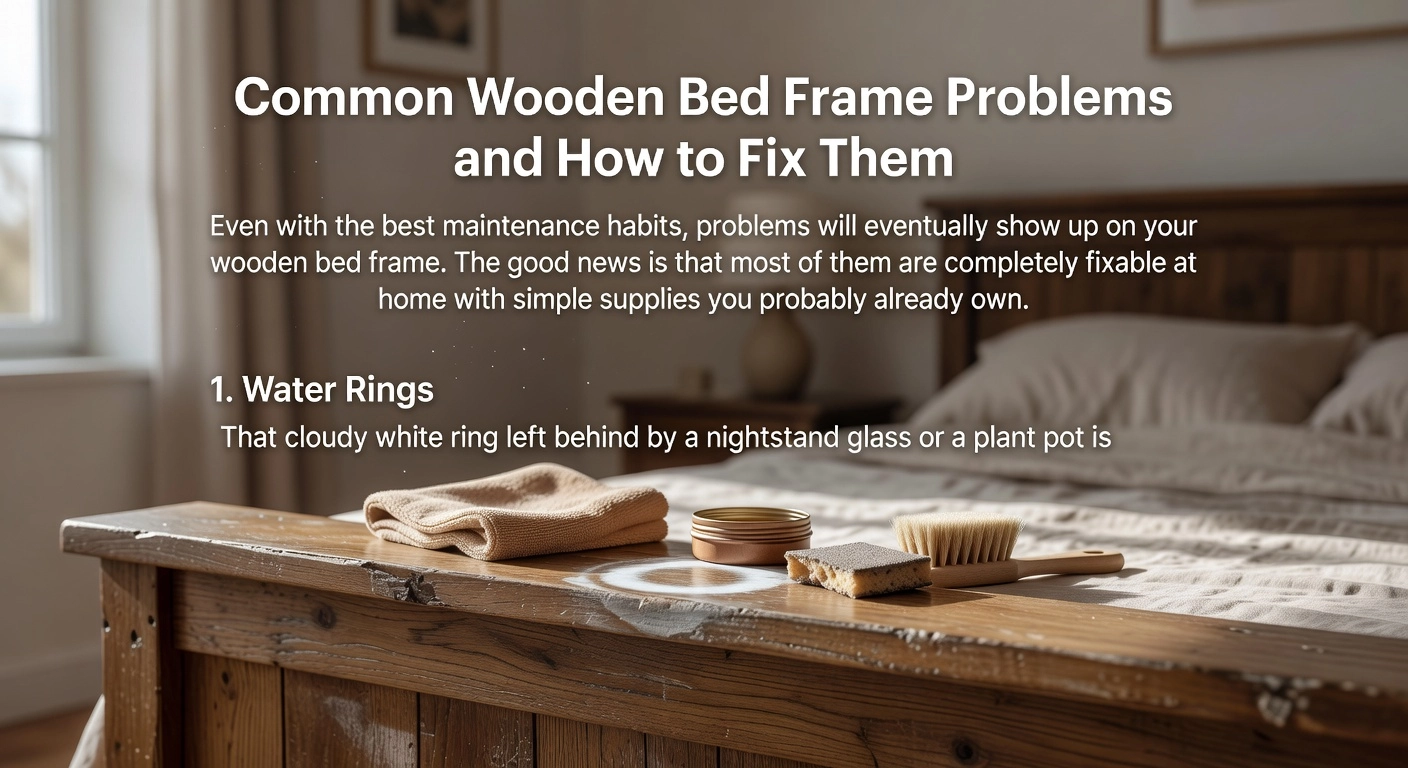
Even with the best maintenance habits, problems will eventually show up on your wooden bed frame. The good news is that most of them are completely fixable at home with simple supplies you probably already own.
1. Water Rings
That cloudy white ring left behind by a nightstand glass or a plant pot is one of the most common complaints you’ll hear from wooden bed frame owners. The ring usually sits in the finish rather than deep in the wood itself, which means it’s more treatable than it looks. Mix a small amount of baking soda with non-gel toothpaste into a thick paste, then apply it gently with a soft cloth, moving along the grain rather than in circles. Buff it out, wipe the area clean, and follow up with a light polish. About 70% of DIY restorers find that simple household remedies like this handle minor rings effectively without any specialist products.
2. Scratches on Oiled or Waxed Frames
Oiled and waxed finishes look beautiful, but they do pick up scratches more visibly than sealed lacquer finishes. For minor surface scratches, dab a small amount of matching-tone furniture wax or Danish oil directly onto the mark using your fingertip. Work it into the scratch gently, let it sit for a few minutes, then buff along the grain with a clean cloth. The wax or oil fills in the mark and blends it with the surrounding wood. Deeper gouges may need light sanding before re-oiling, but most everyday scratches respond well to this quick fix.
3. Squeaking Joints
Squeaks typically come from wood-to-wood friction at the rail connection points, especially as seasonal humidity causes the wood to expand and contract. The fix is straightforward: disassemble the joint, rub beeswax or a dry bar of soap across both contact surfaces, then reassemble. The wax acts as a dry lubricant, reducing friction without attracting dust or making a mess. No special tools are required, and the squeak usually disappears entirely after reassembly.
4. Loose Bolts
Loose hardware causes more wobbling and noise than most people expect. Make it a habit to tighten all bolts every 6 to 12 months as part of your regular maintenance check. If a bolt hole has become stripped and won’t hold, fill it with a small amount of wood glue and push in a wooden toothpick to bulk it out. Once the glue sets fully, re-drill a pilot hole and reinsert the bolt. It’s a surprisingly effective fix that restores a solid hold without replacing any parts.
5. Cracked Side Rails
A hairline crack along a side rail is worth addressing quickly before it spreads. Apply wood glue directly into the crack, press the wood together firmly, and clamp it overnight. Once dry, sand the area smooth and touch up the finish. However, if the crack runs through a load-bearing joint or if you notice the frame flexing under normal weight, that’s a signal to stop using it as-is. Structural cracks in joints can compromise safety, and at that point a professional assessment or replacement is the smarter path forward.
How Humidity and Seasons Affect Your Wooden Bed Frame
Wood is a living material, even after it’s been milled and built into a bed frame. It constantly responds to the moisture in the air around it, a property called being hygroscopic. During humid summer months, wood absorbs moisture from the air and swells slightly. When dry winter heating kicks in and indoor air gets parched, wood releases that moisture and shrinks. These small but repeated cycles are what cause joint gaps, surface cracks, and warping over time. Even a kiln-dried hardwood frame will keep adjusting to its environment throughout its entire life.
The single most effective thing you can do to protect your wooden bed frame is control your indoor humidity. Aim to keep your home’s relative humidity between 35% and 55% year-round. That stable range limits how much the wood expands and contracts, which directly reduces stress on joints, finishes, and the wood fibers themselves. A basic hygrometer costs under $15 and takes the guesswork out of monitoring. Run a humidifier during dry heating season and use air conditioning or a dehumidifier during muggy summer stretches.
If your frame is made from reclaimed wood or features an irregular, open grain, pay extra attention during dry seasons. These pieces have variable density and uneven moisture uptake, which makes them more reactive to humidity swings. Applying a penetrating oil or paste wax every four to six weeks through the driest months helps replenish natural moisture and keeps the fibers from drying out and splitting.
Your climate matters too. Coastal and high-humidity regions tend to cause swelling and finish bubbling, while dry inland and high-altitude climates push frames toward cracking at joints and end grain. Knowing your local risk helps you decide whether a humidifier or dehumidifier deserves priority.
When the winter heating season starts, run through this quick checklist:
- Inspect every joint for visible gaps or looseness
- Tighten all bolts and hardware with the appropriate wrench or allen key
- Apply a fresh coat of conditioning oil or paste wax to the entire frame
- Move the frame away from heating vents or radiators if it sits too close
That one annual check-in, done before dry air does its worst, goes a long way toward keeping your frame tight and crack-free for years to come.
When to Refinish Your Wooden Bed Frame Instead of Replacing It
Before you spend hundreds of dollars on a new wooden bed frame, it is worth asking one honest question: is the problem structural or cosmetic? The answer determines everything.
Refinishing makes sense when the bones of the frame are still solid. Run your hand along the joints where the headboard meets the side rails. Push gently on the corners. If everything holds firm without flex or creaking, and the wood itself feels hard and dense, you are likely dealing with a surface problem rather than a structural one. Common cosmetic issues that respond well to refinishing include a faded or yellowed finish from sunlight exposure, light surface scratches from moving the frame or vacuuming nearby, and water stains or product buildup that have not soaked deep into the grain. These are purely visual problems, and sanding them away costs a fraction of replacement.
The basic refinishing sequence is beginner-friendly and typically fits into a weekend. Start by lightly sanding the wood with 120 to 150 grit sandpaper, always moving along the grain, never across it. Cross-grain sanding leaves scratches that show through the final finish. Once the old surface is dulled and smooth, wipe everything down with a tack cloth to lift every bit of dust. If you want a new color, apply a wood stain or pre-stain conditioner in thin, even coats with a brush or rag. Then seal the surface with a coat of polyurethane for durable protection, or use a penetrating oil finish for a softer, more natural look. Supplies typically run between $40 and $80 total.
Refinishing is also a smart way to update the style of an older frame. If your frame has a heavy, glossy polyurethane coat that feels dated, sanding it back and applying a matte oil finish can bring it in line with current minimalist or Japandi-inspired bedroom aesthetics, which favor clean lines, natural wood grain, and low-sheen surfaces.
For frames with deep staining or significant darkening from old water damage, oxalic acid wood bleach is an accessible option before restaining. It is sold as a powder you mix with water, and it targets iron-based stains and general discoloration effectively. Work in a ventilated space, wear gloves and eye protection, apply it to bare wood, let it work, then rinse and allow the wood to dry fully before sanding lightly and proceeding with stain and sealer. Always test a small hidden area first.
Replacement becomes the right call when the damage goes beyond the surface. Cracked side rails at load-bearing joints, slat supports broken in multiple spots, or soft spongy areas in the wood are signs of rot from prolonged moisture exposure. No amount of sanding fixes a compromised joint or reverting rot. If your frame shows any of these issues, refinishing would only mask a safety risk rather than solve it.
DIY Polish and Conditioner Recipes Tested on Bed Frame Wood
If you want to skip the store and mix something up yourself, these three tested recipes cover the most common situations you’ll run into with a wooden bed frame.
1. Beeswax Polish (Best for Regular Maintenance)
This is the most beginner-friendly DIY product you can make. Melt 1 part beeswax with 4 parts mineral oil or jojoba oil in a double boiler, never directly over a flame since wax is flammable. Once fully combined, pour the mixture into a small tin or mason jar and let it cool into a soft paste. Apply a thin layer with a lint-free cloth, buff along the grain, and you’re done. This recipe works beautifully on oiled or waxed finishes and gives you 3 to 4 months of protection per application. It builds a light surface sheen and adds genuine water resistance without clogging the wood’s pores.
2. Linseed Oil Conditioner (Best for Dry or Cracked Wood)
If your frame looks parched, with visible cracks or a dull, chalky surface, beeswax alone won’t solve the problem. Mix boiled linseed oil with mineral spirits at a 1:1 ratio and apply it generously, letting it soak for at least 30 minutes before wiping away the excess. This blend penetrates far deeper than any surface polish, delivering moisture directly into the wood fibers. Let it dry overnight before applying anything else on top. Think of this as the conditioning step that comes before polishing, not a replacement for it.
3. Vinegar and Olive Oil Mix (Use With Caution)
A 1:2 ratio of white vinegar to olive oil gets shared constantly online, and it does produce a nice temporary shine. However, it belongs only on sealed polyurethane finishes where the oil stays on the surface. On bare, oiled, or porous wood, olive oil penetrates and can go rancid over time, leading to sticky residue or unpleasant odors. Save this recipe for your sealed frames only.
Quick Comparison
Beeswax delivers the best surface sheen and water resistance for routine upkeep. Linseed oil works better for deeply dried-out wood that needs conditioning first. Commercial blended products offer a reliable middle ground with consistent, tested formulations when you’d rather skip the DIY process entirely.
Regardless of which recipe you choose, always test it on a hidden spot first, underneath the frame rail or on the back of a slat. This matters especially with reclaimed or antique frames where the original finish type is genuinely unknown.
Wooden Bed Frame Buying Checklist Before You Decide
Before you hand over your credit card, running through this quick checklist can save you from a purchase you will regret within the first year.
1. Confirm the wood species and whether you are getting solid wood or veneer over engineered wood. The product listing matters here, so look for explicit language like “solid oak” or “kiln-dried walnut” rather than vague terms like “wooden” or “wood-finish.” Solid hardwoods including oak, walnut, acacia, and rubberwood justify higher price tags because they can be sanded, refinished, and repaired when scratches or water rings appear. A veneer frame looks identical in photos but cannot handle the same repairs, and damage to the surface layer is often permanent.
2. Check the finish type and read what the manufacturer recommends for cleaning and conditioning. This step matters more than most shoppers realize. Using an oil-based conditioner on a frame sealed with polyurethane, or spraying a harsh all-purpose cleaner on a wax-finished surface, can dull the finish and void your warranty. Look for specific care instructions in the product specs, not just the marketing copy.
3. Research the joint construction before committing. Mortise-and-tenon joints and bolt-through connections resist movement in multiple directions and hold up far better under nightly use than cam-lock hardware found in flat-pack furniture. Cam-lock systems loosen over time, which is the leading cause of squeaky wooden bed frames.
4. Verify sustainability claims in the technical specs, not the headline. If FSC certification matters to you, look for the actual certification number rather than phrases like “sustainably sourced.” The same applies to low-VOC or non-toxic finish claims; a GREENGUARD Gold certification in the specs is meaningful, while “natural finish” in the headline is not.
5. Calculate the total cost of ownership before deciding a cheaper frame is the smarter buy. A $400 pine frame typically lasts 7 to 10 years before joints fail or wood deteriorates. Replacing it twice over 25 years costs $800 before accounting for disposal. A $1,200 hardwood frame, maintained with $20 to $40 in annual conditioning products, stays functional and attractive for 25 or more years, making it the more economical choice over time.
Putting It All Together: Buying Smart and Caring for the Long Haul
Of all the decisions covered in this guide, two will shape everything else: the wood type you choose and the finish on top of it. Get those two right, and you set yourself up for low maintenance costs and decades of solid performance. Get them wrong, and you are fighting an uphill battle from day one.
The repair-over-replace mindset makes that investment pay off. Keep it simple with three habits: a monthly dusting pass using a microfiber cloth, a seasonal conditioning session every three to six months (especially important for oil and wax finishes), and an annual hardware check where you tighten bolts, inspect slats, and catch squeaks before they get worse.
Before you buy any cleaner or polish, identify your finish type first. Using the wrong product on a sealed versus an oil-finished frame can cause clouding or permanent surface damage.
For specific problems, WoodStuffHQ has beginner-friendly tutorials covering water ring removal, scratch repair, squeaky furniture fixes, and full refinishing walkthroughs. Real issues get real solutions, no guesswork needed.
A wooden bed frame maintained with basic DIY care is genuinely a 25-plus year investment. That kind of longevity pays back far beyond the purchase price, in comfort, style, and money saved on replacements you will never need to make.
Conclusion
Choosing the right wooden bed frame does not have to be complicated. To recap the key takeaways: hardwoods like oak, maple, and walnut offer the best long-term durability; your budget will help narrow down the best wood type for your needs; and consistent, simple maintenance will dramatically extend the life of any wooden frame.
A great bed frame is more than just furniture. It is an investment in your sleep, your comfort, and your home. With the right knowledge, you can make a choice you will feel confident about for years to come.
Ready to find your perfect frame? Start by setting your budget, deciding on your preferred wood type, and browsing options from reputable sellers. Your ideal bedroom setup is closer than you think, and it all begins with one smart, well-informed decision.
Frequently Asked Questions
How long does a quality wooden bed frame actually last compared to other types?
A quality hardwood bed frame made from oak, walnut, or cherry can last 25 years or more when properly maintained. This significantly outperforms metal frames, which typically last 10 to 15 years, and particleboard alternatives that can start sagging or delaminating within just 3 to 10 years. The key advantage of solid wood is that it can be repaired, refinished, and restored at home, extending its lifespan in ways that metal or upholstered frames simply cannot match.
What is the best wood type for a wooden bed frame if I have kids and pets?
For high-activity households with kids and pets, oak, rubberwood, or acacia are your best choices due to their high density and resilience. These hardwoods score significantly higher on the Janka hardness scale, meaning they resist denting, scratching, and everyday wear far better than softer options like pine. Rubberwood is a particularly smart pick as it offers solid durability comparable to cherry wood at a lower price point, while also being an eco-friendly option sourced from rubber tree plantations.
How do I know what finish is on my wooden bed frame before cleaning or conditioning it?
You can identify your frame's finish with a simple water test. Dab a small amount of water on a hidden spot and observe what happens. If the water beads up on the surface, you likely have a film finish such as polyurethane or wax. If the water absorbs quickly into the wood, you are probably working with an oiled finish. This distinction is critical because using the wrong cleaning product, such as vinegar on an oiled or waxed frame, can strip the protective layer and cause permanent damage.
What causes a wooden bed frame to squeak and how can I fix it?
Squeaking in wooden bed frames is most commonly caused by wood-to-wood friction at the joint connection points, particularly where the side rails meet the headboard and footboard posts. Seasonal humidity changes cause wood to expand and contract, creating micro-movements that produce noise over time. The fix is straightforward: disassemble the squeaky joint, rub beeswax or a dry bar of soap across both contact surfaces, and then reassemble. The wax acts as a dry lubricant that eliminates friction without attracting dust, and the squeak typically disappears entirely after reassembly.
When should I refinish my wooden bed frame instead of replacing it?
Refinishing is the right choice when the frame's structure is still solid but the surface shows cosmetic issues like a faded or yellowed finish, light scratches, or water stains. If joints feel firm without flexing or creaking and the wood feels hard and dense, you are dealing with a surface problem that can be fixed for $40 to $80 in supplies over a weekend. Replacement becomes necessary when damage is structural, such as cracked side rails at load-bearing joints, multiple broken slat supports, or soft spongy areas indicating wood rot from prolonged moisture exposure, as no amount of refinishing can safely fix those issues.
1 thought on “Wooden Bed Frames: Which Wood Lasts and How to Care for It”