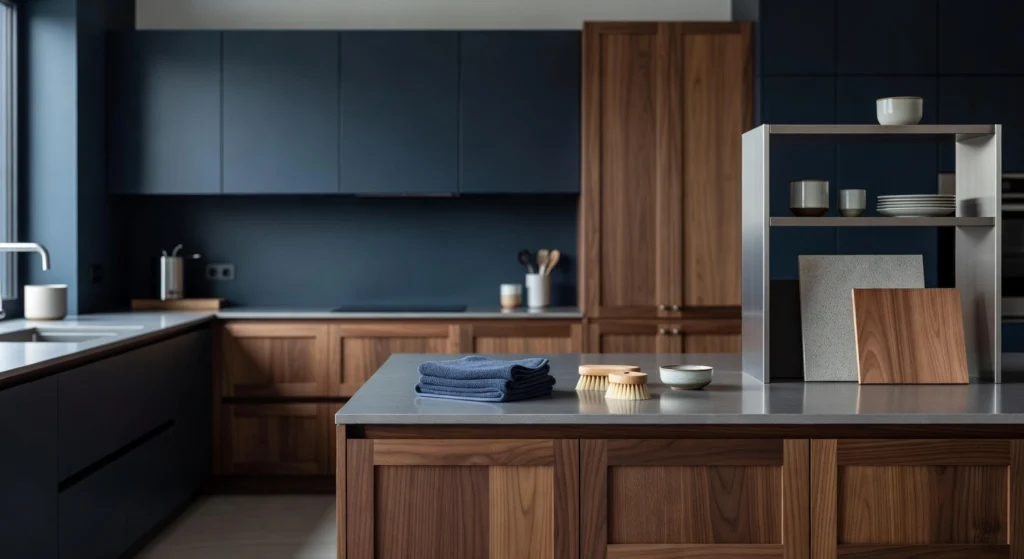

Your kitchen is the heart of your home, and the units you choose can make or break both its functionality and style. Whether you are planning a full renovation or simply upgrading your storage, understanding kitchen units is the essential first step toward creating a space that truly works for you.
Kitchen units come in a surprising variety of types, materials, and finishes, and navigating all those options can feel overwhelming, especially if you are new to home improvement. The good news is that with the right guidance, making smart choices becomes much more straightforward.
In this guide, we have broken everything down into simple, digestible sections designed specifically for beginners. You will discover the main types of kitchen units available, the most popular materials and what sets them apart, how to properly care for wooden units to keep them looking their best, and the top design trends heading into 2026. By the time you finish reading, you will have a solid foundation of knowledge to help you shop with confidence and create a kitchen that is both beautiful and built to last.
The Main Types of Kitchen Units Explained
Before you choose a cabinet finish, pick a paint color, or plan a DIY restoration project, you need to understand the fundamental building blocks of any fitted kitchen. Kitchen units fall into four main categories, and each one serves a distinct purpose in your layout.
1. Base Units
Base units are the backbone of every kitchen. They sit directly on the floor and support your countertop, bringing the working surface to a standard height of roughly 900mm once the countertop is added. The carcass itself typically measures 720mm high, with widths available in 300mm, 400mm, 500mm, and 600mm increments to suit different layouts. Inside, you will find configurations including single or double doors with fixed shelves, deep pan drawers for heavy cookware, multi-drawer setups for utensils, and sink base units with cutouts for plumbing. Because base units carry the most weight and endure the most daily wear, the materials and finishes you choose here matter enormously for long-term durability.
2. Wall Units
Wall units mount directly above the countertop, adding valuable vertical storage without taking up any floor space. They are ideal for lighter, frequently accessed items such as plates, glasses, spices, and dry goods. These units come in single-door, double-door, and bridging configurations. Bridging units are shorter cabinets that span gaps above appliances, sinks, or windows, creating visual continuity and filling awkward empty spaces. Standard wall unit depths run between 300mm and 400mm, keeping them from intruding too far into your workspace. You can explore a full breakdown of cabinet types and configurations to understand how wall units integrate with the rest of your layout.
3. Tall Units and Pantry Cabinets
Tall units, also called pantry or larder cabinets, run from floor to ceiling and deliver the highest storage capacity of any unit type. They typically reach between 2100mm and 2400mm in height and can house pull-out shelves, integrated appliances like ovens and refrigerators, or dedicated food storage zones. According to the 2026 U.S. Houzz Kitchen Trends Study, pantry cabinets are now the top built-in feature added during renovations, chosen by 47% of remodeling homeowners. That figure reflects a broader shift toward organized, clutter-free kitchens where every item has a designated place. For a detailed comparison of base, wall, and pantry cabinets, it helps to see how each type contributes to the overall storage plan.
4. Specialty Units
Specialty units solve the layout problems that standard cabinets cannot address on their own. Corner solutions are among the most important; dead corner space is notoriously difficult to access, but carousel units with rotating shelves and Le Mans pull-out systems with swinging shelf arms make those areas fully functional. Appliance housing cabinets are tall or base units engineered to integrate ovens, microwaves, or dishwashers behind matching cabinet doors for a seamless, built-in look. Narrow pull-out racks dedicated to wine bottles, spice jars, or foil rolls slot neatly into gaps between standard units. Reviewing different types of kitchen cabinet styles can help beginners identify which specialty options make sense for their specific space.
5. Why Unit Type Knowledge Comes First
Mapping out which unit types belong in your kitchen is the essential first step before you make any decisions about materials, door styles, or finishes. A kitchen built around well-chosen base, wall, tall, and specialty units will work efficiently every day, and when you eventually refinish, repair, or restore those cabinets, you will already understand what each component needs to perform at its best.
What Kitchen Units Are Made From: A Material Breakdown
According to Mordor Intelligence’s US kitchen furniture market data, wood and wood-based materials accounted for approximately 61% of all kitchen furniture materials in the United States in 2025. That single statistic tells you everything you need to know about why understanding wood types matters so much when you are planning to buy, restore, or maintain kitchen units. Whether you are dealing with a flat-pack budget kitchen or a custom-built installation, the material your units are made from will directly determine how you care for them, how long they last, and what DIY repair options are available to you.
1. Solid Hardwood
Solid hardwoods such as oak, walnut, beech, and maple represent the gold standard for kitchen unit construction. These materials offer outstanding durability, genuine warmth, and a natural grain that improves in character with age. The most significant advantage for any homeowner is refinishability; solid hardwood can be sanded back, re-stained, and refinished multiple times over its lifespan, which is something composite materials simply cannot match. If your oak cabinet doors develop scratches or water rings, those problems are fixable with the right technique and finish. This long-term repairability makes solid hardwood a genuinely cost-effective choice when you factor in decades of use rather than just the upfront price.
2. MDF (Medium-Density Fiberboard)
MDF is an engineered wood product made from compressed wood fibers and resin, and it appears frequently in painted kitchen doors and cabinet fronts. Its surface is exceptionally smooth and uniform, which means it accepts paint without the grain telegraphing through, making it a popular choice for clean, contemporary kitchens. MDF also resists warping better than some solid wood alternatives in stable indoor environments. The critical weakness, however, is moisture vulnerability. Kitchen environments expose cabinetry to steam, splashes, and humidity on a daily basis, and any unsealed MDF edge will absorb water rapidly, causing swelling and irreversible damage. Proper edge banding and a fully sealed finish are non-negotiable if your kitchen units include MDF components.
3. Plywood Carcasses
The box structure, or carcass, that forms the body of a kitchen unit is where plywood genuinely earns its reputation. Plywood is constructed from cross-grained veneer layers bonded together, which gives it superior screw-holding strength compared to particleboard and significantly better resistance to moisture-related swelling. Experienced cabinet makers consistently favor plywood carcasses for this reason, and units built with cabinet-grade plywood often last 20 to 30 years with proper care. If you are evaluating kitchen units for a new installation, checking whether the carcass is plywood or particleboard is one of the most practical quality checks you can perform.
4. Particleboard and Chipboard
Particleboard, also called chipboard, is manufactured from compressed wood particles and adhesive resin. It is the most affordable wood-based material available, and it is the backbone of most flat-pack and ready-to-assemble kitchen ranges. Material comparisons from cabinet industry sources consistently highlight particleboard’s budget appeal alongside its primary limitation: a high susceptibility to water damage. Even minor exposure to moisture at edges or base panels can cause the material to swell and crumble over time. If your kitchen units are particleboard-based, consistent and proactive wood care becomes especially important. Keeping edges sealed, wiping spills immediately, and ensuring good ventilation under the sink are all practices that can meaningfully extend the lifespan of these units.
Understanding what your kitchen units are made from is not just academic knowledge. It directly shapes every maintenance, repair, and refinishing decision you will make as a homeowner, which is exactly where the practical guidance in the following sections becomes most useful.
How Kitchen Units Are Built: Frame, Frameless, and Flat-Pack
Understanding how your kitchen units are physically constructed is just as important as knowing what they are made from. Construction method shapes everything from how cabinets look and how much storage space they offer, to how you should approach repairs, refinishing, and long-term wood care.
1. Face-Frame Construction
Face-frame cabinets are the traditional North American standard, and they remain the dominant style in the US, holding roughly 55 to 60 percent of the market as of 2025 and 2026. This method attaches a solid wood border, typically made from hardwood rails and stiles around 1.5 inches wide, to the front of the cabinet box. That frame adds meaningful structural rigidity and creates the visible borders you see between doors and drawers. It also provides a reliable mounting surface for hinges and hardware. For DIY maintenance, face-frame units are relatively forgiving. The frame itself can be sanded, stained, or refinished independently from the door faces, which makes targeted touch-up work more manageable. The frame also helps conceal minor wall imperfections during installation, which is one reason builders and renovators continue to favor this approach for traditional, transitional, and farmhouse-style kitchens.
2. Frameless (European-Style) Construction
Frameless cabinets, sometimes called full-access or European-style cabinets, eliminate the face frame entirely. Doors and drawers mount directly to the thicker side panels of the cabinet box, typically three-quarter-inch plywood or engineered board, using concealed hinges. The result is a flush, clean-lined appearance with full-overlay doors that cover the entire cabinet opening. Practically speaking, frameless units offer 10 to 15 percent more usable interior space and significantly wider drawer openings compared to their face-frame counterparts. This construction style is growing steadily, now accounting for 40 to 45 percent of the US market, driven by demand for modern aesthetics and spatial efficiency. From a maintenance perspective, frameless units require more precise hinge adjustments and careful attention to exposed edge banding during refinishing. Sanding too aggressively can compromise thin veneer edges, so gentler wood care methods are advisable.
3. Ready-to-Assemble (RTA) Flat-Pack Units
RTA flat-pack units are one of the fastest-growing segments in kitchen cabinetry, fueled by DIY demand, e-commerce growth, and significant cost advantages. According to current market data, RTA cabinets can save buyers 30 to 50 percent compared to pre-assembled options. Components arrive boxed and flat, joining together via dowels, cam locks, or screws. While quality varies widely, the most durable RTA units use plywood construction with CARB-compliant materials. One consideration that beginners often overlook is that factory finishes on RTA units, whether thermofoil, laminate, or painted surfaces, frequently benefit from an additional sealing or topcoat application. High-moisture kitchen environments accelerate wear on these finishes, and a compatible clear coat or sealer significantly extends their lifespan and resistance to chipping and fingerprinting.
4. Custom-Built Units
Custom-built kitchen units sit at the opposite end of the spectrum from flat-pack. They are constructed to exact specifications using joinery techniques such as mortise-and-tenon, dovetails for drawer boxes, dados, and rabbets. This approach demands woodworking skills, appropriate tooling including table saws and routers, and a solid understanding of how kitchens place stress on cabinetry through weight, moisture, and daily use. The payoff is superior fit, premium material selection, and exceptional longevity. Custom builds represent a smaller share of the overall market but are the gold standard for unique layouts and luxury finishes.
5. Why Construction Type Matters for Wood Care
Your cabinet’s construction method is the single most important factor in determining which repair and refinishing approaches are safe and effective. Face-frame units support more aggressive sanding and spot refinishing. Frameless units need precise alignment tools and careful edge treatment. RTA units require protective topcoats and gentle cleaning products that won’t lift factory finishes. Custom units demand that any repair work matches the original joinery and substrate. Always identify your construction type before reaching for sandpaper, a brush, or any wood care product.
2026 Kitchen Unit Trends Worth Knowing Before You Renovate
If you are planning a kitchen renovation in the near future, understanding where design is heading will save you from making choices that already feel dated before the grout has dried. The 2026 trend landscape is clear, well-documented, and genuinely useful for anyone choosing kitchen units right now.
1. The ‘Newstalgic’ Aesthetic Is Defining 2026 Kitchens
The single most important design concept shaping 2026 kitchen units is what industry insiders are calling “newstalgic” style. This approach blends vintage warmth and character with thoroughly modern function, combining the comfort of familiar forms with the practicality that contemporary households demand. Think subtle Shaker proportions paired with integrated technology, or classic material warmth expressed through clean, uncluttered lines. The key principle is restraint: one or two vintage-inspired touches rather than a full period reproduction. According to detailed 2026 kitchen cabinet trend analysis, flat-front doors paired with durable wood or quality laminates are central to achieving this look while keeping long-term maintenance manageable.
2. Warm Neutrals Are Replacing White and Cool Gray
All-white kitchens dominated for well over a decade, but 2026 data shows a decisive shift toward warmer palettes. Taupe, mushroom, and khaki are now the leading neutral choices, creating an organic, lived-in atmosphere that cool whites simply cannot deliver. Beyond neutrals, sage greens are gaining ground rapidly, followed closely by navy and indigo tones that work particularly well on kitchen islands or accent units. NKBA-linked research cited in 2026 warm kitchen trend coverage suggests warm neutrals are cited by roughly 96% of surveyed designers as a top color direction, with sage and earthy greens at approximately 86% popularity. If you are refinishing existing units rather than replacing them, these palettes are highly achievable with the right preparation and a quality matte topcoat.
3. Natural Wood Finishes Are Outpacing Painted Surfaces
White oak leads the wood resurgence at around 51% popularity among cabinetry choices, with walnut and rift-sawn oak close behind. For the first time in years, natural wood grain is genuinely outpacing painted cabinet finishes as the preferred surface treatment. This shift reflects a broader consumer appetite for organic, tactile materials that connect a kitchen to the natural world. Mixed approaches, combining painted lower units with natural wood uppers or a wood-faced island, are also common and offer a practical middle ground for renovation budgets.
4. Matte Finishes and Clean Door Profiles Are In; High-Gloss Is Out
Matte lacquers and subtly textured surfaces now dominate the finish category, valued for their understated appearance, fingerprint resistance, and low-maintenance properties. Slim Shaker profiles and flat-slab doors align with this preference, projecting a minimalist yet warm sensibility. High-gloss lacquers and heavily ornate door details are clearly declining as homeowners prioritise timeless choices over finishes that show wear and require frequent upkeep.
5. Handleless Hardware Is Growing Fast
Integrated J-pull channels, touch-to-open systems, and fully concealed hardware mechanisms are all expanding in popularity. These handleless solutions create smooth, continuous cabinet surfaces that feel architectural rather than assembled, which suits open-plan kitchens particularly well. They also reduce visual clutter and simplify daily cleaning, making them a practical choice alongside their aesthetic appeal.
6. Smart Storage Is a Non-Negotiable Priority
Houzz data indicates that more than 75% of kitchen renovators now incorporate built-in storage features as a core requirement. Pull-out drawers, deep base drawers replacing traditional shelf units, hidden appliance garages, and floor-to-ceiling pantry columns are all cited consistently across 2026 trend reports. These solutions maximise usable space while keeping surfaces clear and kitchens visually calm, reinforcing the seamless aesthetic that defines the broader 2026 direction.
Understanding these trends before you purchase or refinish kitchen units will help you make decisions that remain visually current and functionally sound for years ahead.
How to Care for Wood Kitchen Units the Right Way
Wood kitchen units face a unique set of challenges that other furniture in your home simply does not. Heat, steam, grease, and moisture are constant presences in any working kitchen, and without a consistent care routine, even the most well-built cabinet finish will degrade faster than it should. The good news is that protecting your wood units does not require professional tools or expensive products. It requires the right habits applied regularly.
1. Build a Monthly Degreasing Routine
Grease and cooking residue are the single biggest threat to kitchen cabinet finishes. Every time you fry, roast, or boil, airborne oil particles settle on nearby surfaces, including cabinet doors, drawer fronts, and the areas around handles. Over time, this invisible film thickens, becomes sticky, traps dust, and begins breaking down the protective finish underneath it.
The fix is straightforward. Mix a few drops of mild dish soap into a bowl of warm water and wipe down your cabinet surfaces with a soft microfiber cloth at least once per month, following the direction of the wood grain. For heavier grease buildup near the stove, a wood-safe cabinet cleaner applied with a damp, not soaking, cloth works well. Always dry the surface immediately after cleaning. According to cleaning tests published by The Kitchn, the key is gentle, consistent cleaning rather than occasional heavy scrubbing, which can damage finishes more than the grease itself.
2. Protect Against Water Damage at High-Risk Zones
Water is the second major threat, and it tends to strike in predictable locations: the cabinet under the sink, the base units beside the dishwasher, and the kick plates along the floor. These areas are exposed to drips, leaks, condensation, and splashing on a near-daily basis. In particleboard and MDF units, water can cause swelling and delamination within hours. Even in solid wood cabinets, prolonged moisture exposure leads to warping, finish failure, and eventually mold.
Inspect these zones regularly, ideally every few months, and look for soft spots, bubbling finish, or discoloration along edges and seams. Seal exposed edges and end panels with an appropriate waterproof finish or edge sealant, and address any plumbing drips the moment you notice them. Wiping spills immediately rather than letting them sit is the simplest protective step you can take. For detailed repair guidance when water stains have already appeared, Wirecutter’s cabinet cleaning guide offers tested, practical methods.
3. Manage Seasonal Humidity to Prevent Wood Movement
Wood is a living material that responds to changes in the surrounding environment. When humidity rises, wood absorbs moisture and expands. When humidity drops, it releases moisture and contracts. In a kitchen, where temperature and humidity fluctuate constantly, this movement can cause cabinet doors to stick in summer, gaps to open between panels in winter, and finishes to crack along joints if the original installation did not account for proper wood acclimation.
Aim to keep your kitchen’s relative humidity between 30 and 50 percent year-round. A basic hygrometer helps you monitor this, and a humidifier or dehumidifier can compensate for extreme seasonal swings. If a door begins sticking, adjust the hinge rather than forcing it, since forcing adds stress that can crack the door frame or damage the finish.
4. Avoid Products That Cause Long-Term Residue Buildup
Many homeowners reach for silicone-based furniture sprays or all-purpose household cleaners when they want cabinets to look clean quickly. Both are worth avoiding on wood kitchen units. Silicone sprays leave an invisible coating that builds up over time, creates a slippery surface that attracts more grime, and makes any future refinishing or touch-up work extremely difficult because new finish will not bond properly over silicone. All-purpose cleaners often contain ammonia, bleach, or high concentrations of acidic ingredients that strip protective topcoats and dull the wood over repeated use.
Stick to mild dish soap solutions or dedicated wood cabinet cleaners. Test any new product on a hidden area first, and always follow the wood grain when wiping. According to Plain and Fancy Cabinetry’s care guide, avoiding harsh chemicals is one of the most important long-term decisions you can make for preserving a cabinet finish.
5. Use Step-by-Step Guides for Specific Problems
General maintenance prevents most issues, but kitchens are unpredictable. When problems do appear, whether a sticky grease buildup that will not respond to standard cleaning or a white water ring left by a wet glass, targeted guides make a significant difference. WoodStuffHQ’s dedicated resources on cleaning greasy kitchen cabinets and removing water stains from wood surfaces walk through kitchen-specific scenarios in clear, sequential steps designed for homeowners without professional experience. Using these guides alongside the routine habits above gives you a complete, practical framework for keeping your wood units in strong condition for years ahead.
Updating Existing Kitchen Units Without Full Replacement
A full kitchen replacement can cost anywhere from $15,000 to over $60,000 depending on scale and specification. When your existing carcasses are structurally solid, with square frames, firm joints, and no signs of water damage or delamination, that level of expenditure is rarely necessary. Refinishing or refacing your existing kitchen units typically costs a fraction of full replacement, with professional refacing averaging around $4,000 to $13,500 and DIY approaches running considerably lower. More importantly, these updates are well within beginner capability when approached methodically, and they align directly with the warm, natural, low-sheen aesthetic that defines 2026 kitchen design.
1. Refinishing for Warm Wood Tones
If your current kitchen units are painted or stained in a cool gray or dated white and you want to shift toward the rich walnut and oak tones that are dominating 2026 trends, a gel stain is your most practical tool. Begin by stripping the existing finish if it is heavily built up or incompatible with your chosen stain, then sand lightly to 150-grit to open the surface and improve adhesion without removing too much material. Gel stains work particularly well here because they sit on the surface rather than soaking deep into the wood, which means you can achieve consistent color over existing finishes and bring out grain detail that flat paint previously concealed. Choose an oil-based penetrating finish or a gel stain specifically formulated for high-humidity environments, since kitchens expose surfaces to steam and temperature swings that will degrade unsuitable products quickly. Apply multiple thin coats, allowing each to dry fully before the next, and finish with a durable topcoat to protect the result.
2. Converting from Gloss to Matte
Switching the sheen level of your kitchen units is one of the most straightforward updates available, and it makes a significant visual difference. Lightly scuff-sand the existing gloss surface using 220 to 320-grit sandpaper or a sanding sponge, which creates mechanical adhesion without stripping the finish entirely. Clean and degrease thoroughly before applying a water-based matte topcoat in a low-VOC or zero-VOC formulation. Beyond aesthetics, low-VOC products matter in kitchens specifically because reduced off-gassing keeps indoor air quality healthier, particularly in smaller or less-ventilated spaces. Matte finishes also hide minor surface imperfections more forgivingly than gloss, which is a practical advantage in a high-use room.
3. Installing Push-to-Open Hardware
Handleless kitchen units are a defining feature of the clean-line, minimalist look trending strongly in 2026. Converting existing doors to handleless operation is simpler than most beginners expect. Remove existing handles or knobs, fill the resulting holes with wood filler, sand smooth once dry, and touch up with matching paint or stain. Install push-to-open magnetic catches on the inside of each door, which require minimal drilling and in some cases can be fitted adhesively. The result is a seamless, contemporary appearance that requires no new doors at all.
4. Replacing Door Fronts Only
Keeping your existing carcasses and replacing only the door fronts and drawer fronts is arguably the highest-impact, lowest-disruption update available. The carcass remains in place, which eliminates demolition, avoids disturbing plumbing or electrical runs nearby, and dramatically reduces material waste compared to a full kitchen removal. You simply measure your existing openings, order or build replacement fronts in your chosen style such as a flat slab or slim Shaker profile, and rehang them using existing or new hinges. This approach also lets you introduce a new material entirely, moving from painted MDF fronts to a real wood veneer, for example, while keeping project costs firmly in the accessible range.
Sustainable Materials and Eco-Friendly Finishes for Kitchen Units
Sustainability has moved from a marketing add-on to a genuine purchasing priority in 2026, and kitchen units are at the center of that shift. Research from the National Kitchen and Bath Association indicates that roughly 32 to 37 percent of buyers are now actively seeking eco-conscious cabinetry options, with FSC-certified solid wood, low-formaldehyde MDF, and sustainably sourced plywood leading the list of requested materials. CARB2-compliant and no-added-urea-formaldehyde (NAUF) engineered boards have also become standard requests rather than specialist upgrades. If you are planning a new kitchen or refinishing existing units, understanding what these certifications mean and why they matter will help you make smarter, longer-lasting choices.
1. Look for eco-certified materials when selecting cabinet carcasses
FSC certification means the timber in your kitchen units has been sourced from forests managed to strict environmental and social standards. When buying new units or sourcing materials for a DIY build, look for the FSC label on solid wood components and ask suppliers whether their MDF or plywood boards meet CARB2 standards for formaldehyde emissions. Low-formaldehyde MDF performs similarly to standard MDF in most kitchen applications while releasing significantly fewer harmful compounds into your home over time. Bamboo is also worth considering as a carcass or panel material since it grows to harvestable size far faster than most hardwoods, making it inherently renewable.
2. Choose low-VOC or zero-VOC finishes to protect indoor air quality
Kitchens present a particular challenge when it comes to finish off-gassing. Ventilation is often limited compared to larger open spaces, and the combination of heat from cooking and the presence of food means that any volatile organic compounds released by traditional solvent-based finishes can accumulate quickly. Water-based, low-VOC, and zero-VOC finishes have improved significantly in durability and now provide moisture-resistant, easy-clean surfaces that perform well in demanding kitchen conditions. Matte water-based topcoats, in particular, have become popular precisely because they meet both aesthetic and performance demands without the air quality penalties of older solvent-based products.
3. Understand why material lifespan is part of the sustainability equation
Solid hardwood kitchen units from certified sources can last 20 to 50 years or more with proper care and periodic refinishing. Standard particleboard, by contrast, typically has a functional lifespan of 5 to 15 years in a kitchen environment before moisture ingress, sagging, or surface delamination creates problems that require full replacement. MDF falls somewhere in between, performing better than particleboard when sealed well but lacking the structural resilience and repairability of solid wood or high-quality plywood. Choosing a more durable material upfront means fewer replacements over a lifetime, which is the most direct way to reduce total material waste.
4. Consider reclaimed wood for a sustainable and design-forward result
Reclaimed wood kitchen units tick multiple boxes simultaneously. Using salvaged timber reduces demand for newly harvested material, and the natural variation in grain, color, and texture that comes with reclaimed wood aligns directly with the warm, tactile, “newstalgic” aesthetic that defines 2026 kitchen design. Reclaimed oak and pine are both widely available and work well with flat-front or updated Shaker door styles, pairing authentically with the earthy, nature-inspired color palettes currently dominating kitchen renovations.
5. Apply food-safe topcoats to cabinet interiors, not just exteriors
Most homeowners focus finishing attention on the visible exterior surfaces of their kitchen units and overlook the interiors entirely. This is a costly oversight. Cabinet interiors are exposed to humidity from cooking, steam from dishwashers, and spills that penetrate through open doors. Applying a durable, food-safe topcoat such as a water-based polyurethane or a natural oil finish to interior carcass surfaces creates a moisture barrier that prevents swelling, mold formation, and structural degradation. Units that are properly finished inside and out simply last longer, reducing the likelihood that moisture damage or hygiene concerns will force a premature full replacement.
Choosing the Right Finish for Your Kitchen Unit Material
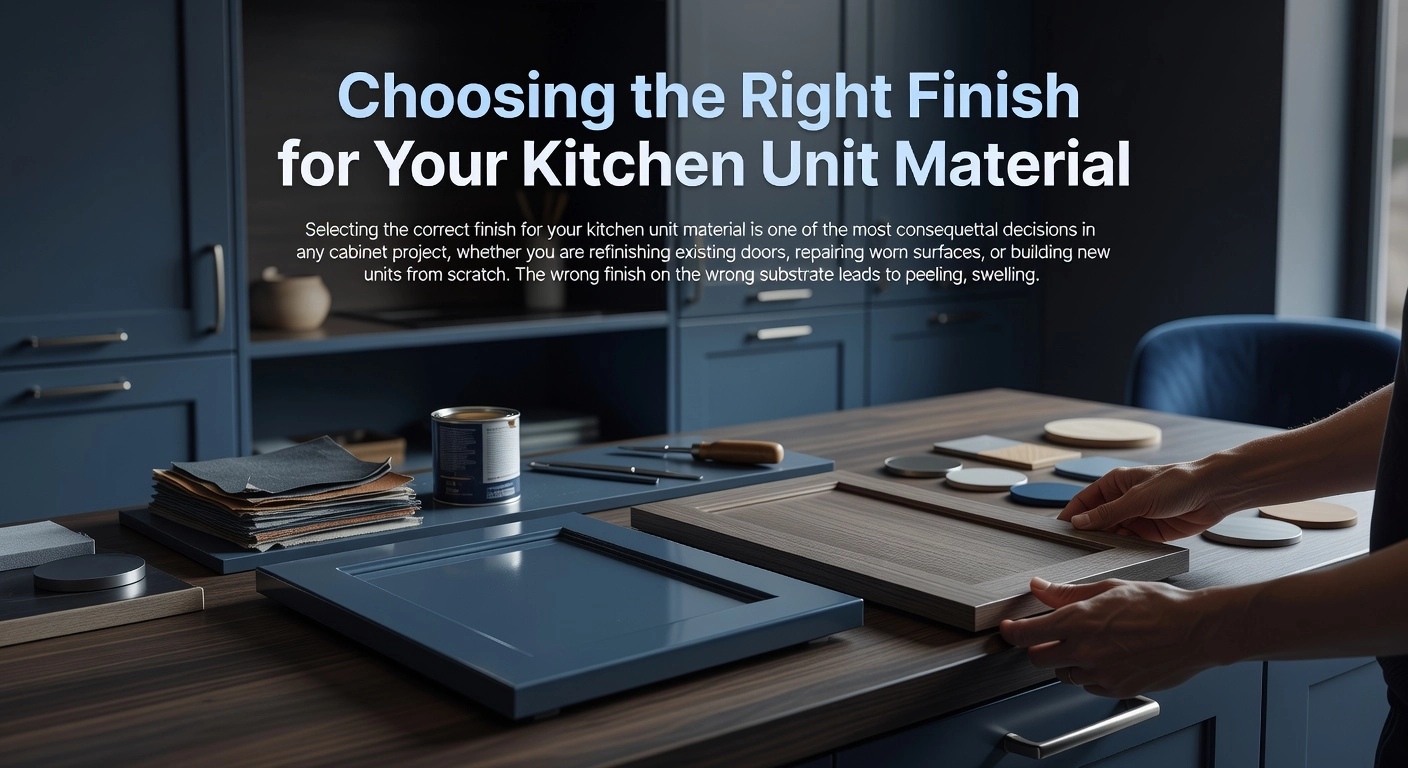
Selecting the correct finish for your kitchen unit material is one of the most consequential decisions in any cabinet project, whether you are refinishing existing doors, repairing worn surfaces, or building new units from scratch. The wrong finish on the wrong substrate leads to peeling, swelling, uneven wear, and repairs that are far more costly than getting the choice right the first time.
1. Oil-Based Penetrating Finishes for Solid Hardwood Doors and Drawer Fronts
Solid hardwood doors and drawer fronts respond best to oil-based penetrating finishes such as tung oil blends or penetrating oil sealers. These products soak into the wood fibers rather than sitting on top, feeding the timber from within and building a natural matte or low-satin sheen that enhances grain without creating a thick plastic-like film. The single greatest practical advantage for beginners is repairability. Because the finish lives inside the wood rather than on its surface, spot repairs blend in seamlessly without visible lap marks or edges. You can address a scuffed area on an oak door front without sanding back the entire panel and starting over. This makes oil-based penetrating finishes an especially forgiving choice for DIY maintenance on species like walnut, oak, and maple.
2. Water-Based Polyurethane or Acrylic Lacquer for MDF Surfaces
MDF has a dense, resin-bound surface with very low porosity, which means penetrating oils have nowhere useful to go. Water-based polyurethane or acrylic lacquer suits MDF far better because these products form a continuous hard film across the surface, building moisture resistance and durability with each coat. They adhere cleanly to MDF without raising fibers or causing the swelling that oil-based solvents can trigger. The result is a tough, wipeable surface capable of handling kitchen grease, steam, and cleaning products. Lower VOC content compared to solvent-based alternatives is an added benefit, particularly for enclosed kitchen spaces during application.
3. Sealed, Wipeable Finishes for Cabinet Interiors
Shelf surfaces and carcass walls inside kitchen units are exposed to spills, humidity, grease, and frequent cleaning, often far more than exterior door faces. A two-part water-based lacquer or a catalyzed conversion varnish provides the hard, chemically resistant film these interior surfaces require. Single-component paints or basic primers are not durable enough for this environment over time. The sealed film resists abrasion from stacked dishes or canned goods while making routine cleaning straightforward.
4. Primer Selection on MDF and Particleboard Edges
Cut edges on MDF and particleboard are the most vulnerable point in any cabinet finish system. The open fibers at edges wick moisture rapidly, leading to swelling and finish failure if not sealed correctly before topcoats are applied. A dedicated MDF primer or a shellac-based sealer provides significantly better protection than a standard wood primer. Shellac-based options dry fast, sand smoothly, and create an effective moisture barrier that works under both water-based and oil-based topcoats. Plan for two to three coats on edges alone before moving to full priming across panel faces.
5. Matching Finishes During Repair Requires Sheen Matching, Not Just Color
When repairing or refreshing existing units, color is only half the equation. Sheen level, whether matte, satin, semi-gloss, or gloss, affects how light reflects from the surface, and a mismatch between old and new finish will be immediately obvious under kitchen lighting even when the color is correct. Always apply a small test patch on a concealed surface such as the inside face of a door or the back of a carcass panel before committing to full panels or door fronts. Take note of the original finish type as well, since applying a film-forming lacquer over an oil-finished surface without proper preparation will cause adhesion problems. Accounting for the natural aging and patina of existing finishes is equally important; a fresh coat matched to the original formula may still look lighter or brighter than surrounding surfaces that have darkened over years of use.
Key Takeaways for Working With Kitchen Units
Before you open a paint tin, order new doors, or reach for a screwdriver, pause and take stock of what you actually have. Understanding your unit types, whether base, wall, or tall, and knowing your material composition, whether solid wood, MDF, or plywood, gives you a reliable foundation for every decision that follows. Guessing at these details leads to mismatched finishes, failed adhesion, and wasted money.
Most 2026 trend updates, including warm walnut tones, matte flat-front doors, and sage or taupe color palettes, are fully achievable through refinishing existing units rather than replacing them. Stripping back worn surfaces and applying the right topcoat costs a fraction of a full kitchen replacement and delivers comparable visual results.
Consistent maintenance compounds over time. Degreasing cabinet faces regularly, sealing exposed edges against moisture, and using finish-appropriate cleaning products can add years to a unit’s lifespan without a single structural repair.
WoodStuffHQ’s companion guides cover greasy cabinet cleaning, scratch repair, water damage restoration, and low-VOC finish selection in practical, step-by-step detail.
Approach every project in order: assess structure first, address the finish second, then upgrade hardware and storage last. That sequence prevents you from decorating over problems that will resurface and ensures every improvement actually holds.
Conclusion
Choosing the right kitchen units does not have to feel overwhelming. By understanding the key unit types available, selecting materials that suit your lifestyle, caring properly for wooden finishes, and keeping an eye on 2026 design trends, you are fully equipped to make confident, informed decisions.
Your kitchen deserves thoughtful planning, and the good news is that even small upgrades can deliver a dramatic transformation. Whether you are drawn to sleek handle-free cabinetry, sustainable materials, or bold new colour palettes, there is a perfect combination waiting for your space.
Now it is time to take action. Start by assessing your current kitchen, identifying what is and is not working, and exploring the options outlined in this guide. Your dream kitchen is closer than you think, and every great renovation begins with exactly the kind of knowledge you now have.