You can see a great example of this in the [Bevel & Bond End-Grain Maple Cutting Board]
Learning how to clean a wooden cutting board properly saves it from garlic smells, dark wine stains, or sticky residue. Don’t throw it away. Don’t throw it away. Wooden cutting boards can last 20+ years if you clean them right. The problem is 90% of people clean them wrong. Dishwashers, bleach, and soaking destroy wood in weeks.
This is the exact 3-step method used by professional chefs and butchers to deep clean, disinfect, and remove odors without ruining the wood. Follow it and your board will look new for decades.
3 Deadly Mistakes That Destroy Cutting Boards in 30 Days
Before we start, stop doing these immediately. These mistakes cause 80% of cracked, warped, and moldy boards:
- Never put it in the dishwasher. Heat + high-pressure water + harsh detergent = cracked, warped board in 1-2 cycles. The glue between wood pieces fails at 140°F.
- Never soak it in water. Wood is like a sponge. It absorbs water, swells 3-5%, then cracks when it dries unevenly. 10 minutes of soaking can cause permanent warping.
- Never use bleach or harsh chemicals. Bleach dries the wood fibers and leaves a toxic residue you can’t eat off. It also strips the natural antimicrobial properties of wood. The FDA does not recommend bleach for wooden food surfaces.
Real Example: A $200 end-grain maple board left soaking overnight will split down the middle. Repair cost? $80. Replacement cost? $200. Cleaning it right? Free.
How to Daily Clean a Wooden Cutting Board After Every Use
This takes 60 seconds and stops 90% of bacteria and odor problems before they start.
- Scrape off food immediately. Use a bench scraper, dough scraper, or the back of a knife. Don’t use the sharp edge – it digs grooves into the wood that trap bacteria.
- Wash with hot water + mild dish soap. Use water as hot as your hands can stand, about 120°F. Use a soft sponge or cloth. Scrub gently with the grain, not against it. Dawn or Palmolive work perfect.
- Rinse both sides fast. Even if you only used one side, rinse both. This prevents uneven water absorption which causes warping. Keep rinse time under 10 seconds per side.
- Dry immediately with a clean towel. Don’t air dry only. Towel dry first to remove surface water, then stand it upright on its edge in a dish rack to air dry completely. Never lay it flat wet – the bottom stays wet and warps.
Pro Chef Tip: Always wash both sides. Wood expands when wet. If one side stays dry and the other is soaked, the board will cup or bow within 24 hours.
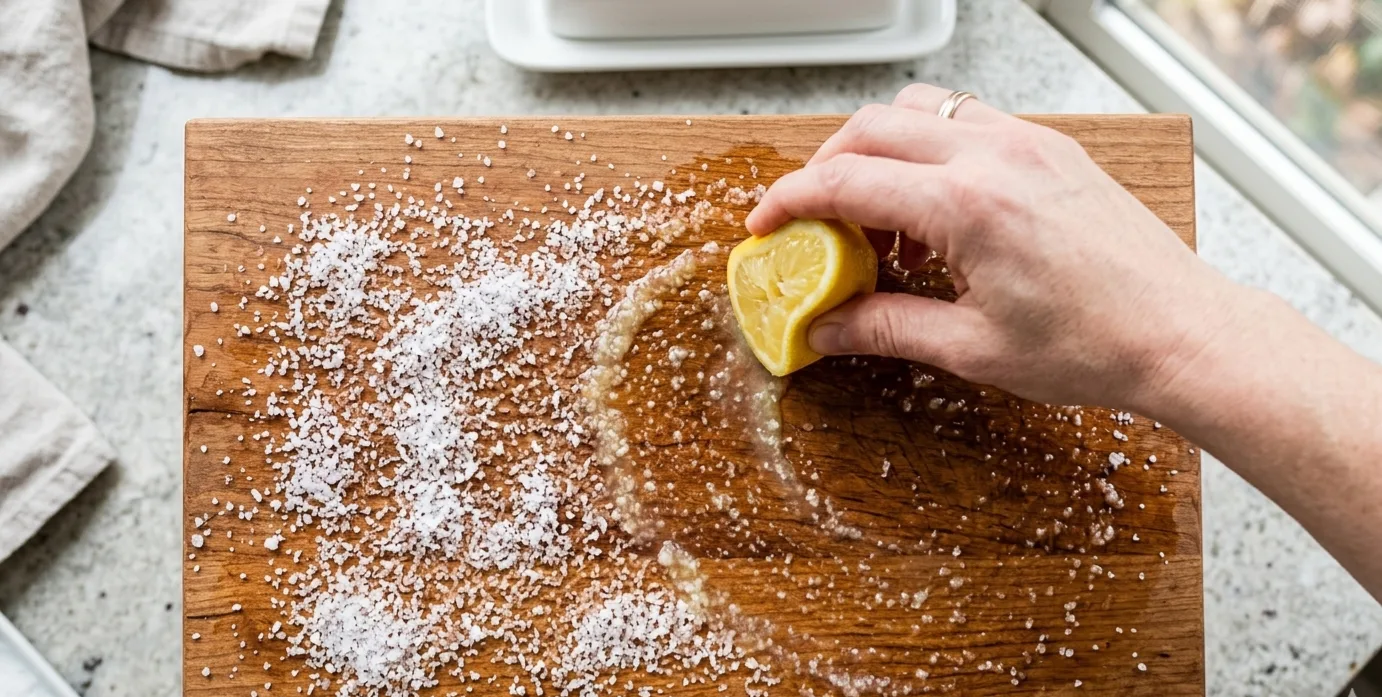
How to Clean a Wooden Cutting Board: Lemon + Salt Method
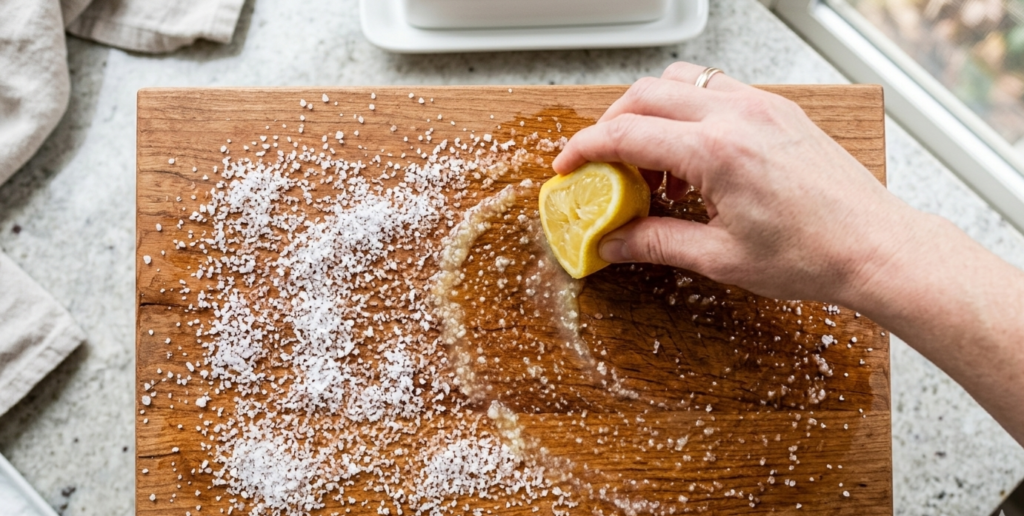
Do this once a week or immediately when your board smells like garlic, onion, fish, or has stains from berries, turmeric, or wine. This is the method every culinary school teaches.
Why it works: Salt is a natural abrasive that scrubs without scratching. It also draws out moisture and odors through osmosis. Lemon juice is 5% citric acid which breaks down organic stains and kills bacteria on contact. Together they deodorize, sanitize, and brighten wood.
What You Need:
- 1/2 cup coarse kosher salt or sea salt. Table salt is too fine – it dissolves too fast.
- 1 large fresh lemon, cut in half. Bottled lemon juice works but fresh is 3x stronger.
- Clean towel or paper towels
- Bench scraper or spatula
Step-by-Step:
- Sprinkle salt generously. Cover the entire board surface with a thick 1/4 inch layer of coarse salt. Pay extra attention to stained or smelly areas. For a standard 18×12 board, you’ll use about 1/2 cup.
- Scrub with lemon hard. Use the cut side of the lemon like a sponge. Grip it firmly and scrub in small circles with the grain. Apply pressure. You should see the salt turning gray/brown as it lifts stains. Squeeze the lemon constantly to release fresh juice. Scrub for 2-3 minutes minimum.
- Let it sit 5-10 minutes. This dwell time is critical. The salt + lemon juice pulls out deep odors from inside the wood pores. For fish smell, let it sit 10 minutes. You’ll actually see liquid pooling on top.
- Scrape off the dirty salt. Use a bench scraper to push all the salt into the trash. Don’t rinse it down the sink – salt + lemon pulp will clog your drain over time.
- Final rinse + dry. Quick 5-second rinse with hot water to remove salt residue, then towel dry immediately and stand upright. The board should look visibly lighter and smell like nothing.
Result: Stains from blueberries, beets, wine, and turmeric will fade 70-90%. Onion and garlic smell will be completely gone. The board surface will feel smoother too.
How to Disinfect a Wooden Cutting Board Without Bleach
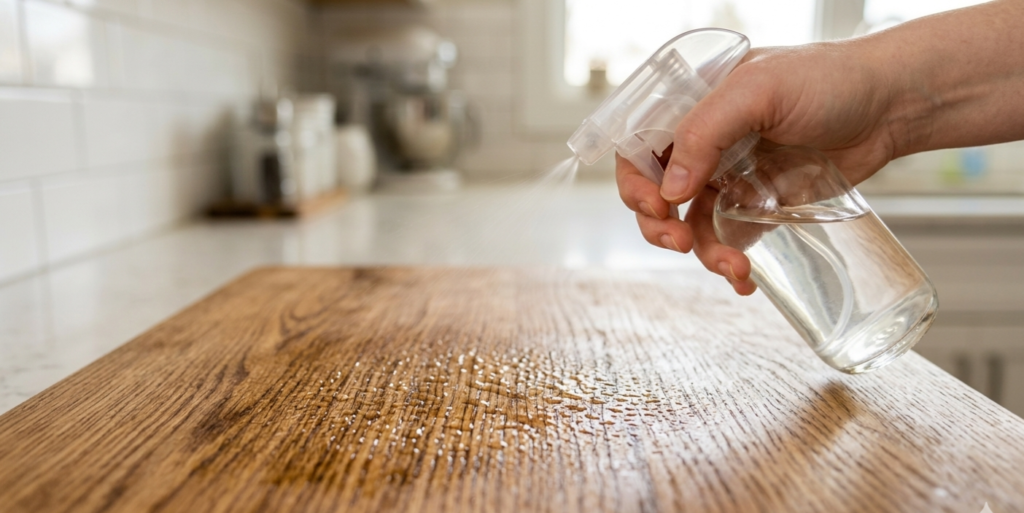
Use this after cutting raw meat, poultry, seafood, or eggs. You need to kill Salmonella, E. coli, and Listeria. Bleach destroys wood fibers. Use white vinegar instead.
The Science: A study by UC Davis found that 5% white vinegar kills 99.9% of bacteria on wood surfaces after 10 minutes of contact time. Wood is naturally antimicrobial – it pulls bacteria into the grain where they die – but vinegar ensures total kill.
You can see a great example of this in the [Bevel & Bond End-Grain Maple Cutting Board]
According to the USDA Food Safety Guidelines, cutting boards must be washed with hot soapy water and sanitized after contact with raw meat. For wooden boards, they specifically recommend vinegar or hydrogen peroxide instead of bleach.
Method 1: White Vinegar – Best for Daily Use
- Mix solution. Put undiluted 5% white vinegar in a spray bottle. Don’t dilute – you need full strength.
- Spray until soaking wet. Cover the entire surface. You should see the wood darken as it absorbs vinegar. Use about 2-3 tablespoons for a large board.
- Wait 10 minutes exactly. Set a timer. This is the EPA-required contact time to kill pathogens. Don’t wipe early.
- Wipe + rinse. Wipe with a clean damp cloth to remove vinegar, then do a 5-second rinse with hot water. The vinegar smell disappears when dry.
- Dry completely. Towel dry + air dry upright 1-2 hours. Bacteria cannot multiply on dry wood. Moisture is what they need.
Method 2: 3% Hydrogen Peroxide – For Heavy Contamination
Use this if you cut raw chicken and forgot to clean for hours, or if the board smells sour.
- Spray hydrogen peroxide. Use regular 3% from the drugstore. Spray until wet.
- Wait 10 minutes. It will bubble – that’s killing bacteria.
- Wipe clean. No rinse needed. Hydrogen peroxide breaks down into water and oxygen.
Water damage is the #1 killer of countertops too. Learn the 3-second rule and humidity control in our butcher block countertop care guide.
Warning: Never mix vinegar and hydrogen peroxide in the same bottle. It creates peracetic acid which is toxic. Use them separately, hours apart.
How to Remove Deep Odors: Baking Soda Paste Method
For fish smell that survived lemon + salt, or a board that smells sour like old milk. Baking soda is alkaline and neutralizes acidic odors at the molecular level.
- Make a thick paste. Mix 3 tablespoons baking soda + 1 tablespoon water. Consistency should be like toothpaste.
- Cover the entire board. Spread the paste 1/4 inch thick on all smelly areas. For whole-board odors, cover the whole surface.
- Wait 30-60 minutes. For light odors 30 min. For fish smell 60 min. The paste will harden and crack – that’s normal.
- Scrub + rinse. Scrub with a damp sponge to loosen the dried paste, then rinse with hot water until all residue is gone. Towel dry immediately.
Pro Tip: For extreme odors, add 1 teaspoon of lemon juice to the paste. The fizzing reaction helps penetrate deeper.
How to Store Your Cutting Board to Prevent Warping & Mold
90% of warping happens from bad storage, not bad cleaning. Follow these rules:
- Store upright on its edge. Never lay flat. Air needs to circulate on both sides. Use a plate rack or lean against a backsplash.
- Keep away from heat sources. Don’t store next to the stove, oven, or dishwasher. Heat dries one side faster than the other = warp.
- Avoid direct sunlight. UV rays fade the wood and dry it unevenly. Store in a cabinet or away from windows.
- Don’t store wet. Make sure it’s 100% dry before putting away. Even slight moisture causes mold in 48 hours.
- Use a board rack if you have multiple. Don’t stack boards directly on each other – trapped moisture causes mildew.
The Final Step Most People Skip: Oil Your Board After Cleaning
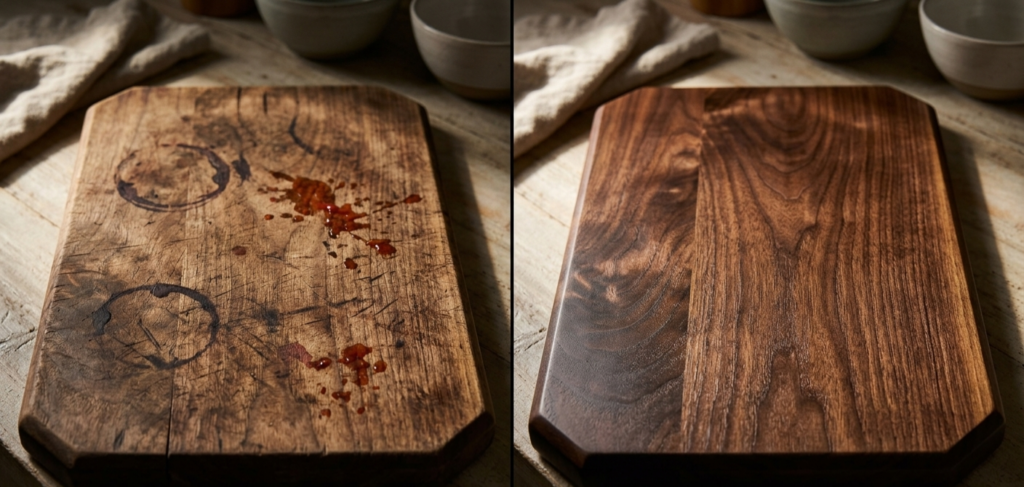
Water, lemon, vinegar, and soap all strip the board’s natural oils and protective coating. If you don’t re-oil, the wood fibers dry out, separate, and crack. Dry wood also absorbs 5x more bacteria and odors.
The Rule: Every time you deep clean, disinfect, or use lemon/salt, you must oil the board after it’s 100% dry. Wait 2-3 hours after washing to ensure zero moisture remains inside the wood.
What happens if you skip it: Within 6 months an unoiled board will develop hairline cracks, feel rough, absorb every smell, and harbor bacteria in the cracks. Within 2 years it will split and be trash.
→ Read our full guide: How to Oil a Cutting Board Properly – Step-by-Step with Photos ← This is critical. We show exactly which oils to use, how much, and how often.
Bottom Line: Now you know exactly how to clean a wooden cutting board without damaging it. Wash with soap daily, deep clean with lemon + salt weekly, disinfect meat boards with vinegar, store upright, and always re-oil after deep cleaning. Do this and your board will last 20 years and stay safe.
FAQ: Cutting Board Cleaning Questions
Can I use soap on a wooden cutting board?
Yes. Mild dish soap like Dawn is safe and recommended by the USDA for daily cleaning. The myth that soap ruins wood is false. Just don’t soak it and dry it fast. Anti-bacterial soap is not needed – studies show regular soap removes 99.9% of bacteria and wood itself is naturally antimicrobial.
How often should I deep clean my cutting board?
Deep clean with lemon + salt 1x per week if you use it daily. Disinfect with vinegar after every single use with raw meat, poultry, or seafood. Oil it 1x per month or when water stops beading on the surface. If water soaks in instead of beading up, it needs oil immediately.
Why does my board smell even after washing?
Odors soak deep into dry, cracked wood pores. Surface washing only cleans the top 0.1mm. If soap doesn’t work, you need the lemon + salt method to pull odors out from 2-3mm deep. Then you must oil the board to seal the wood so it stops absorbing smells. An unoiled board is like a sponge for odors.
Can I sand out knife marks and stains?
Yes. For deep stains or rough knife grooves that trap bacteria, sand with 220-grit sandpaper with the grain, then finish with 320-grit for smoothness. Always sand with the grain, never circles. Clean off all dust with a tack cloth, then re-oil heavily 2-3 times. This makes the board look new and closes the grooves where bacteria hide.
Is it safe to cut raw meat on wood?
Yes, if cleaned properly. The USDA confirms wood is safe for raw meat if you wash with hot soapy water and sanitize with vinegar after each use. Studies show plastic boards actually harbor more bacteria in knife grooves than wood. Wood’s natural antimicrobial properties kill bacteria over time.
How do I know when to replace my cutting board?
Replace it if: 1. Deep cracks you can fit a fingernail in, 2. It’s warped more than 1/4 inch and won’t sit flat, 3. Black mold spots that don’t scrub off, 4. It smells sour even after deep cleaning. A well-maintained board lasts 15-20 years. A neglected one dies in 2 years.
You can see a great example of this in the [Bevel & Bond End-Grain Maple Cutting Board]
Bottom Line: Wash with soap daily, deep clean with lemon + salt weekly, disinfect meat boards with vinegar, store upright, and always re-oil after deep cleaning. Do this and your board will last 20 years and stay safe.
Next Step: A dry board is a cracked board. Learn how to oil your cutting board the right way here. We cover the best food-safe oils, how often to apply, and the 5-minute method that prevents cracks.
9 thoughts on “How to Clean a Wooden Cutting Board : Deep Clean, Disinfect & Remove Odors”