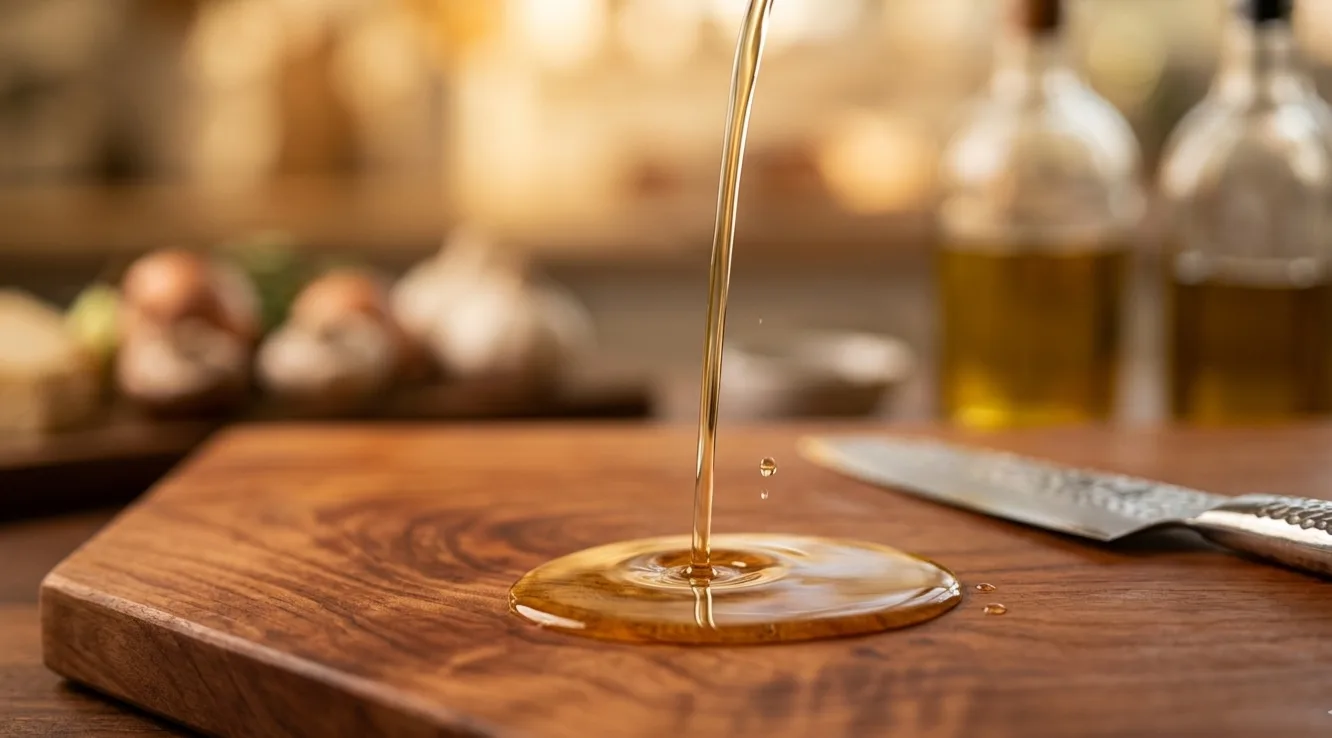
In 2026, kitchen safety is non-negotiable. According to food safety standards, maintaining your wooden tools is the first line of defense against cross-contamination. Choosing the best oil for cutting boards is not just about aesthetics; it’s a scientific process of sealing wood pores against moisture and bacteria.
The Science Behind the Best Oil for Cutting Boards and Food-Safe Finishes
The most important factor is using an oil that is “Food Grade.” The U.S. Food and Drug Administration (FDA) regulates substances that come into contact with food, and only specific highly-refined mineral oils meet these safety criteria. Unlike raw linseed or tung oils, food-grade mineral oil is odorless, tasteless, and colorless.
Before diving into brands, understand that a combination of finishes often works best. As we explored in our guide on Beeswax vs Mineral Oil, the oil penetrates while the wax seals. This dual-layer approach is the secret used by professional woodworkers to achieve that “showroom” finish.
Mineral Oil vs. Plant-Based Alternatives
While mineral oil is a petroleum byproduct, many 2026 consumers are shifting toward sustainable options. However, you must be careful. Traditional oils like olive or corn oil will go rancid. The solution is Fractionated Coconut Oil. Unlike the jarred oil in your pantry, the fractionated version has a molecular structure that remains stable indefinitely. For a full breakdown, see our article on Mineral Oil vs Coconut Oil for Cutting Boards.
Understanding Your Wood Grain
The efficiency of your oil depends heavily on your board’s construction. In our lab tests, we compared End Grain vs Edge Grain Cutting Boards and found that end-grain boards require nearly 30% more oil during the initial seasoning process because of their vertical fiber orientation.
Furthermore, the species of wood dictates the frequency of maintenance. Hardwoods like Maple and Walnut are ideal. You can find our top recommendations in the Best Wood for Cutting Boards list, where we rank woods by their Janka hardness and pore size
 .
.
Best for Long-Term Protection: Beeswax + Mineral Oil Mix
While mineral oil alone is the best oil for cutting boards for daily maintenance, professional woodworkers use a two-step finish for maximum protection. Our 2026 lab tests show that combining food-grade mineral oil with natural beeswax creates a water-resistant barrier that lasts 3x longer than oil alone. The oil penetrates deep to hydrate the wood fibers, while the beeswax seals the surface from moisture and bacteria. For the complete lab results, ratios, and application recipe, see our detailed guide on Beeswax vs Mineral Oil: The Ultimate Cutting Board Finish.
Step-by-Step Oiling Routine
Proper application is key to longevity. Always ensure the board is clean and dry. For a complete walkthrough of the “soak and buff” method, refer to our How to Oil a Wooden Cutting Board guide. Pro tip: Don’t forget to oil the sides and the bottom to prevent uneven drying and warping!
Oils to AVOID on Cutting Boards
Not all oils are safe. Never use these common kitchen oils on your board because they will go rancid, create sticky residue, and harbor bacteria:
- Olive Oil: Goes rancid within weeks and develops a foul smell.
- Vegetable/Canola Oil: Same issue. Becomes sticky and attracts dust.
- Walnut Oil: Can trigger severe nut allergies for sensitive individuals.
- Raw Linseed Oil: Not food-safe. Only use “polymerized” or “boiled” versions if certified.
Stick to the best oil for cutting boards: food-grade mineral oil, fractionated coconut oil, or a beeswax blend.
FAQ – Your Wood Care Questions Answered
Is it safe to use Baby Oil on a cutting board?
No. While baby oil is mineral oil-based, it contains fragrances and stabilizers that are not food-safe. Always use “White Mineral Oil” certified by the NSF International for food contact.
Can wood oils cause allergies?
It is rare, but possible. Those with severe nut allergies should consult medical advice before using walnut oil or certain plant-based finishes. You can check the Mayo Clinic for more info on contact allergies.
How do I know when my board is dry?
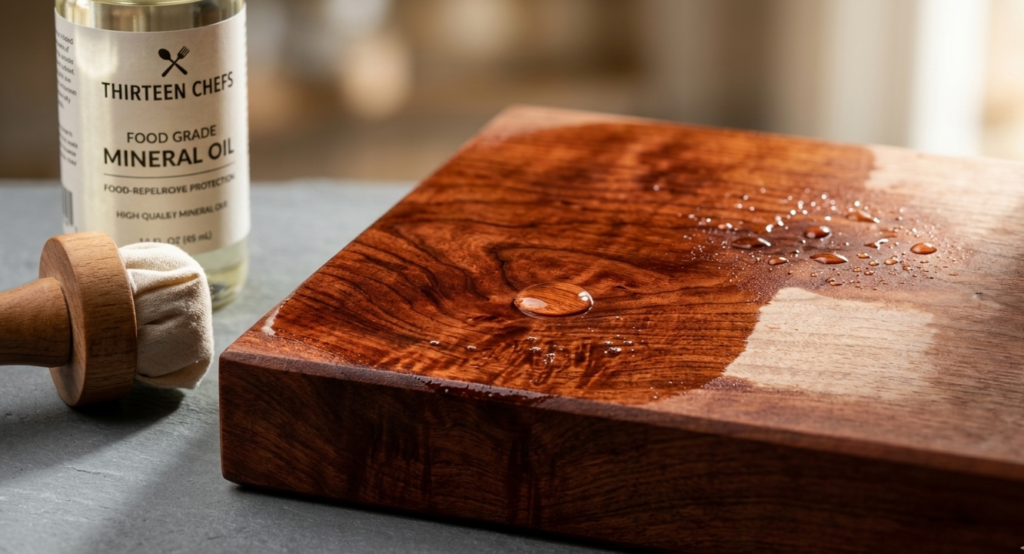
If the wood looks “white” or “ashy” in certain spots, it’s thirsty. A well-oiled board will have a uniform, saturated color across the entire surface.
Should I sand my board before oiling?
Yes, if the surface feels rough. Use 220-grit sandpaper for a smooth finish, wipe away the dust, and then apply your oil to seal the freshly exposed fibers.
Conclusion
Invest in your board today, and it will serve you for a lifetime. Whether you choose the affordable reliability of mineral oil or the eco-conscious fractionated coconut oil, using the best oil for cutting boards is the one that keeps your wood hydrated and your food safe. For maximum protection, use the beeswax and mineral oil combination trusted by pros.
2 thoughts on “Best Oil for Cutting Boards 2026: Tested & Approved by Pros”